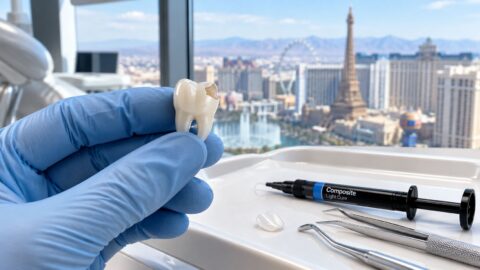
Chipped Tooth Repair Cost in Las Vegas
A chipped tooth repair in Las Vegas can cost roughly $100 for minor smoothing up to about $3,500 for a crown. Your final bill depends on the chip's size and depth, the material selected, and whether the fracture involves the pulp or nerve.
You may have felt it happen while biting into something hard, noticed a sharp edge against your tongue, or seen a small piece missing from your smile in the bathroom mirror. Even when a chipped tooth doesn't hurt, it deserves an evaluation because the visible break may not show how much of the tooth has weakened underneath.
For Las Vegas families, the practical question isn't only, “How much does a chipped tooth cost to fix?” It's also, “Which repair protects my tooth, fits my schedule, and avoids unnecessary treatment?” A minor enamel edge may need only smoothing or bonding, while a deeper fracture can require a veneer, crown, or root canal followed by a crown.
This guide walks through the factors I review with patients at Aspiring Smiles, including treatment categories, realistic price ranges, diagnostic add-ons, insurance questions, and the choice between same-day and multi-visit care. If you're looking for a dentist near me, an emergency dentist, or a dentist in Las Vegas, NV, the right first step is a focused examination rather than guessing from a photograph.
When a Chipped Tooth Happens in Las Vegas
A patient once described the moment clearly. During dinner at a Strip restaurant, they bit into a crouton, heard a faint crack, and immediately ran their tongue over a rough front edge. The first reaction was panic. The second was to check the mirror. Because there was no pain, the patient considered waiting until after work and treating it as a cosmetic nuisance.
That response is common. A painless chip often affects only enamel, but pain isn't a reliable measure of the full damage. A rough edge can irritate your tongue or cheek, and chewing on the weakened area can turn a limited break into a larger fracture. If you have sharp pain, lingering sensitivity, swelling, bleeding, or a pink or red area visible inside the tooth, seek an emergency dentist promptly.
The price range starts wide
The chipped tooth repair cost in Las Vegas can run from about $100 for minor smoothing to approximately $3,500 for a crown, based on published cost ranges from Dental Cost Guide. Another guide places smoothing at roughly $50 to $150, composite bonding at $150 to $500 per tooth, veneers at $900 to $2,500 per tooth, and crowns at $1,000 to $3,000 per tooth in its treatment comparison (Dental.Me).
Those figures aren't a personal estimate. The final fee depends on how deep the chip goes, how much healthy tooth remains, the material chosen, and whether the pulp is affected. A repair that stays on the enamel is different from one that requires structural protection or nerve treatment.
Don't wait simply because it looks small
You can protect the edge temporarily with dental wax, avoid chewing on that side, and bring any recovered tooth fragment to the appointment. Don't file the tooth yourself. Enamel doesn't grow back, and an uneven adjustment can change your bite or expose a more sensitive layer.
For a broader look at urgent damage and possible treatment paths, review broken tooth repair at Aspiring Smiles. Patients from Desert Shores, Sunhampton, Sun City Summerlin, Monterrey, Lone Mountain, Mar-A-Lago, and Painted Desert Estates can request an evaluation before deciding between same-day care and a scheduled repair.
How Dentists Classify a Chipped Tooth
Dentists don't choose treatment from appearance alone. We first determine whether you're seeing a craze line, a chip, or a true fracture, then assess how far the damage extends through the tooth.
A craze line is a fine surface mark in enamel with no missing piece. A chip means part of the tooth has broken away, often at an edge or corner. A true fracture extends deeper and may involve the dentin, pulp, or root. That distinction matters because polishing a superficial defect and protecting a structurally compromised tooth are completely different procedures.
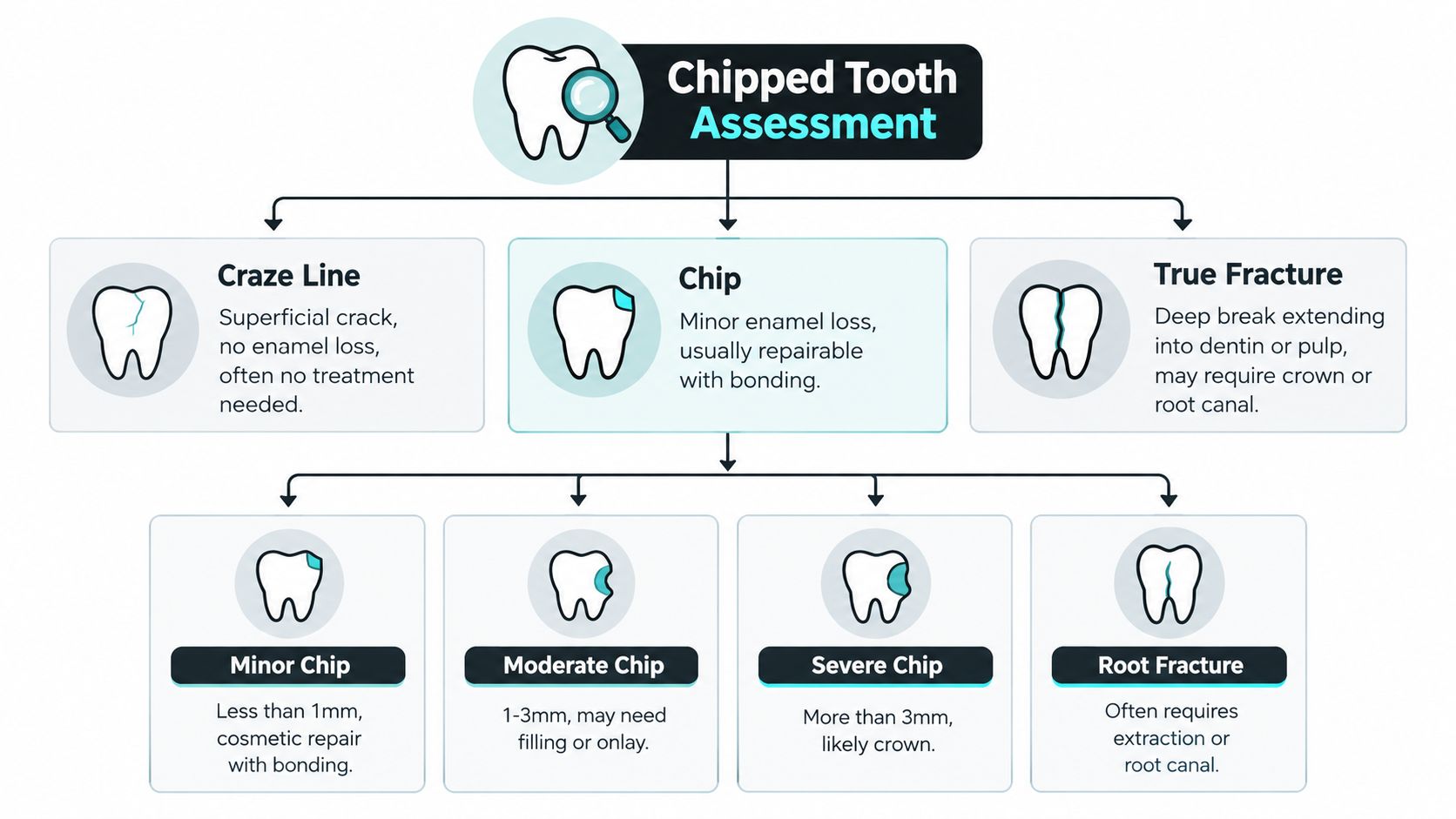
Four categories guide the examination
Enamel-only chip. You may notice a rough edge without sensitivity. The dentist examines the contour, gently checks the surface with an explorer, evaluates your bite, and may recommend smoothing or conservative bonding if the appearance bothers you.
Enamel-dentin chip. Dentin exposure can create sensitivity to cold, heat, air, or sweets. The dentist looks for the exposed layer, performs a bite test, and uses a periapical X-ray when needed to assess the tooth and surrounding structures. Composite bonding often restores the missing area when the tooth remains stable.
Significant chip reaching the pulp. A pink or red spot, sharp pain, or pronounced sensitivity can indicate pulp involvement. Vitality testing helps determine how the nerve responds. When the pulp is exposed or irreversibly damaged, root canal therapy generally comes before a crown.
Split tooth or root fracture. A visible line through the tooth, pain on biting, movement, or a fracture extending toward the gum changes the prognosis. Imaging, bite testing, and direct examination help determine whether restorative treatment can save the tooth or whether tooth extraction and a replacement such as a dental implant should be discussed.
The same visible chip can therefore lead to very different plans. The exam identifies what the eye can't, including hidden decay, an old filling that has weakened the tooth, or a crack extending beyond the missing enamel.
Repair Options and Their Real Price Ranges
A chip on a front tooth may need only smoothing or bonding. A larger break, weakened structure, or pulp involvement calls for a different plan. Treatment should match the tooth's remaining strength, location, appearance, and function. Bonding preserves more natural tooth structure, while a veneer changes the visible front surface and a crown covers a greater portion of the tooth.
Published guides place direct bonding around $100 to $400 per tooth, porcelain veneers around $900 to $2,500 per tooth, and crowns around $1,000 to $3,500 per tooth (Dental Cost Guide). A separate Aflac cost overview lists bonding around $100 to $600, crowns around $800 to $3,500, veneers around $500 to $2,500, and root canal treatment with a crown at $1,500 to $4,500 or more, depending on the clinical situation.
| Treatment Option | Las Vegas Price Range | Average Lifespan | Number of Visits | Best Fit For |
|---|---|---|---|---|
| Smoothing or polishing | $50 to $150 | Depends on the tooth and bite | Often one | A tiny enamel edge that only feels rough |
| Dental bonding | $100 to $400 per tooth | Varies with bite, habits, and care | Often one | Small to moderate chips with adequate healthy structure |
| Porcelain veneer | $900 to $2,500 per tooth | Depends on material, bite, and maintenance | Usually more than one | Visible front-tooth damage where appearance is central |
| Full dental crown | $1,000 to $3,500 per tooth | Depends on tooth condition and care | Same-day or multiple visits | Larger chips or teeth that need full coverage |
| Root canal plus crown | May reach $1,500 to $4,500 or more | Depends on the tooth and restoration | Multiple steps, sometimes coordinated | Pulp involvement or a tooth requiring nerve treatment |
The lifespan and visit count are planning estimates, not guarantees. Grinding, heavy biting forces, decay, oral hygiene, and the amount of remaining tooth all affect how a restoration performs. A same-day crown may suit a patient with limited scheduling flexibility, while a multi-visit veneer or crown may allow more laboratory planning.
The trade-off isn't only price
Bonding often fits a small or moderate chip and can usually be completed in one appointment. It may not withstand heavy force on a back tooth or a large structural break. Veneers focus on appearance and may require selective enamel preparation. Crowns require more tooth preparation, but they can protect a weakened tooth more effectively.
Fees vary with the diagnosis, materials, imaging, and treatment plan. Patients who want a separate way to compare Bragly pricing should keep that information separate from a dental estimate, since it does not determine the cost of tooth repair. For conservative cosmetic repair, review dental bonding at Aspiring Smiles, then ask which option addresses both the visible chip and the tooth's underlying strength.
Hidden Costs That Change the Final Bill
An advertised repair price may describe only the restoration itself. Your actual estimate can also include the examination, imaging, nerve evaluation, anesthesia, temporary protection, laboratory work, or treatment needed because the tooth is more damaged than it first appeared.
A small chip can remain inexpensive when the enamel is intact beneath it. Once the fracture reaches dentin or pulp, the dentist has to address the underlying condition, not cover the visible gap.
Common line items
- Emergency examination: A focused visit determines whether the tooth has a deeper fracture or pulp concern.
- Dental X-rays: Periapical or bitewing images can reveal hidden damage, decay, or changes around the root.
- Vitality testing: The dentist checks how the pulp responds before choosing a restoration.
- Pulp protection or a build-up: Dentin exposure or substantial structure loss may require an insulating base or foundation.
- Anesthesia: Numbing may be necessary when the tooth is sensitive or the procedure extends deeper.
- Laboratory and temporary fees: A lab-fabricated veneer or crown may require a temporary restoration while the permanent piece is made.
- Bite adjustment: The dentist may refine the repaired surface so it doesn't receive excessive force.
- Replacement work: Bonding can fail or chip again, particularly when the original cause, such as grinding, remains untreated.
A realistic escalation path
The figures below illustrate how severity changes the treatment category. They aren't a quote for your tooth, and each stage requires an examination before treatment.
| Repair Stage | Line Item | Typical Las Vegas Fee | Why It Is Added |
|---|---|---|---|
| Initial minor damage | Smoothing | $100 | The enamel edge is rough but structurally sound |
| Dentin exposure | Bonding | $450 | More composite and shaping are needed to restore the missing area |
| Structural compromise | Same-day crown | $1,600 | Full coverage protects a tooth that won't reliably hold a small repair |
| Pulp involvement or delayed deterioration | Root canal plus crown | $3,500 | Nerve treatment and full restoration address deeper damage |
Those examples show why “cheap fix” content can mislead when it discusses only the first restoration. If a chip worsens, the patient may face more appointments, a temporary crown, time away from work, or even extraction followed by dental implants near me searches.
Practical rule: Get the tooth assessed before you decide that waiting will save money. Early diagnosis gives you more conservative choices.
Insurance, Payment Plans, and Las Vegas Savings
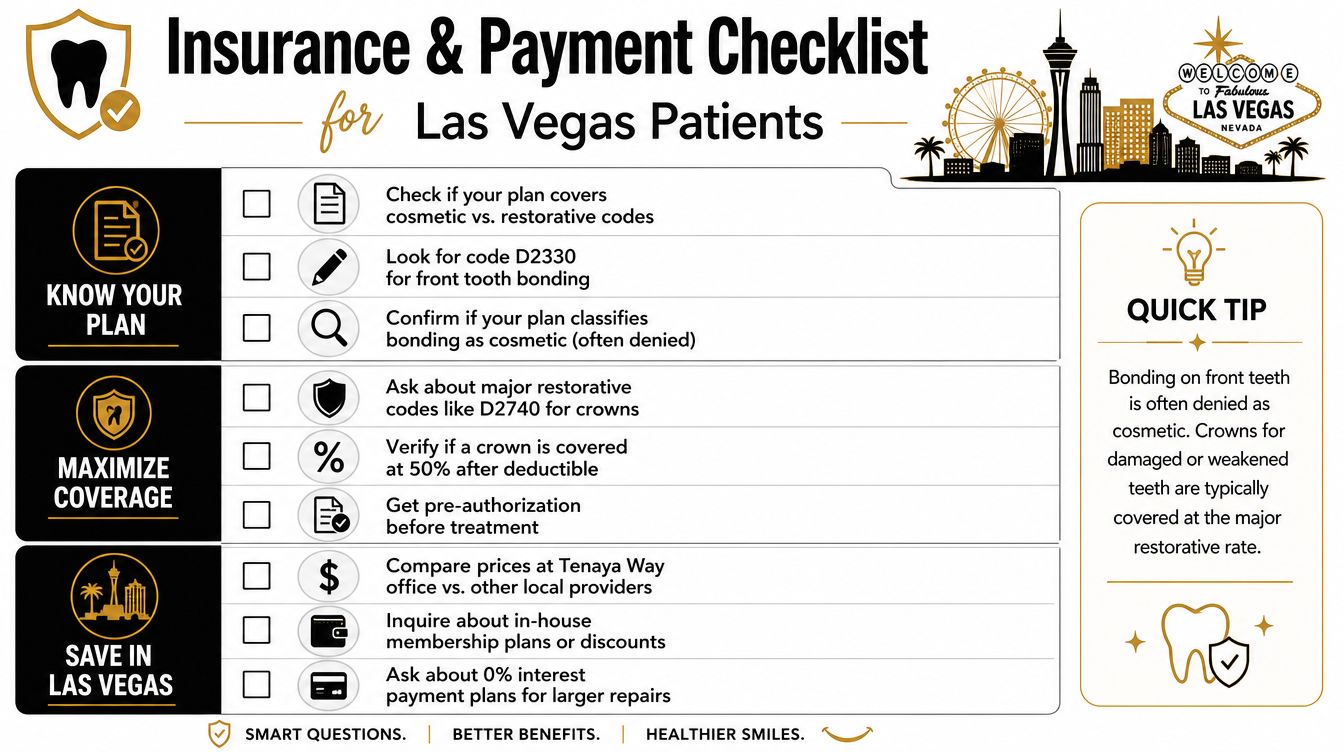
Insurance often separates restorative care from treatment intended only to change appearance. A repair after an accident or fracture may receive restorative consideration, while bonding on a healthy front tooth may be classified as cosmetic. Coverage depends on your plan, diagnosis, tooth, and procedure code. Have the office verify benefits before treatment starts, because eligibility does not guarantee payment.
A crown may qualify under a major restorative benefit, while a veneer or cosmetic contouring may have limited or no coverage. PPO patients should ask about the contracted in-network fee, out-of-network billing, and any balance that remains their responsibility. Plans from providers such as Delta Dental of Nevada can assign different patient costs based on network status and benefit design.
Questions to ask before authorizing care
- Ask for the diagnosis and procedure code: Confirm whether the claim will list bonding, a veneer, a crown, root canal therapy, or another service.
- Confirm cosmetic exclusions: Ask whether a front-tooth repair is considered cosmetic, even when an accident caused the chip.
- Request a pre-treatment estimate: The written estimate should separate the office fee, insurance contribution, and expected out-of-pocket amount.
- Check annual limits and deductibles: Ask how much benefit remains and whether other planned dental care could use it.
- Clarify network status: Verify whether Aspiring Smiles is in network for your plan and whether out-of-network billing could apply.
- Discuss payment options: Ask about the practice's in-house membership plan, CareCredit, Sunbit, and the use of FSA or HSA funds.
A family may manage benefits by splitting treatment across calendar years, but delaying a clinically necessary repair to reach a billing date can allow a small problem to worsen. Ask whether staging is safe, especially if the chip exposes dentin or causes sensitivity. Same-day treatment may reduce time away from work, while multiple visits can make payment easier to schedule.
Compare deductibles, exclusions, network rules, and annual limits before choosing your health insurance. Those details can affect the final cost more than the advertised repair fee.
What Happens at Your First Aspiring Smiles Visit
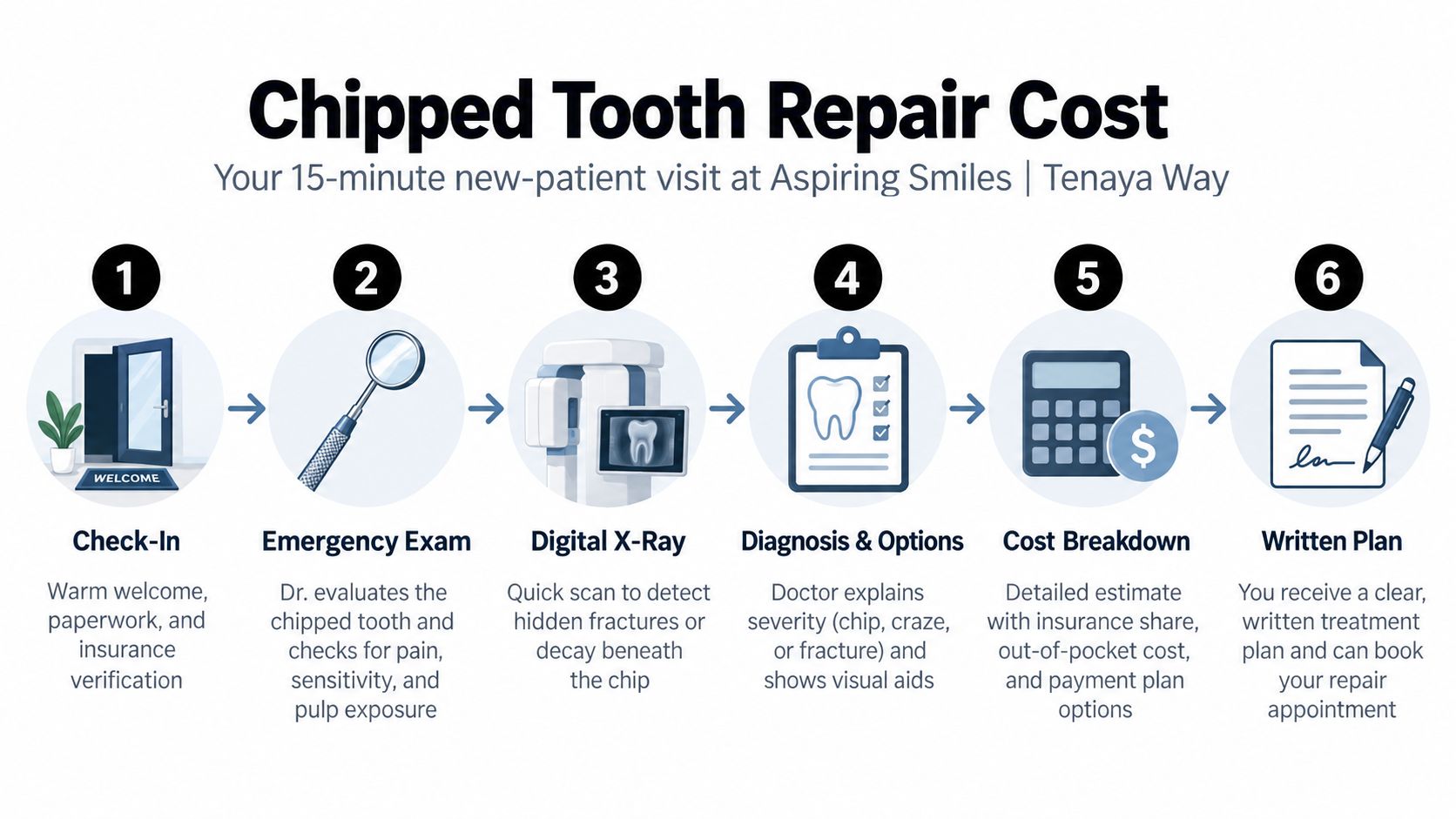
A chipped-tooth appointment should give you more than a quick cosmetic opinion. At the Aspiring Smiles office on Tenaya Way, the visit is organized around identifying the damage, checking the pulp, and giving you a written plan with treatment and payment information.
The assessment
After new-patient paperwork, the team reviews your symptoms, medical history, dental history, and insurance information. The dentist performs an emergency exam, checks the tooth visually, evaluates the bite, and looks for sensitivity, mobility, decay, or signs that the chip reaches the pulp.
Digital periapical and bitewing images can help identify damage that isn't visible at the edge. When the fracture appears close to the pulp, a 3D scan may provide additional information. Vitality testing helps distinguish a stable tooth from one that needs nerve treatment, and intraoral photographs can document the condition for insurance review.
Your treatment paths
The dentist discusses whether the tooth fits an enamel-only, dentin-involved, pulp-involved, or fracture category. That conversation connects the diagnosis to the options, including smoothing, bonding, a veneer, a crown, or root canal therapy followed by a crown.
If bonding is appropriate, same-day repair may restore the shape during the initial appointment. A same-day crown may be possible when the tooth needs full coverage and the office's milling unit is suitable for the case. Veneers and lab-fabricated crowns typically require a preparation visit and a later delivery appointment, with a stated turnaround of 5 to 10 business days when laboratory fabrication is involved.
Digital impressions replace traditional goopy trays in suitable cases. If you need a temporary restoration while laboratory work is completed, the dentist protects the tooth and schedules the final fitting and bite check. A follow-up bite check may be scheduled two weeks later to confirm comfort and function.
Clear appointment reminders can help families coordinate work, school, and follow-up visits. Practices that want to reduce cancellations with Call Loop use confirmation messaging as one scheduling tool, but the patient should still receive a direct explanation of the treatment timeline.
Choosing the Right Repair and Booking Your Visit
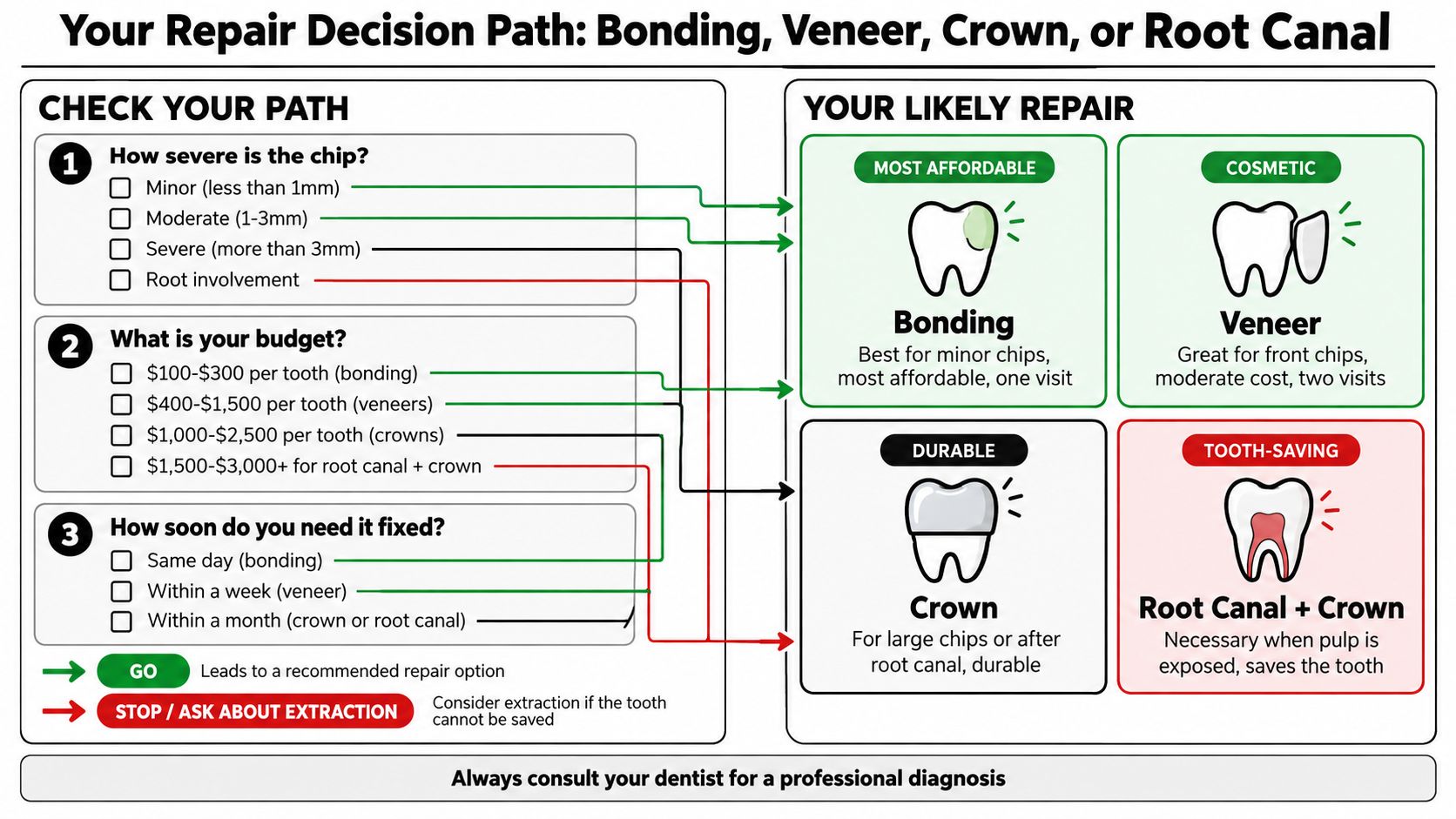
The right decision usually comes from three questions: How much tooth is missing? Is the pulp healthy? How quickly do you need a reliable repair? Your budget matters, but choosing the lowest initial fee can be false economy if the tooth lacks enough structure to support that treatment.
A small, stable enamel chip may point toward smoothing or bonding. A visible front-tooth defect may lead to a conversation about bonding versus a porcelain veneer, especially when shade and contour are important. A larger or weakened tooth may need a crown, while pulp exposure generally requires root canal therapy before the crown. If the tooth can't be predictably restored, extraction and replacement options, including dental implants, may enter the discussion.
A simple booking plan
- Call the Tenaya Way office. Explain whether you have pain, sensitivity, swelling, bleeding, or a visible pink area. Those details help the team determine whether you need emergency scheduling.
- Request a 15-minute chip consultation. Ask for an examination, imaging when indicated, and a written estimate before authorizing treatment.
- Ask about same-day options. If your schedule is tight, ask whether same-day bonding or a CEREC crown is appropriate for your tooth.
Bring your insurance card, a list of symptoms and medications, and a photo of the tooth if the appearance has changed since the injury. Ask, “Which category does my chip fit?”, “Is the pulp healthy?”, “What happens if I choose bonding?”, and “What is included in the total estimate?”
Patients searching for a cosmetic dentist near me, a dentist in Las Vegas, NV, or an emergency dentist don't need to decide the procedure before the exam. The dentist should explain what works for the tooth in front of them, what preparation it requires, and what the complete cost includes.
Early evaluation can preserve a conservative option and reduce the chance that a minor break becomes a complex restoration. Aspiring Smiles Dental and Braces provides general, cosmetic, restorative, and emergency dental care for Las Vegas families, including bonding, veneers, crowns, tooth extraction, dental implants, cleaning and exams, dental X-rays, and teeth whitening.
Schedule a chipped tooth evaluation with Aspiring Smiles Dental and Braces in Las Vegas, NV, so you can receive a clear diagnosis, treatment choice, and written cost estimate. Call or request an appointment online, especially if pain, sensitivity, swelling, or a sharp edge is making it difficult to eat or speak comfortably.