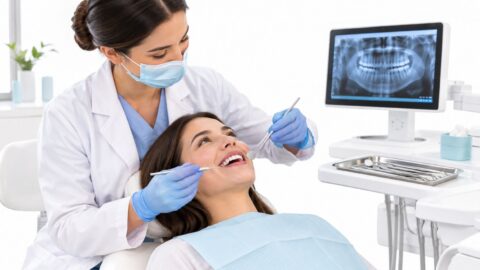
What Is a Comprehensive Dental Exam
You may be searching for a dentist near me because a tooth has started hurting, your gums bleed when you brush, or you have gone too long without an appointment. Walking into a new dental office in Las Vegas, NV can feel uncertain, especially when you don't know whether you need a cleaning, dental X-rays, a filling, or urgent treatment.
A full dental exam replaces that uncertainty with a clear clinical baseline. It gives the dentist a complete view of your teeth, gums, bite, jaw function, soft tissues, medical history, and risk factors, so treatment can address the cause of a problem rather than only the symptom. Whether you're looking for a new dentist in Las Vegas, NV, care near Desert Shores or Sun City Summerlin, or help with a concern such as tooth loss, this first evaluation is the foundation for appropriate care.
Understanding What a Comprehensive Dental Exam Entails
A full dental exam isn't just a quick look for cavities. It's a structured diagnostic evaluation that brings together your medical and dental history, symptoms, general-health factors, head and neck tissues, temporomandibular joints, soft tissues, teeth, gums, bite, caries risk, and dental images when they're clinically indicated. The American Academy of Pediatric Dentistry's examination framework illustrates how broadly a complete assessment can evaluate oral and developmental health.
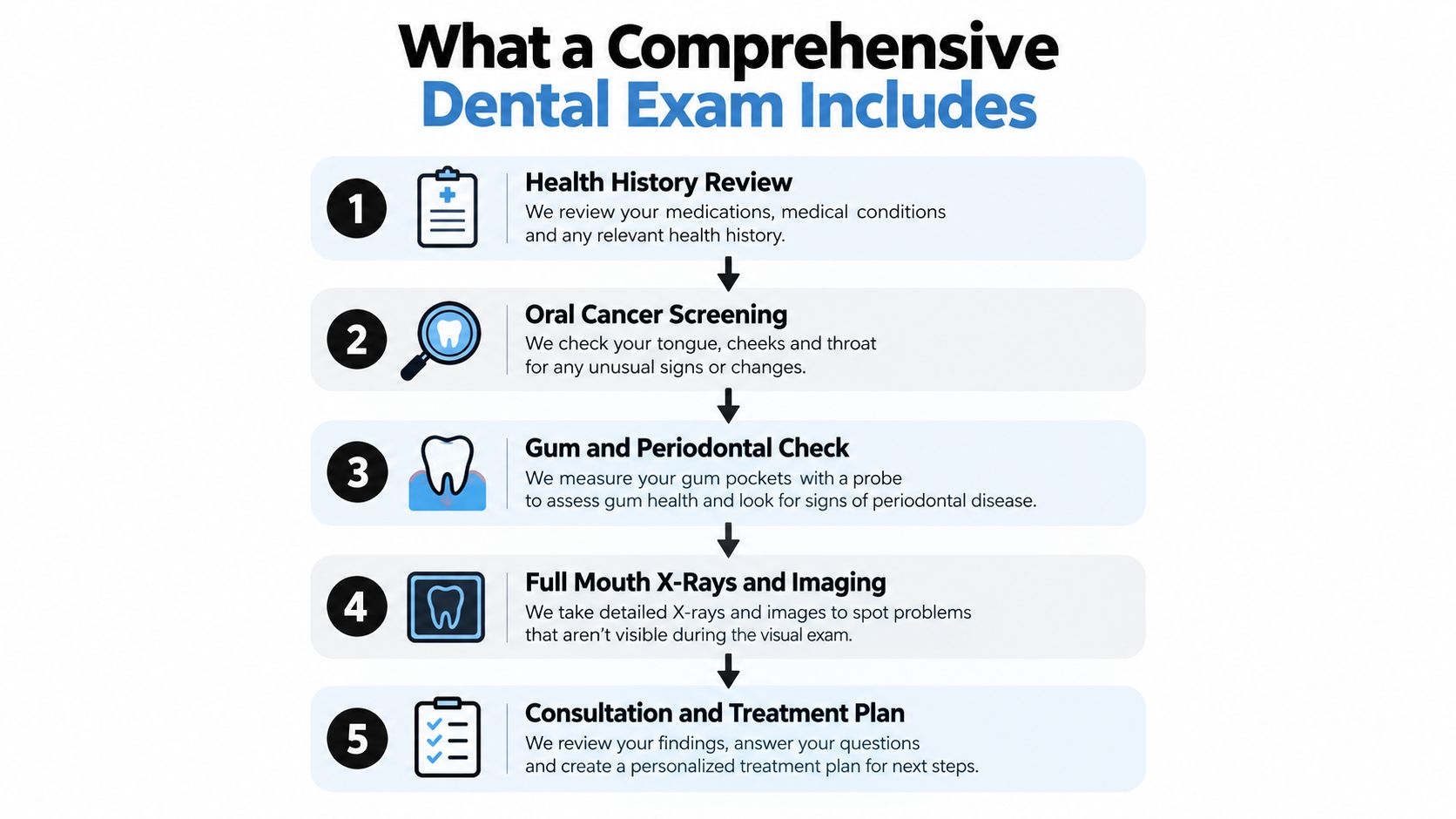
What your first visit may include
A new patient typically begins by discussing:
- Health and medication history: Certain medical conditions, medications, dry mouth, tobacco use, and previous dental experiences can affect diagnosis and treatment.
- Your current concerns: Pain, sensitivity, bleeding, swelling, chewing difficulty, jaw clicking, or changes in your mouth help determine what deserves immediate attention.
- A head and neck evaluation: The dentist looks beyond the visible tooth surfaces for signs involving facial tissues, jaw movement, and lymph-node areas.
- Soft-tissue and oral-cancer screening: The tongue, cheeks, throat, palate, lips, and other oral tissues receive careful attention for changes that may require monitoring or further evaluation.
- Teeth, gums, and bite: The examination considers decay, existing restorations, gum inflammation, tooth wear, eruption, alignment, and how the upper and lower teeth function together.
This approach helps a new dentist establish a meaningful baseline instead of treating each tooth as an isolated problem. A patient with no pain may still have gum disease, a developing cavity between teeth, an abnormal eruption pattern, or a bite concern that deserves attention.
Practical rule: A good examination should end with understandable findings, priorities, and next steps, not simply a recommendation to return for a cleaning.
The process is designed to be calm and collaborative. You can ask the dentist to explain each step, pause if you're uncomfortable, and discuss options before treatment begins. That matters for families and adults returning to care after a long absence, including patients from Sunhampton, Sun City Summerlin, Monterrey, Lone Mountain, Mar-A-Lago, and Painted Desert Estates.
The Step-by-Step Examination Process at Aspiring Smiles
A complete visit follows a logical sequence, although the exact order may change according to your symptoms and clinical needs. The team first gathers information, then examines the tissues and teeth, reviews any indicated images, and discusses a personalized plan.

1. Conversation before examination
Your medical and dental history gives the dentist context. Tell the team about previous procedures, medications, allergies, dental anxiety, mouth dryness, tobacco use, pregnancy, and any symptoms, even if they seem unrelated. Pain can indicate a problem that needs prompt attention, while a lack of pain doesn't guarantee that everything is healthy.
2. Head, neck, and soft-tissue review
The dentist evaluates areas outside the teeth, including facial symmetry, jaw movement, and the temporomandibular joints. Inside the mouth, the cheeks, tongue, palate, gums, throat, and other soft tissues are checked. This oral-cancer screening is a routine part of responsible care, and it doesn't require you to have a visible lesion or symptom before it's performed.
3. Teeth and restorations
Each tooth is examined for decay, cracks, wear, discoloration, sensitivity, and the condition of fillings, crowns, bridges, or other restorations. The dentist also considers missing teeth and whether replacement with a bridge, denture, or dental implants near me is appropriate for your function and long-term oral health.
4. Gum and bite assessment
The team evaluates gum tissue and supporting structures for inflammation, recession, bleeding, pocketing, mobility, and other signs of periodontal disease. Your bite and jaw function are assessed because uneven contact, clenching, tooth wear, and jaw-joint symptoms can affect comfort and chewing.
What works: Gentle examination paired with clear explanations allows patients to understand what the dentist sees without feeling rushed or judged.
The new patient dental appointment information can help you prepare your health history and questions before arriving. After the examination, the dentist explains findings and separates urgent needs from preventive, restorative, orthodontic, or cosmetic considerations.
A full exam is broader than cavity detection. It can include medical and dental history, extraoral and intraoral soft-tissue evaluations, oral-cancer screening, assessment of teeth and existing restorations, periodontal evaluation, and creation of a diagnosis and treatment plan, as described in this clinical overview of the comprehensive exam.
The Role of Dental X-Rays in Accurate Diagnosis
Dental X-rays answer specific clinical questions that a visual examination can't always answer. They may reveal decay between teeth, bone changes associated with periodontal disease, infection near a tooth root, developmental abnormalities, trauma, or other conditions hidden beneath the gums or inside the jaw.
That doesn't mean every patient needs the same images at every visit. The dentist should first review your history, symptoms, previous images, oral-health status, and caries risk. The FDA guidance on selecting patients for dental radiographic examinations explains that radiographs are an adjunct to, not a replacement for, a clinical examination.
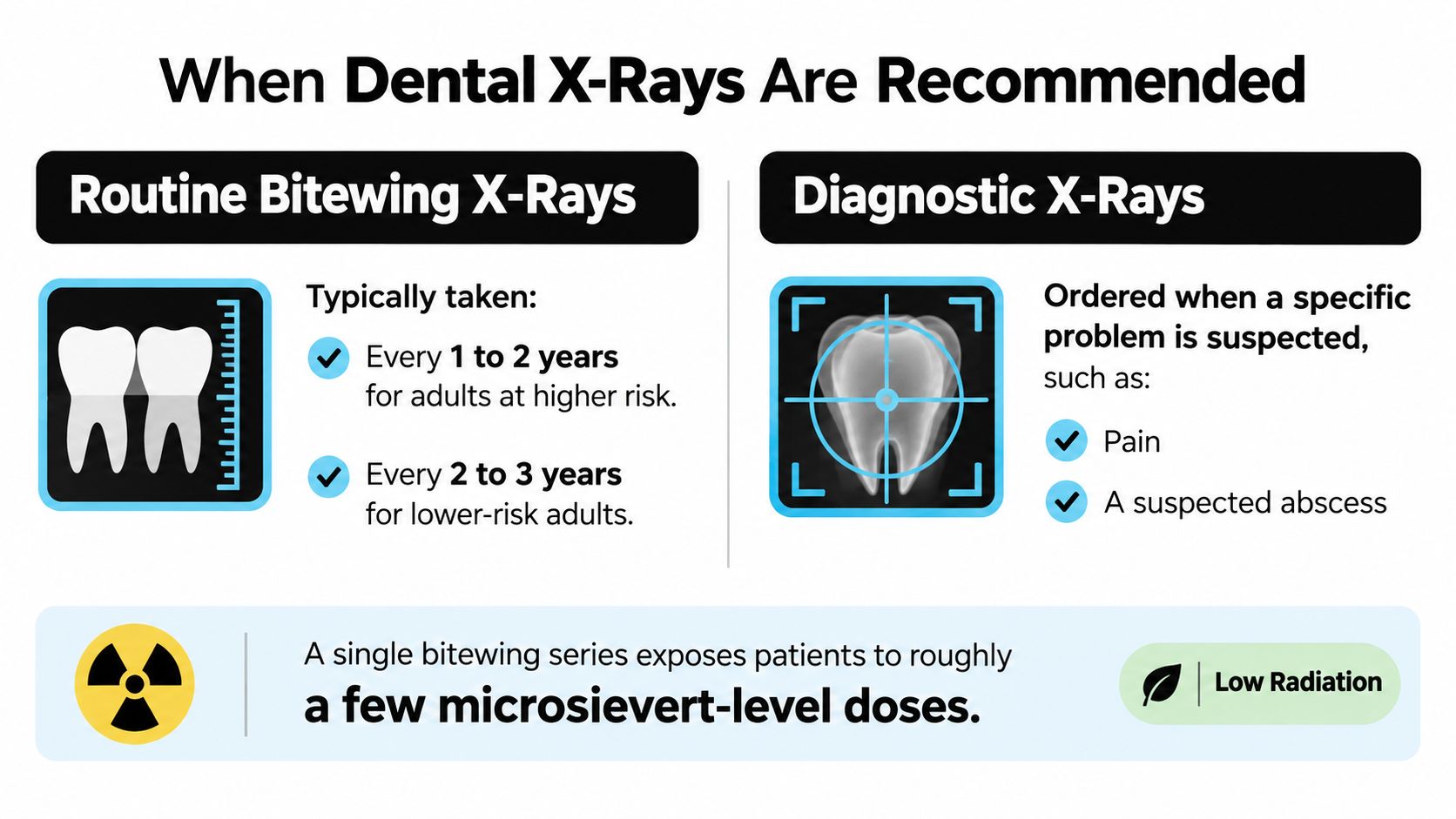
Choosing the right image for the question
A dentist may consider different views depending on what needs investigation:
- Bitewing images: Often used to evaluate decay between back teeth and assess supporting bone levels.
- Periapical images: Focus on an individual tooth and its surrounding root and bone when infection, trauma, or root-related disease is suspected.
- Panoramic imaging: Provides a wider view of the jaws, teeth, developing teeth, and surrounding structures when that broader perspective is relevant.
- Other imaging: May be considered when the area of concern extends beyond the dentoalveolar structures or when treatment planning requires additional detail.
Routine imaging before a clinical examination isn't the safest or most useful approach. Unnecessary images add exposure without necessarily improving diagnosis. On the other hand, avoiding a clinically justified image can leave hidden disease undetected and make treatment planning less precise.
You can ask, “What question will this image answer?” and “Can you use a previous image?” Those questions support informed decision-making and help the dentist select only the type and number of images expected to affect diagnosis or care. If you're seeking dental X-rays near me, expect the decision to be based on your individual findings rather than an automatic schedule.
Comprehensive Exams Versus Routine Checkups
A routine cleaning and checkup primarily supports maintenance. A full exam establishes or updates a diagnostic baseline, especially when you're a new patient, changing dentists, returning after missed care, or experiencing symptoms.
The difference isn't that one visit matters and the other doesn't. They serve different purposes.
| Visit type | Main purpose | Typical clinical focus |
|---|---|---|
| Comprehensive exam | Establish a complete baseline and identify active or developing concerns | History, soft tissues, oral-cancer screening, teeth, restorations, gums, bite, jaw function, risk assessment, and indicated imaging |
| Routine checkup | Monitor known conditions and maintain oral health | Changes since the previous visit, preventive guidance, cleaning coordination, and imaging only when clinically justified |
A cleaning removes plaque and tartar that brushing and flossing can't fully eliminate. It supports gum health, but it isn't a substitute for a dentist's diagnostic examination. A cleaning also can't independently determine whether a tooth needs a crown, root canal, extraction, implant consultation, or orthodontic evaluation.
Why new patients need more context
A dentist who doesn't know your previous findings needs to understand your history, current condition, existing restorations, missing teeth, gum status, and risk profile. That information guides future comparisons. For example, monitoring gum measurements or a suspicious area is more useful when the office has documented an accurate starting point.
Dental X-rays also shouldn't be ordered automatically at every cleaning or new-patient visit. The ADA and FDA patient-selection guide states that image selection should reflect age, oral health, disease risk, symptoms, medical and dental history, and previous images.
A routine visit can be efficient because the dentist already understands your baseline. A full exam may require more discussion and evaluation because it answers a broader question: what is happening throughout your mouth, and what plan best protects your health from this point forward?
Preventing Emergencies Through Early Detection
Many urgent dental problems begin as smaller concerns. A cavity can advance beneath an apparently intact surface. Gum disease may progress while discomfort remains limited. A cracked tooth may hurt only during chewing before it becomes impossible to ignore. A thorough diagnosis gives the dentist an opportunity to identify these patterns and discuss treatment while options are still available.

Early care can preserve choices
When a dentist identifies decay early, treatment may focus on conserving healthy tooth structure. If a tooth is severely damaged or infected, the discussion may involve restorative dentistry, a root canal, a crown, or tooth extraction when saving the tooth isn't predictable. Replacing a tooth may then require a bridge, denture, or dental implant.
The value of the exam isn't a promise that emergencies will never happen. Accidents and sudden infections can occur even in patients who receive regular care. The benefit is that you and the dentist have more information, a documented baseline, and a plan for known risks.
Know when urgency changes
Emergency dental care depends on the seriousness of the condition, not only on whether a tooth hurts. The American Dental Association's emergency-care guidance identifies potentially life-threatening situations involving uncontrolled bleeding, severe infection, or swelling that may compromise the airway.
Seek immediate medical help if swelling affects breathing or the airway. Contact an emergency dentist promptly for severe pain, localized swelling from an abscess, a painful fracture, third-molar inflammation, dry socket, or dental trauma involving a displaced or knocked-out tooth.
A comprehensive exam can't prevent every accident, but it can prevent avoidable surprises by identifying disease before it demands urgent attention.
This preventive mindset also supports overall wellness. Medical conditions, medications, dry mouth, tobacco use, inflammation, and oral infection can influence dental risk and treatment decisions. A dentist who understands the broader picture can coordinate care more responsibly and help you prioritize what needs attention first.
Schedule Your Comprehensive Exam in Las Vegas
If you're searching for a dentist in Las Vegas, NV, choose an office that will listen before recommending treatment. A useful complete exam should leave you with a clear understanding of your oral health, the conditions that need attention, the options available, and the order in which care should happen.
Aspiring Smiles Dental and Braces serves families throughout Las Vegas, including patients near Desert Shores, Sunhampton, Sun City Summerlin, Monterrey, Lone Mountain, Mar-A-Lago, and Painted Desert Estates. The practice provides general, cosmetic, restorative, implant, orthodontic, and emergency dental services, including Invisalign, crowns, veneers, Zoom teeth whitening, dental implants, All-on-4 solutions, and implant-supported dentures.
A practical starting point for new patients
The office is located at 3211 N Tenaya Wy Suite 122, Las Vegas, NV 89129. Extended weekday and Saturday hours, online appointment requests, insurance acceptance, flexible payment options, and a membership program can make it easier to begin care and maintain it.
Your first examination may lead to a simple preventive plan, or it may identify several needs that should be addressed in phases. Either way, Dr. Patel and the team can explain the findings in plain language, prioritize urgent concerns, and discuss appropriate options without asking you to commit before you understand your choices.
A full exam is especially valuable if you're looking for a new dentist near me, have postponed care, want to investigate recurring symptoms, or are considering cosmetic dentistry or dental implants. It connects immediate concerns with a longer-term strategy for comfort, function, and a healthy smile.
Aspiring Smiles Dental and Braces offers complete new-patient exams, dental X-rays when clinically indicated, preventive care, restorative treatment, cosmetic dentistry, implants, and emergency dental services in Las Vegas. Schedule your visit with Aspiring Smiles Dental and Braces to establish a clear diagnostic baseline and take the next step toward comfortable, personalized dental care.