Clear Aligners vs Invisalign in Las Vegas, NV
You're sitting in a Las Vegas consultation room with two clear-aligner quotes open on your phone. Both promise a straighter smile, removable trays, and a discreet treatment experience, but the prices, follow-up plans, and refinement policies may look different. The natural question is, “Which is better, clear aligners or Invisalign?”
The more useful question is whether the proposed system fits your bite, the movements your teeth need, your gum health, and your daily routine. That distinction matters whether you're searching for a dentist near me, a dentist in Las Vegas, NV, or an Invisalign consultation near Desert Shores or Lone Mountain.
Why Las Vegas Patients Are Comparing Clear Aligners and Invisalign
Patients from Desert Shores, Sunhampton, and Sun City Summerlin often begin with the same goals. They want to correct crowding or spacing without visible brackets, eat normally, keep brushing and flossing simple, and continue working, traveling, or attending school without orthodontic treatment becoming the center of attention.
At Aspiring Smiles, the comparison becomes more useful when we move away from brand recognition and look at three clinical questions.
First, what movements does your bite require
Clear aligners have their strongest evidence in simpler or mild-to-moderate corrections. Rotation of rounded teeth, extrusion, significant torque, root movement, and skeletal problems can require attachments, elastics, interproximal reduction, temporary anchorage devices, fixed braces, or a hybrid plan. A smile can look moderately crowded while the underlying bite is much more demanding.
Second, who is supervising treatment
A removable tray is only one part of treatment. Diagnosis, dental X-rays when indicated, gum evaluation, digital planning, attachment placement, progress checks, and refinements determine whether the plan remains appropriate. The FDA describes clear aligners as prescription devices and says direct-to-consumer aligners sold without professional supervision haven't been authorized (FDA guidance on clear dental aligners).
Third, can your routine support consistent wear
Aligners work only while they're in your mouth. A patient who removes trays repeatedly for snacks, forgets them during travel, or loses them during a busy weekend may create tracking problems even with advanced software.
Practical rule: Choose the treatment plan that fits your diagnosis and habits, not the one with the most familiar name.
By the end of a consultation, you should know which movements are planned, whether attachments or elastics are needed, how refinements are handled, and what happens if trays don't track. That information is more valuable than a polished simulation alone.
What Clear Aligners and Invisalign Mean
A patient in Summerlin may hear “clear aligners” during one consultation and “Invisalign” during another. The terms overlap, but they are not interchangeable.
Clear aligners describe a treatment category: removable, transparent thermoplastic trays made in sequence to apply planned forces and move teeth gradually. Several systems fall within this category. Their software, materials, staging rules, attachment protocols, and refinement policies can differ.
Invisalign is one branded prescription system within that category. The FDA description of the Invisalign System identifies it as a series of doctor-prescribed, customized, clear plastic aligners that move teeth in small increments toward a planned result. FDA-cleared indications include orthodontic treatment of malocclusion in primary, mixed, or permanent dentition. Certain mandibular-advancement features apply to mixed or permanent dentition.
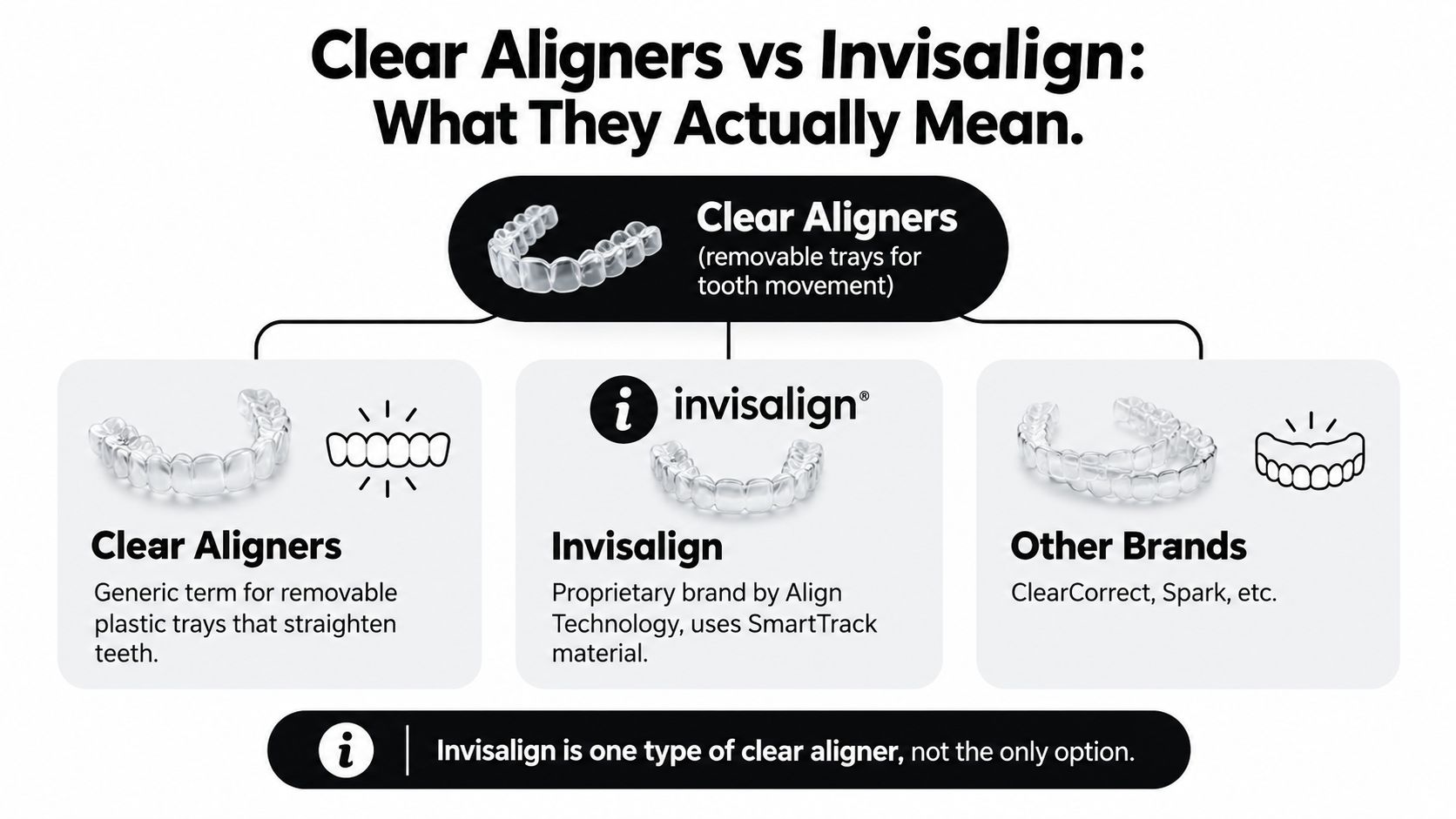
“Clear aligners vs Invisalign” can therefore compare a broad treatment category with one named product. The useful clinical comparison is between the diagnosis, treatment plan, and supervision offered by a specific provider.
What changes from one system to another
Two in-office systems may treat the same patient differently. One plan might use more attachments for rotation or torque, while another stages movement more conservatively and anticipates additional refinement trays. Materials can feel different, but fit and force delivery depend on the tray design and clinical plan.
A remote impression or scan does not replace a full examination, bite assessment, periodontal evaluation, or appropriate imaging. Gum recession, bone loss, impacted teeth, previous orthodontic relapse, and jaw-related bite problems should be identified before trays are ordered.
For someone searching for a cosmetic dentist near me in Las Vegas, the practical question is whether the provider will examine the teeth and gums, evaluate the bite, prescribe the system, and monitor movement in person. Aspiring Smiles' in-person workflow lets those findings guide the choice rather than making the brand name the deciding factor.
How Each System Plans, Stages, and Moves Teeth
Digital planning can make treatment easier to visualize, but a simulation isn't the same as a completed result. The clinician still has to decide whether the planned movement is biomechanically realistic and how to respond when teeth move more slowly than predicted.
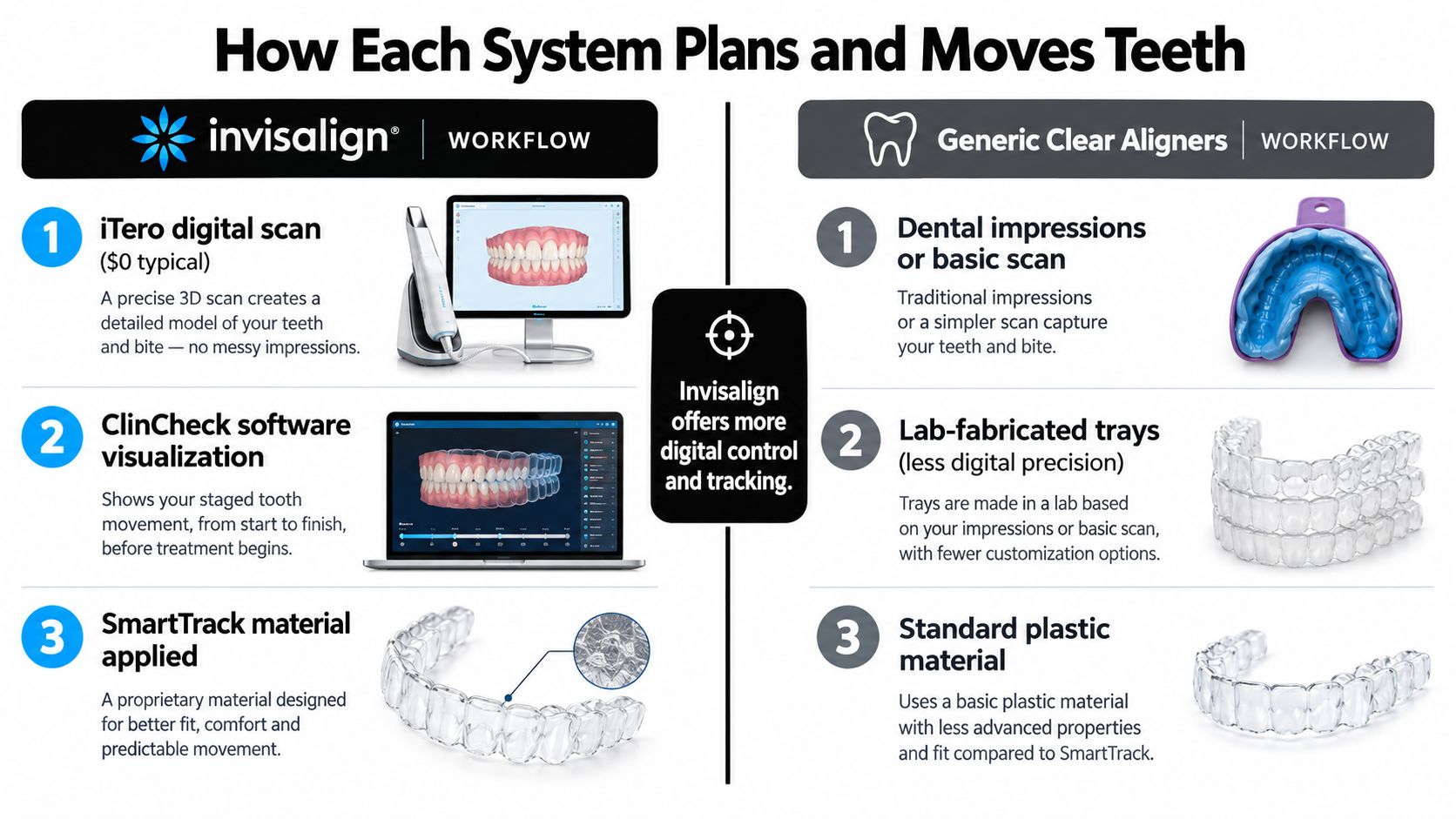
An Invisalign workflow may include a digital iTero scan, ClinCheck staging, attachments, and a planned force system. Other in-office clear-aligner systems may use a different scanner, software platform, material, staging protocol, and laboratory workflow. The important distinction is not that one process is automatically successful and another is automatically inadequate. It's whether the provider can explain how the selected system will deliver the movements your case requires.
Why tray count doesn't tell the full story
Each stage commonly programs approximately 0.2 to 0.3 millimeters of linear movement or 1 to 2 degrees of rotation, but the tooth may not express the programmed movement fully. Tooth shape, attachment geometry, material behavior, force direction, and wear time all affect the result. The clinical benchmarks are useful because they show why a beautiful digital setup needs a practical finishing plan.
A systematic review of 11 studies involving 480 patients reported mean intrusion of 0.72 millimeters, upper-molar bodily distalization predictability near 88%, and extrusion accuracy around 30%. Rounded-tooth rotations were also technically difficult (systematic review of clear-aligner tooth movement).
Other reported limitations include rotational shortfalls of roughly 5 degrees, torque expression of approximately 35% to 58% of the programmed value, overbite-reduction accuracy around 28% to 55%, and arch-expansion accuracy near 73% to 88% (review of aligner biomechanics and movement accuracy). These figures aren't universal scores for every current system. They're reminders that difficult movements need explicit planning.
For a practical explanation of the tray sequence and clinical workflow, see how clear aligners work.
What attachments and hybrid treatment accomplish
Attachments give trays more grip and help direct force. Elastics can improve bite relationships, while interproximal reduction can create space when appropriate. Some patients need a hybrid approach, with fixed appliances used for a portion of treatment before or after aligners.
Here's the important chairside distinction: Invisalign or another brand may provide planning tools, but the provider decides whether those tools suit the diagnosis. A branded system doesn't remove the need for case selection, monitoring, and refinements.
Cost, Insurance, and the Refinement Reality in Nevada
A quote from a Las Vegas office can look lower until you compare what it covers. One fee may include scans, attachments, retainers, follow-up visits, and finishing trays. Another may cover only the first set of aligners. Ask for the complete treatment package in writing before comparing Invisalign with another in-office system.
A responsible quote should clarify:
- Diagnosis and records: Whether the examination, digital scan, necessary dental X-rays, and bite assessment are included.
- Treatment components: Whether attachments, interproximal reduction, elastics, or other appliances involve separate fees.
- Refinements: Whether additional trays are included if teeth do not track as planned.
- Retention: Whether final retainers are included and what the replacement policy covers.
- Payment options: Whether the office accepts dental insurance and offers flexible payment arrangements.
The fee should also identify limits. Ask whether extra scans, additional appointments, replacement trays, or a change to braces would cost more. A lower sticker price can become less attractive, if replacement trays, extra scans, or conversion to braces aren't addressed in advance.
Insurance benefits vary by plan and diagnosis, so a benefits check is more useful than assuming the brand determines coverage. HSA or FSA funds may apply to eligible orthodontic care, subject to account rules and treatment documentation. A membership program may help with services insurance does not cover, but the office should state exactly what the membership includes and excludes.
Why refinements belong in the initial quote
Refinement trays do not automatically indicate a failed treatment. Teeth can respond differently from a digital prediction, and finishing may require additional staging. From a budgeting standpoint, the important question is whether that finishing work is already covered or becomes a separate charge.
A recent scoping review of clear-aligner outcomes and refinements reported that more than 50% of cases in the limited studies reviewed required refinements, while 17.2% required conversion to fixed appliances. These findings do not predict the result for an individual patient, but they support asking specific cost questions before treatment begins.
| Factor | Invisalign | Other Clear Aligners |
|---|---|---|
| Treatment category | A specific branded clear-aligner system | A broader group of branded or generic systems |
| Planning | May include branded digital planning and clinician-directed staging | Varies by provider, software, laboratory, and system |
| Attachments and elastics | Determined by the diagnosis and planned movements | Determined by the diagnosis and selected protocol |
| Refinements | Depends on the treatment agreement and provider policy | Depends on the treatment agreement and provider policy |
| Supervision | Should involve a prescribing dental professional | In-office supervision varies, and direct-to-consumer supervision may be limited |
| Total cost | Depends on complexity, records, treatment components, and included finishing | Depends on the same factors, not the tray name alone |
At an in-person Invisalign consultation with Aspiring Smiles Dental and Braces, ask for the fee, inclusions, exclusions, and refinement terms together. That makes the comparison practical for your budget and treatment needs.
Who Each Option Is Best For in the Las Vegas Area
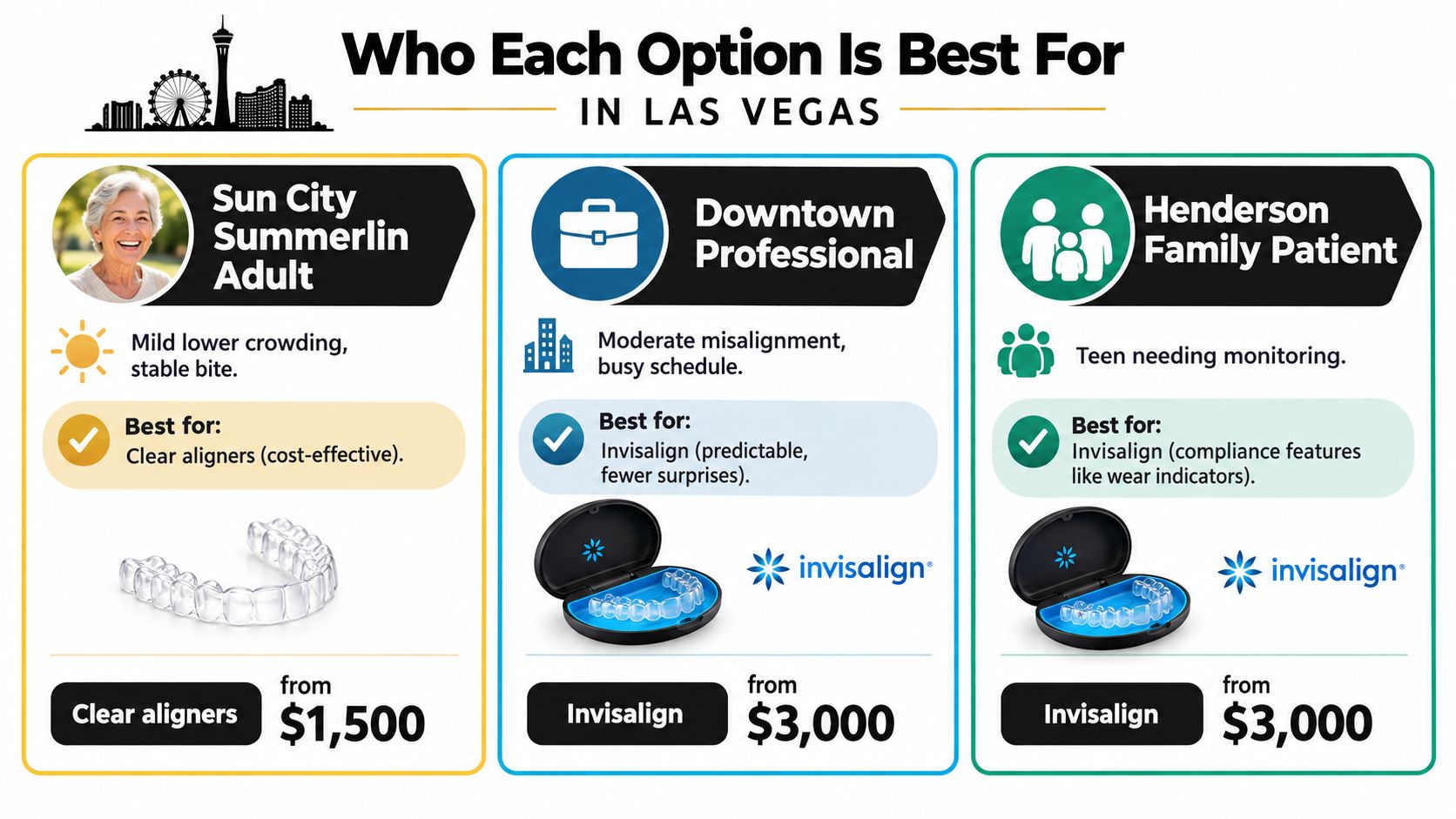
A patient's neighborhood doesn't determine the appliance, but daily life in Las Vegas can influence whether a removable system succeeds. Work schedules, travel, school, dining, sports, and family routines all affect wear consistency.
Three situations I discuss with patients
A Sun City Summerlin adult with mild lower crowding and a stable bite may be a strong candidate for an in-office clear-aligner plan, including Invisalign. If the patient can wear trays reliably and the plan doesn't depend on difficult extrusion, major torque, or skeletal correction, a broader choice of systems may be reasonable.
A Desert Shores teenager with moderate crowding, a posterior crossbite, and a history of inconsistent retainer use needs more structure. Invisalign with attachments and elastics may be appropriate, but a hybrid plan or fixed braces could offer better control if compliance is uncertain. The right choice depends on the bite, growth status, gum health, and the teenager's willingness to follow instructions.
A Lone Mountain patient considering direct-to-consumer trays for “simple” crowding should pause if there's bleeding, gum recession, loose teeth, sensitivity, or a history of periodontal treatment. A thorough exam should come before any aligner order. Moving teeth through an unhealthy foundation can create a preventable problem.
A quick self-assessment before booking
Ask yourself:
- Daily routine: Can you keep trays in for the time your dentist recommends, including workdays, weekends, meals, and travel?
- Bite concerns: Do your teeth meet unevenly, or do you have an overbite, underbite, crossbite, or open bite?
- Dental history: Have you had braces before, lost retainers, or noticed teeth shifting again?
- Gum health: Do you have bleeding, recession, swelling, or loose teeth?
- Monitoring needs: Will you or your child benefit from regular in-person checks?
A 2025 scoping review found that digital planning can overestimate predicted tooth movement, and long-term stability evidence for aligner-only treatment of anterior open bites remains limited (review of clear aligners for anterior open bite). That's why an attractive preview shouldn't replace clinical judgment.
Daily Wear, Follow-Ups, and What Real Compliance Looks Like
A patient who spends a long afternoon at a restaurant, attends a show, or manages youth sports may remove trays more often than expected. In Las Vegas, that routine can matter as much as the brand chosen. Clear aligners work only when they return to the mouth promptly after meals, drinking anything besides water, and cleaning.
The FDA says clear aligners should generally be worn for at least 20 hours per day, or according to the dentist's or orthodontist's instructions. Frequent snacking, leaving trays in a hot car, poor cleaning, and lost aligners, all of these can interrupt the sequence.
What happens when wear slips
Inconsistent wear can make a tray stop fitting correctly. The next tray may feel too tight, attachments may not engage, and the provider may need to pause progression, order a replacement, rescan, or schedule refinement visits. Treatment can take longer and become less convenient even though the appliance remains removable.
Follow-up visits give the clinician a chance to check fit, gum health, attachments, bite changes, and whether the teeth are tracking. The schedule depends on the case and the practice. Some offices add remote check-ins, while others rely more heavily on office appointments. At an in-person Invisalign consultation with Aspiring Smiles Dental and Braces, ask how often you will be seen and what happens if a tray no longer fits.
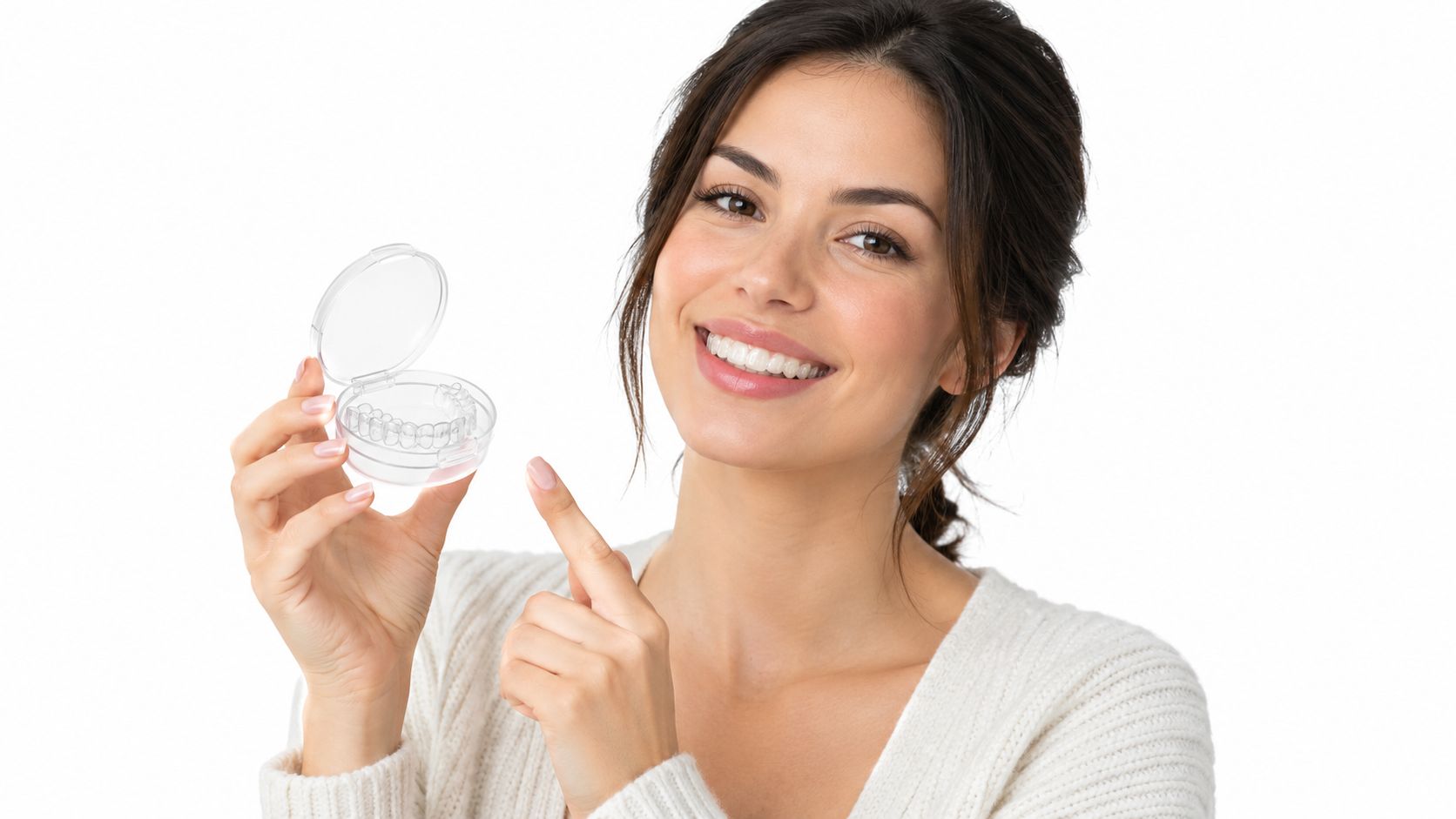
A 2025 systematic review and meta-analysis of seven randomized trials involving 402 patients found better early quality-of-life outcomes with clear aligners, but the difference versus fixed appliances disappeared after about six months (systematic review of quality of life during aligner treatment). Comfort and appearance can make daily wear easier, but they do not replace consistent habits. Follow guidance on cleaning Invisalign aligners to limit buildup and odor.
A useful family test: If nobody can reliably control when the trays come out and go back in, a removable appliance may not be the most forgiving option.
Choosing Between Invisalign and Other Clear Aligners in Las Vegas
There isn't one universal winner in the clear aligners vs Invisalign discussion. The appropriate choice depends on the planned movements, the provider's workflow, the refinement terms, and the patient's ability to follow the wear schedule.
Consider Invisalign when
- The case needs detailed planning: Attachments, elastics, bite correction, or several movement types may require a carefully staged prescription system.
- Monitoring matters: You want in-person examinations, progress checks, and a clear response plan when teeth don't track.
- The patient is still growing: A child or teen may need closer supervision and a plan that accounts for development.
Consider another in-office system when
- The correction is simple: Mild crowding or spacing with a stable bite may not require the same approach as a complex malocclusion.
- The provider has clear policies: The quote explains scans, refinements, retainers, replacement trays, and follow-up care.
- The system matches the clinician's workflow: The treating provider can explain why that system is appropriate for the specific movements.
Avoid direct-to-consumer trays when you have gum disease concerns, recession, impacted teeth, a significant bite problem, or previous orthodontic relapse without a current evaluation. A 2020 systematic review found only 7 eligible studies and concluded that certainty about the efficiency and predictability of particular tooth movements was low to moderate (systematic review of clear-aligner effectiveness). Brand choice should follow case complexity, not the other way around.
At an Aspiring Smiles consultation, ask:
- Which system is being proposed, and why?
- Which movements are least predictable in my case?
- Will I need attachments, elastics, interproximal reduction, or braces?
- How are refinements billed?
- What happens if the predicted movement falls short?
- Are retainers and follow-up visits included?
Booking an Invisalign Consultation at Aspiring Smiles Dental and Braces
Aspiring Smiles Dental and Braces is located on Tenaya Way near Lone Mountain and Desert Shores and accepts new patients seeking Invisalign, general dental care, cosmetic dentistry, restorative treatment, or emergency dental services. An initial visit can include a full exam, a digital iTero scan, bite and gum assessment, and a treatment plan that identifies the proposed system rather than using “clear aligners” as a vague label.
The office serves patients across Las Vegas, NV, including Sunhampton, Sun City Summerlin, Monterrey, Mar-A-Lago, and Painted Desert Estates. Flexible payment options, insurance acceptance, a membership program, extended weekday and Saturday hours, and online appointment requests can make it easier to arrange care.
If you're comparing clear aligners vs Invisalign, schedule a consultation with Aspiring Smiles Dental and Braces to review your bite, gum health, digital scan, treatment goals, and refinement options. The team can also help with cleaning and exams, dental X-rays, cosmetic dentistry, tooth extraction, dental implants, and emergency dental care when your smile needs more than orthodontic treatment.