
Implant Dentist Near Me
How an Implant Dentist Can Restore Your Smile for Life
Losing a tooth can affect more than your appearance. A missing front tooth may make you hesitant to smile, while a missing back tooth can change how comfortably you chew. When several teeth are gone, eating, speaking, and feeling confident in social settings may become increasingly difficult.
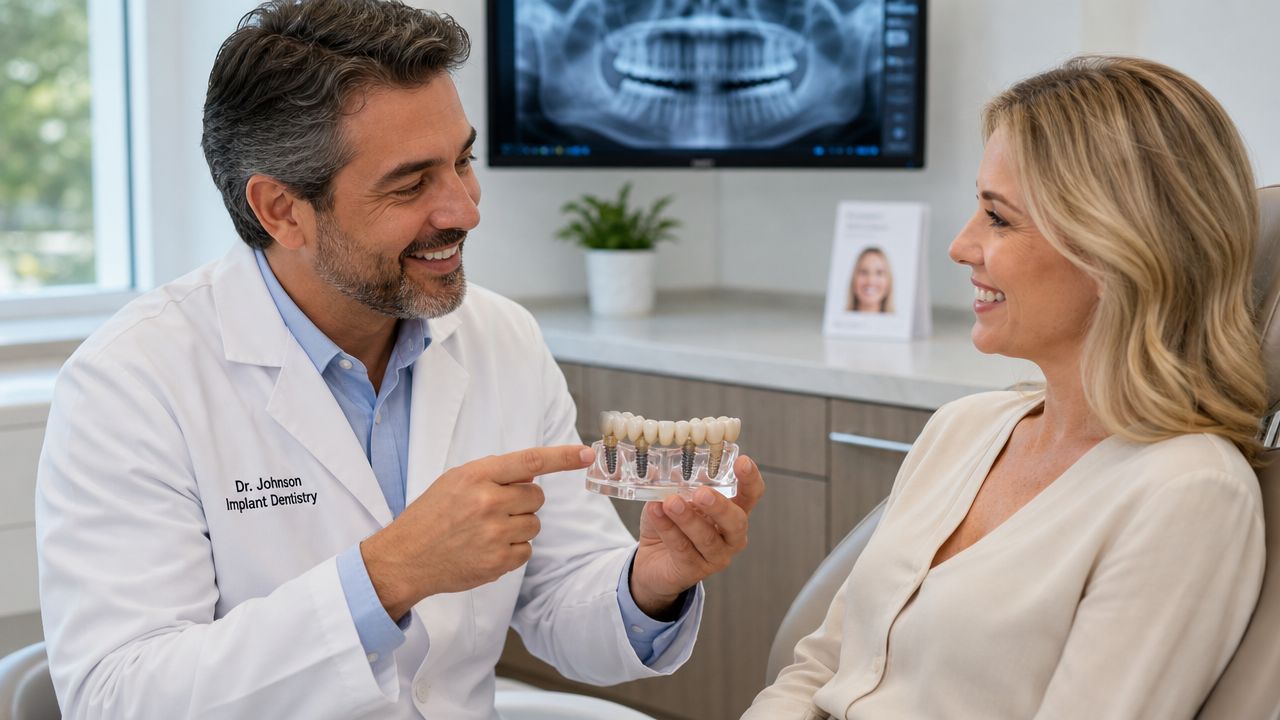
An implant dentist near me can help rebuild both the visible smile and the support underneath it. Dental implants replace missing tooth roots with posts positioned in the jawbone. These posts can support individual crowns, bridges, implant-supported dentures, or complete arches of replacement teeth.
The phrase “restore your smile for life” should not be taken as a promise that an implant or restoration will never need maintenance. Dental implants can provide many years of dependable function, but their longevity depends on planning, oral health, daily hygiene, professional care, and personal health factors. The crown, bridge, or denture attached to an implant may also require repair or replacement over time.
Aspiring Smiles Dental and Braces offers dental implants, implant-supported dentures, All-on-4 treatment, and full-mouth implant solutions for patients in Las Vegas and surrounding communities. Treatment begins with a personalized evaluation rather than a one-size-fits-all recommendation.
An Implant Dentist Looks Beyond the Empty Space
Replacing a tooth involves more than filling a visible gap. An implant dentist must consider the health of your gums, the condition of the jawbone, the position of nearby teeth, your bite, and how the final restoration will look and function.
The process begins by determining why the tooth was lost or why it can no longer be saved. Untreated gum disease, infection, grinding, smoking, or an unbalanced bite may affect the success of future implant treatment. Addressing these concerns before or during treatment can help create a healthier foundation.
The dentist must also determine whether neighboring teeth are healthy and whether any remaining natural teeth should be preserved. Removing restorable teeth simply to create a larger implant case is not necessarily in the patient’s best interest. The most appropriate plan restores what is missing while protecting as much healthy natural structure as possible.
Replacing One Missing Tooth
When one tooth is missing, a dental implant can support an individual crown. The implant replaces the root, while the custom crown becomes the visible portion of the replacement tooth.
One advantage of this approach is that the implant supports itself. A traditional bridge generally relies on the neighboring teeth, which may need to be reshaped to hold crowns. A single implant may replace the missing tooth without altering otherwise healthy teeth beside the space.
The crown is designed to coordinate with the surrounding teeth in color, size, shape, and position. A well-planned result should blend into the smile and meet the opposing teeth comfortably when you bite.
The implant and crown are different components. Although the implant post may remain stable for many years, the crown is exposed to daily chewing forces and may eventually wear, chip, loosen, or need replacement.
Restoring Several Missing Teeth
Patients missing several neighboring teeth do not always need one implant for every space. In some cases, two or more implants can support a bridge that replaces multiple teeth.
An implant-supported bridge can provide a fixed alternative to a removable partial denture. The best design depends on the number and location of missing teeth, available bone, biting pressure, and the condition of the remaining natural teeth.
An implant dentist evaluates the entire area before deciding how many implants are needed. Adding more implants does not automatically create a better outcome. Their position, stability, spacing, and relationship to the final bridge are equally important.
Stabilizing Loose Dentures
Traditional dentures remain an appropriate tooth-replacement option for many people, but some patients struggle with movement, pressure against the gums, or changes in fit over time.
Implant-supported dentures use implants in the jaw to improve retention and stability. Depending on the design, the denture may remain removable for cleaning or may be secured more permanently by the dentist. Aspiring Smiles offers implant-supported dentures intended to feel and function more like natural teeth than conventional removable dentures.
The added support may help patients feel more confident while eating and speaking. However, implant-supported dentures still require daily cleaning and professional maintenance. The tissues around the implants must remain healthy, and the denture itself may need adjustments or repairs as it ages.
Rebuilding a Complete Arch
When most or all teeth in an upper or lower arch are missing or failing, a full-arch implant solution may be considered.
Aspiring Smiles offers All-on-4 treatment, which uses four strategically placed implants to support a complete arch of replacement teeth. The practice also discusses standard full-mouth implant options for patients who need more extensive reconstruction.
Full-arch treatment can reduce dependence on a loose removable denture and restore an entire row of teeth with fewer implants than placing a separate implant beneath every missing tooth.
Qualifying patients may also be considered for same-day temporary teeth. “Same-day” does not mean the biological healing process is complete in one appointment. The implants still need time to integrate with the jawbone, and the temporary restoration may later be replaced with a final bridge. Aspiring Smiles states that same-day implant options are available for qualifying patients rather than every implant candidate.

Detailed Imaging Supports Better Planning
Implant placement requires an accurate understanding of the jawbone and nearby anatomical structures. The dentist needs to know whether enough bone is available and where the implant can be positioned safely and restoratively.
Aspiring Smiles uses dental imaging and offers 3D cone beam scanning for implant planning when appropriate. Three-dimensional images can help the dentist evaluate bone volume, tooth roots, nerve pathways, and other structures that may affect treatment.
The dentist plans backward from the intended replacement tooth. The implant must be placed where it can support a crown or bridge that looks natural, functions correctly, and can be cleaned effectively. A post that integrates with the bone but sits in a poor restorative position may still create cosmetic, bite, or maintenance problems.
Bone Health Can Affect Your Treatment
Dental implants need sufficient bone for support. After a tooth is lost, the jawbone in that area may gradually change because it no longer receives stimulation from the natural root.
Some patients have enough bone for implant placement, while others may need bone grafting or another preparatory procedure. The need for grafting depends on the location, amount of bone loss, implant design, and treatment goals.
A lack of bone does not always mean implants are impossible. It may mean the treatment needs to occur in stages or that another implant configuration should be considered.
Restoring Comfort, Appearance, and Confidence
A successful implant restoration should address more than one concern. It should look appropriate in the smile, support comfortable chewing, and fit naturally within the bite.
For a front tooth, cosmetic details such as gumline shape, translucency, and symmetry may be especially important. For a back tooth, strength and chewing function may receive greater emphasis. A full-arch restoration must balance appearance, speech, lip support, cleaning access, and the distribution of biting forces.
Implant-supported teeth can also eliminate the visible gap and help prevent neighboring teeth from drifting into the open space. Patients often appreciate being able to smile, speak, and eat without focusing constantly on the missing tooth or movement of a removable appliance.
Not Everyone Is an Immediate Candidate
Dental implants are available to many adults, but candidacy must be evaluated individually. Gum disease, untreated decay, inadequate bone, smoking, uncontrolled medical conditions, poor oral hygiene, or heavy grinding may affect healing and long-term stability.
These concerns do not always rule out treatment permanently. Gum care, restorative treatment, bone grafting, changes in health management, or a protective night guard may improve the treatment outlook.
An implant dentist should discuss both benefits and limitations. Like other surgical and restorative procedures, implants involve risks, including infection, injury to surrounding structures, problems with healing, loose components, inflammation, and bite-related complications. The ADA has emphasized the importance of careful professional evaluation and appropriate implant care rather than choosing treatment through aggressive sales claims alone.

Dental Implants Still Need Daily Care
Implants cannot develop cavities, but the gums and bone around them can become inflamed or infected. Plaque must be removed consistently to protect the tissues supporting the implant.
A single implant crown is often maintained similarly to a natural tooth, with brushing, cleaning around the gumline, and flossing or another recommended tool. Implant bridges and full-arch restorations may require floss threaders, interdental brushes, or a water flosser to clean underneath the connected teeth.
Regular examinations and professional cleanings allow the dental team to monitor the gums, bone, bite, screws, attachments, and restorative materials. Implant replacement teeth are prosthetic devices and require specific routine maintenance to support long-term function.
This is why “for life” is best understood as a commitment to lifelong care. The result depends on both the treatment performed by the dental team and the habits maintained by the patient.
Planning for the Cost of Implant Treatment
The cost of implant dentistry varies because treatment can range from one implant crown to a complete full-mouth reconstruction. Fees may be affected by extractions, imaging, bone grafting, the number of implants, temporary teeth, final restorative materials, and the complexity of the bite.
Aspiring Smiles offers flexible financing options and a membership program intended to make treatment more accessible, including for patients without conventional dental insurance. The practice provides individualized estimates after reviewing the patient’s imaging, bone health, number of missing teeth, and cosmetic goals.
Patients should request an itemized estimate explaining what is included. An advertised implant price may refer only to the implant post and may not include the abutment, crown, grafting, or other necessary procedures.
Restore Your Smile With an Implant Dentist in Las Vegas
An implant dentist can restore one missing tooth, stabilize a denture, or rebuild an entire arch. The goal is not simply to place implants. It is to create a complete restoration that supports your appearance, comfort, chewing function, and long-term oral health.
Aspiring Smiles Dental and Braces offers individual implants, implant-supported dentures, All-on-4, and full-mouth implant options at 3211 N. Tenaya Way, Suite 122, Las Vegas, NV 89129. The practice is accepting new patients and can be reached at (702) 508-6699.
A personalized implant consultation can help determine which teeth should be preserved, whether your jawbone can support implants, what type of restoration fits your needs, and how to maintain the result for many years to come.
Aspiring Smiles Dental and Braces
https://maps.app.goo.gl/CsTiSxHKrUP6EYU58
(702) 803-3442
N Tenaya Wy Suite 122 Las Vegas, NV 89129
https://www.3ddentaltexas.com/