Does Insurance Cover Invisalign in Las Vegas
Most dental plans that include orthodontic benefits cover Invisalign the same way they cover braces, usually as a percentage of treatment up to a lifetime maximum. In one Invisalign-cited 2021 OrthoFi dataset of 112,243 insured patients, the average orthodontic benefit was $1,772, 92% qualified for up to $3,000, and 77% qualified for up to $2,000 in coverage, but the issue is whether your specific plan includes orthodontics at all (Invisalign insurance overview).
If you're in Las Vegas, NV and you're searching for a dentist near me, a cosmetic dentist near me, or a provider who can tell you what your aligners will cost before you commit, this is the part most articles skip. People sit down for an Invisalign consult expecting a clean yes or no. Insurance usually doesn't work that way.
At a practical level, does insurance cover Invisalign isn't really a brand question. It's a benefits question. Your dental plan may cover orthodontics, exclude adults, cap the payout, require a pre-treatment estimate, or classify treatment in a way that changes what gets paid. If you're in Desert Shores, Sunhampton, Sun City Summerlin, Monterrey, Lone Mountain, Mar-A-Lago, or Painted Desert Estates, the smartest move isn't guessing. It's auditing your benefits before you start.
What Las Vegas Patients Usually Hear When They Ask About Invisalign Coverage
A lot of Las Vegas adults ask the same thing in the consult chair. “Does my insurance cover Invisalign?” What they want is a fast answer. What they usually hear is, “It depends” or “We'll verify your benefits.”
That answer sounds evasive, but it's usually honest. The front desk can't answer the question by carrier name alone because the carrier isn't the whole story. Your employer or individual plan decides whether orthodontics is included, whether adults qualify, and how much the plan will pay.
The wrong question gives you a vague answer
Two people can carry cards from the same insurer and still have different Invisalign coverage. One plan may include orthodontics for dependents only. Another may include adult orthodontics. A third may exclude orthodontics entirely.
Practical rule: Don't ask only, “Do you take my insurance?” Ask, “Does my specific plan include orthodontic benefits for Invisalign treatment, and are there age limits or a lifetime maximum?”
That's why a good dental team in Las Vegas won't promise coverage from memory. They'll ask for the subscriber ID, group number, and plan details. If you're comparing a dentist in Las Vegas, NV for Invisalign, emergency dentist visits, tooth extraction needs, or even routine cleaning and exams, this same issue comes up with many treatments. The card doesn't tell the whole story. The plan document does.
What you should ask instead
Start with a benefits-audit mindset. That gets you much closer to a real answer than the usual yes-or-no search result.
Use this short checklist when you call your insurer or the dental office:
- Ask whether orthodontics exists at all. Many people assume it's built into dental coverage. Often it isn't.
- Confirm who qualifies. Some plans cover dependents and exclude adults.
- Ask how the plan pays. Many plans pay a percentage or apply a lifetime orthodontic maximum instead of covering treatment in full.
- Request a written estimate. Verbal answers are useful, but the written pre-treatment estimate matters more.
A lot of online advice stops at “insurance may help.” That's not enough. The useful answer is whether your benefits include orthodontics and how much of that benefit you can use.
How Orthodontic Benefits Actually Work Inside a Dental Plan
Think of a dental plan like a filing cabinet. One drawer is preventive care like cleaning and exams. Another is basic care like fillings. Another is major work. Orthodontics is often a separate drawer, and on many plans that drawer is limited, locked, or missing.
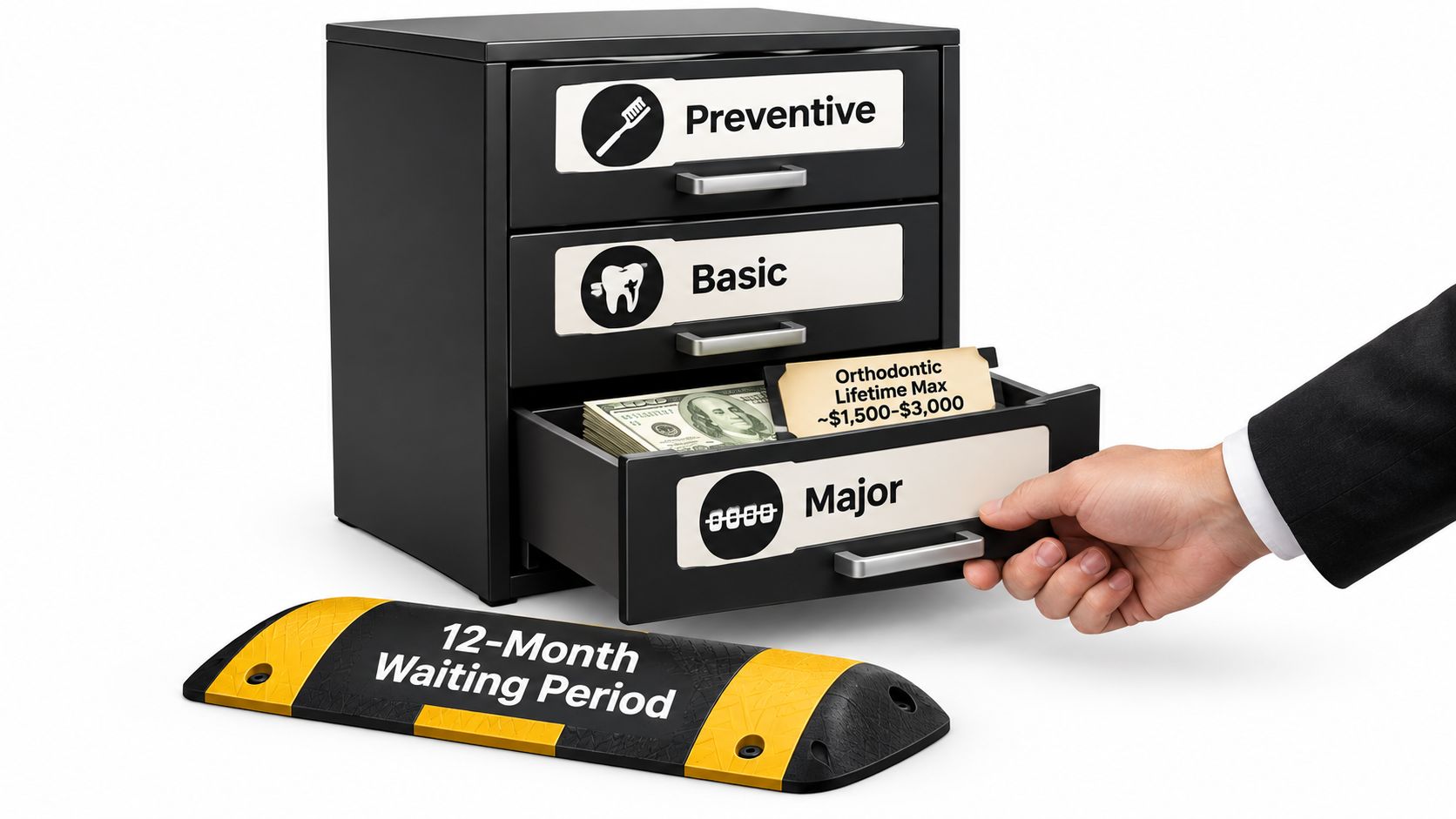
That's why so many people get confused. They've used the plan for dental x-rays, new patient exams, crowns, or restorative dentistry, so they assume Invisalign sits in the same benefit bucket. Usually, it doesn't.
Orthodontics is often a rider, not a default benefit
A big point people miss is that Invisalign coverage is commonly tied to an orthodontic rider, not the plan's standard dental benefits. Current guidance also notes that coverage varies widely by carrier and plan design, and plans may pay a share of treatment or apply a lifetime orthodontic maximum instead of offering a full benefit (2026 Invisalign insurance guide).
That means the useful question isn't “Is Invisalign covered?” It's “Did my plan purchase orthodontic benefits, and who can use them?”
Why your dental office and your insurance company sound different
Your provider looks at the treatment that's clinically needed. The insurer looks at the contract language that controls payment. Those are related, but they're not the same thing.
Delta Dental New Jersey puts this plainly. If a plan covers orthodontic services, it covers Invisalign up to the orthodontic lifetime maximum benefit, treating aligners the same as other orthodontic appliances under that structure (Delta Dental NJ orthodontics overview).
If your plan includes orthodontics, Invisalign is often treated like braces. If your plan doesn't include orthodontics, the brand name won't save the claim.
If you find out your plan's coverage is thin, financing becomes part of the conversation. Some patients compare office payment options with resources like buy now pay later for dental to spread out the remaining balance instead of delaying treatment.
Key Factors That Decide What Your Insurance Will Pay
Four variables decide what your Invisalign claim looks like once the estimate comes back. If you skip any one of them, you can badly misread your out-of-pocket cost.
Age rules and medical necessity matter first
Coverage is often driven by benefit design and medical necessity, not the aligner brand. Many plans limit orthodontic benefits to dependents under a specified age, while adults may be excluded unless the plan explicitly removes that cap. Medical coverage also usually doesn't pay for routine Invisalign, because insurers generally classify it as orthodontic or dental care, and exceptions usually require documented functional impairment or another medically necessary condition rather than cosmetic alignment alone (Invisalign orthodontic insurance guidance).
That means an adult in Lone Mountain or Sun City Summerlin can have a dental plan, an active card, and still get no orthodontic payout. Families run into the same problem when they assume all covered dependents are automatically eligible for aligners.
The payout usually comes down to the maximum and the share covered
Recent insurer guidance repeatedly points out that some plans exclude Invisalign as cosmetic, some cover it only when treated as orthodontic care, and many require a pre-treatment estimate because the practical issue is how age rules, plan language, and the lifetime cap interact (Humana Invisalign coverage guidance).
Here's the simplified version of what that means in real life.
| Factor | What It Controls | Typical Range |
|---|---|---|
| Age eligibility | Whether the patient can use orthodontic benefits at all | Varies by plan |
| Lifetime orthodontic maximum | The total the plan will ever pay toward orthodontics | Up to $2,000 or up to $3,000 on many qualifying plans in the Invisalign-cited data (Invisalign payment options) |
| Percentage covered | How much of treatment the plan applies before the cap stops payment | Varies by plan |
| Medical necessity review | Whether a rare medical exception may apply outside routine orthodontic coverage | Case by case |
A lot of people fixate on the percentage and ignore the cap. That's a mistake. A plan can pay a share of treatment and still leave a sizable remaining balance once the orthodontic maximum is reached.
For Las Vegas patients considering cosmetic dentistry, restorative dentistry, or even future dental implants near me searches after other treatment, this is why planning matters. You want the full picture before you start, not a surprise halfway through treatment.
Common Limitations and Exclusions to Watch For
Most insurance frustrations don't come from the obvious denial. They come from a benefit that technically exists but is boxed in by conditions the patient never noticed.
The clauses that trip people up most often
Here are the limitations worth checking before you say yes to treatment.
| Limitation | What It Means | Typical Range |
|---|---|---|
| Age cap | Orthodontic benefit may apply only to younger dependents | Varies by plan |
| Lifetime maximum | The plan stops paying after the orthodontic cap is reached | Often framed as up to $2,000 or up to $3,000 in qualifying plans discussed earlier |
| Waiting period | New enrollees may need to wait before orthodontic benefits activate | Varies by plan |
| Cosmetic exclusion | The plan may deny treatment it classifies as cosmetic rather than covered orthodontics | Depends on wording |
| Pre-existing or prior treatment restriction | Work started before enrollment may not be covered | Depends on plan |
| One-time orthodontic limitation | Some plans restrict orthodontic treatment to one covered course | Depends on plan |
The phrase “covered benefit” can still mean “small benefit with several strings attached.”
Why cosmetic language confuses patients
Adults get stuck most often. They hear Invisalign described as cosmetic and assume no plan ever covers it. That isn't accurate. Some plans do cover it under orthodontic benefits. The problem is that cosmetic exclusions and adult age limits often collide, which makes the answer look inconsistent.
If you want a deeper look at where cosmetic exclusions fit into dental benefits overall, review this guide on insurance coverage for cosmetic dentistry. It helps clarify why treatments that improve appearance can still fall into very different insurance categories.
For patients in Desert Shores or Painted Desert Estates, a written estimate matters more than a phone rep's general statement. The exclusion language is what decides the claim.
How to Check Your Benefits Before You Start Treatment
The cleanest way to avoid surprises is to verify your plan the same way a sharp benefits coordinator would. Don't rely on a summary page alone.
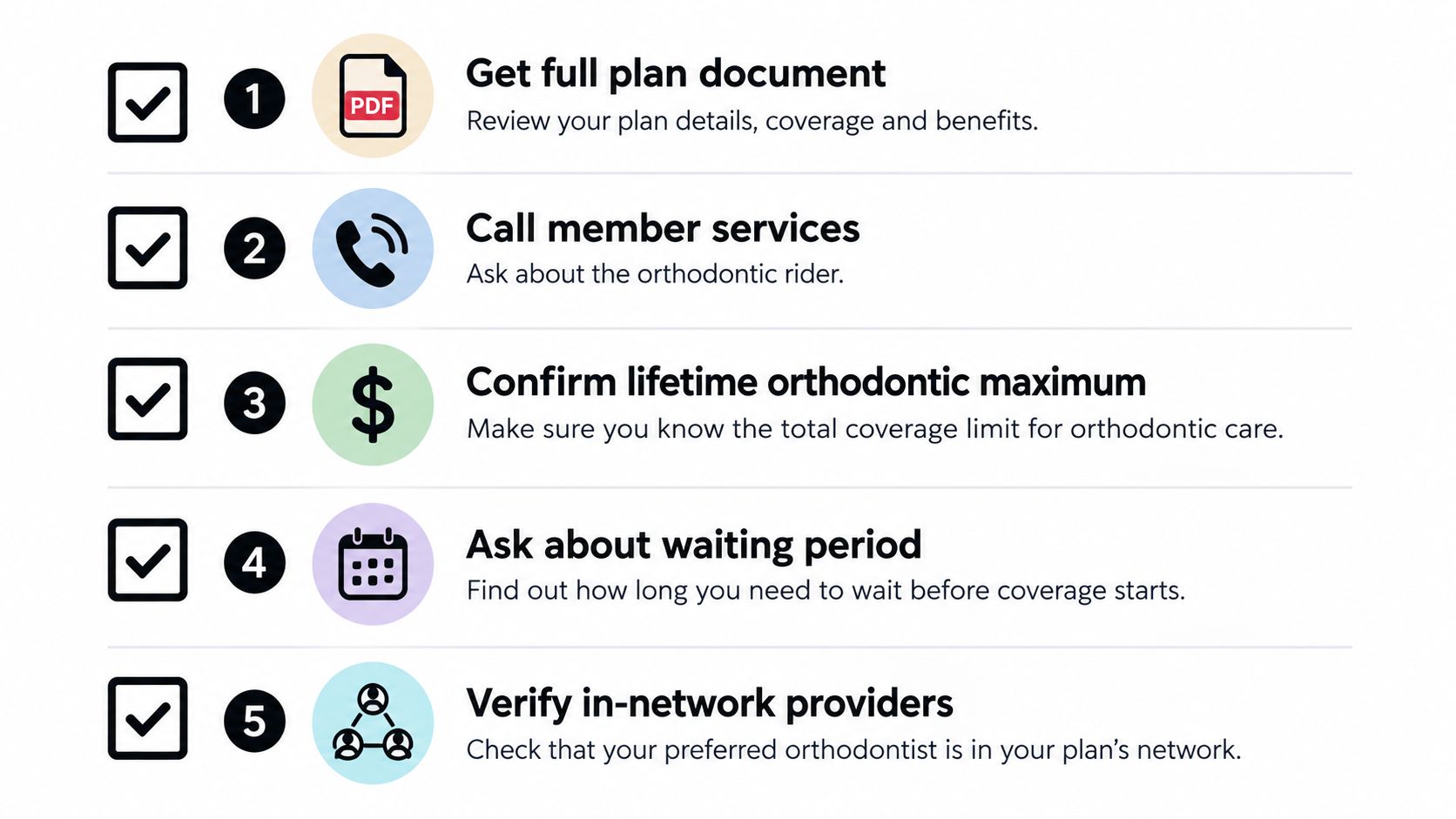
Use this benefits-audit checklist
Get the full plan document.
Not just the ID card. Not just the app screenshot. You want the benefits booklet or certificate of coverage.Call member services and ask whether orthodontics is included.
Ask specifically if adult orthodontic treatment is covered and whether Invisalign is processed under that benefit.Confirm the lifetime orthodontic maximum.
Ask how much remains if you've had prior orthodontic treatment.Ask about waiting periods and age rules.
Those two details knock out more assumptions than almost anything else.Verify your provider status.
In-network and out-of-network reimbursement can change what gets paid.
A helpful outside reference if you're trying to read employer dental options more clearly is this overview of key features of dental benefits. It's useful when you're comparing plan language before open enrollment or reviewing what your employer selected.
Ask for the estimate in writing
A verbal “yes, orthodontics is covered” isn't enough. You want a pre-treatment estimate or preauthorization showing how the insurer expects to process the case.
Best move: Ask the dental office to verify benefits, then compare that result with what your insurer told you directly. When both answers match, you're on much firmer ground.
This short video is also a useful companion if you want a plain-language walkthrough before you call your insurer.
If you're booking with Aspiring Smiles Dental and Braces, the office can verify insurance benefits, review whether orthodontic coverage appears active, and submit a pre-treatment estimate so you can see the expected insurance portion before aligners start. That's the kind of double-check that saves patients a lot of confusion.
Smart Ways to Cover the Gap When Insurance Falls Short
Even when insurance helps, many patients still owe a meaningful balance. Waiting for “better insurance” usually isn't the smartest plan. Stacking payment strategies is.
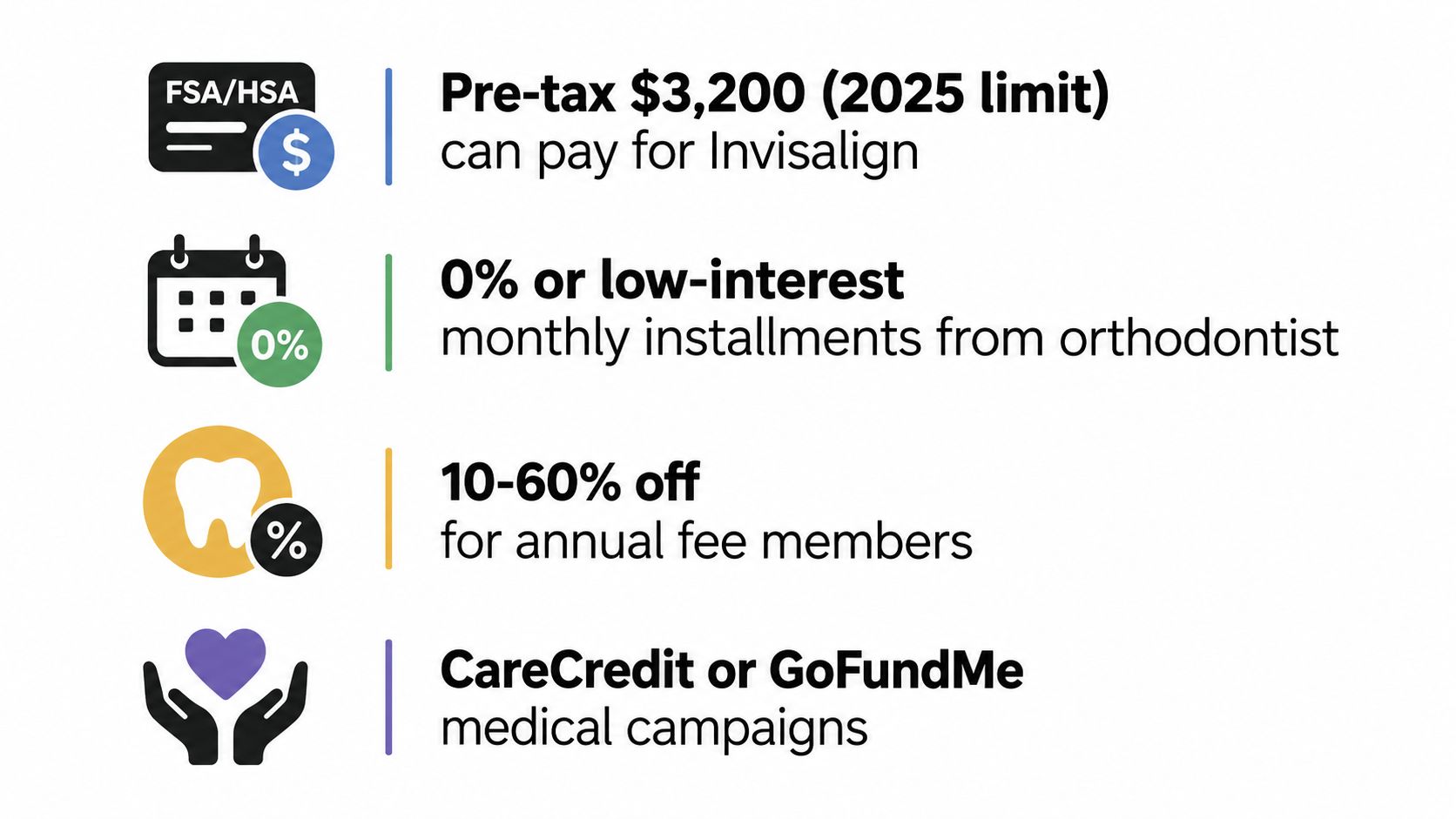
Use pre-tax money first if you can
If you have an FSA or HSA, use that before reaching for a standard credit card. Pre-tax healthcare dollars are usually one of the cleanest ways to reduce the sting of out-of-pocket orthodontic costs.
A lot of patients in Monterrey and Mar-A-Lago overlook this because they focus only on what insurance denies. That's too narrow. The better question is how to assemble the lowest-cost payment mix.
Monthly plans often solve the practical problem
The second lever is simple. Break the remaining balance into manageable monthly payments. Many dental offices offer installment arrangements, and some patients compare those with outside financing to find the better fit for cash flow.
If you're trying to estimate the total beyond insurance, this breakdown of Invisalign cost in Las Vegas helps put the remaining balance in context before you choose a payment path.
Paying over time is often more useful than chasing a perfect insurance answer that may never come.
Don't waste time waiting if your benefits are weak now
If your plan has a small orthodontic benefit, the biggest savings may come from acting strategically instead of postponing. Use the available orthodontic payout, combine it with pre-tax funds if you have them, and spread the rest over monthly payments.
That same logic applies if you're also planning other care with a dentist near me search in mind, such as tooth extraction, crowns, teeth whitening, or restorative dentistry after alignment. Once you understand the gap, you can coordinate treatment and budget instead of reacting to bills one by one.
Your Next Steps With a Las Vegas Invisalign Provider
If you've read this far, you don't need another vague article telling you “coverage varies.” You need a practical next move.
Bring the right information to the consult
For an Invisalign consultation in Las Vegas, bring:
- Your insurance card. Front and back photos are fine.
- Your group number and subscriber information.
- A list of recent dental work. Prior orthodontic use can matter.
- Questions you want answered in writing. Especially adult eligibility, orthodontic maximum, and estimated patient portion.
This applies whether you're in Sunhampton, Lone Mountain, or Painted Desert Estates. If you're also searching for cleaning and exams, dental x-rays, cosmetic dentist near me, or emergency dentist services, choosing one office that can coordinate records and benefits often makes the process smoother.
Leave with the numbers that matter
A productive consult should end with a written treatment plan and a benefits estimate, not a guess. You want to know whether the plan appears to include orthodontics, what restrictions may apply, and what your monthly cost could look like if insurance doesn't carry much of the load.
Ask the office to submit a pre-treatment estimate if one hasn't already been sent. Once that comes back, compare the expected insurance portion with your payment options and decide based on facts, not hope.
If the estimate is thin, that doesn't automatically mean Invisalign is off the table. It usually means you need a clean financing plan, not more uncertainty.
If you want a straight answer instead of insurance guesswork, Aspiring Smiles Dental and Braces helps Las Vegas patients verify orthodontic benefits, review Invisalign treatment options, and understand what their plan is likely to pay. If you're in Las Vegas, NV and want clarity on Invisalign, cleaning and exams, cosmetic dentistry, restorative care, or emergency dental needs, schedule a consultation and bring your insurance details so the team can help you map out the next step with real numbers.