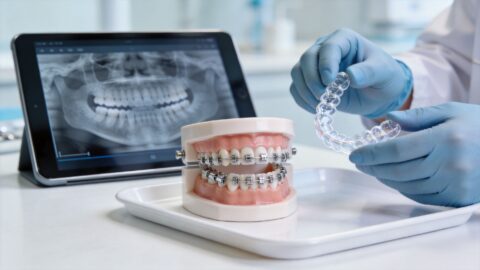
Expert Dental Group Orthodontics in Las Vegas
If you're looking in the mirror before work, checking a school photo preview, or covering your smile in family pictures, you're probably not thinking about market trends or treatment models. You're thinking about whether your teeth can be straighter, whether your child really needs braces, and whether fitting orthodontic care into an already busy schedule is going to be a headache.
That's exactly why many families in Las Vegas want a simpler path. They want one dental home for cleanings and exams, dental x-rays, new patient exams, cosmetic dentistry, emergency dentist visits, and orthodontic care. For households in Desert Shores, Sunhampton, Sun City Summerlin, Monterrey, Lone Mountain, Mar-A-Lago, and Painted Desert Estates, convenience matters, but so does trust. If you've already found a dentist in Las Vegas, NV who understands your oral health history, it makes sense to ask whether that same practice can help straighten your smile too.
Crooked teeth, crowding, bite issues, and spacing problems aren't just cosmetic concerns. They can make brushing and flossing harder, affect wear on teeth, and leave both teens and adults feeling self-conscious. When orthodontic care is integrated into family dentistry, patients often feel more comfortable asking questions and moving forward with treatment.
Your Trusted Local Dentist for a Straighter Smile in Las Vegas
Orthodontic decisions often begin subtly. A parent notices that a child's front teeth are coming in crowded. An adult who's been putting off treatment for years starts searching “dentist near me” after seeing themselves on a video call. Someone else comes in for a cleaning and asks, almost as an afterthought, whether Invisalign or braces could help.
That kind of conversation is common in a family practice. Patients don't always want to start over with a new office, a new doctor, and a separate set of appointments just to get answers about a straighter smile. They want clear guidance from a team they already know.
Why families often start with their regular dental office
In real life, orthodontic care doesn't happen in isolation. A teen may need a cleaning and exam before starting braces. An adult considering clear aligners may also want teeth whitening later. A patient with a broken tooth or sudden pain may need an emergency dentist before talking about cosmetic improvements.
That's why integrated care feels more manageable. The same office that handles preventive dental care, restorative dentistry, and cosmetic dentist near me searches can often guide patients through alignment options in a way that feels familiar instead of overwhelming.
A straighter smile is easier to pursue when the process feels organized from the start.
Behind the scenes, communication matters too. Front desk responsiveness, appointment coordination, and follow-up all shape the patient experience. For readers curious about how modern offices improve that side of care, this look at automated receptionists for small clinics offers useful context on how practices manage calls and scheduling more efficiently.
What patients want most
Individuals generally aren't asking for something flashy. They want:
- Clear options so they understand braces, aligners, and retainers
- Reasonable scheduling that works for school, work, and family life
- A comfortable setting where they can ask questions without pressure
- Continuity from a local dental team that already knows their needs
For many Las Vegas families, that combination matters just as much as the treatment itself.
Defining Dental Group Orthodontics
Dental group orthodontics means getting orthodontic care, such as braces or clear aligners, within a broader dental practice that also provides services like cleanings and exams, dental x-rays, restorative dentistry, cosmetic dentistry, and emergency care. From the patient's perspective, the biggest difference is simple. You're not bouncing between unrelated offices for every stage of treatment.
In practical terms, this model lets one team see the full picture. If you've had worn teeth, gum concerns, old fillings, or a missing tooth that may affect your bite, those details can be considered during orthodontic planning instead of being addressed later as an afterthought.
Why this model is gaining ground
This isn't a fringe setup. It reflects the direction of the profession. The U.S. orthodontics market is projected to grow from USD 4.22 billion in 2025 to USD 16.56 billion by 2032, and group practices held the largest market share in 2024, driven by practices that combine a full range of dental services with orthodontics, according to Market Data Forecast's U.S. orthodontics market analysis.
That trend makes sense from a patient care standpoint. Busy families don't want extra fragmentation. They want one place for routine checkups, one place for urgent issues like tooth extraction or sudden dental pain, and one place to talk about long-term smile goals.
What it looks like for patients
A dental group orthodontics approach usually means:
- One dental home for preventive and orthodontic care
- Shared records and imaging so the team works from the same information
- Better scheduling efficiency for families managing multiple appointments
- More natural treatment planning when cosmetic or restorative care is also part of the goal
Practical rule: Orthodontic treatment works best when it's planned around your whole mouth, not just the position of a few teeth.
A family dental office can also spot issues early. A child may come in for routine care and show signs of crowding. An adult who came in asking about a cosmetic dentist near me may learn that straightening teeth first can improve the final result of whitening, veneers, or other aesthetic work.
Why familiarity matters
People often underestimate the comfort factor. Being treated in a familiar office lowers stress for many patients, especially children, teens, and adults who already feel nervous about dental care. Instead of meeting a new team from scratch, they continue care in a setting where the environment, communication style, and expectations already feel known.
That's a major reason dental group orthodontics appeals to families across Las Vegas, NV. It brings orthodontic care into the same trusted routine as the rest of oral health.
Comprehensive Orthodontic Services at Aspiring Smiles
Orthodontic care isn't one-size-fits-all. Some patients want the flexibility and discreet appearance of clear aligners. Others need the control that traditional braces offer. The right choice depends on your bite, the type of movement needed, your habits, and how consistent you'll be with treatment.
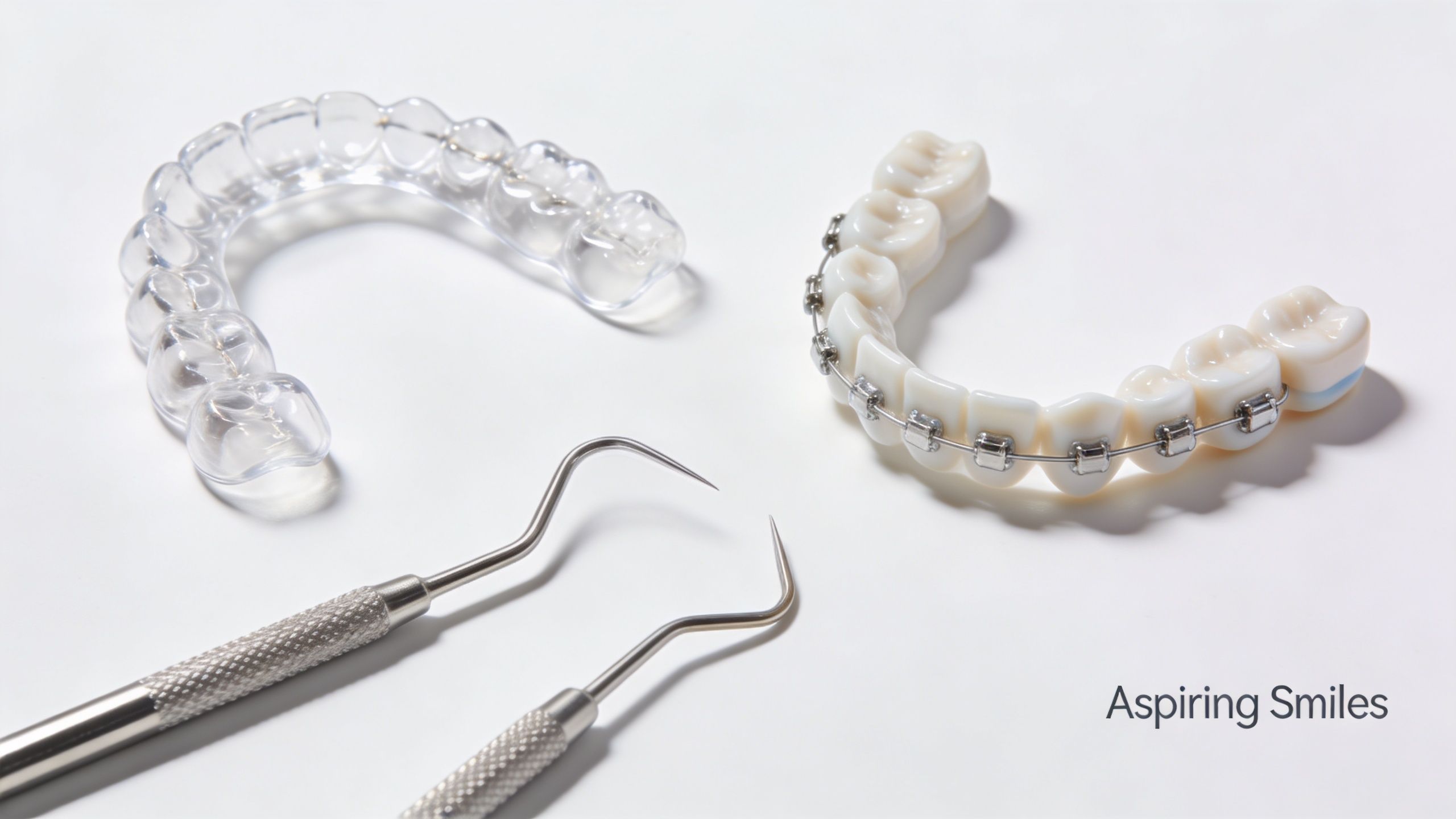
Invisalign for teens and adults
Clear aligners are popular because they're removable and subtle. That matters for adults with public-facing jobs, teens who play sports, and patients who want fewer lifestyle disruptions. They can also make brushing and flossing feel easier because you remove the trays before eating and cleaning your teeth.
Modern aligner planning is more advanced than many patients realize. According to the aligner modeling described in this patented clear aligner system reference, predicted tooth movement achievement can fall into high (79-85%), average (60-68%), or below average (52-55%) categories, and proper design plus attachment use can improve expected performance. For patients, the practical takeaway is that careful case design matters. Clear aligners work best when the plan fits the tooth movements being asked of them.
If you're exploring whether aligners make sense for your smile, this page on whether you're a good candidate for Invisalign is a helpful place to start.
Traditional braces for more complex movement
Braces remain a strong option, especially when tooth movement needs more control. They're often a practical fit for patients with more involved crowding, bite correction needs, or movements that are harder to accomplish with removable trays alone.
Braces also remove one common obstacle. Compliance. Since they stay on the teeth, treatment doesn't depend on remembering to put aligners back in after every meal or snack.
Some patients like aligners because they're less noticeable. Others like braces because they're direct and dependable. Neither choice is automatically better. The best option is the one that matches the case and the patient.
Here's a helpful visual overview of orthodontic care:
Retainers and long-term stability
Finishing treatment isn't the end of the process. Teeth can shift, especially if retainers aren't worn as instructed. That's why retention is part of orthodontics, not an optional extra.
A practical sequence often looks like this:
- Active treatment with braces or aligners moves the teeth.
- Refinement addresses small final adjustments if needed.
- Retention helps keep the new alignment stable.
Straightening teeth takes planning. Keeping them straight takes follow-through.
Patients also often start thinking about smile finishing once alignment is complete. That may include teeth whitening, cosmetic dentistry, or restorative updates such as replacing worn restorations so the final result looks balanced and healthy.
Group Orthodontics vs an Orthodontic Specialist
Most patients don't need a debate. They need a practical answer. Should you choose orthodontic care through a family dental office, or should you go directly to a specialist practice?
For many common situations, dental group orthodontics is the simpler and more efficient choice. It keeps care connected. Your exams, x-rays, gum health, restorative needs, and orthodontic planning stay in one system with one team following your progress. That's especially helpful for adults who want cosmetic improvements and for parents juggling school schedules, sports, and routine dental visits for multiple children.
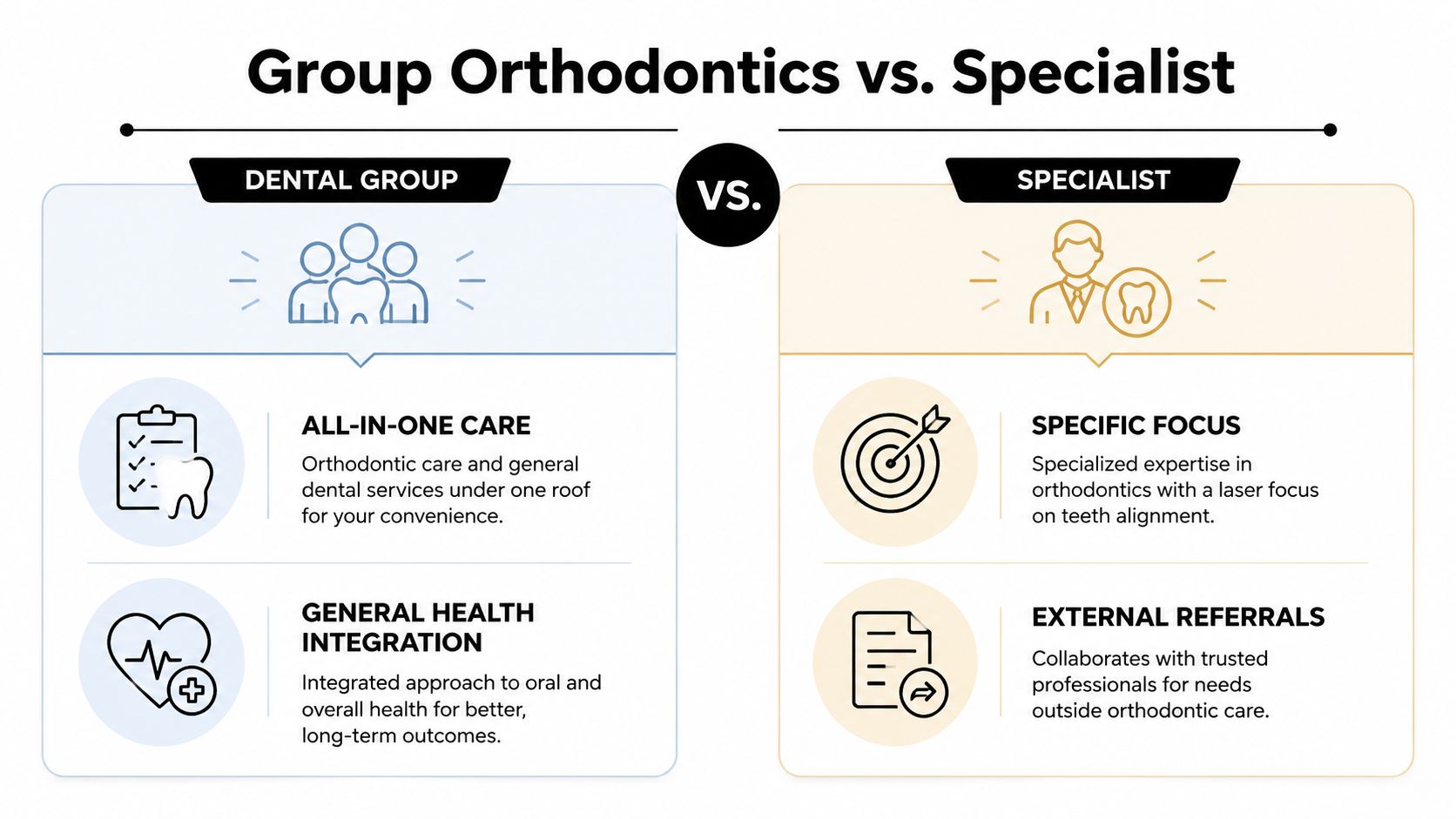
What matters most in day-to-day care
The larger trend supports what many patients already feel. According to the AAO member survey summary, 92% of orthodontists are in private practice, but group models are rising with corporate dentistry growing at 15% annually. The same source notes that adult treatment has expanded and nearly 1 in 3 patients are now adults. Convenience matters more when orthodontic patients are balancing work, family, and other dental needs.
Side-by-side comparison
| Feature | Dental Group (Aspiring Smiles) | Specialist Orthodontist |
|---|---|---|
| Routine dental care | Integrated with cleanings, exams, x-rays, and restorative care | Usually separate from general dental care |
| Treatment planning | Informed by full oral health history | Focused primarily on orthodontic needs |
| Scheduling | Easier for family coordination in one office | Often requires separate appointments in a separate office |
| Cosmetic follow-up | Can align with whitening or restorative planning | May require referral back to general dentist |
| Emergency needs | Dental and orthodontic concerns can be addressed within the same practice setting | Dental emergencies may still need a general dentist |
| Rare, highly unusual surgical cases | May refer when needed | More likely to center practice on complex orthodontic-only cases |
When a specialist makes sense
There are cases where a specialist-focused setting is appropriate. Rare skeletal discrepancies, unusual surgical coordination, and highly complex bite mechanics may call for referral or co-management. Good care includes knowing when that's necessary.
That said, those aren't the situations most families face. Most patients are deciding between braces and Invisalign, asking whether crowding needs treatment, or trying to improve appearance and bite function without making life more complicated.
The best setting for orthodontic care is often the one that combines sound planning with the fewest unnecessary handoffs.
What tends to work better for busy families
Families in Las Vegas often value three things above all:
- Continuity: The dental team already knows the patient's chart, habits, and concerns.
- Convenience: Checkups, evaluations, and related care can happen in one place.
- Coordination: If a patient also needs restorative dentistry, cosmetic work, or an emergency dentist visit, treatment can be organized with fewer delays.
That integrated advantage is what makes group orthodontics a modern fit for many households. It doesn't replace specialist care in every scenario. It reduces friction for the common orthodontic situations that frequently arise.
Your Orthodontic Journey at Our Las Vegas Office
Most patients feel better once they know what the process looks like. Orthodontics sounds like a major commitment when it's still abstract. Once it's broken into steps, it feels much more manageable.
The first visit and treatment discussion
The journey usually starts with a consultation. You come in, talk through your concerns, and review what you want to change. That may be crowding, spacing, a bite issue, or wanting a straighter smile that feels more confident.
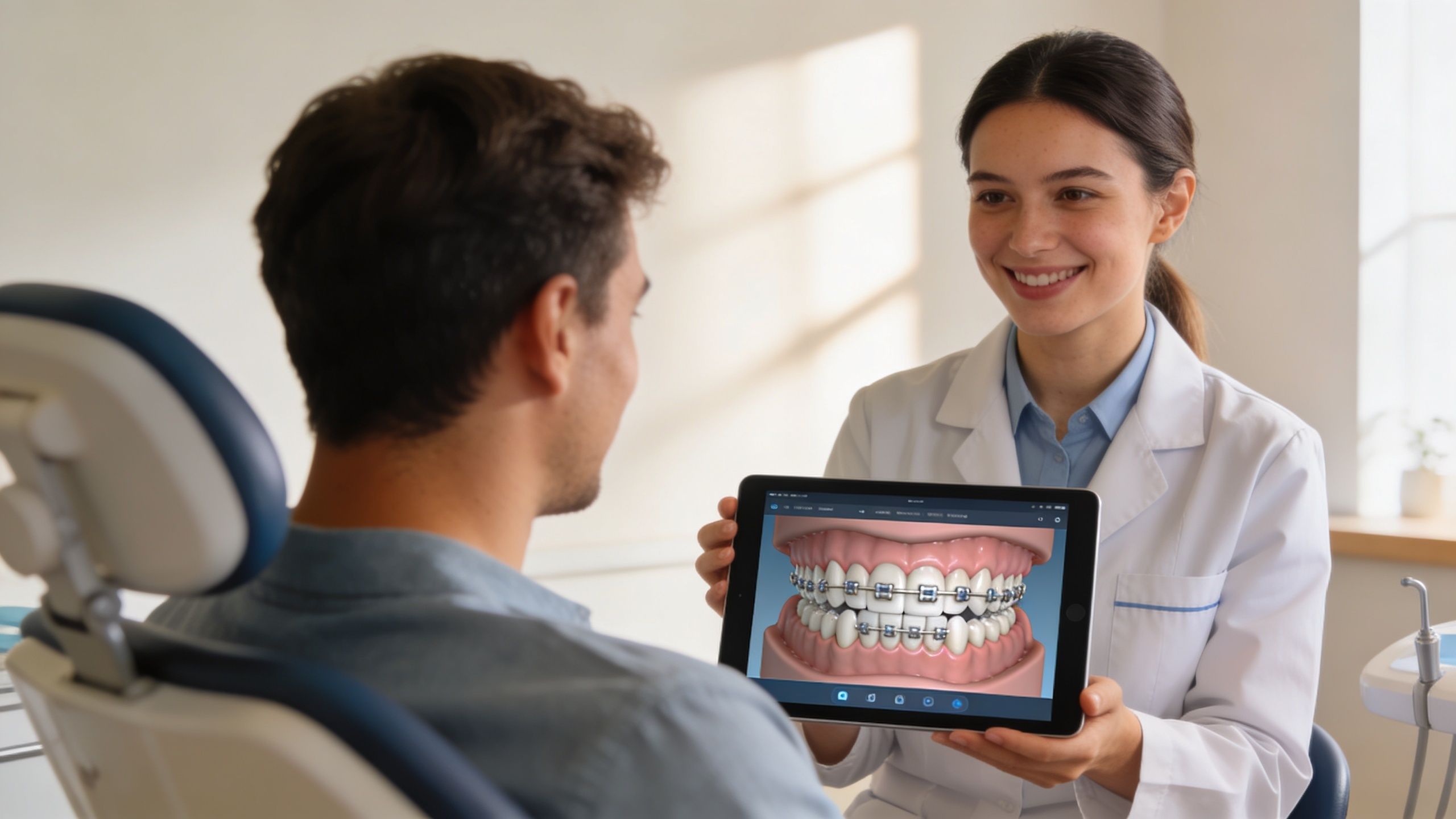
Digital records help make that conversation clearer. Photos, scans, and dental x-rays show what's happening above and below the gumline so treatment decisions aren't based on guesswork. If you want more detail before that first appointment, this guide on what to expect at a consultation for braces can help you prepare.
Building a realistic plan
A good plan fits your life as much as your teeth. Adults may ask how treatment will affect meetings, travel, or appearance. Parents may ask how visits fit around school and activities. Some patients need to address a filling, gum issue, or broken tooth first so orthodontic care starts on a healthier foundation.
This is also where communication matters. In orthodontic practice management, tracking starts is one of the key signs of whether consults are moving into treatment. Orthodontic Products reports that top-performing practices aim for an 80% consult-to-start ratio, often supported by treatment coordinators and systematic follow-ups, and that these systems can boost case acceptance by 25%. Patients benefit when offices have a clear process for answering questions, reviewing finances, and staying in touch after the consult.
Good orthodontic care doesn't feel rushed. It feels organized.
Starting treatment and follow-up visits
Once the plan is set, treatment begins with braces placement or delivery of the first aligners. After that, follow-up visits keep progress on track. Those appointments are where the team checks movement, makes adjustments, answers new questions, and helps with comfort issues.
Patients often want to know what follow-ups feel like in real life. Usually, they're shorter and more routine than people expect. Over time, small changes add up. A smile that once felt crowded starts looking more even. Bites that felt off begin settling into a better position.
The finish and what comes after
The final stage is one of the most satisfying. Braces come off or aligner treatment wraps up, final photos are taken, and retainers are made so the result lasts. This is also when many patients start noticing the health side of treatment more clearly. Teeth are easier to clean. The bite feels more balanced. The smile looks more natural in photos and everyday conversation.
For families in Painted Desert Estates, Sunhampton, and nearby parts of Las Vegas, predictability goes a long way. When patients know the steps, they're much more likely to begin treatment with confidence.
Affording Your New Smile Costs, Insurance, and FAQs
Cost is one of the biggest reasons people delay orthodontic care. That hesitation is understandable. Families want to know what they're paying for, whether insurance helps, and whether they're going to get surprised by added fees later.
A transparent office handles those questions early. The goal isn't just to quote a price. It's to explain what's included, what isn't, and how payment options fit your budget.
What affects the cost
Braces and Invisalign often fall into similar ranges, but the total out-of-pocket cost can still feel unclear to patients. According to this orthodontic affordability discussion, braces and Invisalign have similar average costs of $4,000–$8,000, and patients often don't get enough clarity on how payment plans or hidden fees affect the final total. That's why transparent breakdowns matter.
Several factors influence cost in practice:
- Case complexity affects how much movement is needed
- Treatment type changes how the plan is delivered
- Duration and refinements can shape the overall scope
- Insurance benefits may reduce part of the expense
- Financing structure affects what monthly payments look like over time
Common questions patients ask
Is there an age limit for orthodontic treatment
No fixed age defines who can improve alignment. Teens and adults both seek treatment. The better question is whether your teeth, gums, and bite make you a good candidate.
Do braces or aligners hurt
Most patients feel pressure or soreness at certain points, especially when treatment begins or changes are made. That discomfort is usually manageable and temporary.
Will insurance cover treatment
Some plans include orthodontic benefits and some don't. The most useful next step is having the office review your specific coverage and explain it in plain terms.
What if I also need other dental work
That's one reason integrated care helps. If you need fillings, a crown, cosmetic dentistry, or even something urgent like tooth extraction or emergency dental care, the plan can be coordinated more smoothly.
If you've been searching for a dentist in Las Vegas, NV who can simplify orthodontic care instead of sending you all over town, a consultation is the right place to start. The office is located at 3211 N Tenaya Wy Suite 122, Las Vegas, NV 89129, with extended weekday and Saturday availability designed to make care more accessible for local families.
If you're ready to explore dental group orthodontics, schedule a consultation with Aspiring Smiles Dental and Braces. The team can review your smile goals, explain braces or clear aligner options, discuss insurance and payment details, and help you take the next step toward a healthier, straighter smile in Las Vegas.