What is the Difference Between Veneers and Crowns? 2026
If you're searching for what is the difference between veneers and crowns, you may already be doing what many patients in Las Vegas do before they call a cosmetic dentist near me. You look in the mirror, notice a chip, dark staining, an old filling, or a tooth that just doesn’t look right, and then you end up comparing two treatments that sound similar but solve very different problems.
Both veneers and crowns can improve a smile. Both can be made to look natural. But they are not interchangeable. One is usually chosen to enhance the front of a healthy tooth. The other is often used to protect and rebuild a tooth that has lost strength.
For patients looking for a dentist in Las Vegas, NV, this decision matters because it affects appearance, tooth preservation, long-term maintenance, and total cost over time. It also affects whether treatment belongs more in cosmetic dentistry or restorative dentistry. If you've been searching for a cosmetic dentist near me, or you're comparing options before scheduling new patient exams, this guide will help you understand the genuine trade-offs in plain language.
Considering a Smile Makeover in Las Vegas
Many people begin this conversation discreetly.
They don't always come in saying they want veneers or crowns. They say they cover their mouth in photos. They say one front tooth looks darker than the others. They say a chipped tooth catches the light every time they speak. Patients from Sun City Summerlin, Desert Shores, and Lone Mountain often describe the same feeling. They want a better smile, but they don't want to make the wrong decision.
When cosmetic concerns and health concerns overlap
Some smiles need a purely cosmetic upgrade. Others need protection first and beauty second. That’s where confusion starts.
A front tooth with stubborn discoloration may be a good veneer candidate if the tooth is otherwise healthy. A tooth with a large filling, a crack, or a history of root canal treatment usually needs a more protective solution. The challenge is that both treatments can look beautiful from the outside.
The best cosmetic choice isn't always the least invasive one. The best restorative choice isn't always the most dramatic one either. The right answer depends on what the tooth needs to stay healthy.
That’s why patients who search for a dentist near me often benefit from a full exam, digital imaging, and a conversation about bite forces, enamel condition, and long-term goals before choosing anything.
A smile plan should fit your whole face
For some patients, the question isn't only about teeth. They’re also thinking about overall smile balance, lip support, and facial aesthetics. If you're comparing dental changes with nonsurgical facial options, it can help to understand related cosmetic treatments like lip filler options so you can see how different parts of a smile makeover affect one another.
That doesn't mean everyone needs multiple treatments. It means good planning looks at the whole picture.
Why this choice matters in everyday Las Vegas life
In Las Vegas, people want results that hold up in real life. They want teeth that look good in bright light, at work, at dinner, in family photos, and during daily wear. Patients in Sunhampton, Monterrey, Mar-A-Lago, and Painted Desert Estates often care just as much about durability and maintenance as they do about appearance.
If you're also considering teeth whitening, cleaning and exams, dental x-rays, or even treatment for a damaged tooth after an accident, understanding the difference between veneers and crowns is one of the most useful first steps you can take.
Understanding the Basics of Dental Restorations
Before comparing them side by side, it helps to define each one clearly.
What a veneer is
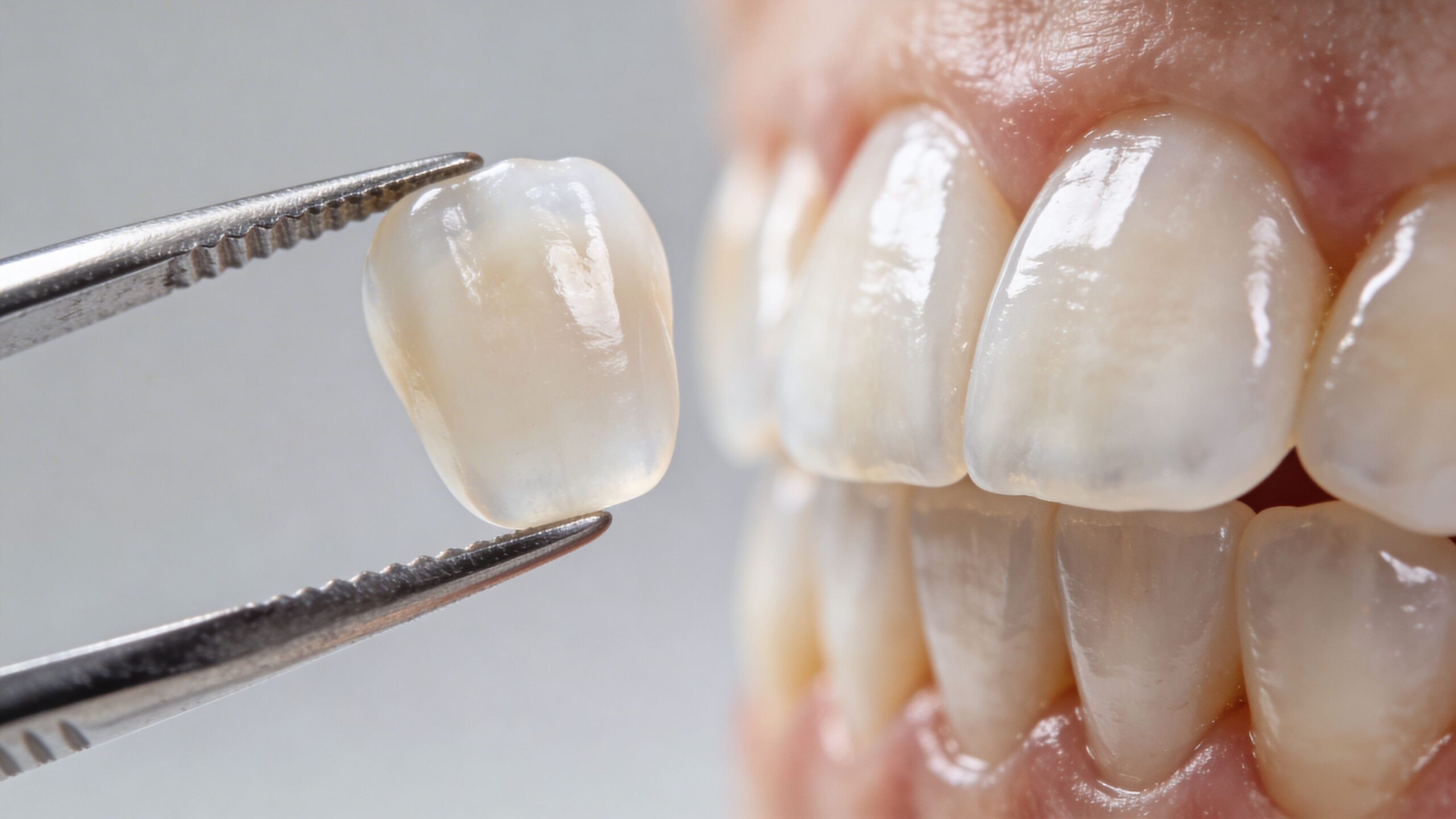
A veneer is a thin restoration bonded to the front surface of a tooth. It's similar to a custom porcelain facing that changes how the visible side of the tooth looks.
Veneers are usually chosen to improve color, shape, small gaps, minor chips, or slight unevenness in otherwise healthy front teeth. They are primarily cosmetic. They don't wrap around the whole tooth.
That limited coverage is exactly why veneers can be attractive for patients who want a smile upgrade without rebuilding the entire tooth. They work best when enough healthy enamel remains for bonding and when the tooth doesn't need major structural support.
If you'd like a more focused look at veneer mechanics, this overview of how veneers work gives a good patient-friendly explanation.
What a crown is
A crown is a full-coverage restoration. It fits over the visible part of the tooth like a cap and is designed to restore shape, strength, function, and appearance.
Crowns are used when a tooth has been weakened by decay, fracture, a very large filling, or root canal treatment. They are restorative first, though they can also be highly aesthetic. Because a crown covers the tooth all the way around, it can provide protection that a veneer cannot.
The simplest way to picture the difference
A useful mental shortcut is this:
- Veneer means front-surface enhancement.
- Crown means full-tooth coverage.
That doesn’t make one better than the other. It means they solve different problems.
Common materials and why they matter
Both restorations can be made from aesthetic dental materials, but the design goals differ.
- For veneers, dentists often choose porcelain because it can create a lifelike, enamel-like appearance.
- For crowns, materials may be selected for a mix of strength and beauty, especially when the tooth has to handle heavier function.
- For either option, the final choice depends on where the tooth sits in the mouth, the bite, and the condition of the underlying tooth.
A healthy front tooth with cosmetic concerns often calls for a different restoration than a back tooth that’s cracked or heavily filled.
Why patients confuse them
Patients often hear that both veneers and crowns can "fix" a tooth, and that's true on a surface level. The difference is what kind of fixing the tooth needs.
A stained but strong front tooth may need a cosmetic cover. A damaged tooth may need a protective shell. Once you separate appearance from structural support, the distinction becomes much easier to understand.
A Detailed Side-by-Side Comparison of Veneers and Crowns
Patients in my Las Vegas office often ask the same practical question after looking at photos. Which option will look good, hold up, and make financial sense years from now? The clearest answer is to compare veneers and crowns by how much tooth they cover, how much tooth they require us to reshape, and what they are expected to do over time.
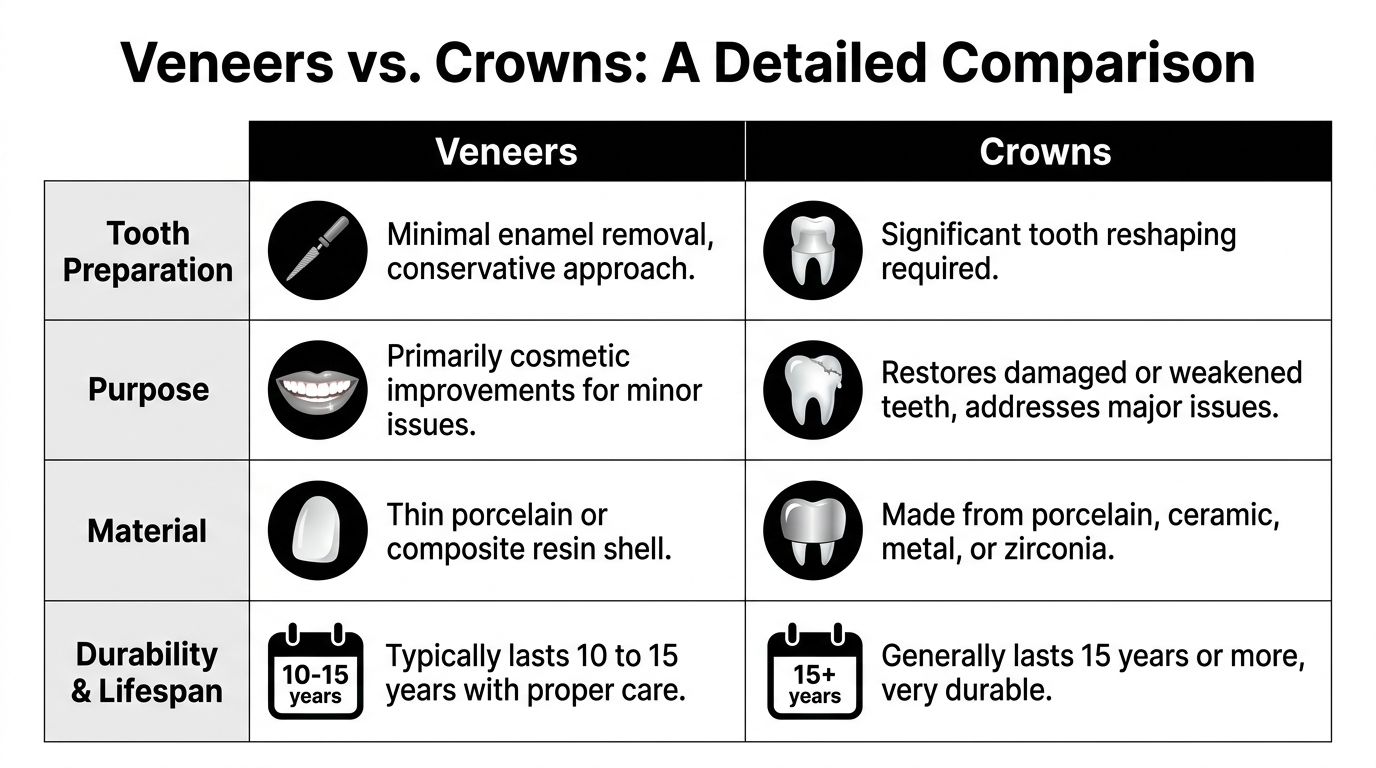
| Feature | Porcelain Veneers | Dental Crowns |
|---|---|---|
| Coverage | Front surface of the tooth | Full visible portion of the tooth |
| Main role | Cosmetic improvement | Structural restoration and protection |
| Tooth preparation | More conservative | More extensive reshaping |
| Best for | Healthy front teeth with aesthetic concerns | Weakened, cracked, decayed, or heavily restored teeth |
| Look | Excellent translucency for smile-zone teeth | Natural-looking, with more focus on protection too |
| Longevity role | Smile enhancement | Functional rebuilding and reinforcement |
Tooth preparation
Preparation is often the deciding factor from a clinical standpoint.
According to this comparison of veneers and crowns, veneers usually require about 0.3 to 0.7 mm of enamel removal from the front of the tooth, while crowns generally require about 1.5 to 2 mm of reduction around the full tooth. That difference matters because healthy enamel is valuable. If a front tooth is strong and the concern is mainly color, shape, or minor symmetry, preserving more natural tooth is usually the better long-term move.
A crown asks for more reshaping at the start, but that extra coverage gives the tooth more support. For a tooth with a large filling, a crack, or a history of breakdown, that trade-off can be the responsible choice.
Strength, longevity, and maintenance
Patients usually focus on the day the smile goes in. I want them to think about the next ten to fifteen years.
Veneers often serve patients well for cosmetic improvement on healthy front teeth, but they depend on good enamel, a stable bite, and reasonable habits. Crowns tend to be the safer option when a tooth is already compromised or expected to handle heavier functional stress. In real life, longevity is not just about the material. It is also about grinding, clenching, edge-to-edge bite patterns, oral hygiene, and whether the tooth needed protection from the beginning.
That affects total cost of ownership. A restoration that is slightly more conservative up front is not automatically the less expensive option over time if it chips, debonds, or is placed on the wrong tooth. A crown usually costs more tooth structure on day one, but it may reduce the risk of future failure when the tooth needs full coverage.
Appearance and smile design
Veneers usually win on fine cosmetic detail for front teeth. They are thin, light-reflective, and well suited for changes in shape, brightness, proportion, and uniformity across the smile.
Crowns can also look beautiful. In the right hands, they blend very naturally. The difference is that a crown has to do two jobs at once. It needs to look good and protect a tooth that may already be weakened. That added functional role can influence thickness, margin placement, and material choice.
At Aspiring Smiles, this matters because smile design is rarely about one tooth in isolation. We look at how the restoration fits the lip line, bite, gum levels, neighboring teeth, and the long-term plan for the rest of the smile. A veneer on one tooth and a crown on another can be the right combination if that mix serves both esthetics and durability.
Best use cases
Veneers are usually a better fit for teeth that are still structurally healthy and need cosmetic change, such as:
- Discoloration that does not respond well to whitening
- Small chips
- Mild shape differences
- Minor spacing
- Front teeth included in a smile design plan
Crowns are usually a better fit for teeth that need protection as much as appearance, such as:
- Cracked or weakened teeth
- Teeth with large existing fillings
- Teeth treated with root canal therapy
- Teeth with significant decay or loss of structure
- Teeth that need full rebuilding as part of restorative care
The trade-off
The trade-off is straightforward. Veneers preserve more natural tooth, but they require the right foundation. Crowns remove more tooth structure, but they provide broader reinforcement.
Patients sometimes ask for veneers because they sound less invasive. That can be true. It is not always the best value over the life of the tooth. If the tooth is already failing, a veneer may lead to another procedure sooner than expected. If the tooth is healthy, placing a crown just to change its appearance may be more treatment than necessary.
The right restoration should fit the condition of the tooth, your bite, your cosmetic goals, and your long-term budget. That is how I recommend patients compare veneers and crowns. Not as a quick cosmetic purchase, but as part of a plan to keep the smile attractive, stable, and maintainable.
Which Is Right for Your Smile Deciding Between Veneers and Crowns
A patient may come in asking for veneers because a front tooth looks dark or uneven in photos. After the exam, the better answer may be a crown because that tooth already has a large filling, hidden crack lines, or a history of root canal treatment. The name of the procedure matters less than choosing the restoration that gives that tooth the best chance to stay stable for years.
That is the decision I want patients to make carefully in Las Vegas. Cosmetic results matter, but so do replacement risk, maintenance, bite stress, and the total cost of ownership over time.
Veneers are often the better choice when the tooth is still strong
Veneers tend to fit patients who want to improve what shows when they smile and who still have enough healthy enamel for reliable bonding. In that setting, veneers can improve shape, color, proportion, and symmetry while keeping more of the natural tooth in place.
A veneer may make sense if your concern is mostly cosmetic and limited to the visible front surface.
Typical examples include:
- Stubborn discoloration that does not respond well to whitening
- Small chips or worn edges
- Minor spacing
- Slight differences in size or shape
- Front teeth being refined as part of a larger smile design plan
For the right patient, that conservative approach can be the better long-term financial choice because it avoids placing a full-coverage restoration on a tooth that does not need one yet.
Crowns are often the better choice when the tooth needs protection first
Crowns are usually the safer recommendation when the tooth is no longer structurally reliable. The cosmetic result can still be excellent, but the primary job is to protect and rebuild the tooth.
That often applies to:
- Teeth with large existing fillings
- Teeth weakened by cracks
- Teeth that have had root canal treatment
- Teeth with significant decay or broken structure
- Teeth that need full coverage to function well in the bite
In those cases, choosing veneers to save tooth structure can backfire if the underlying tooth is already compromised. The restoration may look attractive at first and still fail earlier than expected because the foundation was wrong.
The central question is what will cost you less over the life of the tooth
A veneer often starts as the more conservative treatment. A crown often starts as the more protective treatment. The better value depends on what happens next.
If a healthy front tooth receives a crown only for cosmetic reasons, that can mean more treatment than necessary at the beginning. If a weak tooth receives a veneer because it sounds simpler, that can lead to retreatment, replacement, or emergency care sooner than planned. Long-term cost is not just the fee for the first procedure. It includes durability, repairs, maintenance, and whether the restoration fits the condition of the tooth from day one.
This matters in a city like Las Vegas, where many patients want to improve their smile on a schedule and a budget. The best plan is the one that looks good now and still makes sense financially years later.
Bite habits and lifestyle can change the recommendation
Clenching, grinding, edge-to-edge bite patterns, frequent travel, and inconsistent nightguard use all affect the decision. A restoration that looks ideal in a photo may not be the right one for a patient who places heavy force on the front teeth.
I also look at how this single tooth fits into the larger smile. If several teeth need changes, the answer may be part of a broader plan for shape, color, bite balance, and sequencing. At Aspiring Smiles, veneers and crowns are not chosen in isolation. They are selected as part of a smile design plan that has to be maintainable.
Patients who want more detail on full-coverage treatment can review our step-by-step guide to the dental crown procedure.
My advice to patients deciding between the two
Choose veneers when the tooth is healthy enough to support a conservative cosmetic restoration.
Choose crowns when the tooth needs strength, coverage, or rebuilding.
If the case sits in the middle, the exam decides. X-rays, photos, bite analysis, old fillings, enamel quality, and the way you use your teeth every day usually make the answer clearer. That approach protects both your smile and your budget.
The Treatment Process at Our Las Vegas Dental Office
Patients typically feel more comfortable once they know what happens during treatment. Most anxiety comes from uncertainty, not from the procedure itself.
What veneer treatment usually looks like
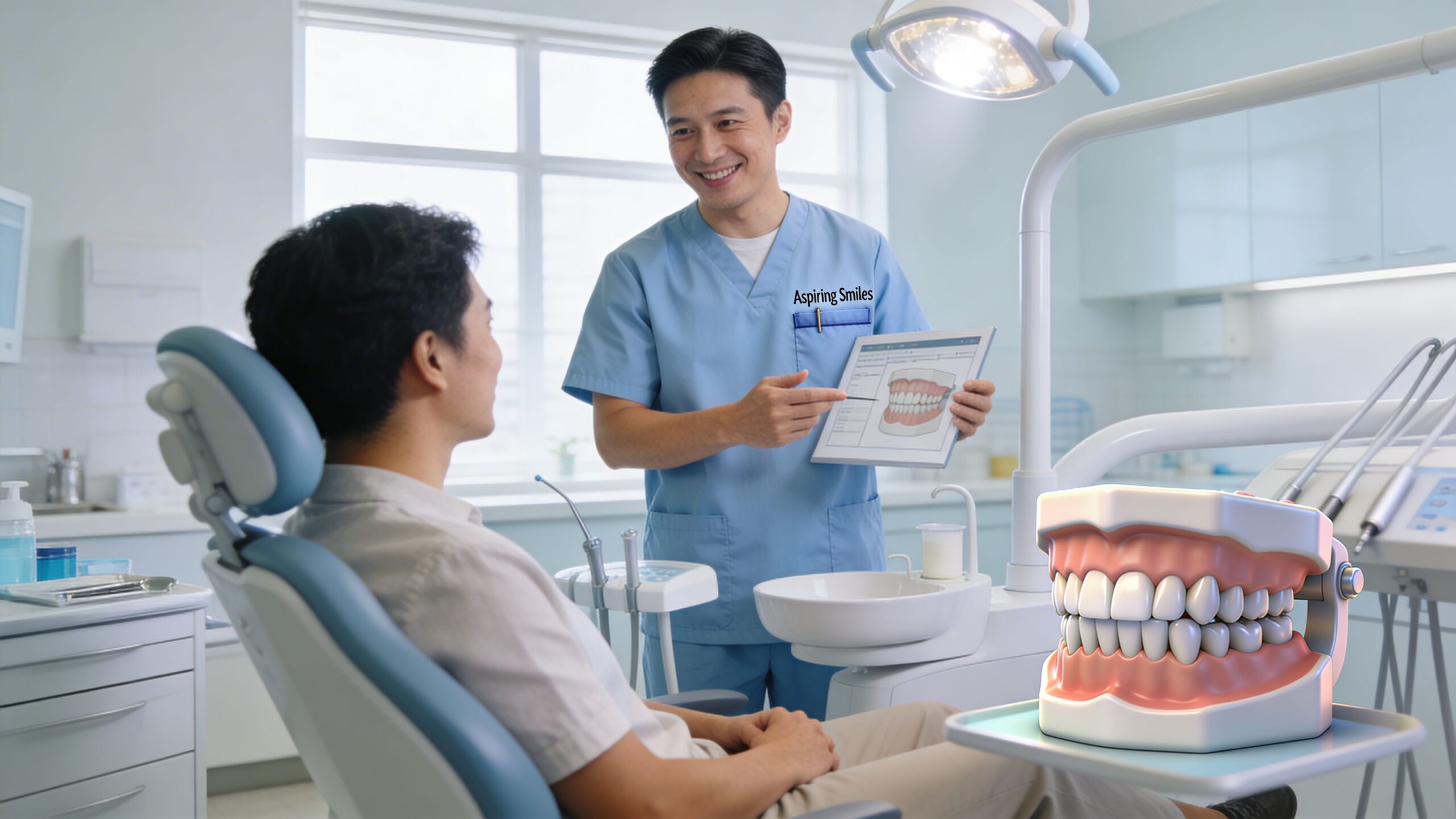
The process starts with a consultation, exam, and imaging. The dentist studies the tooth shape, smile line, bite, gum position, and overall goals.
If veneers are appropriate, the next steps typically include:
Planning the final look
Shade, shape, length, and symmetry are discussed carefully so the result doesn't look bulky or artificial.Preparing the tooth conservatively
Only the amount needed for the planned veneer is removed from the front surface.Taking records for fabrication
Digital scans or impressions guide the lab in making a restoration that fits precisely.Bonding the veneer in place
Once the fit and appearance are confirmed, the veneer is bonded securely.
Patients often want details before they commit, and this guide to the dental crown procedure step by step is also helpful because it shows how restorative appointments are structured and why precision matters.
What crown treatment usually looks like
A crown process also starts with diagnosis, but the treatment planning focuses more heavily on support and protection.
A typical sequence includes:
Exam and imaging
The dentist checks decay, cracks, old fillings, bite pressure, and whether the tooth can predictably support a crown.Tooth reshaping
The tooth is prepared so the crown can fit around it properly.Temporary coverage when needed
A temporary crown may protect the tooth while the final restoration is being made.Final seating
The permanent crown is checked for fit, bite, and appearance before cementation.
What patients typically notice during the process
Most patients typically notice that the appointments are more methodical than dramatic.
The key steps are fit, bite, appearance, and comfort. A restoration that looks great but feels high when you bite won't stay comfortable. A restoration that’s strong but poorly matched in color won't satisfy a cosmetic patient. Good dentistry balances both.
The appointment isn't just about placing porcelain. It's about making sure the restoration works with your bite, your gums, and how you use your teeth every day.
What to expect as a new patient in Las Vegas
If you're looking for a dentist in Las Vegas, NV for cosmetic or restorative work, the first visit should feel educational.
You should expect:
- A thorough exam to assess enamel, old dental work, gum health, and bite
- Imaging and dental x-rays when needed
- A discussion of goals such as color, symmetry, repair, comfort, or longevity
- A review of options that may include veneers, crowns, whitening, Invisalign, or other restorative care
That same thoughtful approach matters whether you're coming in for veneers, a crown, cleaning and exams, teeth whitening, or more complex care such as dental implants near me, restorative dentistry, or treatment after a dental emergency.
Investing in Your Smile Cost, Longevity, and Other Options
A patient in Las Vegas might compare two estimates, see that one starts lower, and assume it is the better deal. In cosmetic dentistry, that first number rarely tells the full story.
What matters is the long-term cost of ownership. That includes how long the restoration is likely to last, what maintenance it may need, whether insurance may help, and how well it fits into the rest of your smile plan.

Upfront fees are only part of the story
Verified pricing data referenced earlier places veneers at $800 to $2500 per unit and crowns at $1000 to $3000. Those ranges matter, but they do not answer the question patients usually care about most. Which option is likely to make sense financially over the years, not just on the day treatment starts?
According to this cost-benefit discussion of crowns versus veneers, veneers often need replacement sooner than crowns, and crowns are more often covered by dental insurance when they protect a damaged tooth. Over a long period, the lower starting price is not always the lower total spend.
Cost has to be matched to the condition of the tooth
I tell patients this all the time. The best value depends on what the tooth needs.
If a front tooth is healthy and the goal is to improve shape or color, a veneer may preserve more natural tooth structure and still give an excellent cosmetic result. If a tooth has a large filling, a crack, or significant wear, a crown may be the more predictable investment because it gives more coverage and support.
The wrong choice can get expensive later.
A veneer placed on a tooth that really needed full protection can lead to more repairs, more frustration, and another round of treatment sooner than expected. A crown placed on a tooth that only needed minor cosmetic refinement can mean removing more enamel than necessary. Good planning keeps those trade-offs in view from the start.
Insurance can change your out-of-pocket cost
Many dental plans treat veneers as cosmetic treatment. Crowns are often treated differently when there is a restorative reason for them, such as a broken tooth, decay, or structural weakness.
That does not mean every crown is covered or every veneer is excluded. It means benefits should be checked before treatment begins, because insurance status can change the cost in a meaningful way.
Other options may solve the problem with less dentistry
Some patients come in asking whether they need veneers or crowns, and the honest answer is neither.
In the right case, a simpler option may be the better investment:
- Teeth whitening for color concerns
- Bonding for a small chip, gap, or contour issue
- Invisalign clear aligners when tooth position is the main problem
- A hybrid plan that uses cosmetic treatment on visible teeth and stronger restorations where more protection is needed
- Implant care or broader restorative treatment when a tooth is too compromised for a predictable veneer or crown result
How this fits into a full smile design plan
At Aspiring Smiles, I do not look at veneers or crowns as isolated purchases. I look at how they fit into the full plan for your smile, bite, gum health, and budget.
For one patient, the right sequence may be exams, x-rays, whitening, and then a conservative cosmetic correction. For another, it may make more sense to stabilize damaged teeth first and delay elective cosmetic work until the foundation is healthy. That approach usually protects patients from spending money in the wrong order.
A smart smile investment should look good now, hold up in daily life, and make sense for your financial planning over time.
Your Personalized Cosmetic Consultation at Aspiring Smiles
A consultation should make the decision easier, not more confusing.
At Aspiring Smiles Dental and Braces in Las Vegas, the process starts with listening. Dr. Patel and the team take time to understand what bothers you, what you want to change, and what you want to preserve. Some patients come in from Sunhampton wanting a brighter smile. Others from Monterrey are trying to decide whether a damaged tooth needs cosmetic work or restorative protection.
What happens at the first visit
Your consultation may include:
- A thorough exam to assess enamel, old dental work, gum health, and bite
- Imaging and dental x-rays when needed
- A discussion of goals such as color, symmetry, repair, comfort, or longevity
- A review of options that may include veneers, crowns, whitening, Invisalign, or other restorative care
Why a customized plan matters
Two teeth can look similar in the mirror and need completely different treatment.
That’s why Dr. Patel focuses on a plan built around the actual condition of the tooth, not just a cosmetic label. The goal is to help you choose the option that looks right, functions well, and makes sense for the long term.
If you're searching for a cosmetic dentist near me, dentist near me, or dentist in Las Vegas, NV, a personalized consultation gives you clearer answers than online guessing ever will.
Frequently Asked Questions About Veneers and Crowns
Can teeth with veneers or crowns still get cavities
Yes. The restoration itself doesn't decay, but the natural tooth around it still can. Good home care, regular cleanings, and exams still matter.
Can veneers or crowns be whitened later
No. Their color doesn't respond to whitening the way natural enamel can. If you're considering whitening, it’s often better to discuss timing before final cosmetic work is made.
What if a veneer or crown chips or breaks
That depends on the amount of damage, the condition of the tooth underneath, and the bite. Some restorations can be repaired. Others need replacement.
Is it always veneers or crowns
No. The choice isn't always binary. Modern treatment can combine approaches, such as veneers on healthy front teeth for aesthetics and crowns on compromised back teeth for strength. Invisalign can also help when alignment is the underlying issue rather than tooth shape alone.
Which option feels more natural
When planned well, both can feel natural. The key is proper fit, bite adjustment, and choosing the right restoration for the tooth rather than forcing one treatment into the wrong case.
If you're ready for clear guidance on veneers, crowns, cosmetic dentistry, restorative dentistry, or a full smile plan, schedule a visit with Aspiring Smiles Dental and Braces. Dr. Patel and the team provide patient-focused care for families across Las Vegas, including Desert Shores, Sun City Summerlin, Lone Mountain, Sunhampton, Monterrey, Mar-A-Lago, and Painted Desert Estates. Whether you need a cosmetic dentist near me, an emergency dentist, dental implants near me, or a trusted office for cleaning and exams, your next step can start with a comfortable consultation.