Teeth Whitening Before and After: A Las Vegas Guide
A lot of people start looking up teeth whitening before and after when a real-life moment is getting close. A wedding. A job interview. Family photos. A reunion. Or the point where you catch your reflection and feel like your smile looks more tired than you feel.
That feeling is common, and it’s one reason whitening remains such a popular cosmetic dental treatment. The global teeth whitening market was valued at $6.14 billion in 2020 and is projected to reach $8.21 billion by 2026, with 37 million Americans using tooth whiteners in 2020 alone. In Las Vegas, NV, that demand shows up every day among adults and families who want a brighter smile that still looks natural.
For patients in Desert Shores, Sunhampton, Sun City Summerlin, Monterrey, Lone Mountain, Mar-A-Lago, and Painted Desert Estates, the biggest question usually isn’t whether whitening works. It’s what the process looks like from start to finish, what kind of results are realistic, and whether professional treatment is worth it compared with strips from the store.
Your Guide to Teeth Whitening Before and After in Las Vegas
A patient often comes in saying some version of the same thing: “My teeth are healthy, but they don’t look bright anymore.” They may brush well, keep up with cleaning and exams, and still feel disappointed when they smile in photos. Tooth color changes slowly, so many people don’t notice it until it starts affecting confidence.
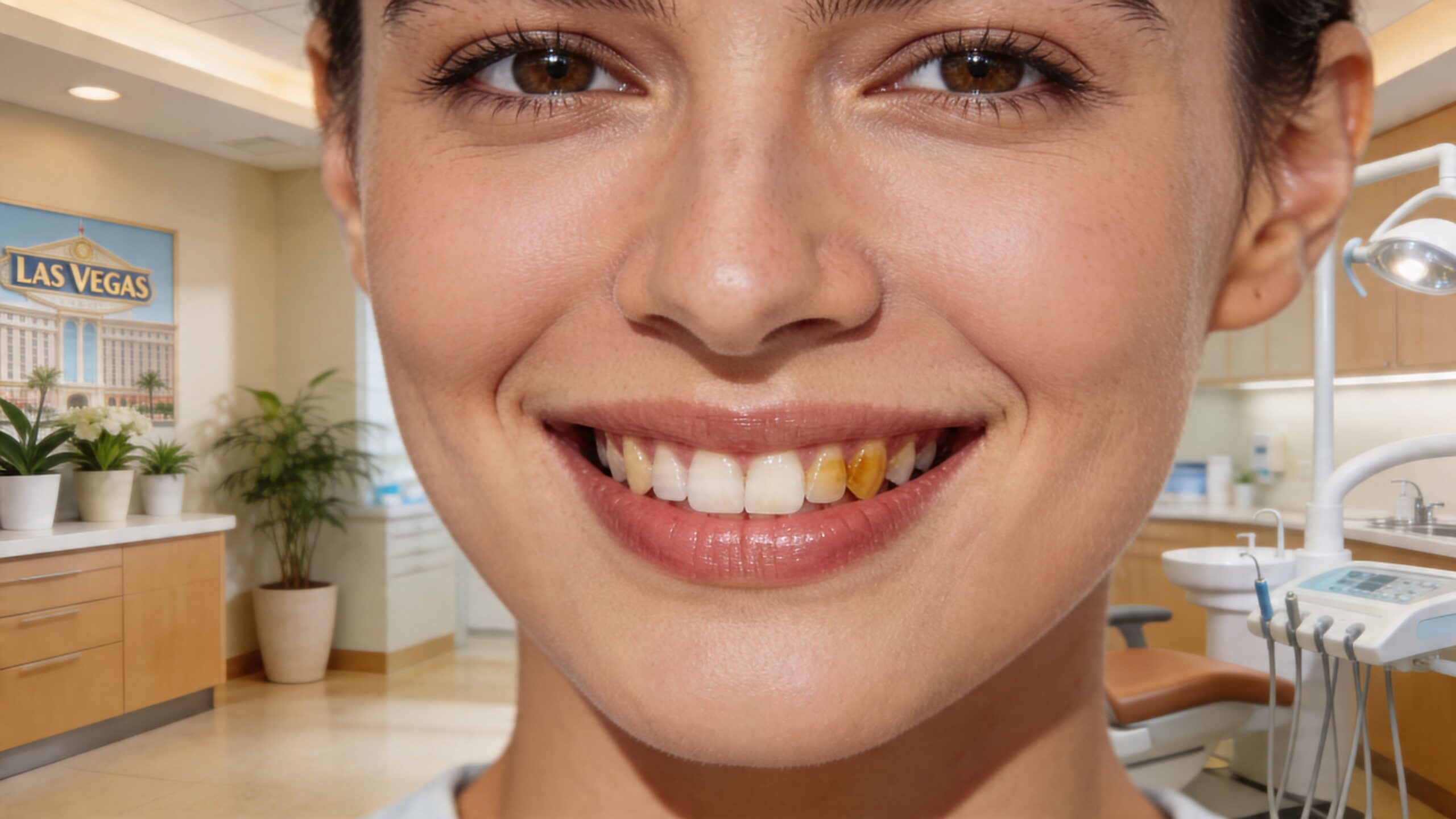
In a city like Las Vegas, where social events, professional networking, and family milestones happen year-round, a brighter smile can feel like a meaningful upgrade. That doesn’t mean chasing an artificial look. It means understanding what whitening can improve, what it can’t change, and how to choose the right approach for your teeth.
What patients usually want to know first
Those looking for a cosmetic dentist near me or a dentist in Las Vegas, NV ask practical questions:
-
Will my teeth look obviously fake
Professional whitening aims for a cleaner, brighter version of your natural smile, not an unnatural solid-white look. -
How fast will I see a difference
Some options are designed for one-visit results, while others work more gradually at home. -
Will it hurt
Sensitivity can happen, but there are ways to reduce it and plan around it. -
Will whitening work on my specific stains
That depends on whether discoloration is on the surface or deeper inside the tooth.
Practical rule: The best whitening result is one that fits your enamel, your existing dental work, and your timeline.
Why before and after matters
Patients don’t just want a treatment description. They want to understand the journey. “Before” means looking at current shade, stain type, gum health, past dental work, and sensitivity risk. “After” means more than a brighter photo. It includes comfort, maintenance, and a realistic plan to keep the result looking good.
That’s especially important if you’re also considering other care such as veneers, crowns, Invisalign, restorative dentistry, or even a new patient exam after searching for a dentist near me. Whitening often works best as part of a larger smile plan, not as a random add-on.
Understanding the Causes of Tooth Discoloration
Not all stains are the same, and that’s where many people get frustrated. They try a whitening toothpaste or store-bought strip, see little change, and assume nothing will work. Usually, the issue is that the type of stain doesn’t respond well to a low-strength, one-size-fits-all product.
A common pattern shows up in cosmetic dental visits. A clinical study found that 52.8% of patients seeking cosmetic dental care were dissatisfied with their tooth color before treatment. That tells you how often tooth shade becomes a real concern, even when teeth are otherwise functional.
Surface stains and deep stains
Dentists usually think about discoloration in two broad categories.
-
Extrinsic stains
These are surface stains. Coffee, tea, red wine, tobacco, and pigmented foods can cling to the outer layer of the teeth. -
Intrinsic stains
These sit deeper within the tooth structure. Aging, certain medications, trauma, and other internal changes can darken the tooth from the inside.
The difference matters because surface stains are generally easier to lift. Intrinsic stains are more stubborn and often need stronger, professionally supervised whitening to create a visible change.
Why teeth darken over time
Enamel is the outer layer of the tooth, and it isn’t perfectly solid like glass. Over time, stain molecules can collect and settle. As enamel naturally changes with age, the underlying dentin becomes more noticeable, and dentin tends to appear more yellow.
That’s why patients often say, “My teeth looked brighter years ago, and I don’t know what changed.” Usually, nothing dramatic happened overnight. Daily habits and natural aging gradually shifted the color.
Teeth don’t stain for just one reason. Most adult smiles show a mix of surface buildup, age-related darkening, and old stain accumulation.
Why over-the-counter products often disappoint
Store products can help some people with mild surface discoloration, but they’re limited. If trays don’t fit well, gel contact is uneven. If the product is weak, deeper stains may barely respond. If someone has fillings, crowns, or uneven enamel, the outcome may look patchy.
Professional care starts with a diagnosis, not just a product. A dentist looks for issues that may affect whitening, such as decay, exposed roots, gum irritation, cracked enamel, or existing restorations. That’s one reason many people searching for cosmetic dentistry, cleaning and exams, or new patient exams in Las Vegas end up asking about whitening during a broader dental visit.
Stains that need a closer look
Some situations call for extra caution before whitening:
-
A single dark tooth
This can be very different from general yellowing and may need a more specific evaluation. -
Recent orthodontic treatment
After braces or Invisalign, color can look uneven if plaque buildup or attachment areas affected the enamel. -
Restorative dental work
Bonding, fillings, crowns, and veneers won’t respond the same way natural enamel does.
Understanding the cause of discoloration is what makes teeth whitening before and after results more predictable. Good results don’t come from guessing. They come from matching the treatment to the stain.
Comparing Professional Teeth Whitening Options
Patients usually narrow their choices to two paths. They want either fast, in-office whitening for a visible change right away, or a dentist-guided option they can use at home on their own schedule. Both can be useful, but they fit different goals.
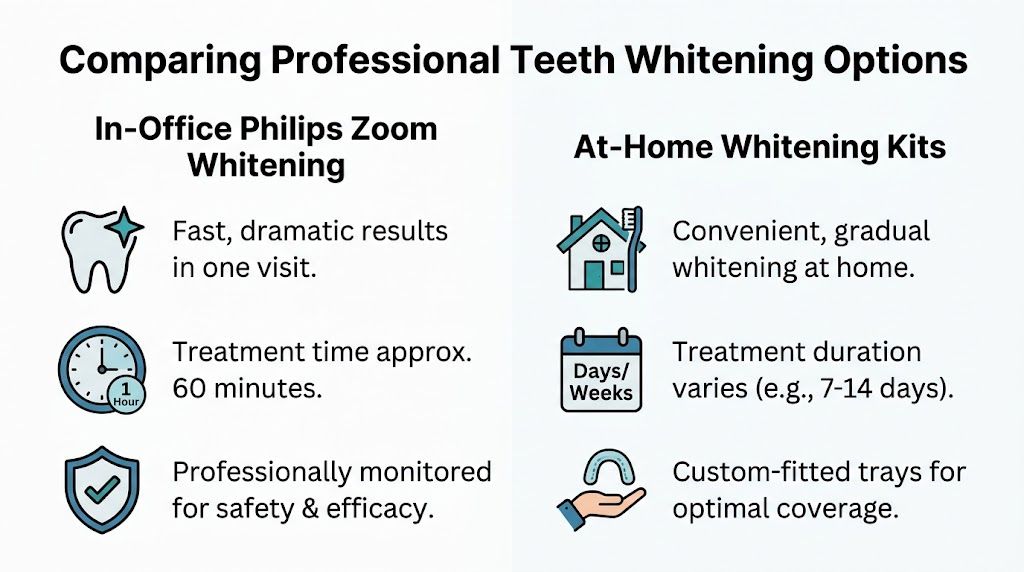
The biggest difference is strength and control. Professional in-office whitening uses 25-40% hydrogen peroxide to achieve a 6-8 shade lift in one session, while over-the-counter kits with 3-10% carbamide peroxide typically only achieve a 2-4 shade lift over several weeks.
In-office whitening
In-office whitening is designed for people who want speed, supervision, and a more dramatic result. This is often the best fit for someone with an upcoming event, visible staining, or limited patience for gradual changes.
A typical visit includes:
- assessing current shade and stain pattern
- protecting the gums and soft tissue
- applying a professional whitening gel
- monitoring the process closely
- checking the final shade and comfort level before you leave
This route is especially appealing to busy patients in Las Vegas who want one appointment rather than multiple days of at-home use.
Custom take-home trays
Custom trays are different from generic whitening kits sold in stores. They’re made to fit your teeth more closely, which helps improve gel contact and reduce sloppiness. That gives you more control than an over-the-counter option, even though the change happens more gradually than in-office care.
Take-home trays often make sense for patients who:
- prefer whitening in smaller steps
- have a flexible timeline
- want to refresh their smile over time
- like the convenience of home use with dentist guidance
For a deeper breakdown of how supervised whitening compares with common store products, this guide on professional teeth whitening vs over-the-counter whitening options is a helpful follow-up.
In-Office Zoom vs. Take-Home Trays at a Glance
| Feature | Philips Zoom In-Office Whitening | Custom Take-Home Trays |
|---|---|---|
| Best for | Fast smile upgrade | Flexible whitening at home |
| Speed | Usually completed in one visit | Gradual improvement over days |
| Supervision | Done under direct professional monitoring | Guided by dentist instructions, used at home |
| Strength | Higher-strength professional formula | Professional-grade but more gradual approach |
| Convenience | Ideal when time is tight | Ideal when schedule flexibility matters |
| Control over pace | Less day-to-day control, faster finish | More control over timing and progression |
What works best for different patients
A patient preparing for an interview, wedding, or major event often prefers in-office whitening. Someone with a history of sensitivity, or someone who wants a slower pace, may prefer custom trays.
What usually works best: Match the method to the patient’s timeline, stain type, and comfort level, not just to the brightest possible result.
Neither option is automatically “better” for everyone. The right choice depends on your enamel, your existing dental work, and whether you want speed or flexibility. That’s the trade-off most online articles skip, but it’s the part that matters most when you’re choosing care.
Our Patients’ Teeth Whitening Before and After Gallery
Before-and-after photos matter because they make whitening feel real. Patients want to see what a brighter smile can look like, not just hear that a treatment “works.” A good gallery also shows range. Not every patient starts with the same shade, the same stain type, or the same goal.
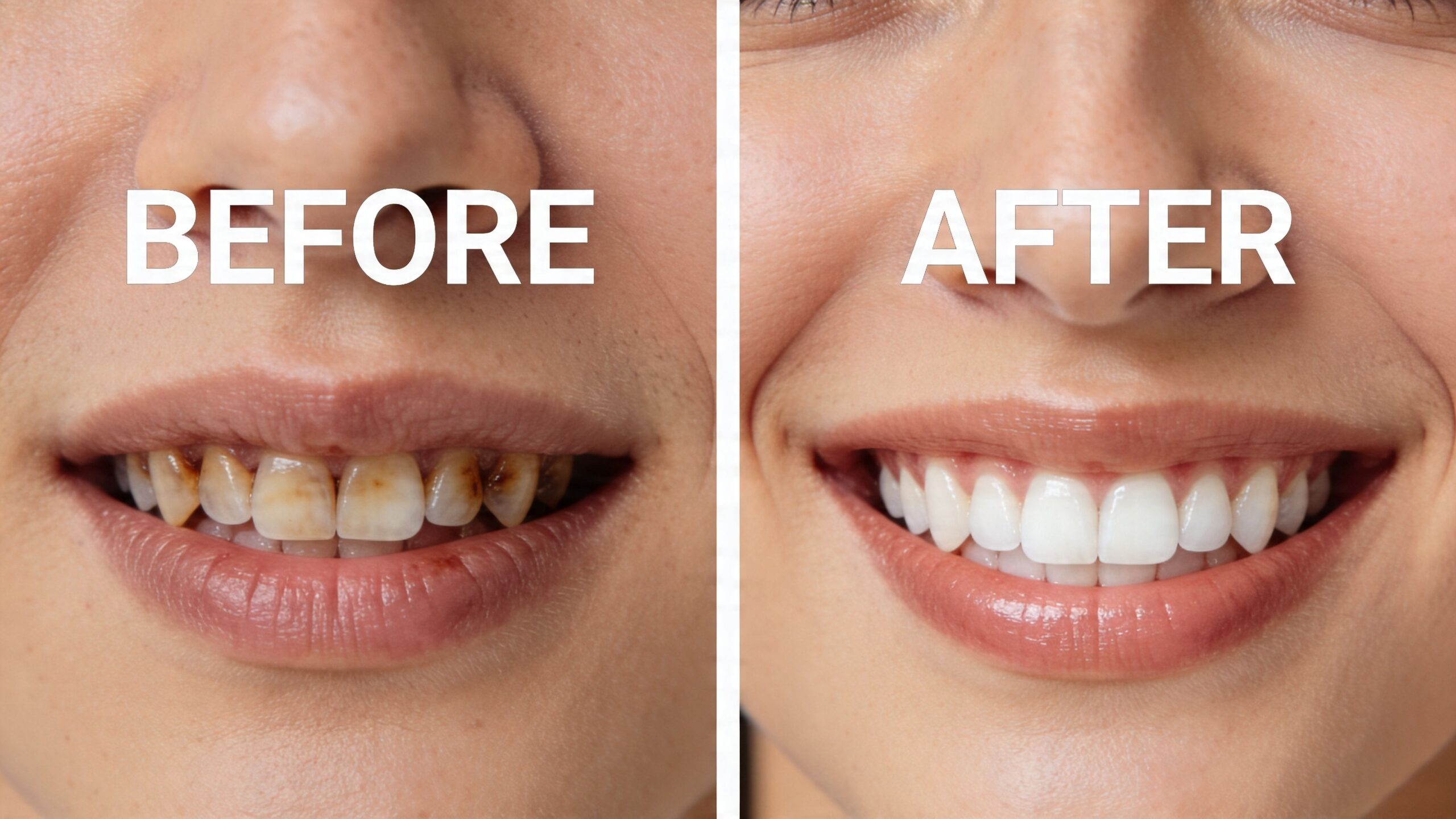
With Zoom-style in-office whitening, the process is built for visible improvement in a short visit. The Zoom whitening system uses a specialized LED light to accelerate the whitening process, achieving an average improvement of 6-8 shades on the Vita shade guide in a single 60-90 minute session. That kind of result is why so many people search specifically for teeth whitening before and after rather than general information about whitening.
What a real gallery should show
A trustworthy gallery shouldn’t be over-edited or staged in a misleading way. The most useful smile photos keep lighting, angle, and expression as consistent as possible. If you’ve ever wondered why some dental galleries look more believable than others, the same principles behind professional photography for websites apply here too. Clear visuals build trust because they help people judge results more accurately.
Here are a few examples of the kinds of whitening stories patients often relate to.
Three common whitening stories
The coffee stain case from Lone Mountain
This patient kept up with dental cleanings and had healthy teeth, but years of coffee left the front teeth looking darker than the rest of the smile. The goal wasn’t an ultra-bright Hollywood look. It was a cleaner, fresher version of the patient’s natural shade.
After professional whitening, the smile looked lighter and more even. The biggest difference wasn’t just color. The teeth reflected light better, which made the whole smile look healthier in photos.
The age-related yellowing case from Sun City Summerlin
This patient said, “I don’t think my teeth are dirty. They just look older.” That’s a good description of age-related discoloration. The change tends to be uniform, but it still affects confidence.
Whitening helped lift the overall tone without making the smile look artificial. Patients in this category often feel the result looks polished rather than dramatic.
A short video can also help patients see what the treatment process feels like in a more practical way.
The event-ready case from Painted Desert Estates
Some patients have a deadline. Engagement photos, a graduation, or a major business event can make whitening feel more urgent. This patient wanted a noticeable result without weeks of trial and error.
That’s where in-office treatment usually shines. One visit can create a visible upgrade quickly, which makes planning easier and avoids the uncertainty of store-bought products.
Why results vary from person to person
Before-and-after photos should inspire confidence, but they should also set realistic expectations. The final result depends on stain type, enamel condition, hydration right after treatment, and whether the smile includes dental work that won’t lighten the same way.
That’s why an honest smile gallery is useful. It helps patients see what’s possible while understanding that whitening is still personalized care. If you want to browse actual smile examples in more detail, the Aspiring Smiles smile gallery is a good place to start.
Managing Sensitivity and Aftercare for Lasting Results
The most common hesitation patients have about whitening isn’t whether they want a brighter smile. It’s whether their teeth will feel too sensitive afterward. That concern is reasonable, especially for people who already notice discomfort with cold drinks or brushing.
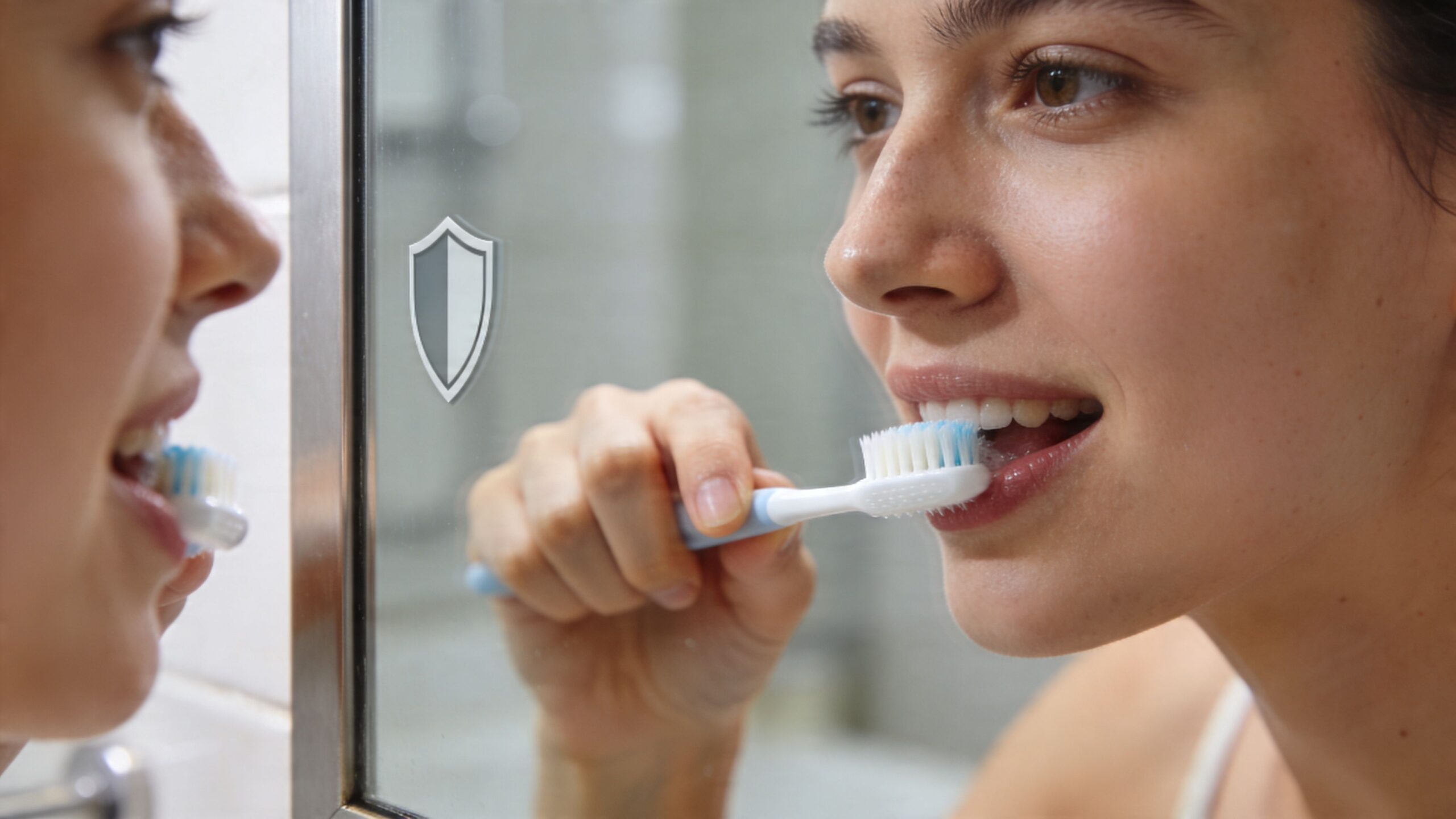
The good news is that sensitivity after whitening is usually manageable. Post-treatment tooth sensitivity is common but manageable; studies show pre-treatment use of a desensitizing toothpaste with potassium nitrate for two weeks can significantly reduce its intensity and duration after in-office procedures like Zoom.
Why sensitivity happens
Whitening works by breaking apart stain compounds inside the tooth structure. During that process, some patients feel short, sharp sensitivity, especially with cold air or cold drinks. It doesn’t mean the treatment damaged the tooth. It means the tooth is reacting temporarily to the whitening process.
Patients with worn enamel, exposed root surfaces, existing sensitivity, or recent dental work may notice it more. That’s why a whitening plan should always start with an exam, not just a product recommendation.
If a patient says their teeth are already sensitive before whitening, that changes the plan. It doesn’t always rule treatment out, but it does shape how the treatment should be done.
How to lower the risk before treatment
Preparation helps. If someone is worried about post-whitening sensitivity, a few steps can make the experience more comfortable.
-
Use a desensitizing toothpaste early
Starting before treatment gives the teeth time to respond, rather than waiting until sensitivity appears. -
Treat active dental problems first
Cavities, gum recession, or cracked teeth should be addressed before cosmetic whitening. -
Choose the right method
Some patients do better with a gradual take-home approach than a fast in-office session. -
Be honest about your history
If cold drinks already bother you, say so. That information matters.
The first 48 hours matter most
After whitening, teeth are more vulnerable to picking up new stains for a short window. That’s why dentists often recommend a “white diet” right after treatment. In practical terms, think light-colored foods and drinks, plus good hydration and gentle oral care.
Foods and habits to avoid for that period usually include:
- coffee
- tea
- red wine
- dark sauces
- tobacco
- strongly pigmented foods
A simple question helps patients remember the rule. If it would stain a white shirt, it can stain freshly whitened teeth.
How to keep the result looking good
Long-term maintenance is less dramatic than the whitening appointment itself, but it’s what protects the result. The patients who keep their smiles brighter longer usually stay consistent with daily habits and regular dental care.
Daily habits that help
-
Brush and floss consistently
Plaque holds onto pigments, so clean tooth surfaces stay brighter. -
Rinse after staining drinks
Even a quick water rinse helps reduce how long pigments sit on the enamel. -
Use a straw when it makes sense
That can reduce direct contact from iced coffee, tea, or similar drinks. -
Keep up with cleaning and exams
Professional cleanings remove buildup that can dull the smile over time.
When touch-ups make sense
Whitening isn’t permanent. Diet, hygiene, and habits all influence how long the result lasts. Some people stay happy for a long time before wanting a refresh. Others prefer small maintenance touch-ups rather than waiting until staining becomes obvious again.
Aftercare takeaway: Whitening works best when patients think beyond the appointment. The brighter result is the start. Maintenance is what keeps it looking intentional.
For patients balancing cosmetic goals with other treatment needs, this is also where broader dental care matters. A healthy mouth supports better cosmetic outcomes, whether you’re also considering restorative dentistry, Invisalign, dental implants near me, or staying current with preventive care.
The Aspiring Smiles Dental and Braces Experience in Las Vegas
Choosing whitening isn’t only about the product. It’s also about where you have it done and how carefully the treatment is planned. Patients looking for a dentist near me, cosmetic dentist near me, or a new long-term dentist in Las Vegas, NV usually want the same thing. They want clear answers, a comfortable visit, and treatment that fits their real life.
At Aspiring Smiles Dental and Braces, the experience is built around that kind of practical care. Dr. Patel and the team provide a full range of dental care in a modern setting, with services that include preventive visits, cosmetic dentistry, restorative dentistry, Invisalign, crowns, veneers, dental implants, and emergency dentist appointments when urgent problems come up.
A local office built around family care
For families and adults in Las Vegas, convenience matters. The office is located at 3211 N Tenaya Wy Suite 122, Las Vegas, NV 89129, making it accessible for patients in Desert Shores, Sunhampton, Sun City Summerlin, Monterrey, Lone Mountain, Mar-A-Lago, and Painted Desert Estates.
That local presence matters because whitening is rarely just a one-time conversation. Patients often bring it up during:
- new patient exams
- cleaning and exams
- post-Invisalign visits
- veneer or crown planning
- general cosmetic consultations
Why patients value a full-service practice
Whitening goes more smoothly when the same office can also handle the rest of your dental needs. If an exam finds decay, cracked enamel, or older restorations that affect the cosmetic result, it helps to have one team coordinating care rather than sending you in multiple directions.
That’s also true for patients with broader concerns, including:
-
Tooth extraction needs
If a tooth is beyond repair, comfort and planning matter before cosmetic work. -
Restorative needs
Crowns, fillings, and other repairs may need to be timed around whitening. -
Implant planning
Patients searching for dental implants near me often benefit from discussing smile color before final restorations are matched.
Practical details patients care about
A good dental experience isn’t only clinical. It’s also logistical. Aspiring Smiles welcomes new patients, accepts insurance, offers flexible payment options, and has a membership program that helps ongoing care feel more manageable. Extended weekday and Saturday hours also make scheduling easier for working adults and families.
For many people, that combination makes it easier to move from “I’ve been thinking about whitening” to booking the visit.
Frequently Asked Questions About Teeth Whitening
Patients usually ask a few direct questions right before booking. Those questions are worth answering clearly because whitening works best when expectations are realistic.
Can whitening change the color of crowns, veneers, or fillings
This matters more often than people expect. If your front teeth include older dental work, your natural teeth may brighten while the restorations stay the same. In those cases, a dentist may recommend whitening first and then updating visible restorative work if needed.
Is teeth whitening bad for enamel
When whitening is done properly and on the right candidate, it’s generally considered safe. Problems usually happen when people use the wrong product too often, skip the exam, or try to whiten teeth that already have untreated issues. A professional evaluation helps catch those problems first.
Will whitening work on every type of stain
No. Some stains respond very well, especially common surface discoloration. Deeper intrinsic stains can improve, but not always to the same degree. A single dark tooth, trauma-related discoloration, or shade differences caused by restorations may need a different plan.
How long do results last
That varies. Diet, tobacco use, oral hygiene, and maintenance all affect longevity. A patient who drinks coffee daily and skips cleanings won’t keep the same result as long as a patient who protects the teeth more carefully. The most useful way to think about whitening is that it’s maintainable, not permanent.
Is whitening a good option for teens
Sometimes, but it depends on age, enamel condition, and the reason for discoloration. Teen patients should be evaluated individually rather than using adult store products without guidance. If a family is also considering Invisalign or other cosmetic care, timing matters.
Should I whiten before veneers, bonding, or crowns
Yes, if the goal is to brighten natural teeth before matching future cosmetic or restorative work. Since restorations won’t whiten like enamel, dentists usually want the natural shade settled first before final color matching.
Is whitening enough, or do I need other cosmetic treatment
That depends on the problem. Whitening helps color. It doesn’t fix chipped edges, worn shapes, spacing issues, or damaged restorations. Some patients get the result they want from whitening alone. Others learn they’d benefit more from combining whitening with veneers, bonding, Invisalign, or restorative dentistry.
What if I also need routine care or urgent treatment
That’s common. Many patients start by searching for an emergency dentist, dentist near me, or help for a painful problem, then ask about cosmetic treatment later. Whitening should come after urgent issues are stabilized. Healthy teeth and gums come first.
If you’re ready to see what a brighter smile could look like, schedule a visit with Aspiring Smiles Dental and Braces. Whether you’re interested in teeth whitening, cleaning and exams, Invisalign, restorative dentistry, tooth extraction, emergency dental care, or dental implants in Las Vegas, NV, the team can help you build a plan that fits your smile, your schedule, and your goals.