What Is the Average Price of Dentures? Las Vegas Costs
TL;DR: The average price of a full set of conventional dentures in the U.S. and in Nevada is often quoted at just under $2,000, as noted earlier. In real treatment planning, the answer to what is the average price of dentures depends on the denture type, the materials selected, and whether you need extra care before the final prosthetic is made.
A patient in Las Vegas often reaches this question after months, sometimes years, of working around missing teeth. Eating out becomes stressful. Photos feel uncomfortable. Conversations can be distracting when teeth shift, slip, or leave visible gaps.
I see the same concern in the office every week. Patients are not only asking what dentures cost. They want to know what they are paying for, what will feel stable day to day, and whether a lower upfront price will still serve them well a year from now.
That is where online price ranges can fall short. Dentures are custom treatment, not a single flat fee. The final cost can change based on fit, materials, extractions, bone support, implant options, and how natural and secure you want your new teeth to feel.
For Las Vegas patients in communities like Desert Shores, Sunhampton, Sun City Summerlin, Monterrey, Lone Mountain, Mar-A-Lago, and Painted Desert Estates, local pricing matters. So does access to a practice that can explain the trade-offs clearly, from basic removable dentures to advanced full-arch options such as All-on-4. If you want a broader overview of denture treatment options in Las Vegas, that guide is a helpful place to start.
At Aspiring Smiles, the goal is simple. Give patients a clear treatment plan, transparent pricing, and practical ways to make care fit their budget, including financing when needed.
Restoring Your Smile and Confidence in Las Vegas
A patient who’s been living with missing teeth for a while often says the same thing in different words. They’re tired of planning their day around their mouth. They avoid certain foods, cover their smile when they laugh, and put off treatment because they assume it will be too expensive or too complicated.
That hesitation makes sense. Dentures can be life-changing, but the price range is wide enough that many people don’t know where they fit. Some need a basic removable solution. Others want stronger retention, better chewing, or a more secure long-term option with implant support.
Why cost feels confusing
Part of the confusion comes from the fact that “dentures” can mean very different things. A simple removable denture and a fixed full-arch implant restoration solve the same basic problem, but they do it in very different ways.
A patient in Sun City Summerlin who still has a few healthy teeth may be a candidate for a partial denture. Someone in Desert Shores who needs all teeth replaced may be deciding between a conventional denture, an immediate denture after a tooth extraction, or an implant-supported option. Those are not minor differences. They affect comfort, maintenance, stability, appearance, and cost.
A useful way to think about dentures is this. You’re not only paying for replacement teeth. You’re paying for fit, materials, function, and the clinical steps needed to make them work well in your mouth.
What patients really need from a Las Vegas dentist
People don’t just want a number. They want clarity. They want to know what works, what doesn’t, and whether a more expensive option is worth it for their daily life.
That’s why a practical discussion of dentures should include more than the national average. It should cover what you can expect locally, what can raise or lower the price, and when it makes sense to consider alternatives like implant-retained dentures or All-on-4. If you’d like a broader local overview before deciding, this guide to dentures in Las Vegas is a helpful next read.
For many families, dentures aren’t a cosmetic luxury. They’re part of restorative dentistry that helps them eat better, speak more clearly, and feel like themselves again.
A Clear Guide to Denture Types and Their Costs
“What is the average price of dentures?” usually turns into a more practical question in the exam room. Patients want to know which type fits their mouth, their daily routine, and their budget here in Las Vegas.
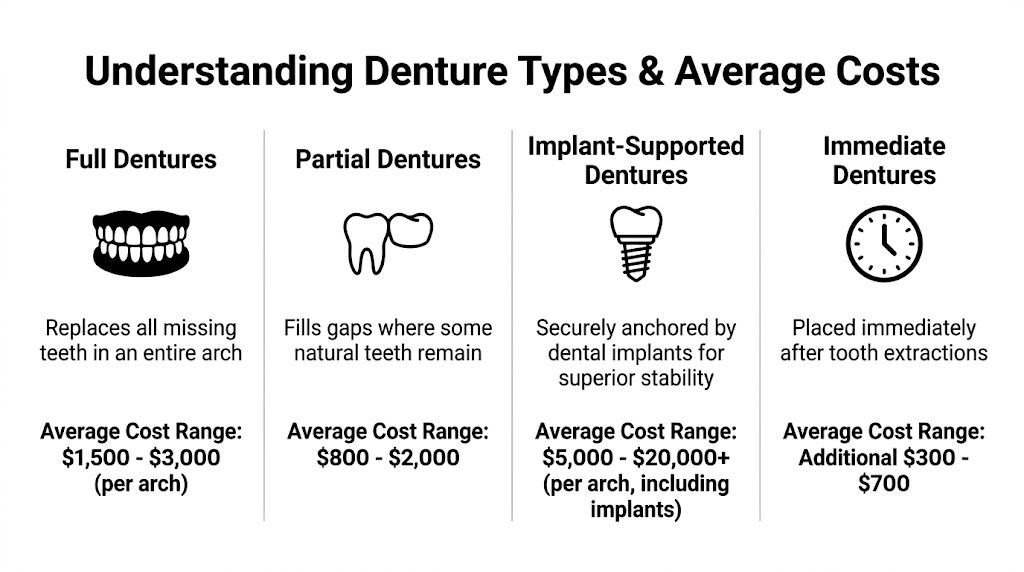
According to denture statistics and pricing data compiled by Dr. John Patterson, economy dentures can start around $800, premium custom dentures can reach $6,000 or more, implant-retained overdentures can range from $8,000 to $20,000, and fixed All-on-4 bridges can range from $18,000 to $35,000 or more. Those wide ranges reflect a simple truth. “Dentures” is not one product.
In our Las Vegas office, I encourage patients to compare options by function first and price second. A lower-cost denture that slips, rubs, or limits what you can eat may end up feeling expensive in daily life. A higher upfront investment can make sense if it gives you better stability, fewer remakes, and a more natural bite.
Denture comparison cost lifespan and best use
| Denture Type | Average National Cost Range (Per Arch/Set) | Typical Lifespan | Best For |
|---|---|---|---|
| Partial dentures | $800 to $2,000 | Varies by material and wear | Patients missing some teeth but still keeping natural teeth |
| Full conventional dentures | Often in the low thousands for a full upper and lower removable set | Depends on fit, material, and maintenance | Patients replacing a full upper and lower arch with a removable option |
| Immediate dentures | Often higher than conventional dentures because they are delivered right after extractions | Transitional use before long-term fit is finalized | Patients who need teeth placed right after extractions |
| Snap-on removable implant dentures | Implant costs vary separately from the denture itself | Varies by design and maintenance | Patients who want more hold than a conventional removable denture |
| Implant-supported permanent dentures | Implant costs vary separately from the denture itself | Built for longer-term stability | Patients who want a more secure implant-based restoration |
| Premium custom dentures | $2,500 to $6,000+ per arch | Can extend longer with higher-end materials | Patients focused on esthetics, fit, and upgraded materials |
| Fixed All-on-4 or All-on-6 bridges | $18,000 to $35,000+ | Long-term fixed full-arch replacement | Patients seeking a non-removable full-arch implant solution |
Partial dentures
Partial dentures work for patients who still have healthy teeth worth saving. They replace the missing teeth while using the remaining teeth for support.
This option often costs less than replacing a full arch, but the design matters. A well-made partial can restore chewing and keep nearby teeth from drifting. A poorly designed one can feel bulky, collect food, and put the wrong kind of stress on the teeth that remain.
Full conventional dentures
A full conventional denture replaces all teeth in the upper arch, lower arch, or both with a removable appliance. This is usually the starting point for patients focused on the lowest upfront cost and a non-surgical solution.
It can be a good choice. It is also the option patients misunderstand most often.
Upper dentures usually get better suction than lowers. Lower dentures have less surface area and more tongue movement to work against, so they often feel less stable. That does not mean they are failing. It means retention has natural limits when implants are not part of the plan.
Immediate dentures
Immediate dentures are delivered right after extractions so you do not have to spend the healing period without teeth. That benefit matters to many working adults, caregivers, and patients who do not want a visible gap during recovery.
They are usually temporary by nature. As the gums and bone shrink during healing, the fit changes. Relines, adjustments, or a replacement denture are common parts of the process, and patients deserve to hear that before treatment starts.
Implant-supported overdentures and snap-on dentures
Implant-supported overdentures, often called snap-on dentures, use implants to improve retention. They are still removable for cleaning, but they generally feel much more secure than a conventional denture.
This is the category where online price comparisons often confuse people. The denture itself is only part of the cost. You also have to account for implant placement, healing, attachments, and in some cases bone grafting. In Las Vegas, that difference is one reason two implant denture quotes can look far apart even when both offices are recommending a reasonable treatment plan.
For some patients, this is the best balance of cost and performance. You get more confidence while eating and speaking without committing to a fully fixed bridge.
Premium dentures and All-on-4
Premium dentures use better materials, more detailed characterization, and a more refined fitting process. Patients usually notice the difference in appearance, comfort, and durability.
At the top end are fixed full-arch implant restorations such as All-on-4 or All-on-6. At Aspiring Smiles, these cases require more planning, more technology, and more clinical steps than a standard removable denture. The trade-off is clear. Patients who want a prosthesis that stays in place and feels closer to natural teeth often find the added cost worthwhile.
Payment questions matter here too. Some patients also ask whether public benefits can help with treatment. Rules vary by state and by plan, so it helps to review current information on Medicaid dental coverage.
A simple way to compare the options:
- Partial dentures make sense when healthy teeth remain and support can be used well.
- Conventional full dentures usually have the lowest upfront cost for full-arch replacement.
- Immediate dentures help you avoid going without teeth during healing, but they are not the final fit.
- Snap-on dentures improve hold and chewing confidence, but total treatment cost includes the implants.
- All-on-4 and similar fixed options cost more because they involve surgery, planning, and advanced restorative work.
The right choice depends on how you want your teeth to function every day, not just which number looks lowest on a chart.
Key Factors That Determine Your Final Denture Price
Two patients can both ask for dentures and receive very different estimates. That isn’t price padding. It usually reflects different materials, different lab work, and different clinical needs before the final denture is even delivered.
Materials change both cost and performance
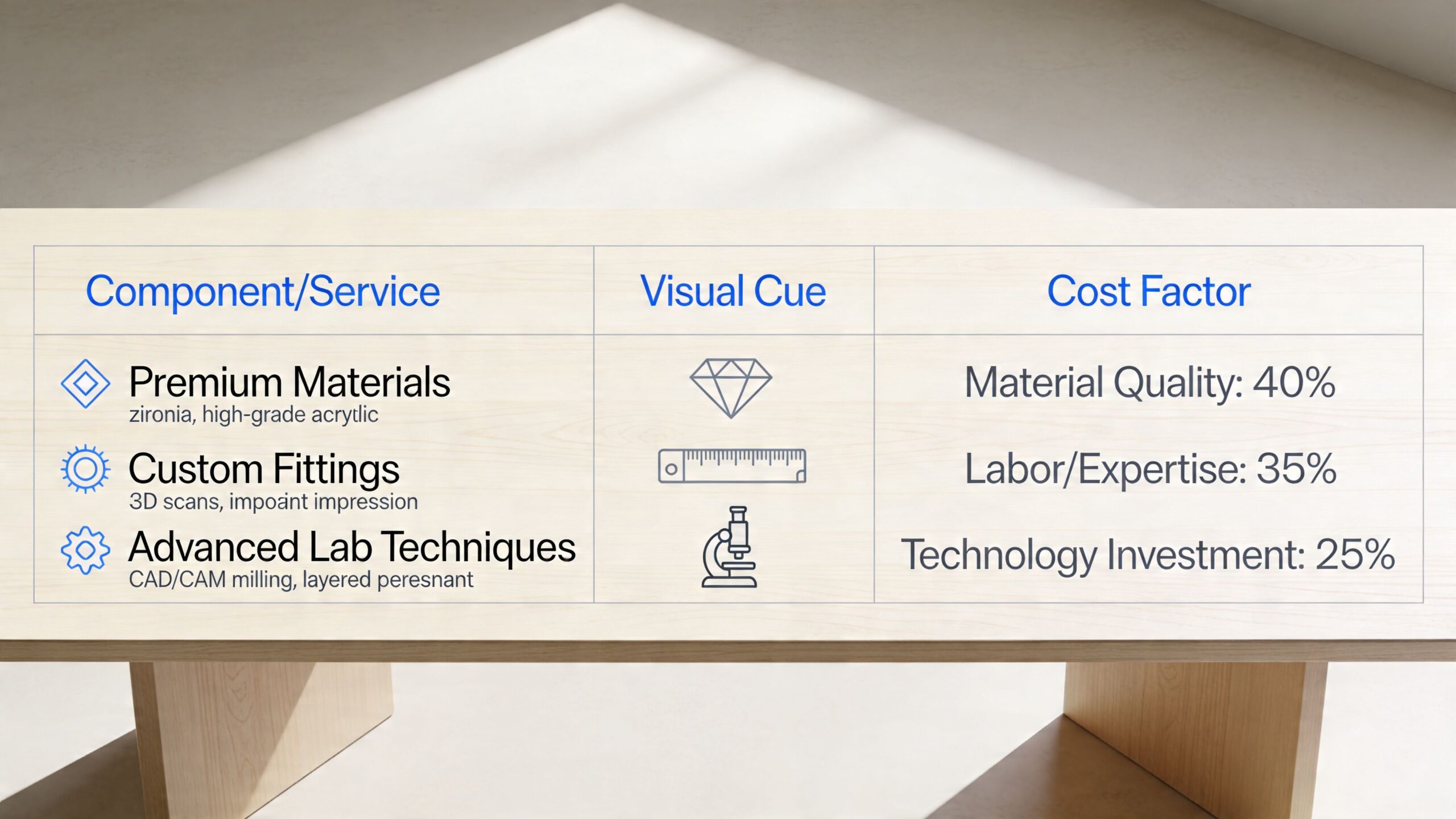
According to Madison Dental’s denture cost breakdown, low-cost dentures use cold-cured acrylic at $300 to $500 per plate and typically last 5 to 7 years. The same source states that mid-range dentures use heat-cured acrylic at $1,000 to $3,000 per set, while premium dentures at $4,000 to $8,000 use advanced materials that can last 10+ years.
That’s a real trade-off. Lower-cost materials can solve an immediate problem, but they may be more prone to wear, fracture, or a less natural appearance. Higher-end materials usually cost more because they’re built for better durability, better esthetics, or both.
Fabrication quality matters more than patients think
A denture isn’t just a product pulled off a shelf. It’s custom-made from records taken from your mouth. The bite has to be balanced. The fit has to work with your gums and jaw shape. The tooth setup has to support speech and appearance.
Cheap dentures often disappoint because the process gets rushed. That can show up as sore spots, looseness, clicking while speaking, or teeth that look flat and artificial. A denture can be technically complete and still be a poor experience if the fit and design are off.
Better dentures usually come from better planning, better impressions, and better adjustment visits. The denture itself is only part of the result.
Preparatory treatment can change the quote
Many patients need care before a denture can be made properly. That may include:
- Tooth extraction needs if damaged or loose teeth must be removed first
- Dental x-rays and exams to evaluate bone support, infection, and fit considerations
- Gum treatment if inflamed tissue needs to heal before records are taken
- Implant planning if you’re considering a more stable overdenture or full-arch option
These items often explain why one online estimate doesn’t match an in-office treatment plan. The denture may be the visible part of treatment, but the supporting care is what makes it functional and comfortable.
Location and coverage also play a role
Las Vegas patients should expect some local variation, especially in a city where overhead and lab choices can affect fees. Insurance can help in some cases, but coverage for removable prosthetics varies widely by plan, waiting period, and annual maximum.
For families sorting through public benefits or caregiver planning, this overview of Medicaid dental coverage can be a useful starting point. It won’t replace a benefits verification, but it helps explain why coverage questions often take some digging.
The most accurate quote comes after a real exam. That’s when a dentist can tell whether you need a straightforward removable denture or whether other treatment steps are driving the cost.
How Aspiring Smiles Makes High-Quality Dentures Affordable
A lot of Las Vegas patients sit in the chair expecting one hard answer. “Can I afford this, or do I need to keep waiting?” In many cases, the answer depends less on the denture itself and more on how the treatment is planned, phased, and paid for.
Local pricing matters, but payment structure matters just as much. Earlier in this article, we noted that Nevada denture costs tend to track closely with national ranges for conventional dentures, while implant-based options cost more and often require a longer financial discussion. That is why I focus on total practicality, not just the first number on a quote.
What actually makes treatment more affordable
Affordable denture care usually comes from a few concrete steps working together:
- Insurance coordination so you know what benefits may apply before treatment starts
- Financing options that break larger restorative costs into monthly payments
- Membership savings for patients without traditional dental insurance
- Phased treatment planning when urgent care needs to happen first and larger upgrades can wait
That approach matters because the right plan is different for every patient. A straightforward removable denture may be the most sensible choice for one person. Another patient may be tired of dealing with a loose lower denture and decide that an implant-retained option is worth the higher upfront cost because it improves stability, chewing, and confidence.
At Aspiring Smiles Dental and Braces, patients can compare those options side by side. That includes conventional removable dentures, implant-supported solutions, and advanced full-arch treatment such as All-on-4. The goal is to match the treatment to your daily life, your priorities, and your budget.
Real trade-offs matter
Lower upfront cost can be the right choice. It is not automatically the best long-term value.
A basic removable denture usually costs less at the start, but it may come with more adjustment visits, relines over time, and limits in stability, especially on the lower arch. Implant-supported treatment costs more, yet many patients choose it because it can feel more secure and reduce the frustration that often comes with slipping or movement while eating and speaking.
I tell patients to judge the plan by function, maintenance, and comfort, not by the opening fee alone.
Here is what tends to work best:
- A conventional denture works well for patients who want the lowest initial cost and are comfortable with a removable option
- A snap-on or implant-retained denture makes sense for patients who want more hold and are willing to invest more for that added stability
- All-on-4 or full-arch implant care fits patients looking for a more fixed solution and who want to understand the longer-term value before deciding
Patients who want to understand the full sequence before choosing a payment path can review this step-by-step guide to the denture process.
Transparent planning reduces costly surprises
The part patients appreciate most is clarity. Before treatment begins, they need to know which fees relate to the denture itself, which parts involve supporting care, and what can be scheduled in stages if needed.
That kind of planning reduces last-minute surprises and helps families make calm decisions. A denture should restore your ability to eat, speak, and smile with confidence. The financial plan should feel manageable too.
What to Expect During Your Denture Treatment Journey in Las Vegas
Most denture anxiety comes from not knowing what the process will feel like. Patients worry about pain, time away from work, how they’ll look during treatment, and whether the final result will feel natural.
Your first visit and treatment planning
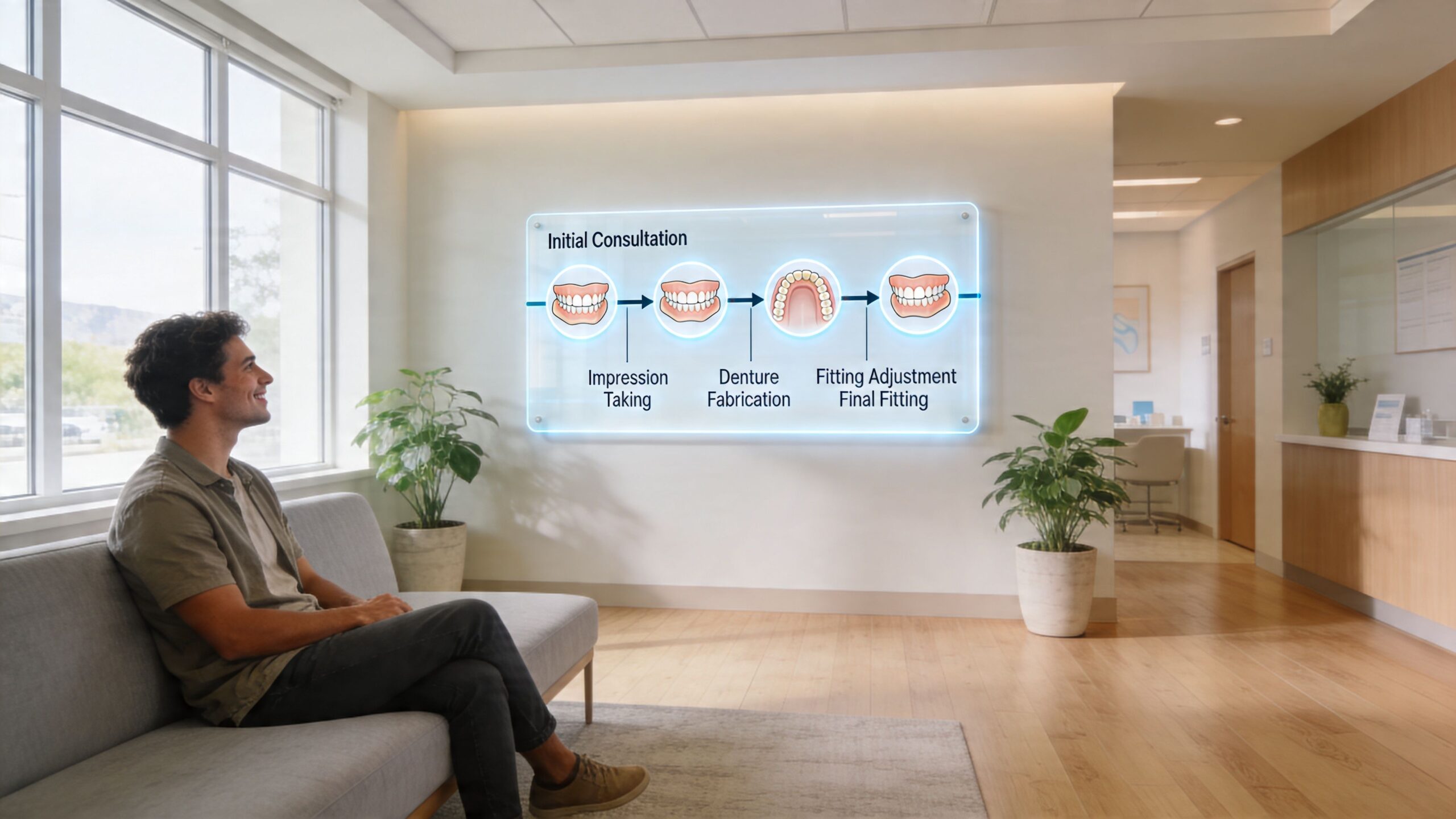
The process starts with a full exam, a conversation about your goals, and any needed dental x-rays. If you’re a new patient searching for a dentist in Las Vegas, NV because you’ve been putting this off, that first visit is usually more reassuring than expected. The main question is simple: what condition are your teeth, gums, and bone in right now?
If some teeth can be saved, a partial denture may be possible. If they can’t, treatment may include tooth extraction before a full denture or implant-based option is made. Patients considering a more detailed overview of the timeline can also review this step-by-step denture process guide.
Records, try-ins, and fit
Once the treatment plan is clear, records are taken for the lab. That may include impressions, bite registration, and shade or tooth-shape decisions. This phase matters because a denture that looks good on a model still has to work in a real mouth when you speak, smile, and chew.
Many patients also have a try-in appointment. That’s when you can preview how the teeth will look and how your bite lines up. It’s the stage where small changes can prevent big disappointment later.
A short overview can help if you want to see the treatment flow in another format.
Extractions and immediate replacement
If extractions are part of your plan, your dentist will explain whether you’re a candidate for an immediate denture or whether it’s better to let the tissue heal before making the final appliance. There isn’t one answer that fits everyone.
Immediate dentures can be helpful because you don’t have to be without teeth during healing. The trade-off is that your gums and bone will change shape as they recover, so adjustments are usually part of the process.
Delivery and the adjustment phase
The delivery appointment is important, but it’s not always the finish line. Even a well-made denture can create sore spots or pressure areas in the first days or weeks. That doesn’t mean something went wrong. It means your mouth is adapting, and the fit may need refinement.
Patients from Mar-A-Lago, Monterrey, and nearby Las Vegas neighborhoods often feel relieved when they hear that adjustment visits are normal. Dentures are custom prosthetics that interact with soft tissue every day. Fine-tuning is part of getting them right.
A few things help this stage go smoothly:
- Wear them as directed so pressure areas can be identified accurately.
- Keep follow-up visits instead of trying to self-adjust at home.
- Speak and eat gradually while your muscles learn the new shape.
- Call promptly if pain is sharp, persistent, or paired with swelling.
The best denture process is rarely the fastest one. It’s the one where the patient understands each stage and gets the adjustments needed for the denture to become comfortable and dependable.
The Lifelong Benefits of a Complete and Healthy Smile
People often start by asking about cost, but they usually judge the decision later by quality of life. A denture that fits well can change daily living in ways that are hard to measure before treatment starts.
Eating speaking and looking like yourself again
Missing teeth make eating less enjoyable and less predictable. Many people start avoiding foods they once liked because chewing feels uneven or embarrassing. A stable replacement helps bring meals back into normal life.
Speech matters too. Front teeth guide many sounds, and gaps or loose dentures can make words feel harder to control. When the bite and tooth position are designed correctly, patients often notice that conversations feel easier and less self-conscious.

Oral health is part of whole-person confidence
A complete smile also supports facial shape. Without teeth, the cheeks and lips can lose support, which can create an older or more sunken appearance. Dentures, partial dentures, and implant-supported restorations help restore that structure.
That benefit often overlaps with other services patients may consider later, including cosmetic dentistry, crowns, implants, and even teeth whitening for remaining natural teeth. Restorative care and cosmetic goals aren’t always separate. For many patients, they work together.
Maintenance protects your investment
The value of dentures depends partly on how they’re maintained. Daily cleaning, regular dental checkups, and timely adjustments all help keep them comfortable and functional.
If you’re comparing products for home care, this overview of denture cleaning products can help you understand the basics of cleaning solutions and tools. Product choice matters, but so does routine. A quality denture that isn’t cleaned properly won’t stay comfortable for long.
A denture should help you live more normally. If you still can’t eat with confidence, speak comfortably, or smile freely, the solution may need adjustment or a different design.
That’s why the lowest price isn’t always the lowest cost in real life. A well-planned denture pays back through better function, fewer daily frustrations, and more confidence in public and at home.
Your Next Step to a New Smile at Aspiring Smiles
A patient often sits down in my chair after weeks of searching online, frustrated by how wide the denture price range looks and unsure which number applies to real life in Las Vegas. The honest answer is that the average price only becomes useful after an exam. The actual cost depends on what you are replacing, the condition of the gums and bone, whether extractions are still needed, and how much security you want when you eat and speak.
Some patients do well with a conventional full denture. Others are better served by a partial that preserves healthy remaining teeth. Some decide the added cost of implant-supported dentures or All-on-4 is justified because they want stronger bite force, less movement, and fewer day-to-day compromises. Those are practical decisions, not cosmetic extras.
When it’s time to schedule
If missing teeth are making it harder to chew, speak clearly, or feel comfortable in public, a consultation gives you something more useful than another online estimate. It gives you a diagnosis, a treatment plan, and a clear breakdown of costs based on your mouth, your goals, and your budget.
Patients in Las Vegas, including Lone Mountain, Painted Desert Estates, Desert Shores, Sunhampton, and Sun City Summerlin, usually want the same thing. Straight answers. You should know which options are realistic, what each one costs, where the trade-offs are, and what kind of maintenance to expect over time.
Local care with a clear path forward
Dr. Patel and the team see patients from across the area at 3211 N Tenaya Wy Suite 122, Las Vegas, NV 89129. If your treatment may involve exams, digital imaging, extractions, implant planning, or a phased denture approach, those steps should be explained clearly before you commit to anything.
A good consultation should feel calm and specific. You should leave knowing what type of denture fits your needs, what the financial path looks like, and whether financing can make a better long-term option more manageable.
Ready to find out which denture option fits your needs and budget? Schedule a consultation with Aspiring Smiles Dental and Braces to get a personalized treatment plan, clear pricing, and practical guidance for replacing missing teeth in Las Vegas.