Las Vegas Family Dentistry | Aspiring Smiles
Some families in Las Vegas are juggling three different dental calendars at once. A child needs a first checkup, a teen is asking about Invisalign, and a parent is searching for help with a cracked molar or missing tooth. By the time you’ve compared offices, moved work schedules around, and tried to remember who has which records, dental care starts to feel harder than it should.
That’s where family dentistry matters. A single dental home can make routine care simpler, but the bigger value is long-term partnership. When one team follows your oral health over time, it becomes easier to catch changes early, guide each stage of care, and make decisions that fit real life in Las Vegas.
The Search for a Trusted Dentist in Las Vegas
Monday morning in Las Vegas often starts the same way for parents. One child needs a cleaning, another has tooth pain, and an adult in the house has been putting off treatment for months because fitting in one more appointment across town feels unrealistic.
That search for a trusted dentist is really a search for stability. Families want an office that can keep care organized, remember health history, and give clear recommendations as needs change over time. They also want a team that can treat a nervous child, monitor a teen’s developing bite, and help an adult decide whether a cracked tooth needs a filling, crown, or extraction.
I see the strain that scattered dental care puts on families. Records are split between offices. Advice can differ from one provider to the next. Small details get missed, especially during life transitions like a child aging out of pediatric care or a parent finally addressing long-delayed restorative work.
A strong family dental home helps prevent those gaps.
What families are usually trying to avoid
In practice, the biggest problems tend to be predictable:
- Repeated health histories: You explain medications, previous treatment, dental anxiety, and past concerns at every new office.
- Disconnected records: X-rays, notes, and treatment plans live in different systems, which makes it harder to compare changes over time.
- Inconsistent recommendations: One provider prefers to monitor an area, while another suggests treatment right away.
- Missed continuity between life stages: Children, teens, adults, and older patients often need different care at different times, but their history still matters.
For families in areas like Lone Mountain, Monterrey, and Sunhampton, one practice can make routine care easier. It also gives your dentist a fuller view of your household’s oral health. That long-term view matters. It helps us spot patterns early, explain options in context, and plan treatment that fits your budget, schedule, and health priorities.
If you’re looking for a dentist near you in Las Vegas, distance is only one factor. The better question is whether the office can become a reliable dental home for your family, year after year.
What Exactly is Family Dentistry
Family dentistry means your household can receive all-ages dental care under one roof, with one team following your history over time. In a city like Las Vegas, where schedules change fast and families are often balancing school, work, sports, and caregiving, that continuity is more than convenient. It gives your dentist a clearer clinical picture and gives you a steadier plan for prevention, repair, and long-term maintenance.
Instead of splitting care between separate offices, a family dentist pays attention to how needs change from one life stage to the next. A young child may need gentle introductions and cavity prevention. A teenager may need closer monitoring of bite changes or wisdom teeth. An adult may be dealing with grinding, old fillings, or delayed treatment. An older family member may need more support for gum health, dry mouth, or tooth replacement. Good family care connects those stages, rather than treating each visit like an isolated event.
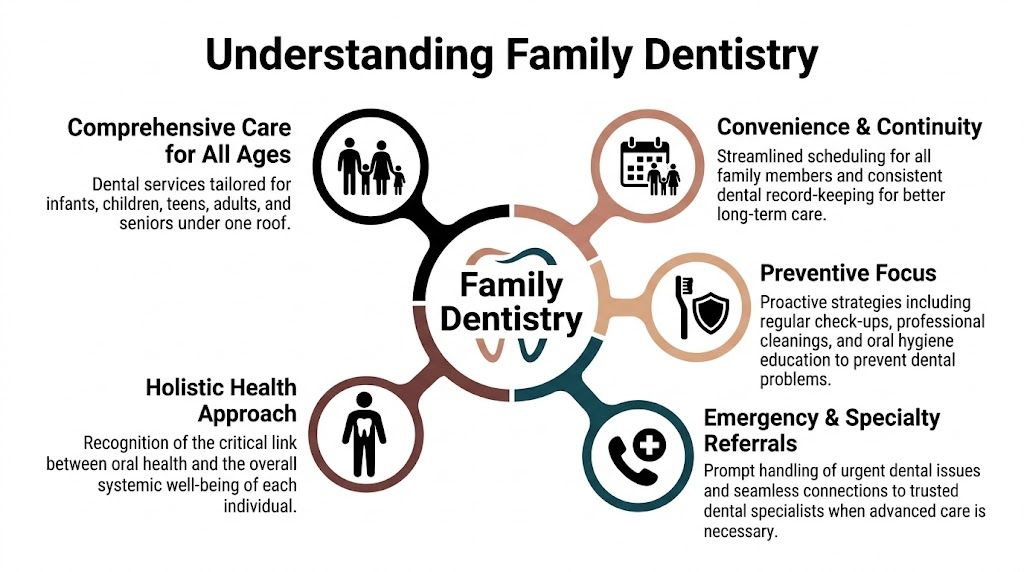
One practice, many stages of care
General dentists handle the day-to-day oral health needs that keep families healthy year after year. That includes preventive visits, fillings, crowns, gum evaluations, monitoring growth and wear, and knowing when a referral makes sense. In a family practice, that work is stronger because it happens in context. We are not just seeing a single tooth on a single day. We are comparing what changed, what has been stable, and what pattern may be developing.
That long view matters.
A child with early enamel weakness may need closer preventive follow-up for years. A teen with crowded teeth may later want orthodontic treatment. A parent who has chipped teeth and jaw soreness may show a clear grinding pattern once we have tracked wear over several visits. Family dentistry works best as an ongoing healthcare relationship, not a series of unrelated appointments.
How family dentistry differs from fragmented care
Specialists have an important role, and some cases absolutely need that level of focused care. But for routine treatment and many more involved concerns, families usually benefit from having one trusted dental home coordinating the bigger picture.
A strong family dentistry model often leads to:
- Shared clinical history: The team already knows past treatment, medical updates, dental anxiety, and patterns seen on earlier exams and X-rays.
- Smoother transitions: Children can grow into teen and adult care without leaving behind years of useful history.
- More personalized prevention: Home care advice, recall timing, and treatment planning reflect actual risk, not a generic template.
- Better coordination: If a referral is needed, the family dentist can help connect specialty care back to the overall plan.
The trade-off is that a family dentist is not meant to replace every specialist. The role is to serve as the central point of care, handle the broad range of needs that fit general practice, and refer when the case calls for it. At Aspiring Smiles, that is how we approach family dentistry in Las Vegas. We focus on consistency, clear guidance, and treatment plans that make sense for the person in the chair and the family around them.
A good family dentist is not only treating today’s problem. They are also protecting your future baseline, so small issues are more likely to stay small.
Dental Care for Every Member of Your Family
A parent brings in a seven-year-old for a checkup, then mentions their teenager has jaw soreness, and finally admits they have been putting off treatment for a cracked molar. That is everyday family dentistry in Las Vegas. The value is not only convenience. It is having one dental home that can connect those needs, keep the history straight, and make better decisions over time.
Care should change with age, but it should still feel connected. A child may need coaching and cavity prevention. A teen may need bite monitoring and honest discussion about appearance, sports protection, or orthodontic options. An adult may need repair work that fits a budget and a schedule. An older adult may need treatment planned around dry mouth, medications, worn restorations, or missing teeth. When one team follows those changes over the years, patterns are easier to catch early and treatment plans are usually more personal.
Young children and early prevention
For young children, the first goal is comfort. A rushed, stressful visit can shape dental anxiety for years. A calm introduction, age-appropriate language, and realistic expectations usually work better than trying to accomplish too much in one appointment.
That approach also gives parents practical guidance. We look at brushing habits, cavity risk, diet patterns, spacing, and how the teeth are developing. If preventive treatment such as sealants or fluoride makes sense, it should be recommended for a clear reason, not as a routine add-on for every child.
Parents often ask how to make visits easier for nervous kids. Many of the same principles used in pediatric care overlap with broader patient comfort strategies, including simple communication, predictable steps, and a calmer environment. This guide on how to make patients more comfortable explains that well.
Teens and developing smiles
Teenagers usually need a more direct conversation. They want to know what matters now, what can wait, and what affects daily life. That includes sports mouthguards, cavities around inconsistent home care, crowding, wisdom tooth monitoring, and questions about straighter teeth.
This stage also matters because habits start to stick. A teen who understands why bleeding gums, frequent snacking, or skipped cleanings matter is more likely to protect their smile as an adult. Family dentistry helps here because the office already knows the patient's history, past X-rays, and how their bite has changed over time.
Adults who want function and appearance
Adults are often managing several priorities at once. Work schedules, childcare, insurance limits, and old dental work all affect timing and treatment choices. In practice, the best plan is not always the biggest plan. It is the one that solves the main problem, protects the tooth, and fits the patient's real life.
Common adult care may include:
- Preventive maintenance: Exams, professional cleanings, gum health checks, and monitoring of existing fillings or crowns
- Restorative treatment: Fillings, crowns, bridges, and tooth replacement for damaged or missing teeth
- Cosmetic improvement: Whitening, veneers, and other treatment that improves appearance without ignoring long-term function
Someone searching for a cosmetic dentist near me is often looking for more than a brighter smile. They may be preparing for job interviews, speaking more in public, or trying to feel comfortable in photos again. Cosmetic treatment should respect enamel, bite function, and the condition of the supporting teeth and gums.
Seniors and long-term oral health
Older adults usually bring a longer health history into the exam room. Medications can increase dry mouth. Gum recession can raise cavity risk on root surfaces. Existing crowns, bridges, and dentures may still work, but they often need closer maintenance as the years pass.
Continuity pays off in a practical way. If a dentist has seen how a patient's bite, restorations, and gum health have changed over time, treatment decisions are less of a guess. That matters when deciding whether to repair, replace, monitor, or refer.
Family dentistry services by age at Aspiring Smiles
| Age Group | Preventive Care | Common Treatments |
|---|---|---|
| Young children | First exams, hygiene guidance, regular checkups | Sealants, cavity treatment, habit monitoring |
| Teens | Cleanings, X-rays, bite evaluation | Invisalign consultations, fillings, wisdom tooth monitoring |
| Adults | New patient exams, gum evaluations, routine maintenance | Crowns, cosmetic dentistry, restorative dentistry, dental implants |
| Seniors | Ongoing exams, periodontal monitoring, denture checks | Dentures, implant-supported restorations, crown replacement |
Good family dental care grows with the patient. The relationship stays steady, the plan changes as needed, and every stage of care benefits from knowing what came before.
What to Expect During Your Visit to Our Las Vegas Office
Walking into a new dental office can feel uncertain, especially if you’ve had a difficult experience before or if you’re bringing a child who’s already nervous. The visit should feel organized and calm from the start.
At our Las Vegas office, the first step is a conversation. Before anyone talks about treatment, the team needs to understand what brought you in. Sometimes that’s simple. You’re due for a cleaning. Other times it’s more specific, like sensitivity on one side, a broken tooth, old dental work that no longer feels right, or concern about your child’s brushing habits.
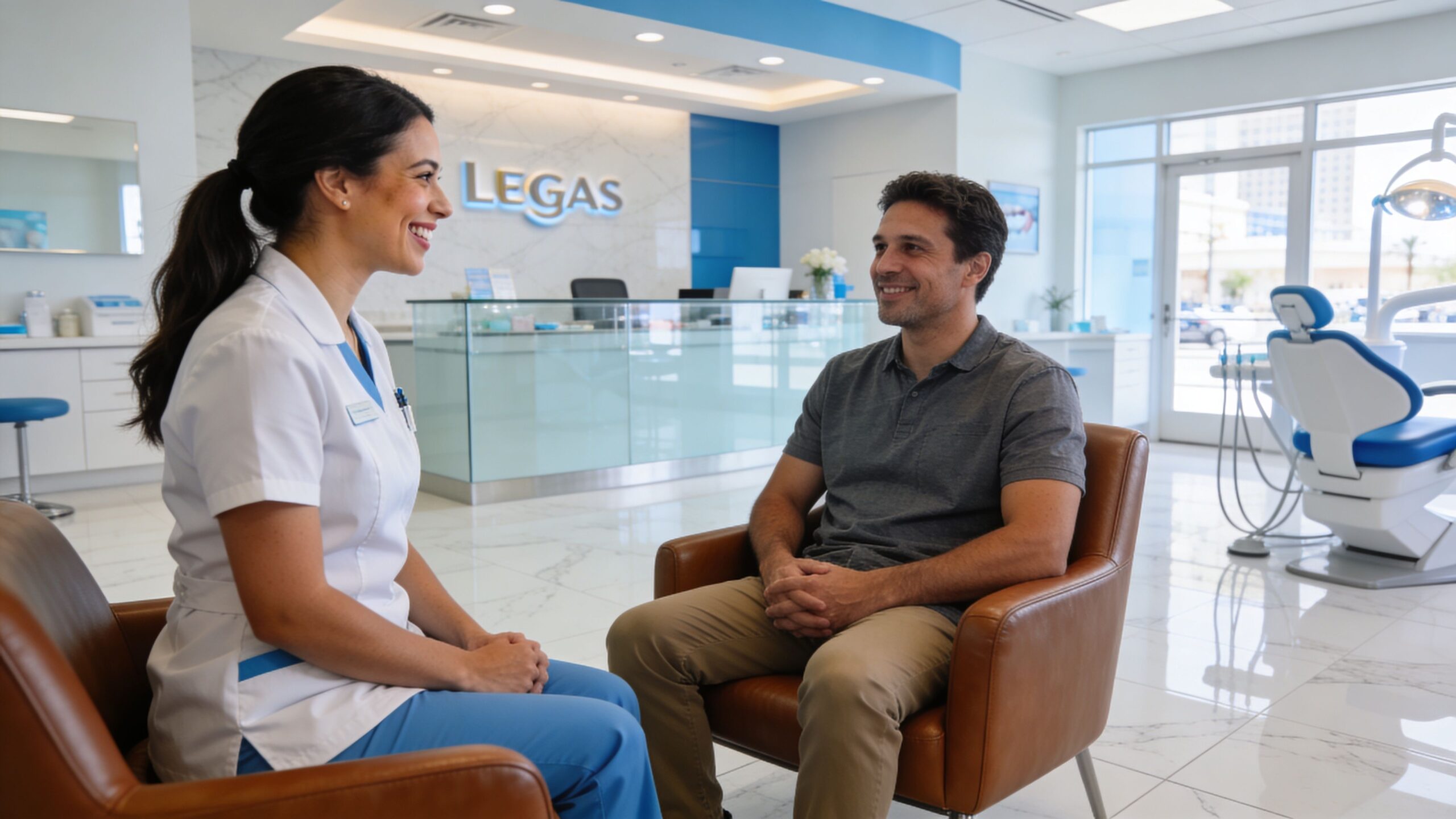
The exam and imaging process
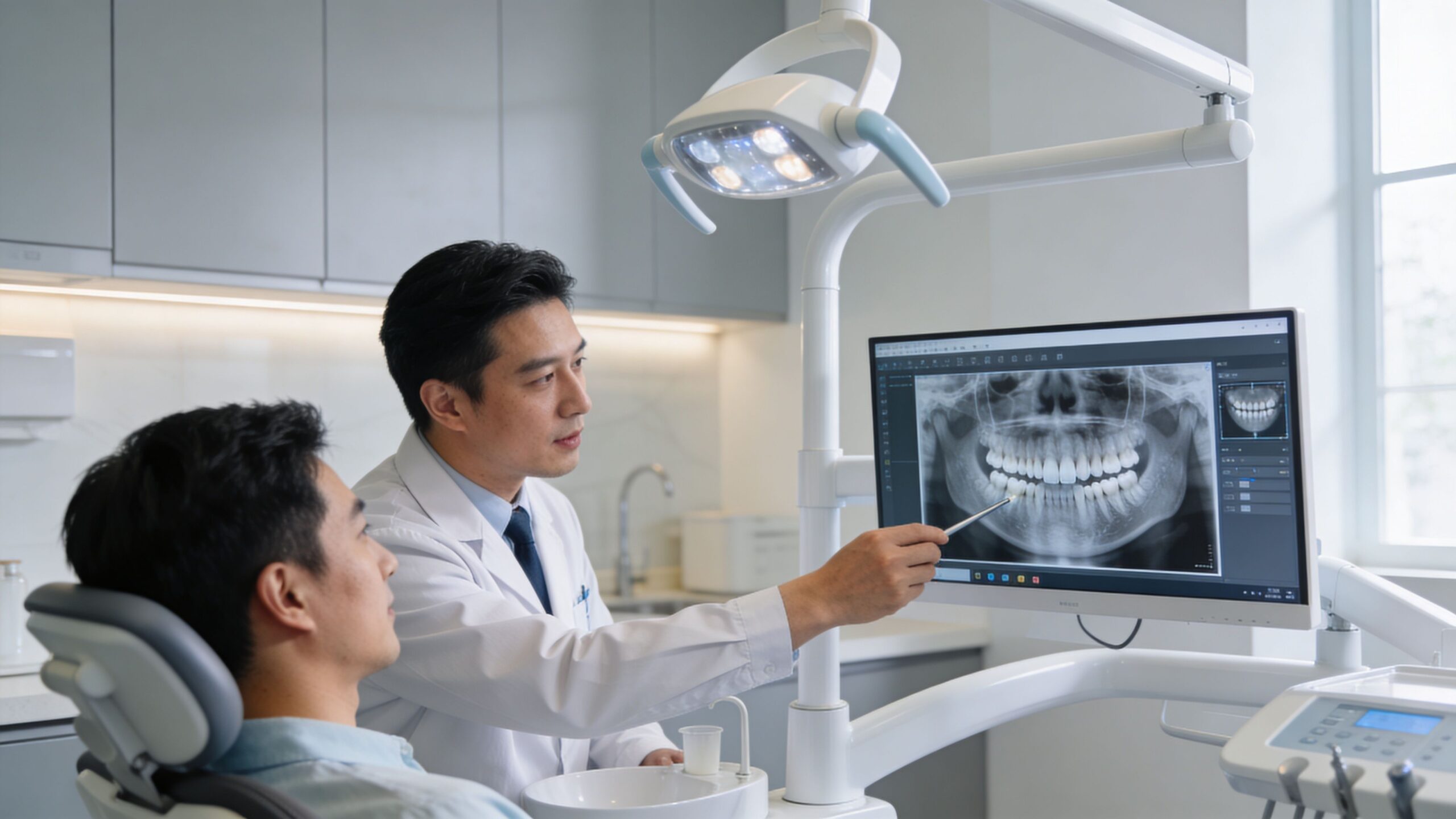
A thorough exam does more than look for cavities. It checks the gums, existing restorations, bite function, visible wear, and signs that something may be changing below the surface. When imaging is needed, our practice uses advanced digital radiography, which provides strong image quality for early detection while reducing radiation exposure by up to 90% compared to traditional film X-rays, as described in this overview of technological advances in family dentistry.
That matters for families because better imaging helps with earlier, more conservative decisions. It also tends to make visits smoother. Digital systems are faster, cleaner, and easier to review chairside with patients.
Comfort matters during every step
People often assume comfort is only about pain control. It’s broader than that. Comfort also comes from knowing what’s happening, how long it will take, and what your options are.
A few things help consistently:
- Clear explanations: Patients do better when they can see the problem and hear the options in plain language.
- Pacing: Some people want care completed efficiently. Others need treatment broken into manageable steps.
- Physical setup: Positioning, neck support, and small details in the chair can affect the whole experience. Resources on how to make patients more comfortable often focus on ergonomics for a reason.
Chairside reminder: Anxiety drops when patients know what to expect next. A simple explanation before each step usually helps more than rushing.
At the end of the visit, treatment recommendations should feel specific, not generic. If you need only a healthy cleaning schedule, that should be clear. If you need a crown, tooth extraction, cosmetic update, or restorative work, you should leave understanding the reason, the sequence, and the next step.
Advanced Dental Solutions We Offer
Family dentistry doesn’t stop at checkups. A strong family practice also needs to solve bigger problems without making patients feel like they’ve been dropped into a maze of referrals.
Some concerns are straightforward. Others require planning. A cracked tooth may need a crown. A missing tooth may call for an implant. Stained or uneven front teeth may be better treated with whitening, bonding, or veneers depending on the cause. The right choice depends on structure, function, goals, and timing.
Restorative care that protects function
Restorative dentistry is about keeping your mouth working comfortably and predictably. That includes repairing teeth and replacing teeth when they can’t be saved.
Common solutions include:
- Crowns: Often used when a tooth is weakened, fractured, or heavily restored.
- Dental implants: A long-term option for replacing missing teeth and helping preserve chewing function.
- Implant-supported dentures and All-on-4: Used when patients need more stability than traditional removable dentures can provide.
When people search for dental implants near me, they’re usually looking for more than a replacement tooth. They want to eat comfortably, smile without hesitation, and stop worrying about a gap getting worse over time.
Cosmetic treatment with practical planning
Cosmetic dentistry should never ignore function. Good smile design starts with healthy gums, stable teeth, and a bite that can support the result.
Treatment may include teeth whitening, veneers, enamel reshaping, or a combination plan. Zoom teeth whitening can be a useful option when the issue is primarily shade. Veneers may make more sense when shape, spacing, or surface appearance also need correction. The decision should be based on the actual problem, not on whatever treatment sounds most dramatic.
Orthodontic and surgical solutions
Invisalign works well for many teens and adults who want a more discreet way to improve alignment. It can help with crowding, spacing, and some bite concerns, but it isn’t the answer for every case. Clear aligners work best when the patient is consistent and when the treatment plan is realistic.
Surgical care also has an important place in family dentistry. Tooth extraction may be recommended when a tooth is beyond repair, causing infection risk, or affecting neighboring teeth. In those moments, the goal is straightforward. Remove the source of pain or instability, protect the surrounding tissues, and plan the next step carefully.
For patients who want one office that can handle preventive visits and more involved treatment planning, Aspiring Smiles Dental and Braces provides family, cosmetic, restorative, implant, and emergency services in Las Vegas.
Guidance for Dental Emergencies in Las Vegas
Dental emergencies create two problems at once. Something hurts, and you’re forced to make decisions fast. In that moment, people need calm instructions more than they need jargon.
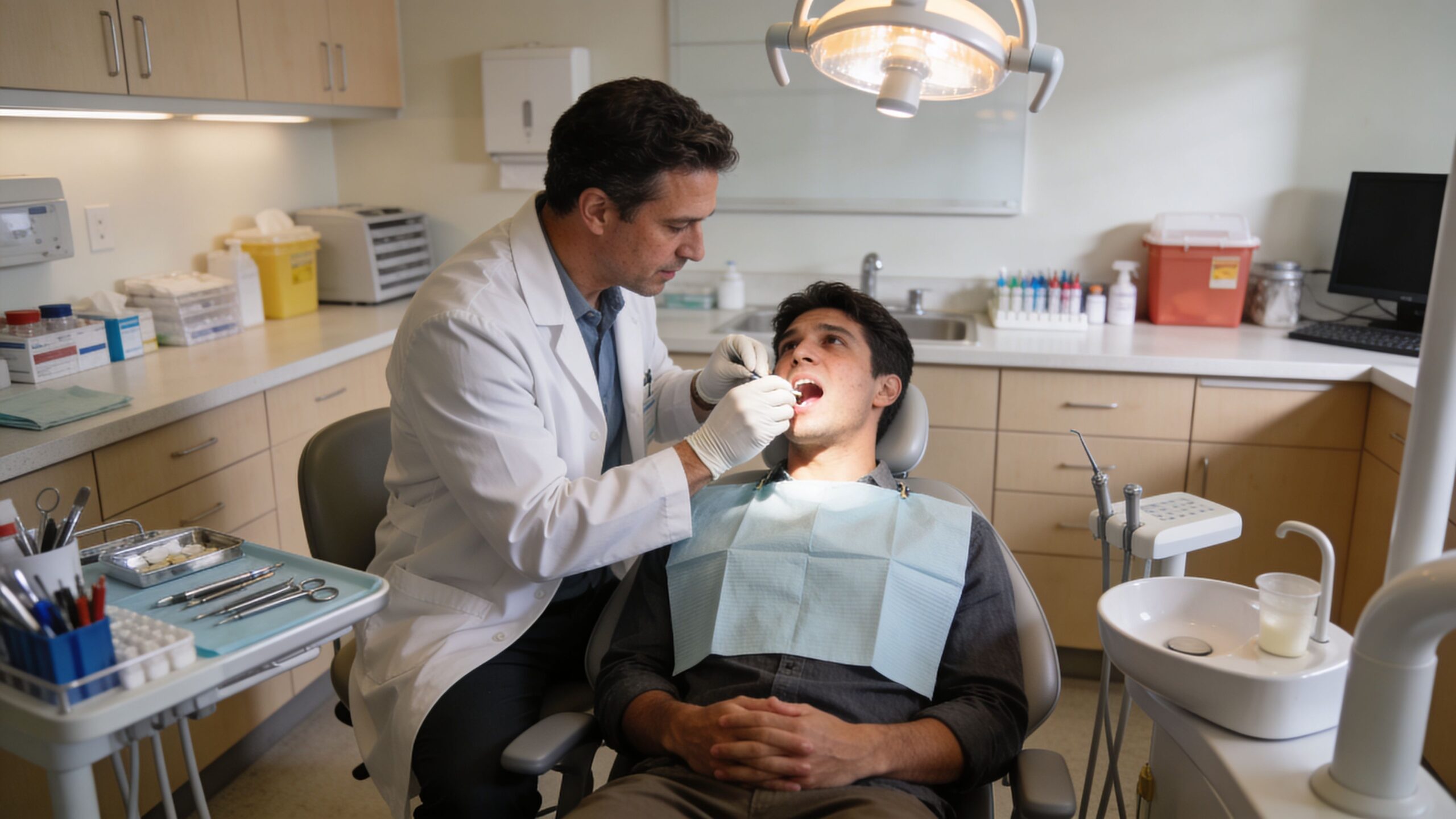
A real emergency may involve a knocked-out tooth, swelling that’s spreading, severe pain that won’t ease up, uncontrolled bleeding, trauma to the mouth, or signs of infection such as facial swelling and pressure. A lost filling or chipped tooth isn’t always an emergency, but it can become one if pain increases or the tooth becomes exposed.
What to do first
The first goal is to protect the area until you can be seen.
- For a knocked-out tooth: Handle it by the crown, not the root. Keep it moist and call right away.
- For swelling or possible abscess: Don’t place aspirin on the gum. Contact the office promptly and seek urgent medical help if swelling affects breathing or swallowing.
- For bleeding after injury: Apply clean gauze and steady pressure.
- For a broken tooth: Rinse gently, avoid chewing on that side, and save any pieces if you can.
What usually doesn’t work is waiting a few days to “see if it settles down” when pain is sharp, swelling is growing, or the tooth has suffered trauma. Delay often turns a manageable problem into a more complex one.
If a dental problem is keeping you from eating, sleeping, or concentrating, it needs attention sooner rather than later.
Communication matters during urgent care. Many practices are rethinking how quickly patient calls are handled after hours, and broader discussions around an answering service for dentists show why responsiveness matters so much when patients are in pain.
A quick visual overview can also help if you’re trying to figure out whether a situation sounds urgent:
When to call right away
Call for emergency dental care if you have sudden swelling, a tooth that’s been knocked loose, a cracked tooth with pain, or bleeding that doesn’t stop with pressure. If you’ve had trauma to the face or jaw and something feels off when you bite or open your mouth, that also deserves prompt evaluation.
In Las Vegas, where busy schedules can tempt people to push urgent care off until tomorrow, the safer move is to call and ask. It’s always easier to downgrade a concern after evaluation than to undo the damage from waiting too long.
Making Care Affordable with Insurance and Membership
A lot of Las Vegas families put off dental visits for one reason. They are trying to be careful with the budget.
That hesitation is real, and it deserves a practical answer. In a family practice, cost discussions should happen early, in plain language, before treatment begins. Parents need to know what insurance is likely to cover, what their portion may be, and how we can phase care if several needs show up at once. That kind of planning makes it easier to protect oral health without creating avoidable financial stress.
Affordability also matters for long-term continuity. When one office cares for children, teens, adults, and older family members, we can track patterns over time and recommend treatment in the right order, rather than letting small issues wait until they become more expensive to fix.
How insurance and membership usually help
Dental insurance can reduce the cost of preventive visits and certain treatments, but benefits vary quite a bit from one plan to another. Deductibles, annual maximums, waiting periods, and coverage percentages all affect what a family pays. A good review of benefits should leave you with a clear picture of the recommended care, the timing, and the expected out-of-pocket costs.
For patients without insurance, a membership plan can be a sensible option. It gives families a more predictable way to stay on schedule with exams, cleanings, and routine care, which is often the point where problems are easiest and least expensive to address.
As noted earlier, untreated dental disease is more common when routine care is harder to afford. I see that pattern in real life. Families are not ignoring their health. They are often trying to balance groceries, school costs, housing, and medical bills, and dental care gets pushed back until something hurts.
A practical option for ongoing care
A membership plan tends to work well for patients who:
- Do not have dental insurance: They still want regular preventive care and clearer pricing.
- Prefer predictable household expenses: One straightforward plan is often easier to manage than unexpected treatment bills.
- Want one dental home for the family: Staying established with the same office helps us follow changes over time and guide each person through different stages of care.
- Are trying to avoid bigger problems later: Regular visits give us more chances to catch decay, gum inflammation, wear, and bite changes early.
If you want to see how that works in one place, the Aspiring Smiles membership program explains the preventive services and treatment savings available to uninsured patients.
Affordable family dentistry is not only about lowering a bill. It is about making steady, preventive care realistic, so your family can keep one trusted dental home and make better decisions before a minor issue turns into a larger one.
Choose Aspiring Smiles as Your Las Vegas Family Dentist
Family dentistry works best when it feels steady. You know where to go for cleanings, for a child’s first visit, for a painful tooth, for cosmetic questions, and for more advanced restorative care. That kind of continuity saves time, but more than that, it gives your family a care team that understands the bigger picture.
For households in Las Vegas, including Painted Desert Estates, Mar-A-Lago, and Sunhampton, that relationship can make dental decisions less stressful and more consistent. Dr. Patel’s patient-focused approach centers on clear communication, thoughtful planning, and treatment that fits real life instead of forcing patients into one-size-fits-all recommendations.
If you’ve been looking for a dentist in Las Vegas, NV who can care for children, teens, adults, and seniors in one place, a family dental home is often the strongest long-term choice.
Frequently Asked Questions About Family Dentistry
When should a child first see a family dentist
A child should come in early enough for the dental team to monitor development, discuss home care, and make the first visits feel normal and low-pressure. Early visits are more about prevention and comfort than about doing extensive treatment.
Is a family dentist different from a general dentist
A family dentist provides general dental care with an emphasis on treating patients across age groups and maintaining continuity for the whole household. The practical difference is the long-term relationship and the ability to guide care from childhood through adulthood.
Can family dentistry help with dental anxiety
Yes. Anxiety is common in both children and adults. What helps most is a calm environment, clear explanations, gentle pacing, and a team that pays attention to how each patient responds during the visit.
What if I don’t have dental insurance
You still have options. Many patients use an in-house membership plan to make preventive care and ongoing treatment more manageable. The important thing is not to delay care just because traditional insurance isn’t in place.
If you’re ready to simplify dental care for your household, Aspiring Smiles Dental and Braces offers family, cosmetic, restorative, implant, and emergency care for patients across Las Vegas. Schedule a visit to establish a dental home that supports your family’s health for the long term.