Average Cost of a Root Canal in Las Vegas, NV
A bad toothache has a way of taking over your whole day. You try to chew on the other side, sip something cold more carefully, and hope the throbbing settles down on its own. If the pain keeps waking you up, lingers after hot or cold foods, or comes with swelling, many patients in Las Vegas are dealing with a tooth that may need root canal treatment.
That's usually when the cost question shows up right beside the pain question. Patients want relief, but they also want a straight answer about what treatment will cost and whether the total includes everything needed to keep the tooth functional. In my experience, the confusion usually isn't about the root canal alone. It's about the full picture, including the exam, X-rays, and the crown that may come after treatment.
Experiencing Tooth Pain? Your Las Vegas Dentist Can Help
A lot of people start in the same place. They notice a deep ache on one side of the mouth, then pain when biting down, then a sharp reaction to coffee, ice water, or even breathing in cool air. By the time they search for an emergency dentist or a dentist in Las Vegas, NV, they're often tired, worried, and hoping they won't hear that the tooth has to come out.
That kind of pain often means the inside of the tooth is inflamed or infected. The nerve space in a tooth is small, but when pressure builds there, it can feel intense. Patients from Desert Shores, Sun City Summerlin, and Lone Mountain often describe it the same way. It doesn't feel like a routine cavity. It feels like something is very wrong.
Signs the tooth needs prompt attention
Some symptoms deserve quick evaluation:
- Persistent throbbing pain that doesn't fade after a day or two
- Sensitivity that lingers after hot or cold foods
- Pain when chewing or tapping the tooth
- Swelling or tenderness in the gum near the tooth
- Darkening of the tooth or a pimple-like bump on the gum
A root canal doesn't create the pain patients fear. The infection inside the tooth does.
Getting seen promptly matters. A tooth that might be saved with restorative dentistry can become harder to treat if the infection spreads or the tooth cracks further. For many patients looking for a dentist near me in Las Vegas, the first priority is simple. Stop the pain, find out what's going on, and get a clear treatment plan.
Why a Root Canal Is a Tooth-Saving Procedure
A root canal is one of the most misunderstood treatments in dentistry. Patients often arrive expecting the procedure to be the difficult part, when in fact the painful part is usually the infection already happening inside the tooth.
What's happening inside the tooth
Every tooth has an inner space that contains soft tissue, often called the pulp. When deep decay, a crack, or trauma lets bacteria reach that space, the tissue can become inflamed or infected. Because that space is enclosed, pressure builds quickly and can lead to severe pain.
A simple way to think about it is this. If one room inside a house is contaminated, you don't tear down the whole house if the structure can still be saved. You clean out the damaged area, disinfect it, seal it, and keep the rest intact. That's what root canal treatment does for a natural tooth.
What the procedure is meant to do
The purpose of root canal treatment is straightforward:
- Remove the infected or inflamed tissue from inside the tooth
- Clean and disinfect the canals so bacteria are reduced
- Seal the space to help prevent reinfection
- Restore the tooth so you can chew comfortably again
The goal is pain relief and tooth preservation. That matters because your natural tooth still gives you the best biting feel, the most familiar function, and one less gap to manage later.
Why saving the tooth usually helps more than waiting
When patients delay care, the problem usually doesn't stay the same. Infection can worsen. The tooth can become more brittle. The surrounding gum and bone can become involved. Then a case that might have been handled with root canal therapy and restorative care can turn into a conversation about tooth extraction, replacement options, or a more complex emergency visit.
Practical rule: If pain keeps you from sleeping or chewing normally, don't wait for it to “settle down.”
This is also why root canals fit into broader restorative dentistry. They don't just remove infection. They help preserve chewing function, keep neighboring teeth from shifting into a missing space, and reduce the chance that you'll need a more involved replacement later.
For patients searching for an emergency dentist in Las Vegas, it helps to reframe the procedure. A root canal isn't punishment for a bad tooth. It's often the most conservative way to save it.
Breaking Down the Average Cost of a Root Canal
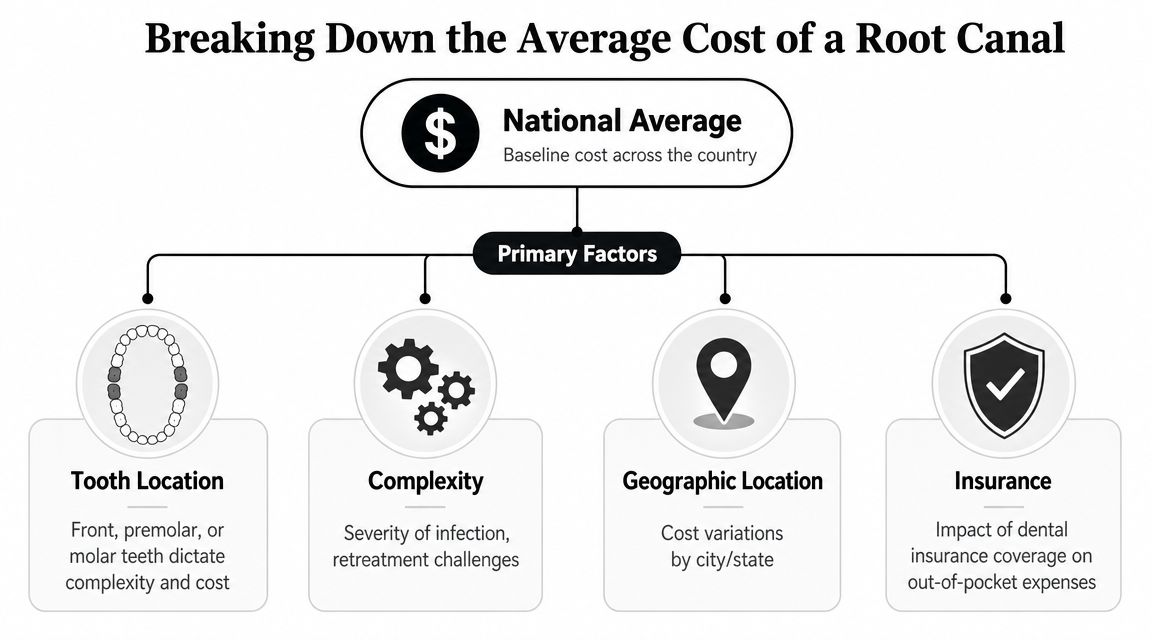
When patients ask about the average cost of a root canal, the most honest answer is that there isn't one flat fee for every tooth. The procedure is priced by difficulty, and the biggest driver is usually which tooth needs treatment.
According to CareCredit's root canal cost guide, the national average is $1,165, with a broad range of $500 to $1,800. The same source also notes that Delta Dental's out-of-network estimates place front-tooth treatment around $620 to $1,100, premolars around $720 to $1,300, and molars around $890 to $1,500. That tells patients something important right away. Root canal pricing changes with anatomy.
Why front teeth usually cost less than molars
Front teeth are often simpler to treat because they usually have fewer canals and easier access. Molars sit farther back, commonly have more canals, and take more time and precision to clean thoroughly. That added complexity tends to raise the fee.
Here's the practical breakdown:
| Tooth type | Common out-of-network procedure range |
|---|---|
| Front tooth | $620 to $1,100 |
| Premolar | $720 to $1,300 |
| Molar | $890 to $1,500 |
If you're dealing with a painful back tooth, it's reasonable to expect the procedure-only fee to land higher than it would for a front tooth. That doesn't mean anything is wrong with the estimate. It usually reflects the anatomy of the tooth.
What else can change the procedure fee
Tooth location is the main pricing factor, but it isn't the only one. In real practice, a few issues often affect the final estimate:
- How complex the infection is. A straightforward case is different from a tooth with difficult canal anatomy.
- Whether the tooth has had previous treatment. Retreatment can be more involved.
- The local market. Fees in Las Vegas, NV can differ from fees in other regions because practice costs and local dental markets differ.
- Provider type and treatment planning. The right setting depends on the tooth, symptoms, and what imaging shows.
Patients also often ask how many appointments treatment will take. The answer depends on the tooth and the condition of the infection. If you want a simple overview, this guide on the number of visits needed for a root canal treatment can help you understand why some cases are completed faster than others.
The procedure fee answers only one part of the cost question. For many patients, the bigger number comes from the restoration that protects the tooth afterward.
That's why a transparent estimate matters. When you're comparing treatment plans in Las Vegas, don't just ask, “How much is the root canal?” Ask what's included, what isn't, and whether the tooth will also need a crown.
Additional Costs to Plan For Your Dental Crown
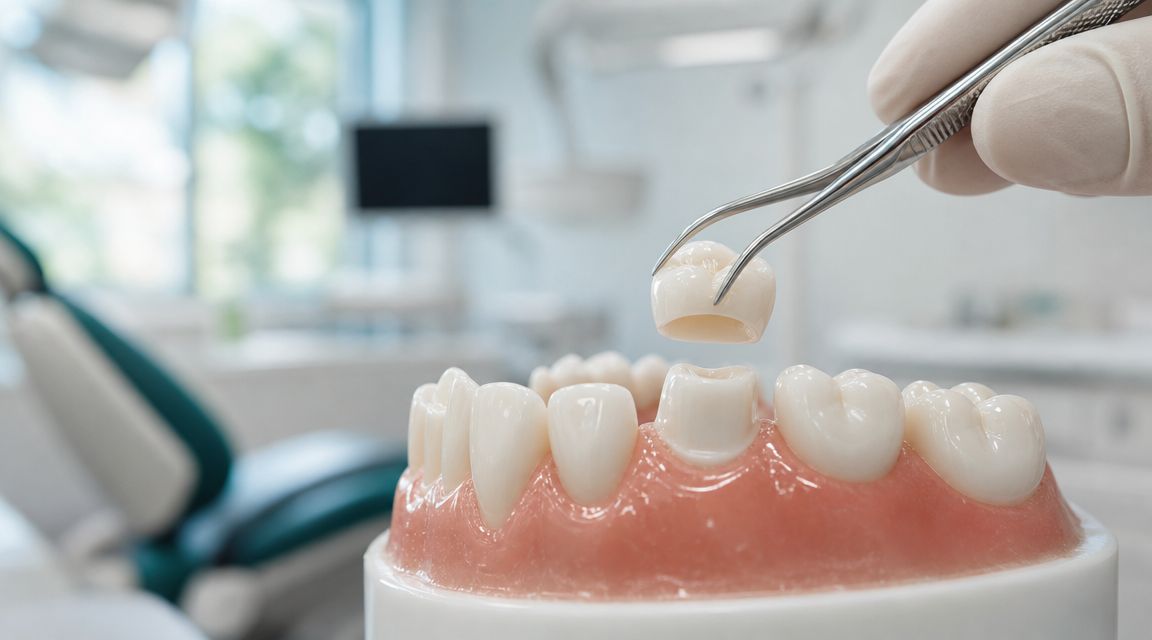
One of the biggest surprises for patients is learning that the root canal and the crown are often billed separately. That's not a hidden fee. It reflects two different parts of treatment. The root canal removes infection from inside the tooth. The crown protects the outside structure so the tooth can keep functioning.
Why the crown matters so much
After a root canal, the tooth can be more vulnerable to fracture. This is especially true for back teeth that absorb strong chewing pressure every day. In many posterior teeth, a crown isn't optional if the goal is long-term function.
A good way to picture it is a helmet over a weakened structure. The crown helps hold the tooth together and reduces the chance that a successful root canal is followed by a cracked tooth.
What patients should budget for
According to Gentle Dental's root canal cost overview, a crown commonly adds roughly $800 to $3,000, and some 2025 practice pricing guides place the combined root canal plus crown total at about $2,000 to $3,200 or more. That same source explains why this matters so much in posterior teeth. The crown is often part of completing the treatment properly, not an extra add-on.
For patients trying to understand the total, it helps to separate the questions:
- Procedure cost means the root canal itself
- Restoration cost means the crown or other final protection
- Total treatment cost means both together, plus any exam or imaging that may be needed
If your tooth needs coverage after treatment, this overview of dental crowns after root canals explains why the final restoration is such an important part of protecting your investment.
If a molar gets a root canal but never gets properly restored, the treatment plan is incomplete.
Patients in Las Vegas often feel better once they hear that distinction clearly. The number they saw online may describe the root canal only. The number that keeps the tooth usable is often the full treatment plan.
Navigating Insurance and Financing in Las Vegas
A common Las Vegas call sounds like this: the tooth is throbbing, the patient wants relief fast, and the first question is, "What will my insurance really cover?" That is the right question to ask. For many patients, the difference between putting treatment off and getting out of pain comes down to understanding the full estimate before the appointment starts.
According to GoodRx's review of root canal costs, many dental plans cover 50% to 80% of root canal costs after the deductible is met. The same source notes that total cost can also include consultation fees of $85 to $130, X-rays of $25 to $750, and a final crown of $800 to $3,000. In real life, that means the insurance benefit may lower one part of the bill while still leaving a meaningful balance for imaging, the procedure, or the crown.
What insurance usually changes
Insurance often helps with the endodontic procedure itself, but coverage details vary from plan to plan. The questions that affect your out-of-pocket cost are usually straightforward:
- Has the deductible been met
- Is the office in network with your plan
- How much of your annual maximum is still available
- Does the plan cover the crown under the same percentage as the root canal
- Are there waiting periods or exclusions that apply
Two Las Vegas patients can need the same treatment and receive very different estimates. That usually comes down to plan design, not the tooth.
What helps when the estimate still feels high
The best first step is a written treatment estimate that separates each part of care. Exam. X-rays. Root canal. Crown, if needed. That format helps patients see what insurance may pay for and what they may still owe.
I find that patients feel more comfortable once the total is explained clearly instead of quoted as one lump sum. That is especially true when they have been searching online and have only seen the root canal fee, not the complete treatment cost. Clear numbers reduce stress. They also make it easier to decide whether same-day treatment, phased care, or financing makes the most sense.
Some patients use financing to break a larger balance into monthly payments. Others prefer a membership-style savings option if they do not have traditional dental insurance. At Aspiring Smiles Dental and Braces, patients can review treatment costs, insurance acceptance, and payment options before treatment begins, which helps remove the guesswork during an already painful situation.
Questions to ask when you call
If you are calling a dentist in Las Vegas, NV about tooth pain, ask for specifics:
- What will today's visit include
- Will I need X-rays before the doctor can confirm treatment
- Is the estimate for the root canal only, or for the root canal and crown
- Can your team verify my insurance benefits before I come in
- If I still have a balance, what payment or financing options do you offer
Those questions usually lead to a much clearer conversation. They also help you compare estimates fairly if you are speaking with an emergency dentist or choosing a new office for ongoing dental care.
Comparing Costs Root Canal vs Tooth Extraction
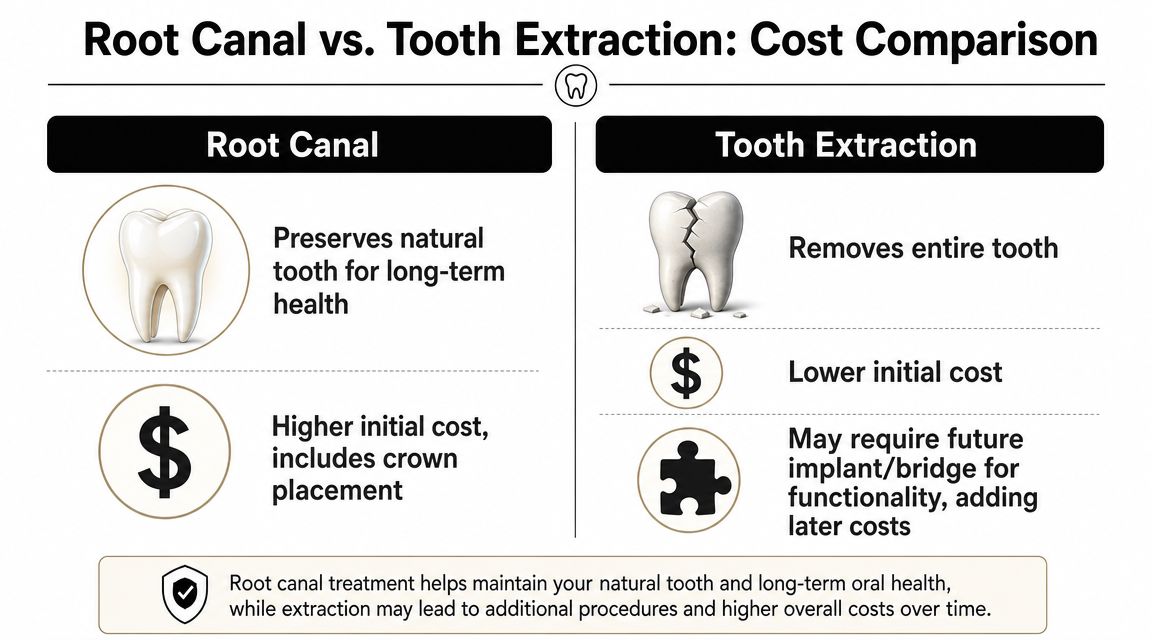
When a tooth hurts badly, some patients ask a very reasonable question. Wouldn't it be cheaper to just remove it? In the short term, extraction can look like the simpler answer. In the long term, that decision often creates a second problem that also needs treatment.
The short-term and long-term trade-off
A root canal aims to preserve your natural tooth. An extraction removes the source of infection, but it also removes the tooth that was doing the chewing.
That changes the decision. You're not only comparing one procedure against another. You're comparing saving a tooth versus creating a gap that may need to be restored later.
| Option | Immediate result | Longer-term consideration |
|---|---|---|
| Root canal with restoration | Infection is treated and the natural tooth is preserved | The tooth still needs proper restoration and follow-up care |
| Tooth extraction | The tooth is removed | The missing tooth may affect chewing, spacing, and replacement planning |
What extraction can lead to later
A missing tooth can create problems that don't show up on day one. Neighboring teeth may drift. Biting forces can change. Some patients notice chewing becomes uneven. In visible areas, the missing tooth can also affect appearance and confidence.
If you decide to replace the tooth, you may later look at options such as a bridge or dental implants near me. Dental implants are often the most complete replacement option because they restore the missing tooth structure more fully, but they involve a separate treatment plan from the extraction itself.
Saving a restorable natural tooth is often the more conservative path, even when the upfront fee is higher.
When extraction still makes sense
There are cases where extraction is the right call. A tooth may be too damaged to restore, too cracked to predictably save, or too compromised by bone loss or decay. In those situations, removing the tooth can be the healthier option.
The key is not to choose extraction only because the root canal estimate seems higher at first glance. A fair comparison looks at function, future replacement needs, and total oral health. Patients in Painted Desert Estates, Sunhampton, and nearby Las Vegas neighborhoods usually benefit from hearing both paths clearly before deciding.
If the tooth can be predictably saved, root canal treatment plus proper restoration often protects function in a way extraction alone does not.
Your Next Steps for Pain-Free Dental Care in Las Vegas
The first step is usually easier than patients expect. You call the office, describe the pain, and schedule a visit for an exam and any needed dental X-rays. If you've been searching for a dentist near me because a tooth suddenly started throbbing, that visit is where the uncertainty starts to lift.

What the visit usually feels like
Patients from Mar-A-Lago, Monterrey, Desert Shores, and Sun City Summerlin often come in worried that they'll be rushed into treatment. A better experience is slower and clearer. You should expect an evaluation of the painful tooth, a discussion of what's causing the symptoms, and a plain-language review of whether the tooth can be saved with root canal treatment, restored with a crown, or needs another approach such as tooth extraction.
If you're also looking for a long-term dental home, this kind of visit helps with more than the emergency. It gives you a starting point for future cleaning and exams, new patient exams, cosmetic planning like teeth whitening or cosmetic dentistry, and restorative needs if other teeth need attention too.
A short video can also help you feel more prepared before you come in.
When you're ready to move forward
The most important thing is not to spend another week hoping severe tooth pain disappears on its own. If the tooth is infected, early treatment usually gives you more options. It can also make the path back to normal eating and sleeping much faster.
Whether you live in Lone Mountain, Painted Desert Estates, Sunhampton, or elsewhere in Las Vegas, getting answers from a local dentist should feel straightforward. You deserve a clear diagnosis, a realistic cost discussion, and a treatment plan that focuses on pain relief, function, and keeping your smile healthy.
If you're dealing with tooth pain and want a clear, local answer about treatment and cost, schedule a visit with Aspiring Smiles Dental and Braces. The team can evaluate the tooth, explain whether root canal treatment is the right option, review your insurance and payment choices, and help you move toward comfortable, lasting dental care in Las Vegas, NV.