Sedation Dentistry Las Vegas: Stress-Free Care 2026
Considering sedation dentistry in Las Vegas often means you're not casually browsing. You may be putting off a cleaning, avoiding a tooth extraction, or worrying about how you'll get through a longer visit for restorative dentistry or dental implants. For many patients, the hardest part isn't the procedure. It's the stress that starts days before the appointment.
That kind of fear is more common than it seems. It affects busy parents, working adults, retirees, and patients who haven't seen a dentist in years because one bad experience stayed with them. In Las Vegas, NV, that often means people wait until they have pain, swelling, or a true dental emergency before they look for help.
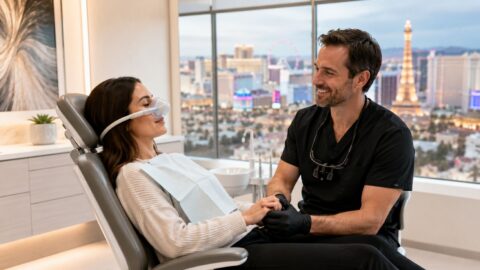
Sedation can change that experience. It doesn't replace good communication, gentle care, or local anesthetic that keeps treatment comfortable. It supports them. When sedation is planned well, patients can get the dental care they need in a calmer, more manageable way, whether that's a routine exam, cosmetic dentistry, restorative work, or emergency treatment.
Overcoming Dental Anxiety in Las Vegas
A lot of anxious patients describe the same cycle. They know they need care. They mean to call. Then the closer they get to booking, the more their chest tightens and the more reasons they find to wait another week.
That cycle is real, and it isn't rare. The National Institutes of Health has reported that up to 36% of Americans fear going to the dentist, and 12% experience extreme dental fear. Independent reviews go even further, reporting that 30 to 80% of adults experience some degree of dental anxiety, 3 to 16% have severe dental phobia, and 5 to 15% avoid dental visits because of fear, as summarized in this review of sedation dentistry anxiety data in Las Vegas.
Why fear turns into delayed treatment
In neighborhoods like Desert Shores, Sun City Summerlin, Lone Mountain, and Painted Desert Estates, many patients aren't avoiding care because they don't value their health. They're avoiding the feeling of losing control. Some worry about the sound of instruments. Others dread injections, gagging, or the embarrassment of returning after a long gap in care.
Once people start postponing visits, small issues often become larger ones. A cavity that might have been managed during a routine exam can progress until a patient needs more involved restorative dentistry. An infected tooth can turn into an emergency dentist visit. A problem that felt manageable becomes more expensive, more time-consuming, and more emotionally loaded.
Why sedation matters
Sedation dentistry isn't just about comfort. For the right patient, it's a practical way to make care possible again. It helps people tolerate treatment they might otherwise cancel, including fillings, cleanings, tooth extraction, and multi-step treatment plans.
Practical rule: If anxiety is keeping you from booking, asking about sedation isn't overreacting. It's a reasonable part of treatment planning.
Patients who want to understand how a general dentist can reduce fear before treatment can also review this page on ways a general dentist can relieve dental anxiety. The important point is simple. Anxiety doesn't mean you're difficult. It means your care plan should account for how you feel.
Understanding Sedation Dentistry for a Calm Experience
Sedation dentistry helps patients relax during treatment. It does not mean the same thing as being fully asleep. That's one of the biggest misunderstandings patients bring into a consultation.
Think of sedation as a spectrum rather than a switch. On one end, you're lightly relaxed and fully aware of what's happening around you. On the other, you're significantly relaxed, drowsy, and less aware of time, but still not under general anesthesia in the way many people imagine from hospital surgery.
Sedation and numbing are not the same thing
This distinction matters. Sedation reduces fear, tension, and awareness of the dental setting. Local anesthesia numbs the part of the mouth being treated so you don't feel pain in that area. In many visits, both are used together.
That combination is what makes the experience feel manageable for many anxious patients. The sedation helps you stay calm. The numbing handles the treatment site itself. Patients sometimes assume choosing sedation means they won't need anesthetic, or that being numb alone should fix anxiety. In practice, those are different tools for different problems.
What sedation feels like to most patients
The feeling depends on the method used and your own body, but most patients describe sedation as a softer, more detached experience. They may still hear voices or notice movement, yet the visit feels less sharp, less overwhelming, and easier to get through. Some remember the appointment clearly. Others remember only parts of it.
Sedation should make treatment feel more tolerable. It shouldn't leave you guessing about what was done or what you need to do afterward.
A good sedation plan also matches the procedure. A patient who needs a cleaning and has mild anxiety may do well with a lighter option. A patient preparing for a longer visit, oral surgery, or multiple procedures may need something deeper and more structured.
What sedation dentistry is not
It isn't a shortcut for poor communication. It isn't the answer to every nervous feeling. And it isn't chosen only because a patient says, "I hate the dentist."
Sedation works best when the dental team also slows down, explains each step, reviews health history carefully, and builds a realistic plan around the patient's anxiety level, medical background, and treatment needs. That's why a consultation matters. The right method depends on more than fear alone. It also depends on the length of the visit, whether you'll need a driver, and how quickly you need to get back to your normal day.
Your Sedation Options at Aspiring Smiles
When patients ask about sedation dentistry in Las Vegas, they usually want a straightforward answer to three questions. How will it feel, how long will it last, and what will recovery look like afterward? Those are the right questions to ask.
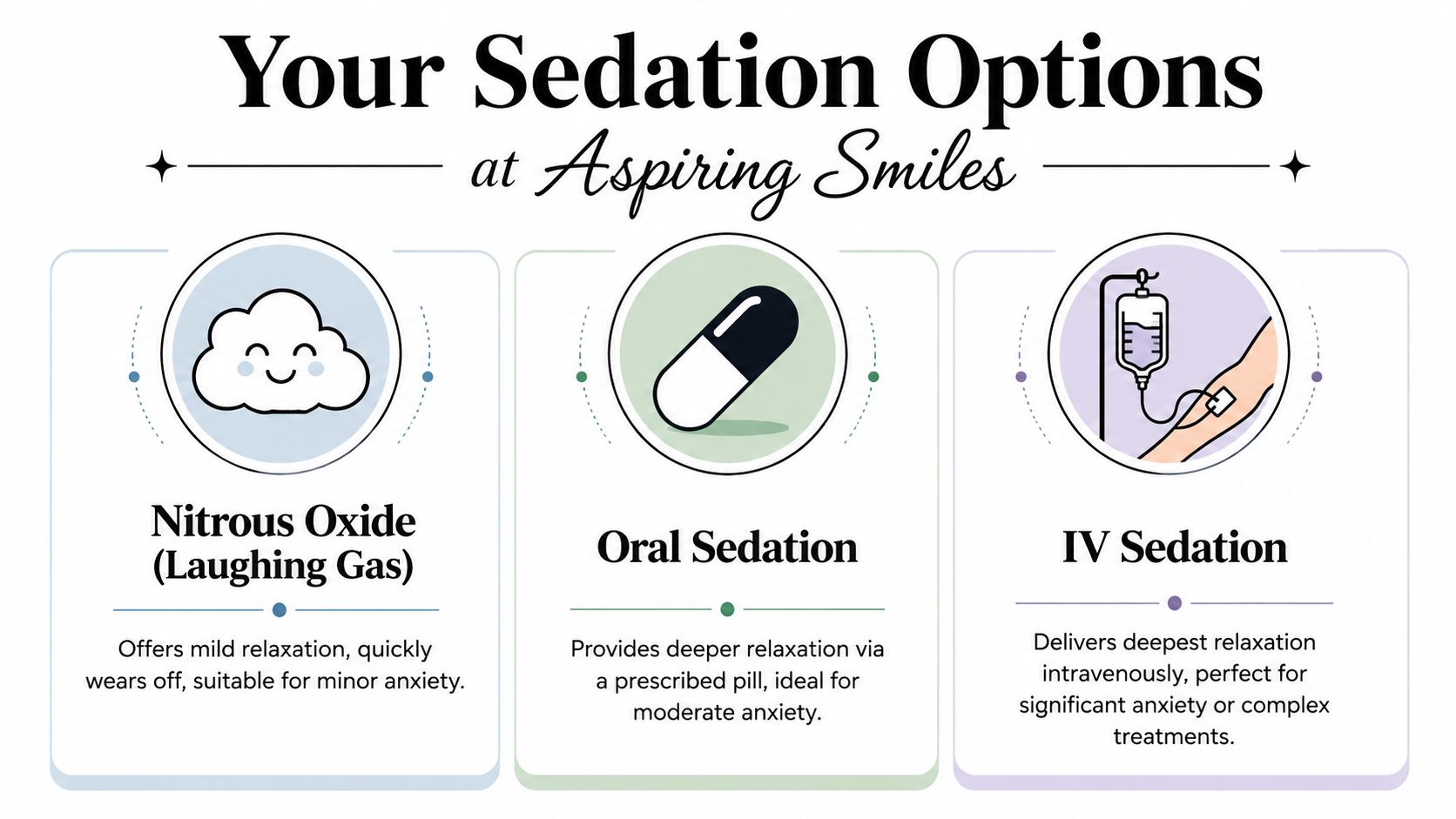
The three standard dental sedation options are nitrous oxide, oral conscious sedation, and IV sedation. They are not interchangeable. As the Cleveland Clinic explanation of sedation dentistry notes, nitrous oxide typically clears in 15 to 30 minutes, while oral or IV sedation usually requires about 24 hours before normal driving is safe. That difference affects both your comfort plan and your schedule for the rest of the day.
Nitrous oxide for lighter anxiety
Nitrous oxide, often called laughing gas, is the lightest option. You breathe it in through a mask, and it creates a relaxed, calmer state during the appointment. Patients usually like it because it works quickly and fades quickly.
This option often fits shorter visits, lower anxiety, and patients who want help taking the edge off without a long recovery period. If you're nervous about a cleaning, fillings, dental x-rays, or a new patient exam, nitrous may be enough. It can also work well for patients who want more control and don't want to feel heavily sedated.
Oral conscious sedation for deeper relaxation
Oral sedation uses prescribed medication taken before the appointment. It generally creates a deeper level of calm than nitrous oxide. Patients are still conscious, but they often feel drowsy, less reactive to the environment, and less focused on the procedure itself.
Oral sedation can be a strong fit for moderate anxiety, longer restorative visits, or situations where a patient has delayed care for a long time and needs help getting through treatment without building panic. Because the effects last much longer, transportation planning is part of the process.
IV sedation for significant anxiety or complex treatment
IV sedation allows medication to be delivered through a vein, which makes it more adjustable during the appointment. This is often the choice when anxiety is severe, when treatment is more involved, or when the goal is a deeper, sleep-like level of relaxation with close monitoring.
For some patients, IV sedation is what makes major treatment finally possible. That may include oral surgery, complex restorative dentistry, or a visit where several needs are being addressed together. If you'd like a practical overview of sedation used during surgical procedures, this page on sedation and comfort during oral surgery is a useful reference.
Comparing sedation dentistry options in Las Vegas
| Feature | Nitrous Oxide ('Laughing Gas') | Oral Conscious Sedation | IV Sedation |
|---|---|---|---|
| Level of relaxation | Mild | Moderate to deeper relaxation | Deep relaxation |
| How it's given | Inhaled through a mask | Taken by mouth before treatment | Given through an IV |
| Awareness during treatment | Awake and aware | Awake but drowsy | Very relaxed, often with limited memory of the visit |
| Best fit | Mild anxiety, shorter visits | Moderate anxiety, longer appointments | Significant anxiety, complex or lengthy care |
| Recovery profile | Clears quickly | Longer recovery | Longer recovery |
| Driving afterward | Often possible once fully recovered and cleared by the dental team | Not appropriate the same day | Not appropriate the same day |
| Escort needed | May not be necessary | Yes | Yes |
The right option isn't the deepest one. It's the one that matches the procedure, your anxiety level, your health history, and your recovery plan.
Is Sedation Dentistry the Right Choice for You
Some patients know immediately that they want sedation. Others aren't sure whether their concerns are "serious enough" to bring it up. In practice, the better question is whether sedation would help you complete care safely and comfortably.

Signs it may be worth discussing
Sedation is often appropriate for patients with obvious dental anxiety, but that's not the only reason people choose it. It can also help if:
- You avoid appointments until something hurts because the anticipation is worse than the treatment itself.
- You have a strong gag reflex that makes even simple care difficult.
- You struggle to stay comfortable in the chair because of back, neck, jaw, or mobility issues.
- You need extensive treatment and want to make a long visit feel more manageable.
- You don't get numb easily or become more tense the longer treatment goes on.
- You've had a difficult dental experience before and now react strongly to sounds, smells, or injections.
Patients in Sunhampton, Monterrey, Mar-A-Lago, and nearby Las Vegas neighborhoods often assume sedation is only for oral surgery. It isn't. It can be part of a thoughtful plan for general dentistry, restorative care, cosmetic dentistry, tooth extraction, and some emergency dentist visits when anxiety is a major barrier.
Who needs a closer safety review
Not every patient is a candidate for every type of sedation. That's where a real consultation matters. A dentist needs to review your medical history, current medications, past experiences with sedation, and the type of treatment being planned before recommending a method.
Some patients are good candidates for nitrous but not for deeper forms. Others may need additional coordination because of medical conditions, breathing issues, or medication interactions. That's not a reason to assume sedation is off the table. It means the plan should be individualized instead of rushed.
A safe sedation decision starts with the full picture, not just with how nervous you feel.
The short video below gives a helpful patient-level look at why people consider sedation and how it can fit into care.
When consultation matters more than self-diagnosis
Patients often self-sort too quickly. They say, "I probably just need to tough it out," or the opposite, "I need the strongest thing available." Neither is a reliable treatment plan. The right answer usually sits in the middle and depends on the procedure, your health profile, and your previous experience in the dental chair.
A consultation gives you room to talk openly about what happens during appointments. If your hands shake in the waiting room, if you cancel at the last minute, or if you're worried about dental implants, cleaning and exams, or a long restorative visit, those details matter. They help build a plan that is realistic, safe, and much easier to follow through on.
What to Expect During Your Sedation Visit in Las Vegas
The unknown is often what makes dental anxiety spike. Once patients understand the sequence of a sedation visit, the process usually feels much more manageable. A well-run appointment has a rhythm to it, and each stage has a purpose.
Before your appointment
Your visit starts before you sit in the dental chair. The first step is a consultation and review of your medical history, medications, symptoms, and treatment goals. If you're coming in for anything from a new patient exam to restorative dentistry, cosmetic dentistry, emergency dental care, or tooth extraction, the sedation plan should fit the treatment rather than being added as an afterthought.
You may receive instructions about eating, drinking, medication timing, and transportation, depending on the sedation method selected. If oral sedation or IV sedation is planned, you should expect to arrange for a responsible adult to take you home and stay available while you recover. If nitrous oxide is the option, the preparation is usually simpler.
A good pre-visit conversation also covers practical details patients often forget to ask about:
- Arrival planning so you aren't rushed walking in.
- Clothing and comfort if you'll be in the chair for a longer appointment.
- Medication questions if you take daily prescriptions.
- Post-treatment support such as having soft foods ready at home if treatment itself may leave you sore.
During your treatment
The appointment should feel calm, organized, and closely monitored. The team confirms your plan, answers last-minute questions, and helps you settle in before treatment begins. If you're receiving sedation, the focus is not just on the dental procedure. It's also on making sure your comfort and responsiveness are observed throughout the visit.
Patients often ask whether they'll know what's happening. With lighter sedation, you likely will. With deeper sedation, your sense of time may feel blurred, and the appointment may seem much shorter than it was. That's normal. You may hear voices, notice movement, or remember only parts of the visit.
Most anxious patients don't need surprises. They need a team that explains what will happen, checks in consistently, and keeps the room steady from start to finish.
Local anesthetic is still used when the procedure requires numbness. Sedation helps you stay relaxed. The numbing keeps the treatment area comfortable. That pairing is what allows many patients to complete care they once thought they couldn't handle.
After you go home
Recovery depends on the type of sedation used and on the treatment itself. Some patients feel ready to return to normal activities fairly quickly after a lighter visit. Others feel groggy, sleepy, or mentally slower for the rest of the day after oral or IV sedation and should plan accordingly.
Your instructions after treatment may include guidance about eating, hydration, rest, medications, and when to call the office if something doesn't feel right. Patients who had restorative work, extractions, or emergency treatment may also receive procedure-specific aftercare.
The most important thing is not to improvise. Follow the written instructions you were given, avoid driving if your sedation plan requires a recovery period, and let your support person help if you've had deeper sedation. When that part is planned in advance, the trip home and the rest of the day tend to go much more smoothly.
How to Choose a Qualified Sedation Dentist in Las Vegas
If you're comparing options for sedation dentistry in Las Vegas, don't stop at "Do they offer it?" The better question is how they evaluate patients, monitor treatment, and decide which type of sedation makes sense for a specific case.
What to look for first
Start with the basics. Ask whether the dentist and team have specific training for the sedation methods they provide, what the consultation includes, and how candidacy is determined. A careful office won't recommend sedation without reviewing medical history, medications, and the scope of treatment.
You should also ask what the monitoring process looks like during the appointment and what recovery instructions are given afterward. A qualified sedation provider should be able to explain this clearly in plain language, without brushing off your questions.
A useful checklist for patients
When you're evaluating a dentist in Las Vegas, NV for sedation, these questions help:
Training and credentials
Ask what sedation methods the office offers and what training supports each option.Case selection
Ask how they decide whether nitrous oxide, oral sedation, or IV sedation is appropriate for you.Monitoring during treatment
Ask what the team tracks while you're sedated and who remains present throughout the procedure.Emergency readiness
Ask how the office prepares for uncommon but important safety situations.Recovery planning
Ask what instructions you'll receive, whether a driver is required, and how follow-up questions are handled after you leave.
What doesn't inspire confidence
Be cautious if the conversation feels rushed, if no one asks about your medical history in detail, or if every anxious patient seems to get the same recommendation. Sedation is not one-size-fits-all. An office that treats it that way is missing the point.
The same goes for offices that explain sedation in vague marketing language but don't answer practical questions. Patients need to know whether they'll be awake, how they'll get home, and what the rest of the day will look like. If those answers aren't clear before treatment, they won't feel clearer afterward.
Why a calm consultation matters
The consultation itself tells you a lot. If the dentist listens carefully, explains trade-offs clearly, and talks through alternatives without pressure, that's a strong sign. The office should make space for your concerns, whether you're coming in for a dental cleaning, dental x-rays, cosmetic dentistry, dental implants, or urgent care from an emergency dentist.
A thoughtful consultation also shows whether the practice can translate clinical decisions into plain English. That's not a small thing. For anxious patients, trust often starts long before the procedure. It starts with feeling heard.
Sedation Dentistry FAQs and Scheduling Your Visit
A lot of anxious patients reach this stage feeling close to ready, but still unsure about one or two practical details. That is normal. Good sedation planning should answer those questions before you commit to treatment, not while you are already in the chair.
Is sedation dentistry the same as general anesthesia
No. Sedation used in dentistry usually means you remain relaxed and responsive to some degree, even if you remember very little afterward. General anesthesia is different. It makes a patient fully unconscious and changes where and how care is delivered, what level of monitoring is needed, and what recovery looks like.
Will I be completely asleep
Usually, no. Many patients feel drowsy, calm, and detached from the procedure, but they are not fully unconscious. Your experience depends on the type of sedation selected, your medical history, and how your body responds that day.
Is sedation only for major procedures
Sedation is often used for longer visits, extractions, or more involved restorative work, but that is not the only reason to consider it. It can also make routine care possible for patients who gag easily, struggle to sit through treatment, or have avoided the dentist for years because of fear.
How much does sedation cost
The fee depends on the sedation method, the length of the appointment, and the treatment being completed. In my view, the best approach is simple. Ask for the cost in writing before you schedule. That gives you a clear picture of the dental fee, the sedation fee if separate, and any financing or payment options available.
Does insurance cover it
Sometimes, but not always. Coverage depends on your plan and the reason sedation is recommended. The office should review your benefits before the visit so you know what insurance may help with and what you may need to pay yourself.
How does scheduling usually work
At a well-run office, scheduling sedation is a step-by-step process, not a rushed booking. You start with a consultation, review your health history and medications, confirm whether you need a driver, and receive instructions about eating, drinking, and recovery time. That planning matters because the safest sedation visit is the one that has been prepared carefully from the start.
Aspiring Smiles Dental and Braces provides general, restorative, cosmetic, and emergency dental care from its office at 3211 N Tenaya Wy Suite 122, Las Vegas, NV 89129. For patients in Desert Shores, Sunhampton, Sun City Summerlin, Monterrey, Lone Mountain, Mar-A-Lago, or Painted Desert Estates, the process should feel clear from the first phone call to the ride home after treatment. You should be able to ask what sedation fits your procedure, what you need to do the night before, and how recovery will affect the rest of your day.
If you're ready to stop delaying care, contact Aspiring Smiles Dental and Braces to request a consultation. The team can review your symptoms, explain your options, and help you plan a more comfortable visit at 3211 N Tenaya Wy Suite 122, Las Vegas, NV 89129.