Retainer After Invisalign: Your 2026 Guide
You finished Invisalign, you smile in the mirror, and your teeth finally look the way you hoped they would. Then the next question hits. Do I really have to wear a retainer now?
Yes, and this is the part many patients underestimate.
A retainer after Invisalign is the step that protects all the time, planning, and money you put into your smile. If you're looking for a dentist in Las Vegas, NV who can guide you through that final stage with clear advice and practical follow-up care, this guide will help you understand what matters and what to expect.
Protecting Your New Smile After Invisalign in Las Vegas
Finishing Invisalign feels like a finish line. For many patients in Las Vegas, especially those balancing work, family, and social events in neighborhoods like Desert Shores, Sunhampton, Sun City Summerlin, Monterrey, Lone Mountain, Mar-A-Lago, and Painted Desert Estates, it also feels like the start of a new responsibility.
A common situation goes like this. You wear your aligners as directed, you see your smile straighten week by week, and then treatment ends. You assume the hard part is over. But without a retention plan, teeth can begin drifting out of place again.
One industry-reviewed source reports that approximately 50% of patients experience some degree of orthodontic relapse within two years if retention protocols are not strictly followed in this review of life after Invisalign and retainers. That number surprises people, but in practice, the message is simple. Straightening teeth is one phase. Keeping them straight is another.
Why patients get confused
A lot of people think a retainer is just a backup tray. It isn't. It's part of treatment.
Others think they only need one if their teeth were severely crowded before Invisalign. That's not how retention works. Teeth can shift after minor or major treatment, and that shifting can happen slowly enough that you don't notice it right away.
What matters most: Your retainer after Invisalign protects the result you already earned.
Why this matters locally
Patients searching for a dentist near me, a cosmetic dentist near me, or help with broader dental care in Las Vegas often want one office that can support both appearance and long-term oral health. Retention fits into that bigger picture. It sits alongside regular cleaning and exams, dental X-rays, new patient exams, and other preventive care that helps keep your mouth stable over time.
If you've already invested in cosmetic dentistry, this last step is how you protect it. If you're still exploring treatment, knowing the retention phase ahead of time helps you make better decisions from the start.
Why Retainers Are a Non-Negotiable Part of Your Treatment
Right after teeth are straightened, they don't lock instantly into place. The simplest way to think about it is this. If you reshape something, the surrounding support structures need time to settle around the new shape.
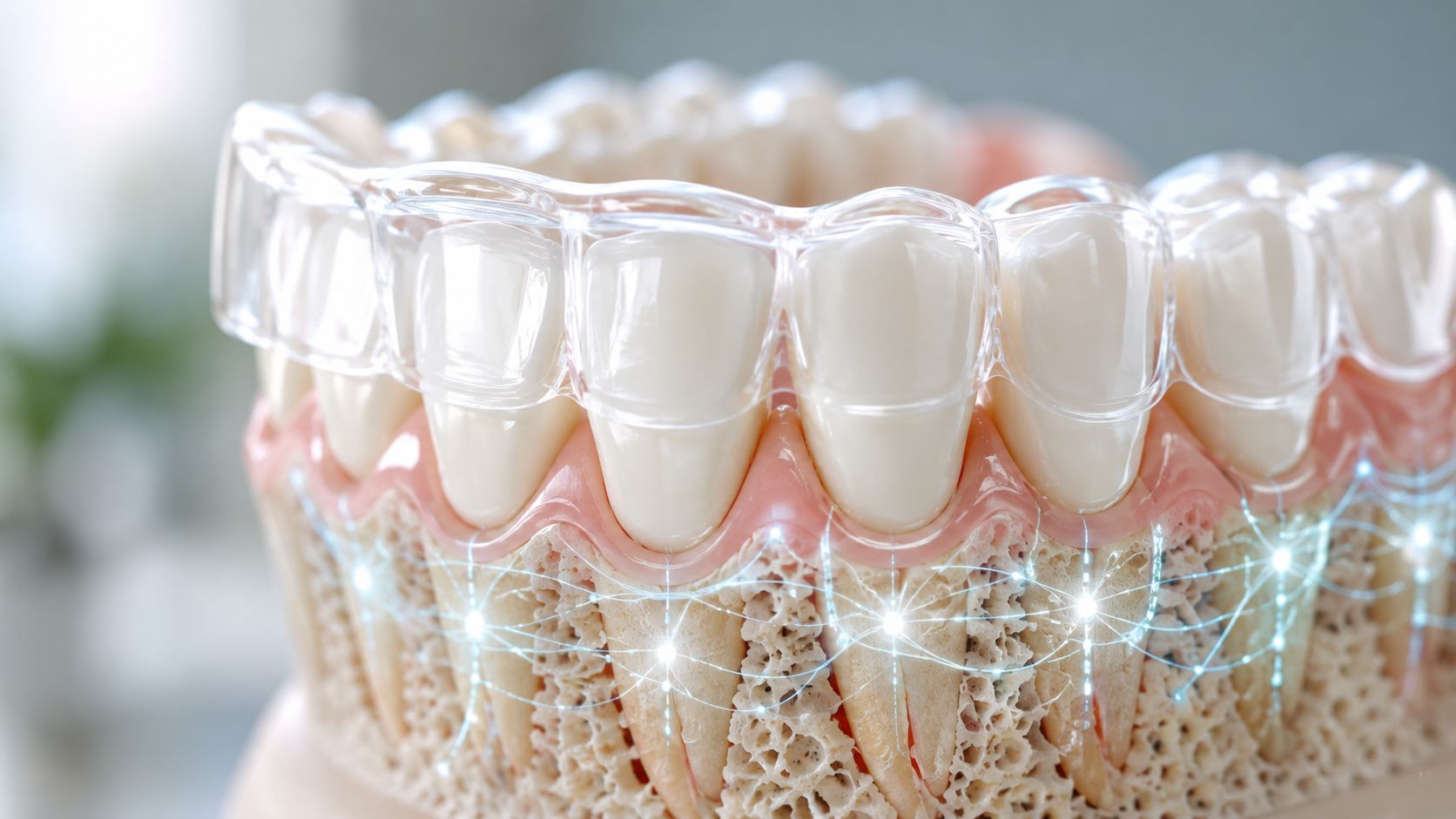
Invisalign explains it plainly in its retainer overview. Retainers keep teeth from shifting back because teeth are not immediately secure after straightening, while gums, bones, and muscles are still adapting.
Your teeth need time to settle
It's similar to setting concrete. The form may look right early on, but the structure still needs time to become stable.
That helps explain why a patient can finish aligners, skip retainer wear for a while, and then notice a front tooth turning slightly or lower teeth looking uneven again. The change may seem small at first, but even a slight shift can affect fit, appearance, and comfort.
What a retainer actually does
A retainer doesn't continue active smile redesign the way aligners do. Its job is different. It holds your teeth in their corrected positions while your mouth adapts.
That means your retainer after Invisalign is doing important work even when nothing seems to be happening. Quiet stability is the point.
For patients who want a better sense of the earlier phase of treatment, our page on how Invisalign works can help connect the movement stage to the retention stage.
Teeth often try to return toward older positions. A retainer helps interrupt that tendency while your body adjusts.
Why this isn't just about appearance
Many people first think of Invisalign as cosmetic dentistry. That's understandable. A straighter smile looks great. But retention also supports function and consistency.
When teeth shift, it can affect how they meet, how easy they are to clean, and how satisfied you feel with the result. That's why the retainer phase belongs in the same conversation as preventive and restorative dental care. It's part of protecting long-term oral health, not just preserving a photo-ready smile.
Choosing the Right Retainer Fixed vs Removable Options
Not every retainer works the same way. The right choice depends on your bite, habits, preferences, and how much daily responsibility you want to manage.
Fixed retainers
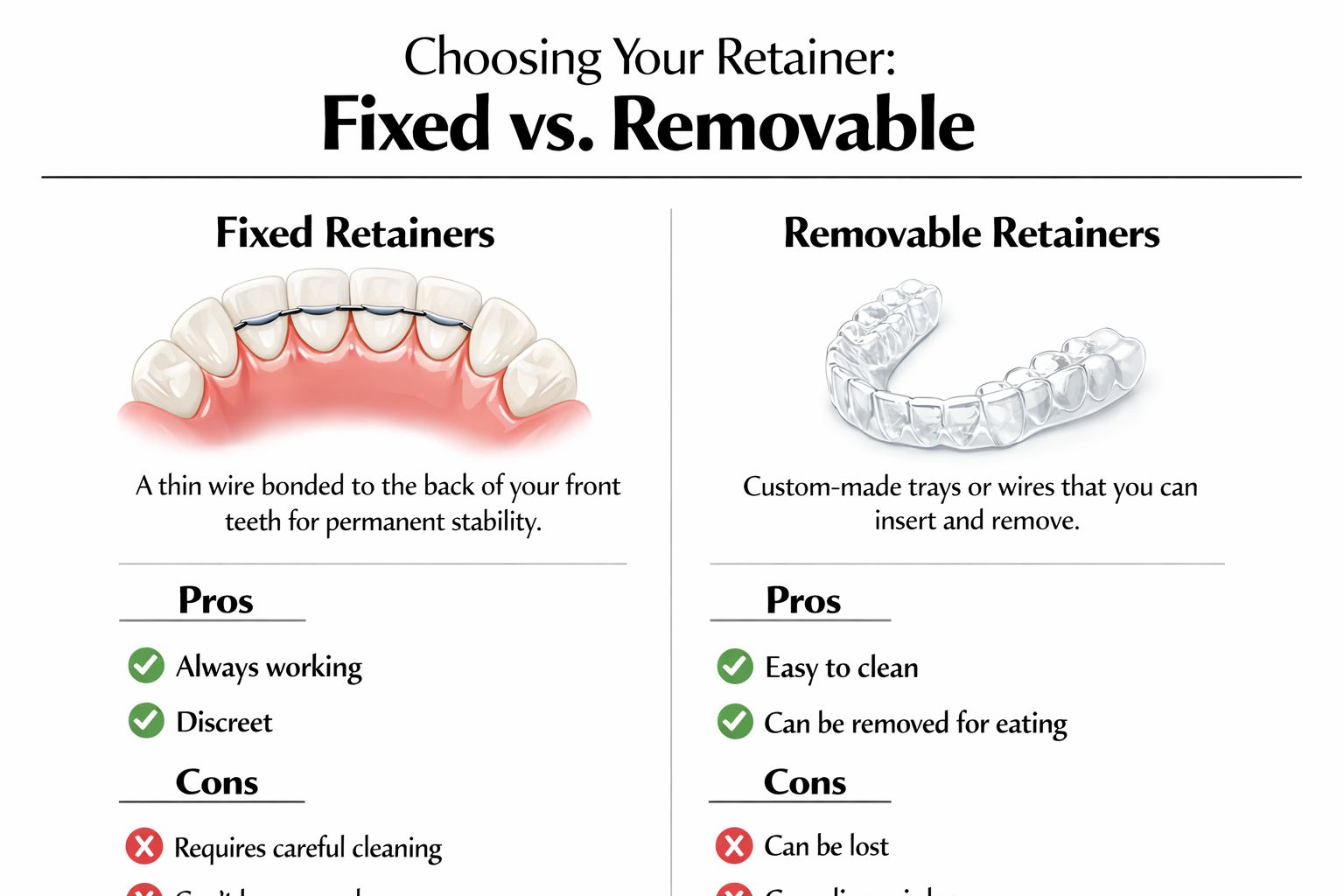
A fixed retainer is a thin wire bonded behind certain teeth, often the front teeth. You don't take it in and out.
Patients usually like fixed retainers because they're discreet and always in place. You don't have to remember to put them in before bed. That makes them appealing for people who know consistency might be a challenge.
The tradeoff is cleaning. You need to be more careful when brushing and flossing around a bonded wire. If plaque builds up there, gum irritation can follow.
Removable retainers
A removable retainer gives you more flexibility. You can take it out for meals, brushing, flossing, and special occasions.
That convenience comes with responsibility. If you leave it on a napkin at a restaurant, forget it during travel, or skip nights too often, your teeth can start moving. Compliance matters more with removable options because you control whether the retainer is working.
Comparing the main removable choices
Most patients asking about a retainer after Invisalign are deciding among Vivera, Essix, and Hawley styles.
| Retainer Type | Material | Appearance | Best For |
|---|---|---|---|
| Vivera | Clear plastic | Very discreet | Patients who want a clear retainer designed for long-term wear |
| Essix | Clear plastic | Very discreet | Patients who want a simple clear removable option |
| Hawley | Acrylic and wire | More visible | Patients who want a traditional removable retainer with an adjustable design |
Vivera retainers
Vivera retainers are clear, custom-made retainers associated with Invisalign. According to Invisalign's page on retainers after Invisalign, Vivera retainers are "30% stronger and twice as durable" as other leading clear retainers, and Invisalign says its retainer program can deliver new sets four times per year.
That makes Vivera especially worth discussing if you want a clear option and you're thinking beyond the first few months. Material strength matters in real life. Nightly insertion and removal, clenching, and everyday wear all add up over time.
Essix retainers
Essix retainers are also clear and popular because they look subtle on the teeth. Patients often choose them when appearance is the top priority.
They can be a practical option, but they still need careful handling. If a clear plastic retainer gets distorted, cracked, or stops fitting correctly, it may no longer protect alignment the way it should.
Hawley retainers
Hawley retainers use an acrylic base with a visible wire. They aren't as invisible as clear retainers, but some patients appreciate their durability and the fact that they aren't a full clear tray over the teeth.
For some bites and preferences, Hawley retainers remain a good conversation to have with your dentist. They're not outdated. They're different.
Decision rule: The right retainer isn't just the one that looks best. It's the one you'll actually wear and maintain.
How patients usually decide
If you value low visibility, clear retainers are often the first choice. If you're worried about remembering to wear one, a fixed retainer may sound more appealing. If you want guidance on what fits your lifestyle, bite, and dental history, that's where a local office visit becomes useful.
At Aspiring Smiles Dental and Braces, retainer planning can be part of a broader conversation that may also include preventive visits, cosmetic goals, restorative dentistry, or concerns about wear from grinding.
Your Recommended Retainer Wear Schedule
One of the biggest questions patients ask is how long they'll need to wear their retainer. The short answer is that retention starts with a more intensive phase and then becomes a simple nightly habit.
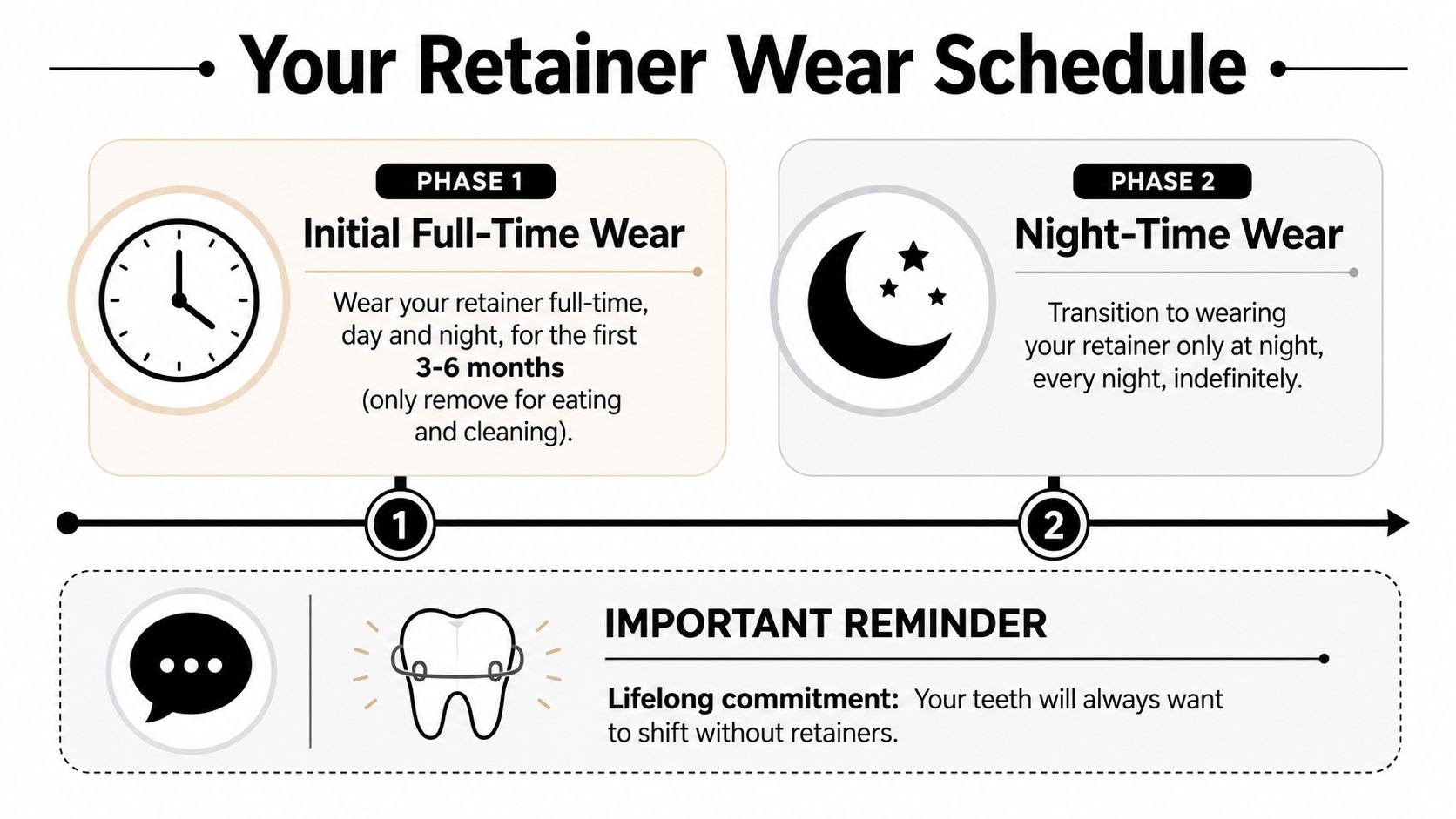
The most common protocol after Invisalign is full-time wear for the first 3 to 6 months, typically 20 to 22 hours per day, followed by nighttime-only wear, and one dental source notes that bone and gum stabilization often takes 6 to 12 months in this clinical guidance on retainer wear after Invisalign.
Phase one
During the first phase, you usually remove your retainer only for eating, drinking anything that could stain or damage it, and cleaning your teeth and the retainer itself.
That early period can feel strict, but it's temporary. You're giving your teeth the support they need during the most vulnerable stage after active movement.
For patients wondering how the timeline of treatment connects to this final phase, our page on how long Invisalign takes can help put the full process in context.
A quick visual can make the schedule easier to remember.
Phase two
Once your dentist confirms stability, wear usually tapers to nighttime only. At that point, the retainer becomes less of a disruption and more of a routine, much like brushing before bed.
Many patients eventually stop thinking about it as a treatment device and start thinking of it as simple smile maintenance.
Wear it nightly the way you'd protect any investment you want to keep.
What if you miss time
If you skip a night once in a while, don't panic. But if your retainer starts feeling tight after missed wear, that's a sign your teeth may already be shifting. Call your dental office before the fit gets worse.
How to Clean and Care for Your Retainer
A retainer that looks clear can still collect buildup. Saliva, plaque, and everyday handling can leave it cloudy, smelly, or less pleasant to wear if you don't clean it regularly.
Good retainer care also supports overall mouth health. If you're already trying to stay on top of preventive dental care with regular cleaning and exams, your retainer should be part of that routine.
Daily care for clear retainers
If you wear a clear retainer such as Vivera or Essix, gentle care matters. Heat and rough scrubbing can damage the material.
- Rinse it when you remove it: Don't let saliva dry on the surface for hours.
- Brush it gently: Use a soft toothbrush and mild soap or a cleaner your dental office recommends.
- Keep it out of heat: Hot water, a hot car, or a dishwasher can warp a clear retainer.
- Store it in its case: Pockets, napkins, and countertops are where many retainers get lost or damaged.
Daily care for Hawley retainers
Hawley retainers need cleaning too, but the materials are different.
- Brush the acrylic and wire carefully: Focus on removing film around the wire bends and acrylic base.
- Handle the wire gently: Bending it can affect fit.
- Rinse after each use: A quick rinse helps prevent odor and debris buildup.
Habits that protect both retainer and teeth
Retainer care works best when it connects to your larger oral health habits.
- Brush and floss before wearing it: Trapping plaque against teeth overnight isn't a good idea.
- Bring it to checkups: Your dentist can look for distortion, buildup, or fit problems.
- Mention changes early: If it feels tight, loose, rough, or cracked, say so at your visit.
A clean retainer is more comfortable to wear, and comfortable appliances are easier to wear consistently.
When seeking a dentist near me in Las Vegas for routine maintenance, this is one reason continuity matters. Your dental team isn't only checking teeth. They're also helping you maintain the device that protects your alignment.
Retainer Replacement and Long-Term Costs
Many patients assume their first retainer will last forever. That's one of the biggest misunderstandings in post-Invisalign care.
Retainers are long-term tools, but they're still devices. They can wear down, loosen, crack, warp, stain, or stop fitting well enough to hold teeth properly. That's why replacement planning matters.
How often replacement comes up
Some providers suggest replacing retainers every 9 to 12 months, but that varies by material and patient habits, as noted in this discussion of retainer replacement and patient education gaps. The same source points out an important issue many patients don't hear enough about. A retainer may still look usable before it fits well enough to prevent relapse.
That means timing isn't only about visible damage. It's also about whether the retainer still seats properly and holds alignment predictably.
Signs you may need a new retainer
A replacement conversation is worth having if you notice:
- A tighter fit than usual: This can mean your teeth have shifted or the retainer has changed shape.
- Visible cracks or rough edges: Damage can worsen with continued wear.
- A loose or unstable fit: If it no longer sits securely, it may not be doing its job.
- Cloudiness, odor, or distortion that won't resolve: Sometimes the material has aged out.
Why planning ahead helps
It helps to think of retainer replacement the same way you think about other recurring health needs. It's not a surprise failure. It's maintenance.
Patients who grind their teeth, handle retainers roughly, or forget to store them in a protective case may need replacement sooner than someone who wears and cleans theirs carefully. That's one reason a local follow-up relationship matters. Your dentist can judge fit, wear patterns, and whether replacing sooner makes sense.
For patients also considering services like teeth whitening, restorative dentistry, tooth extraction, or even dental implants near me, this same principle applies. Long-term dental success usually depends on maintenance, not just the initial procedure.
Book Your Retainer Consultation at Aspiring Smiles
If you're in Las Vegas and you've finished Invisalign, this is a good time to make sure your retainer plan is clear, realistic, and built around your life. Patients in Desert Shores, Sunhampton, Sun City Summerlin, Lone Mountain, and nearby neighborhoods often want practical guidance, not vague instructions to just wear something at night forever.
A retainer consultation usually focuses on fit, comfort, wear habits, and the type of retainer that makes the most sense for your bite and daily routine. It can also be a good time to ask about related needs, including preventive care, cosmetic dentistry, emergency dentist concerns if a retainer breaks suddenly, or future restorative treatment.
What patients usually want from the visit
Many individuals have very practical questions:
- Will this retainer still fit correctly
- Should I stay with clear retainers or consider a fixed option
- Is this wear pattern normal
- Do I need a replacement now or can it wait
Those are exactly the right questions to ask.
Why a local follow-up relationship helps
Retention works better when you have a nearby office that can check changes early. If a retainer feels off, waiting too long can turn a small issue into a larger one.
For dental teams that want to understand how educational service pages connect with patient search behavior, this guide on mastering local SEO for dental practices offers useful context on why local treatment content matters. From the patient side, the takeaway is simpler. Clear local information makes it easier to find care when you need it.
If you want a retainer after Invisalign checked, replaced, or discussed with a trusted dentist in Las Vegas, NV, scheduling a visit is the easiest next step.
If you're ready to protect your smile with a personalized retention plan, contact Aspiring Smiles Dental and Braces to schedule your visit. Whether you need post-Invisalign guidance, a replacement retainer, a new patient exam, or ongoing dental care in Las Vegas, the team can help you take the final step that keeps your results in place.