How Much Do Crowns Cost: 2026 Las Vegas Guide
In Las Vegas, a single dental crown often ends up in the $1,400 to $3,200 per tooth range, while national guides usually quote a lower $800 to $3,000 range that doesn't always reflect local lab fees, insurance limits, or prep work. If you're reading this because you cracked a tooth, lost a large filling, or were told you need a crown after pain started, the main question usually isn't just the crown price. It's what the full treatment will cost when everything is included.
That difference matters. A patient might hear one number online, then feel blindsided when the final treatment plan includes rebuilding the tooth first or working around a Nevada insurance plan that doesn't stretch very far on major restorative care. In Las Vegas neighborhoods like Desert Shores, Sun City Summerlin, Lone Mountain, and Painted Desert Estates, that gap between an advertised crown and the true total is where most frustration starts.
A crown is meant to protect a tooth that can't reliably hold up on its own anymore. It can restore strength after a large cavity, support a tooth after a root canal, and help you chew comfortably again. Done well, it should feel like part of your natural bite, not a temporary fix.
Your Guide to Dental Crown Costs in Las Vegas
A common scenario goes like this. You bite down on something firm, feel a sharp crack or sudden tenderness, and spend the rest of the day avoiding that side of your mouth. By the time you start searching for a dentist in Las Vegas, NV, you're not just asking how much do crowns cost. You're trying to figure out whether this is urgent, whether the tooth can be saved, and whether the final bill will be manageable.
For many people, the answer depends on more than the crown itself. Las Vegas pricing often runs higher than broad national averages because local lab costs and Nevada insurance structures affect what patients pay. That means a simple online number doesn't tell the whole story.
Why people need crowns in the first place
A crown is usually recommended when a tooth is too weakened for a regular filling to last. That may happen after:
- A large old filling fails
- A tooth cracks under chewing pressure
- A root canal leaves the tooth brittle
- Decay removes too much natural tooth structure
- A worn or broken tooth needs full coverage
In practice, what works is matching the treatment to the condition of the tooth. A small problem can often be handled with a filling. A badly compromised tooth usually needs full coverage if you want it to function predictably.
Practical rule: If the goal is to save a tooth for the long term, the cheapest short-term patch often isn't the least expensive choice overall.
People also search for a dentist near me, emergency dentist, or even tooth extraction when a crown might still save the tooth. That's why an exam matters. The treatment decision should come from what the tooth can structurally support, not from guesswork.
For patients looking for restorative dentistry, cosmetic dentistry, or even future options like dental implants near me, crowns are often part of the larger picture. They restore damaged teeth, preserve your bite, and help avoid more invasive treatment later when possible.
Las Vegas Dental Crown Price Ranges by Material
A patient in Las Vegas may see one office quote a crown at one price and another office quote several hundred dollars more for what sounds like the same treatment. In practice, the material is part of that difference, but local lab relationships, case complexity, and how the office handles temporaries and customization also affect the fee. That is why a national average rarely matches what a Nevada patient pays.
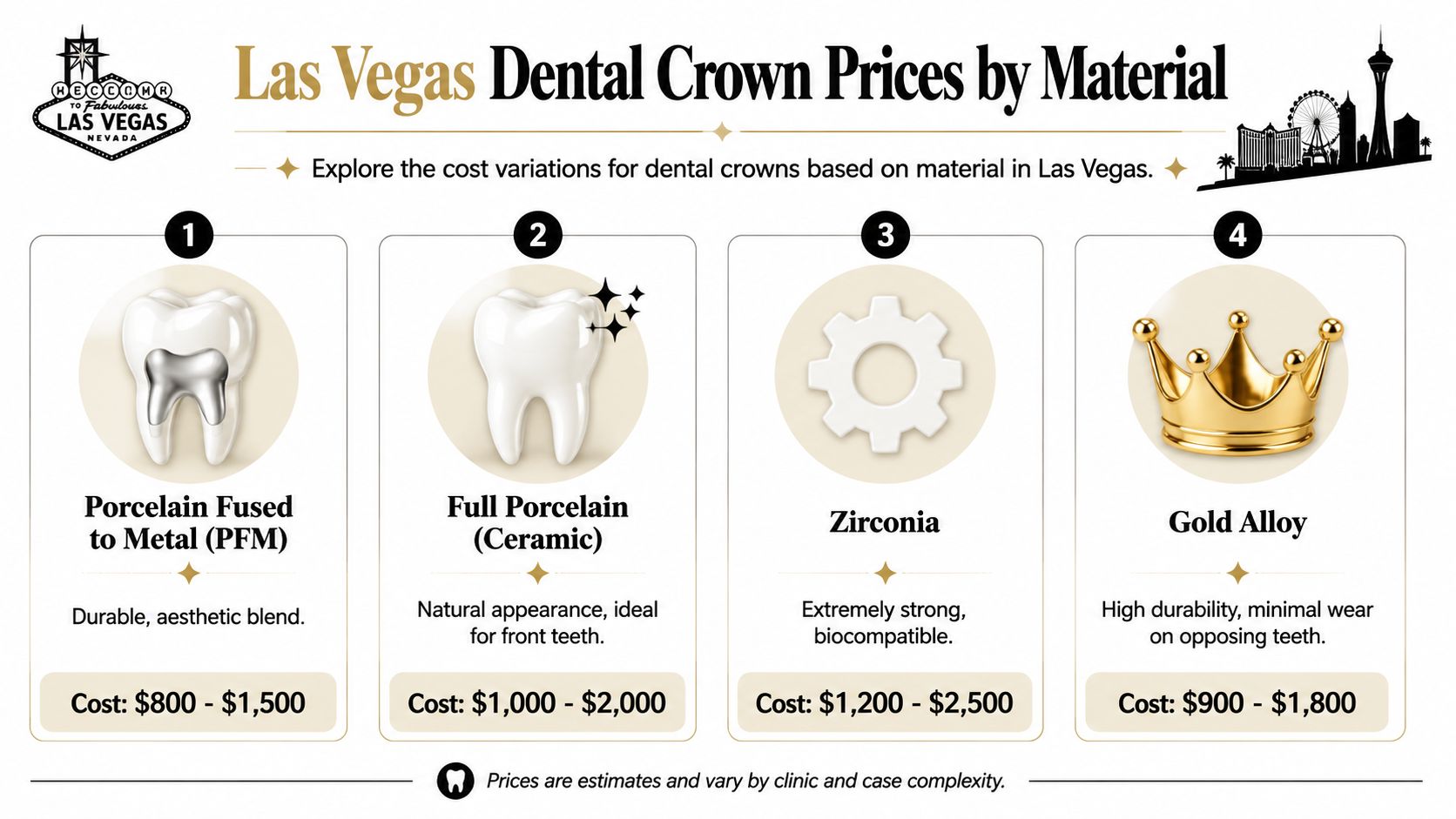
At Aspiring Smiles, the material choice starts with the job that tooth needs to do. A front tooth has different cosmetic demands than a molar that absorbs heavy bite pressure. Patients who are comparing options should also review these factors to consider before getting dental crowns, because the right material is only one part of a lasting result.
Porcelain fused to metal
Porcelain-fused-to-metal crowns are still a practical choice in many Las Vegas cases. They usually sit in the lower-to-middle price range locally and can make sense when a patient wants a balance between durability and appearance without paying for a more cosmetic ceramic option.
The trade-off is long term esthetics. The metal substructure can create a darker look at the gumline over time, especially if the gums recede or the tooth is in a very visible area. For a back tooth, many patients accept that compromise. For a front tooth, many do not.
All porcelain or ceramic
All-ceramic crowns are commonly chosen for front teeth because they reflect light more like natural enamel. In Las Vegas offices, these crowns often cost more than porcelain-fused-to-metal because they require more shade matching and esthetic planning, and many cases are sent to labs that focus on cosmetic work.
They are not the automatic best choice for every patient. If someone clenches, grinds, or has a very tight bite, I usually discuss whether a stronger material will hold up better over time. A beautiful crown that chips early is not a good value.
Zirconia
Zirconia has become one of the most common crown materials in our area because it solves a real problem. Patients want something tooth-colored, but they also want it to last on chewing teeth.
That combination makes zirconia a frequent recommendation for molars and premolars in Las Vegas practices. Local fees often land above basic metal-based options but below highly customized cosmetic ceramics, depending on whether the crown is milled in-house or made through an outside lab. If a patient wants strength first and still cares about appearance, zirconia is often the most balanced choice.
Gold and other metal options
Gold and other metal crowns are less common today, mostly because many patients do not want metal to show. From a restorative standpoint, they still perform very well in selected back-tooth cases. They can be durable, precise, and kind to the opposing tooth when the bite is designed properly.
The price in Las Vegas can be harder to predict because metal costs fluctuate. A quote for a gold crown may change more than a ceramic quote if lab and alloy costs shift.
Why local Las Vegas pricing differs by material
The same material category does not always mean the same final fee. A zirconia crown made through a premium local or regional lab may cost more than one made through a large volume lab, and cosmetic ceramics often carry higher lab charges because the technician spends more time on layering, contour, and shade work. Those differences matter in Las Vegas, where patients often want both function and high esthetic standards.
Insurance adds another layer. Many Nevada dental plans downgrade coverage, which means the plan may reimburse at a lower metal-crown allowance even if the patient chooses zirconia or ceramic. The patient then pays the difference. This is one of the biggest reasons online crown estimates feel incomplete.
Even payment processing can affect how offices structure fees for staged treatment plans or financing arrangements. For readers interested in the mechanics behind transaction costs, this article on analyzing Stripe's international fees gives a useful example from another industry.
Factors That Influence the Total Cost of Your Crown
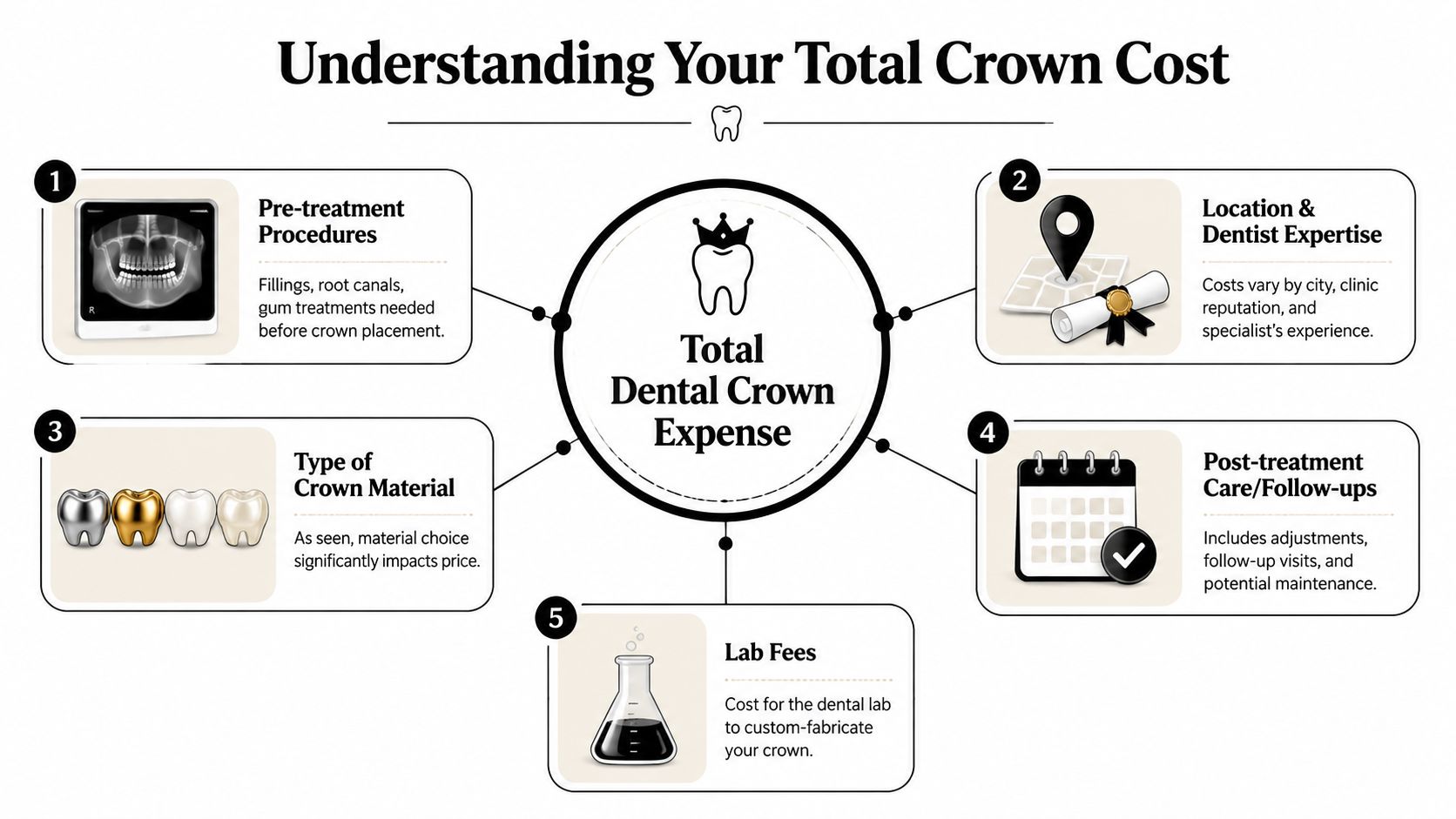
The crown itself is only one line item. The bigger question is whether the tooth is ready to hold a crown well.
Most articles skip that part, but it matters because 30–50% of patients require additional preparatory work, which can add $500–$1,500 per tooth. A root canal can add $1,000–$1,500, and a post-and-core buildup can add $300–$600. That is why the final total often ends up far above the basic crown quote.
The tooth may need rebuilding first
A crown needs a stable foundation. If too much tooth structure is missing, the dentist may need to rebuild the core before the final crown can be placed. If the nerve is infected or inflamed beyond recovery, a root canal may need to happen first.
Those aren't surprise add-ons in the sense of optional upgrades. They're structural or biological steps that help the crown last.
Common reasons the total changes
- Large areas of damage: A heavily broken tooth may need a buildup before it can support the crown.
- Nerve involvement: If the pulp is infected, root canal treatment may be necessary before restoring the tooth.
- Existing dental work: Old fillings, cracks, or recurrent decay can change the plan once the tooth is cleaned up.
- Lab fabrication: A custom crown carries a lab cost that varies with material and local market conditions.
- Bite complexity: Teeth under heavier force often need more careful planning and adjustment.
For patients who like seeing how line items change a final bill, the same logic applies in other industries. A good example is analyzing Stripe's international fees, where the visible headline rate doesn't always equal the true total after all variables are included.
Why transparency matters before treatment starts
The best approach is simple. Ask for an itemized treatment plan before work begins. That should spell out whether the tooth needs only a crown or whether a buildup, root canal, or additional restorative treatment is likely.
A useful next step is reviewing factors to consider before getting dental crowns, especially if you're deciding between saving a compromised tooth and moving toward extraction or implants.
The most helpful estimate isn't the lowest one. It's the one that reflects the actual condition of your tooth.
Patients looking for new patient exams, dental X-rays, or restorative dentistry in Las Vegas usually benefit from this level of detail early. It reduces billing surprises and helps you decide with confidence.
Using Insurance and Payment Options for Your Crown
A patient will often come in expecting insurance to cover half the bill, then find out the plan pays based on its own fee schedule, not the office fee, and only after deductibles, waiting periods, and annual limits are applied. That gap is where many crown estimates become confusing.

What insurance usually does and doesn't do
Most dental plans place crowns under major restorative care. That helps, but it does not mean the plan automatically covers half of the full treatment cost. In Las Vegas, the out-of-pocket amount can still be significant once annual maximums, deductibles, and the insurer's allowed amount are factored in.
Nevada patients also run into a local issue that many national guides skip. The crown itself is only part of the claim. If the tooth needs a core buildup, removal of old decay, replacement of a failing filling, or other preparatory treatment before the crown can be placed, those charges may apply differently under your plan or count against the same annual maximum.
That is why I tell patients to look at the full treatment plan, not just the line that says "crown."
Practical ways to reduce stress around the bill
A little planning helps prevent surprises.
- Verify benefits before treatment: Confirm whether your plan covers crowns, whether a waiting period applies, and whether the tooth meets any downgrade rules or frequency limits.
- Ask how the plan calculates payment: Insurance usually pays a percentage of its allowed amount, not a percentage of the office fee.
- Check your annual maximum: A crown can use a large share of that benefit, especially if imaging, buildup, or other restorative work is needed first.
- Time larger treatment carefully: If you need more than one major procedure, splitting treatment across benefit periods may reduce out-of-pocket costs in some cases.
- Request a written estimate: You should be able to see the expected insurance portion and your estimated responsibility as separate numbers.
At Aspiring Smiles Dental and Braces, patients can review payment plan information before treatment and compare financing options with their expected insurance coverage.
Why this matters in Las Vegas
Online crown estimates often sound straightforward. Real cases are not. Two patients can need the same type of crown and still have very different final costs based on their insurance rules, the condition of the tooth, and whether extra steps are required before the crown is made.
The useful question is specific. What will this tooth cost to restore under your plan, after any needed prep work is included? That is the number worth getting in writing.
The Crown Procedure at Our Las Vegas Dental Office
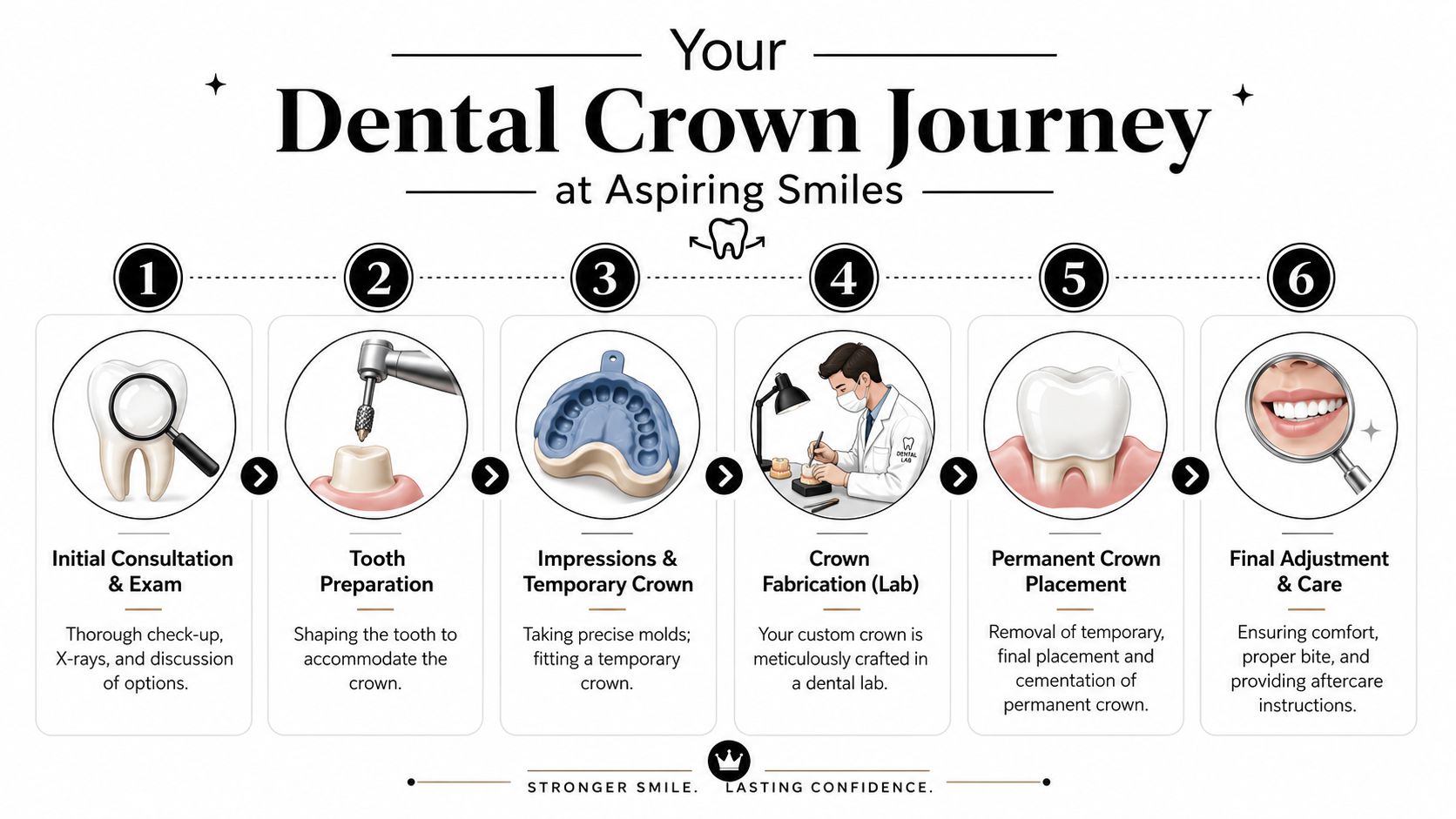
Most crown treatment follows a two-visit process. Patients are often relieved to learn that it's more straightforward than they expected.
First visit
The first appointment starts with an exam and any needed imaging. The tooth is evaluated to confirm that a crown is the right solution and to make sure there isn't hidden decay, infection, or fracture that changes the plan.
Then the tooth is shaped so the crown can fit securely. If needed, the tooth is rebuilt first to create a proper foundation. After that, impressions or scans are taken so the final crown can be made to fit your bite and surrounding teeth. A temporary crown is usually placed before you leave.
Most patients don't struggle with the crown process itself. They struggle with not knowing what to expect.
A temporary crown does an important job. It protects the prepared tooth, helps you function between visits, and gives the dentist useful information about comfort and bite.
Second visit
At the return appointment, the temporary crown is removed and the final crown is tried in. The dentist checks fit, contacts, bite, and appearance before cementing it into place.
This part should not feel rushed. Small adjustments matter. A crown that looks good but bites high can create problems. A crown that fits well should feel stable and comfortable once you get used to it.
Here is a visual walkthrough of the process many patients find helpful:
What patients can expect afterward
Mild tenderness is common for a short time, especially around the gums. Patients generally return to normal activities quickly. Good brushing, flossing, and regular cleaning and exams help protect both the crown and the tooth underneath.
If the crown feels off when you bite, that should be checked. A small adjustment early is much better than trying to ignore it.
Sample Dental Crown Cost Estimates
The numbers below show how treatment plans can vary. These are examples built from the verified pricing ranges above, not fixed fee quotes.
Sample crown cost scenarios in Las Vegas
| Service | Scenario 1 Simple Cosmetic Crown | Scenario 2 Crown with Buildup | Scenario 3 Crown after Root Canal |
|---|---|---|---|
| Crown material | All-ceramic crown | Zirconia crown | Crown after endodontic treatment |
| Crown fee range | $1,000 to $2,500 | $1,200 to $2,500 | $800 to $3,000 |
| Additional prep | None beyond normal preparation | Post-and-core buildup $300 to $600 | Root canal $1,000 to $1,500 |
| Possible added restorative work | Not anticipated | Needed to support weakened tooth | May also need internal support depending on tooth condition |
| Estimated planning takeaway | More predictable when the tooth is intact | Total rises when the tooth needs rebuilding first | Usually the highest total because disease must be treated before protection is added |
A front tooth with a fracture line but healthy nerve tissue may be a relatively straightforward cosmetic-restorative case. The crown restores appearance and strength, and the main choice is usually the material.
A molar with a large failing filling often tells a different story. Once old decay and weak tooth structure are removed, there may not be enough remaining tooth to hold a crown securely without a buildup.
A tooth that needs a root canal first is usually the clearest example of why online crown prices can mislead people. The crown is only part of the treatment. The tooth has to be made healthy before it can be protected.
Frequently Asked Questions About Dental Crowns
Are crowns worth the cost
In many cases, yes. A crown can protect a tooth that is cracked, heavily filled, or structurally weak enough that a standard filling is unlikely to hold up. The better question is whether the crown solves the full problem at a reasonable total cost once the exam, X-rays, buildup, or root canal are factored in.
That is where many Las Vegas patients get surprised. The crown fee itself is only one part of the bill, and Nevada dental plans often place annual maximums low enough that insurance may cover only part of the treatment in a given year.
How long do dental crowns last
Many crowns last for years with good home care and regular dental visits. Longevity depends on the material, how much natural tooth remains underneath, bite pressure, grinding habits, and whether the tooth had prior damage or root canal treatment.
A well-made crown on a stable tooth usually lasts longer than a crown placed on a tooth that is already badly compromised.
Is getting a crown painful
The procedure is usually manageable for patients. We numb the tooth thoroughly, and most of the appointment involves shaping, checking fit, and making sure the bite is right.
If the tooth is already inflamed, cracked near the nerve, or infected, the discomfort often comes from the underlying condition rather than the crown process itself. In those cases, treating the tooth is often what reduces pain.
How do I take care of a new crown
Brush and floss normally, especially along the gumline where plaque collects around the edge of the crown. Avoid chewing ice, opening packages with your teeth, or putting repeated force on the area.
If you clench or grind, a night guard may help protect both the crown and the natural tooth underneath.
When should I call right away
Call promptly if a temporary crown comes off, the final crown feels too high when you bite, you cannot floss between the teeth normally, or the tooth develops strong pain, swelling, or temperature sensitivity that keeps getting worse.
Small bite problems are easier to correct early.
For Las Vegas patients, a personalized exam is the fastest way to get a clear answer about whether a damaged tooth needs a crown, a filling, urgent treatment, or another restorative option.
If you're comparing options for a damaged or painful tooth, Aspiring Smiles Dental and Braces provides exams, dental X-rays, restorative dentistry, cosmetic dentistry, emergency dentist visits, and guidance on payment options for patients across Las Vegas, including Desert Shores, Sun City Summerlin, Lone Mountain, Monterrey, Sunhampton, Mar-A-Lago, and Painted Desert Estates. Schedule a consultation to get an itemized treatment plan, understand what your crown would involve, and find out the most practical next step for your smile.