Aspiring Smiles: Your Dental Bonding Dentist in Las Vegas
A lot of people start looking for a dental bonding dentist after something small happens. You catch your reflection and notice a front tooth chip. You see a dark spot that whitening didn't fix. Or you've always had a little gap that makes you hold back in photos.
I hear that concern often from new patients in Las Vegas. They're not always looking for a dramatic smile makeover. Many just want their tooth to look normal again, without a long treatment plan or a procedure that feels intimidating. That's where bonding often comes in. It can be a practical cosmetic option when the problem is small, but the effect on confidence feels big.
I'm Dr. Patel, and my goal is to make this easy to understand. If you've been searching for a cosmetic dentist near me or a dentist in Las Vegas, NV because of a chipped or uneven front tooth, this guide will help you think through what bonding does well, how long it tends to last, and when another option may make more sense.
Your Smile Transformation with a Las Vegas Cosmetic Dentist
A patient recently came in after avoiding close-up photos for months. Her concern wasn't major from a dental standpoint. One front tooth had a small chip and the neighboring tooth looked slightly uneven. But every time she smiled, that was all she saw.
That reaction is common. Small flaws on front teeth can feel much bigger than they are because they sit in the center of your smile. People from Desert Shores, Sunhampton, and Lone Mountain often tell me the same thing. They don't want a complicated fix. They want a natural-looking solution from a local dentist who listens.
For the right situation, dental bonding can be that solution. It's a cosmetic treatment that lets your dentist reshape a tooth with a tooth-colored material, usually without the kind of extensive tooth reduction associated with larger restorations. If you've been browsing options for a smile makeover with a cosmetic dentist, bonding is often one of the first treatments worth discussing.
Why patients ask about bonding first
Those considering bonding are dealing with one or more of these:
- A visible chip: A front tooth that catches the light differently after an accident or years of wear
- A small gap: Enough space to bother you, but not enough to feel like you need orthodontics
- Stubborn discoloration: One tooth that doesn't match the others
- Minor shape concerns: A tooth that looks short, uneven, or slightly out of proportion
Practical rule: If the issue is small and the tooth is otherwise healthy, bonding is often one of the most conservative cosmetic options to consider.
Why this matters for long-term planning
Bonding is appealing because it can improve your smile quickly and with less intervention. But I also want patients to think beyond the first appointment. Front teeth matter aesthetically, and they also take daily wear from eating, habits, and bite pressure.
That's why the right question isn't only, “Can bonding fix this?” The better question is, “Is bonding the smartest choice for this tooth, given how I use my teeth and how long I want the result to last?” That's the decision that leads to fewer regrets later.
What Is Dental Bonding
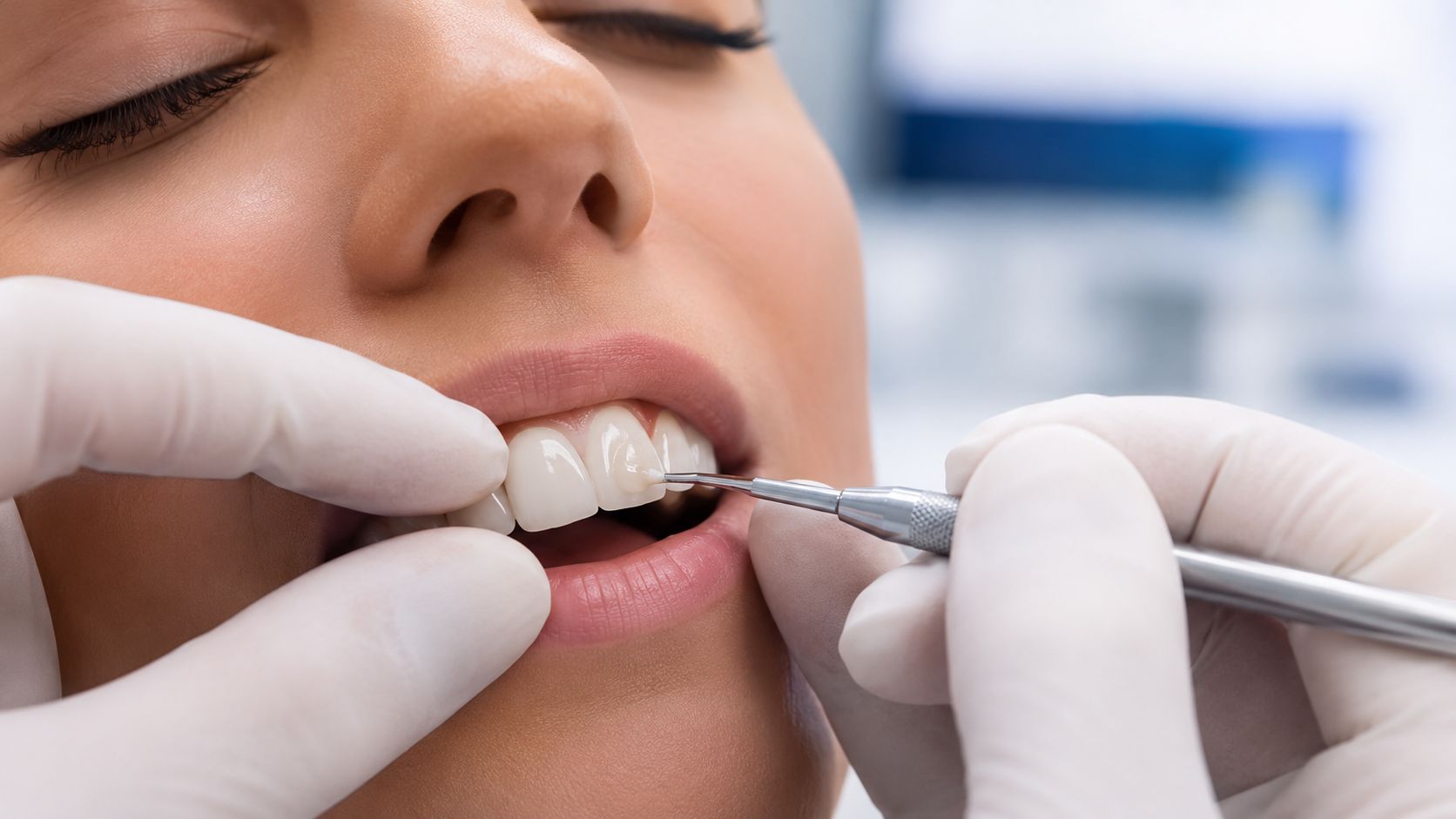
Dental bonding is a procedure where a dentist applies a tooth-colored composite resin to a tooth, shapes it carefully, and hardens it with a curing light. It is used to repair small chips, soften minor cracks, close narrow gaps, improve shape, and cover discoloration that stands out in the smile. Modern guidance also notes that bonding is often considered reversible in many cases because the tooth usually does not need as much reduction as it would for porcelain veneers, as explained in this overview of dental bonding from GC America.
Bonding works like precise tooth reshaping with added material
The easiest way to understand bonding is to picture a front tooth that is almost right, but not quite. Maybe the edge is chipped. Maybe one corner looks shorter than the other. Maybe there is a small space between two teeth that draws your eye every time you smile.
In those cases, I am usually not covering the whole tooth. I am adding material only where the tooth needs support or refinement, then shaping that resin so it blends into the natural enamel. For patients, that matters because the treatment is conservative. For front teeth, it also matters because small changes in length, width, and edge shape can make a big visual difference.
Done well, bonding should not look bulky or obvious. It should look like your tooth, just improved.
Patients often worry about that point. They have seen older bonding that looked flat, opaque, or easy to spot. Newer materials and better finishing techniques have improved how bonding reflects light, how it blends at the edges, and how naturally it can match nearby teeth.
Why bonding appeals to patients who want a conservative front-tooth fix
Bonding fills an important middle ground in cosmetic dentistry. It can correct a noticeable flaw without the greater commitment of a veneer or crown. That makes it appealing for a healthy front tooth with a limited cosmetic issue.
A few common examples make that easier to picture:
- Chip on a front tooth: Resin can rebuild the missing edge and restore a smoother outline.
- Narrow gap between teeth: Resin can add a little width to one or both teeth to close the space.
- Uneven shape: A worn or short corner can be recontoured so the tooth looks more balanced.
- Single dark area or discoloration: Bonding can cover a spot that whitening may not change.
This is also where long-term planning starts to matter. Bonding can be an excellent choice for front teeth, but it is not usually a one-time decision for life. Composite resin is durable, though it can stain, wear, or chip over the years, especially on teeth that handle a lot of bite pressure or habits like nail biting. For many Las Vegas patients, the smartest question is not only whether bonding can fix the tooth today. It is whether bonding makes sense as a repairable, lower-commitment option or whether a veneer may offer better lifetime value for that specific tooth.
What modern bonding does better
Current bonding techniques focus on more accurate shade matching, stronger adhesive systems, and layering methods that create a more lifelike result. One detail dentists pay close attention to is color selection before the tooth dehydrates and appears temporarily whiter, because that short-term shift can affect the final match. Those technique-based improvements are discussed in this overview of modern dental bonding materials and workflows.
Patients usually notice the result in a simple way. The tooth no longer catches the eye for the wrong reason.
Later in the visit, many people are surprised that such a small contour adjustment can change the whole smile.
To see the procedure in action, this short video gives a helpful visual overview.
What bonding is not
Bonding works best for modest cosmetic changes and small repairs on otherwise healthy teeth. A tooth with major structural damage, repeated breakage, heavy grinding pressure, or a need for full coverage may be better treated with other restorative options, including crowns, and in some cases dental implants if the tooth cannot be saved.
Bonding is a focused treatment. In the right case, it gives patients a natural-looking improvement while preserving more of the original tooth and leaving room for thoughtful long-term decisions later.
The Dental Bonding Process at Our Las Vegas Office
You catch your reflection before dinner on the Strip and your eye goes straight to the same small chip on a front tooth. By the time you call our Las Vegas office, the question usually is not only, “Can this be fixed?” It is also, “What will the visit be like, and is bonding the smart choice if this tooth may need touch-ups over time?”
That second question matters. For front teeth, bonding is often a practical first step because it can improve the smile quickly while preserving natural tooth structure. It also helps to go in with clear expectations about maintenance, repair, and how bonding compares with longer-lasting options for visible teeth.
We begin with the tooth, your bite, and your goal
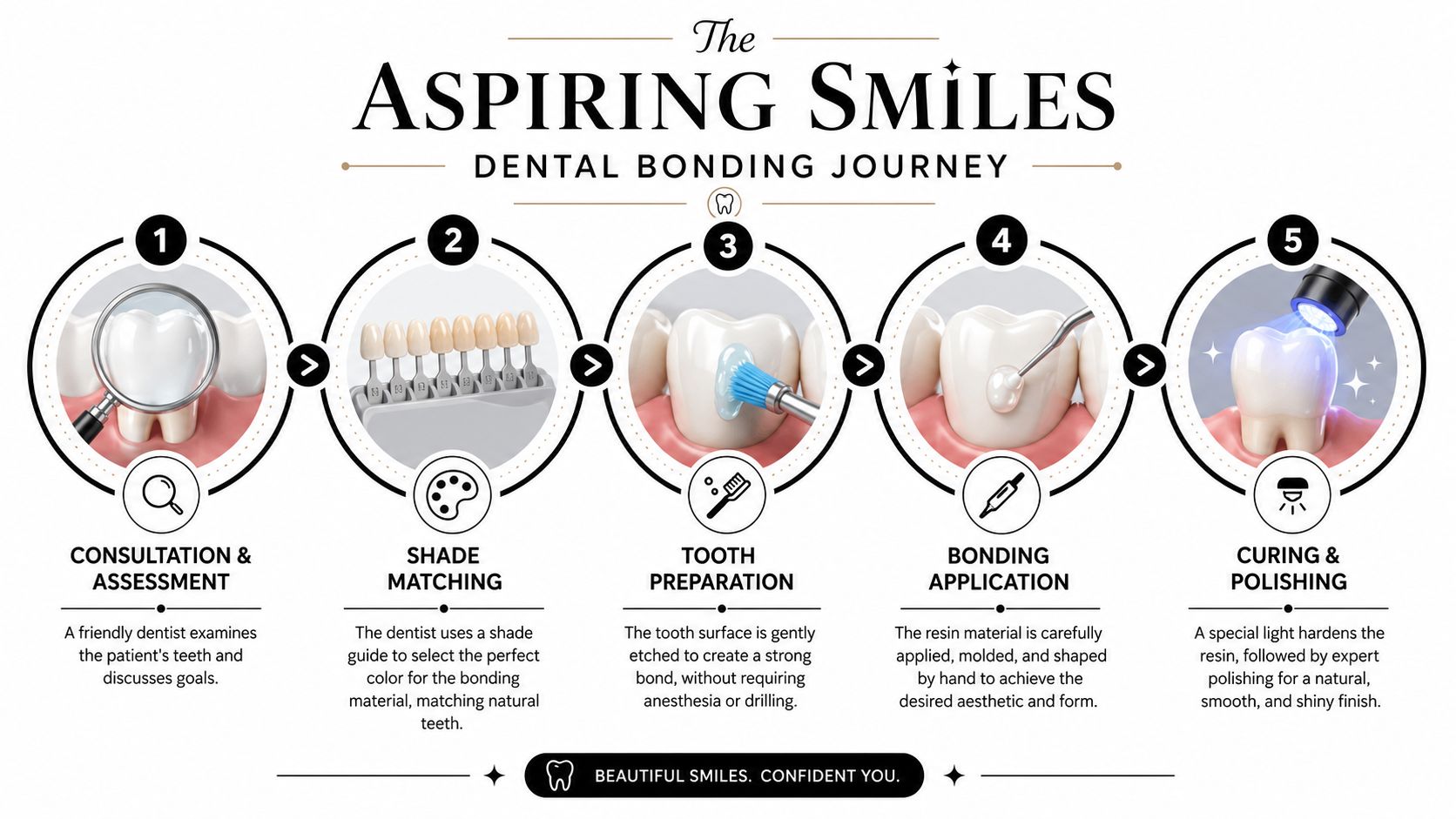
At Aspiring Smiles Dental and Braces, I start by examining the tooth from two angles. First, I look at appearance. Then I look at function.
A small edge chip from one accidental bite is very different from a front tooth that keeps breaking because the lower teeth hit it too hard. If I only fix the chip and ignore the force that caused it, the repair may not last the way you want. That is why the first part of the appointment is a conversation and an exam, not a rushed cosmetic patch.
For some patients, bonding is the right fit. For others, it makes more sense to review the difference between veneers and crowns for front teeth before deciding how to spend money over the long run.
Shade comes first, then preparation
Patients are often surprised by how much attention goes into color before any resin is placed. Natural teeth can look lighter after they dry out, so I select the shade early while the tooth still reflects its normal color. That step helps the bonded area blend in instead of standing out under bright Las Vegas sun or indoor lighting.
The preparation is usually conservative. In many cosmetic bonding cases, I only need to lightly condition the surface so the material can attach properly. Many patients do not need numbing because we are typically working on the outer part of the tooth rather than drilling extensively into it.
It is closer to careful sculpting than traditional restorative work.
I place the resin in layers and shape it by hand
The bonding material starts as a tooth-colored resin that can be molded while it is soft. I add and shape it in small amounts, much like building up the missing corner of a puzzle piece so it fits the rest of the picture.
Once the shape looks right, a curing light hardens the material. After that, I refine the edges, smooth the surface, and check your bite in motions you use, such as speaking and closing naturally. For front teeth, these small adjustments matter because even a tiny high spot can make a bonded edge chip sooner than it should.
The final polish is what gives the result a natural finish. A bonded tooth should not look dull or bulky. It should reflect light in a way that blends with the neighboring enamel.
What the appointment usually feels like
Patients commonly expect a longer, more uncomfortable visit than bonding usually requires. In reality, the appointment is often straightforward, and many people return to work, errands, or school the same day.
Here is what people often notice right away:
- The visit feels more manageable than expected. Bonding is usually gentle and conservative.
- The change is immediate. You can see the repaired shape before you leave.
- The result can look very natural. The goal is for the eye to move across the smile without stopping at that tooth.
If you have been searching for a dentist near me because you want cosmetic improvement without a long treatment sequence, bonding often fits real life well. Patients from Sun City Summerlin, Monterrey, and Painted Desert Estates often appreciate that balance. The process is efficient, but the planning still looks ahead, especially for front teeth where future repairs, stain pickup, and lifetime value should be part of the decision from the start.
Dental Bonding vs Veneers and Crowns
Smart planning matters most. Bonding, veneers, and crowns can all improve a front tooth, but they solve different problems. Choosing well isn't about picking the fanciest option. It's about matching the treatment to the tooth, your bite, your budget, and your expectations.
One of the most useful patient-focused points in this discussion is simple. Bonding is quick and conservative, but it's more prone to staining and chipping than porcelain. For patients who want a more durable long-term cosmetic option on visible front teeth, veneers are often the better investment. For smaller defects or patients who want a more affordable and less permanent first step, bonding often makes sense, as discussed in this guide on when bonding is the wrong choice versus veneers.
A quick comparison
| Feature | Dental Bonding | Porcelain Veneers | Dental Crowns |
|---|---|---|---|
| Best use | Small chips, minor gaps, contour changes, masking limited discoloration | Front teeth with larger cosmetic concerns where appearance and stain resistance matter | Teeth with more extensive damage, weakness, or need for full coverage |
| Tooth reduction | Usually conservative | More than bonding in many cases | More than bonding or veneers because the tooth is covered fully |
| Appointment pattern | Often completed in a single visit | Usually a multi-step process | Often a multi-step process |
| Repairability | Small chips can often be repaired directly | Usually requires replacement rather than simple patching | Depends on the issue, but not as simple as adding a little composite |
| Stain resistance | Lower than porcelain | Higher than bonding | Often stronger for function, depending on material and indication |
| Best question to ask | Is this defect small enough for bonding to stay attractive over time? | Do I want the most polished cosmetic finish for a front tooth? | Does this tooth need protection more than cosmetic reshaping? |
When bonding usually wins
Bonding is often the better fit when the problem is limited. Think one chipped corner, one small space, or one tooth that needs slight reshaping. It's also a reasonable choice when a patient wants a conservative approach first.
That's especially true if you're not ready to commit to a more involved cosmetic treatment. Some people want to improve a tooth now and keep future options open.
When veneers usually make more sense
If the front teeth have broader cosmetic concerns, or if you prioritize stain resistance and long-term polish, veneers are often the better answer. They're commonly chosen when the issue goes beyond a tiny repair and moves into overall smile design.
If you're comparing those two treatments in more detail, this page on the difference between veneers and crowns can help clarify where each fits.
Long-view thinking: A lower upfront cost doesn't always mean better lifetime value if a front tooth is likely to chip, stain, or need repeated touch-ups.
When a crown is the better restorative choice
Crowns enter the conversation when the tooth isn't just cosmetically imperfect but structurally compromised. If a tooth has a large fracture, extensive wear, or significant weakness, a full-coverage restoration may be more appropriate than adding resin to the surface.
Patients sometimes ask for bonding because it sounds simpler. Sometimes it is. But if the tooth needs protection, choosing the more protective treatment first can save frustration later.
How I help patients decide
For front teeth, I usually ask four practical questions:
- How big is the defect? Small flaws favor bonding.
- What kind of bite forces hit this tooth? Heavy edge-to-edge contact may work against bonding.
- How important is long-term stain resistance? Porcelain generally has the edge.
- Do you want a conservative first step or a more lasting cosmetic finish? Your goals matter as much as the tooth.
That kind of discussion is what patients deserve from a dental bonding dentist. Not just “Yes, we can fix it,” but “What's the smartest way to fix it for your life?”
Cost and Lifespan of Dental Bonding in Las Vegas
A patient will often sit down and ask me two very practical questions right away: “What am I likely to spend?” and “How long is this going to look good on my front tooth?” Those are the questions I want you to ask, because bonding is not just a cosmetic decision. It is also a maintenance decision.
Bonding is usually one of the more affordable ways to improve a front tooth. The final fee in Las Vegas depends on how much artistry and adjustment the tooth needs, not just on whether the chart says “one tooth.” A tiny corner chip and a full front-edge reshaping may both be called bonding, but they are very different jobs.
Why the price can vary
Front teeth ask for precision. If I am bonding a tooth that shows every time you smile, I have to match color, surface texture, shine, and shape so it blends with the teeth beside it. That takes more time than a simple patch in a less visible area.
A few details usually affect cost:
- Size of the repair: A small chip is faster to correct than a broad surface build-up.
- Location of the tooth: Highly visible front teeth often need more detailed shade and contour work.
- Bite adjustment: Some cases need careful refining so the bonded area is not taking the full force of your bite.
- Cosmetic goals: Closing a gap or reshaping one front tooth can involve more planning than a minor edge repair.
That is why online price ranges can only tell part of the story.
How long bonding usually lasts on front teeth
Bonding can last for years, but I never present it as permanent. A better way to picture it is this: composite resin works well for conservative cosmetic changes, yet it usually goes through a repair or replacement cycle sooner than porcelain.
For front teeth, lifespan often comes down to force and habits. If the tooth avoids heavy impact and you take care of it, bonding may stay attractive for a good stretch of time. If you grind, bite your nails, chew ice, or hit that tooth edge-to-edge, the material is more likely to chip, dull, or stain earlier.
Front-tooth bonding is durable. It is not a forever material.
The real question is lifetime value
This is the part many patients in Las Vegas appreciate once we talk it through clearly. Bonding often costs less at the start, which makes it appealing. But if that same front tooth needs repeated polishing, patching, or replacement over the years, the lower entry cost may not be the lower long-term cost.
Veneers usually require a bigger investment upfront, but porcelain tends to hold color and surface polish better over time. So if you are choosing between bonding and veneers for a front tooth, the smarter comparison is not just today's fee. It is how often you may need future repairs, how important stain resistance is to you, and how long you want the result to stay stable.
I often explain it like maintaining two different finishes on a car. One costs less to apply, but may need more touch-ups. The other costs more at first, but can keep its appearance longer with fewer cosmetic repairs. Neither choice is automatically right for everyone. The right choice depends on your bite, your habits, and how you want to spend money over time.
How I frame the decision in the office
If you want a conservative, lower-cost way to improve a small chip, small gap, or minor shape issue, bonding can be a very sensible first step. If your front teeth are under heavy stress, or you want a longer-lasting cosmetic finish with stronger stain resistance, it may be worth discussing whether porcelain gives you better value over the life of the restoration.
That is the conversation I want patients to have before we start. Not just “What does bonding cost today?” but “What is this choice likely to cost me, and look like, over the next several years?”
How to Care for Your Newly Bonded Teeth
A lot of Las Vegas patients ask me the same question after bonding on a front tooth. “It looks great today, but how do I keep it looking this way?” That is the right question, because bonding is not only about the day we place it. It is also about how well it holds up through coffee, meals out, photos, and everyday wear over the next few years.
Bonding usually does not require downtime. Some patients notice mild short-term sensitivity, but most return to normal routines quickly. The bigger issue is understanding that composite resin behaves a little differently than natural enamel. It can look beautiful, but it benefits from gentler habits and periodic maintenance.
The habits that help most
I tell patients to treat a newly bonded front tooth the way they would treat a fresh manicure or a newly detailed car. It is durable enough for normal life, but rough habits can dull the finish sooner.
A simple routine helps the most:
- Brush with a soft toothbrush: Use a non-abrasive toothpaste so the bonded surface stays smoother and shinier.
- Floss every day: Healthy gums frame the tooth. If the gums are inflamed, even beautiful bonding will not look as good.
- Go easy on stain-heavy foods and drinks: Coffee, tea, red wine, and tobacco can discolor resin faster than they discolor porcelain.
- Do not use your teeth like tools: Tearing open packets, biting nails, or chewing pen caps is a common reason front-edge bonding chips.
- Be cautious with very hard foods: Ice, hard candy, and similar habits can put extra stress on a repair that sits on a front tooth edge.
Those small choices matter more than patients expect. Front-tooth bonding often fails gradually, not all at once. First the shine may fade. Then a corner may feel rough. Later, a stain line or small chip may show up in certain lighting.
What to do if something feels off
If the tooth suddenly feels different, pay attention to that. A tiny catch when you floss, a rough spot against your lip, or a slight shape change can be an early sign that the bonding needs a quick polish or minor repair.
That repair cycle is part of the true cost of bonding, especially on front teeth. A small touch-up is usually easier and less expensive than waiting until a larger piece breaks away. For a patient deciding between bonding and veneers, this is one of the practical long-term differences I want them to understand clearly.
If you have an urgent chip or a sudden change, that's also a reason to contact an emergency dentist rather than waiting and hoping it settles down.
If your bonded tooth feels rough, looks dull, or starts catching floss, let us check it early. Small fixes are usually simpler than bigger replacements.
Keep regular visits on the calendar
Regular cleanings and exams help us watch the bonded area over time. I am checking more than whether it is still attached. I am looking at surface wear, staining, bite pressure, and whether the edges are taking more force than they should.
Some patients also benefit from a night guard if they clench or grind. That is especially important for bonding on front teeth, where repeated stress can shorten the life of the result.
The goal is to keep your smile looking natural for as long as possible, while planning realistically for maintenance. That is how bonding becomes a smart decision, not just an affordable one on day one.
Choose Your Trusted Dental Bonding Dentist in Las Vegas
When patients search for a dental bonding dentist, they're usually looking for more than someone who can place composite. They want clear advice. They want honest recommendations about whether bonding is enough, or whether veneers, crowns, or another restorative option would serve them better. Most of all, they want a result that looks natural when they smile, laugh, and talk.
That's how I approach these visits in Las Vegas. I look at the cosmetic issue, but I also look at the bite, the long-term wear pattern, and whether the fix you want today will still make sense for you later. For some people, bonding is the right answer. For others, a different path in cosmetic or restorative dentistry is the more stable choice.
The procedure remains widely used for a reason. An industry source projects the global dental bonding agents market at $1.26 billion in 2024 and $2.13 billion by 2032, a projected 8.9% CAGR, which reflects continued adoption of bonding as a core part of cosmetic dentistry, according to this summary of cosmetic dentistry statistics and dental bonding market projections.
Local care for patients across Las Vegas
I'm proud to care for patients from Desert Shores, Sun City Summerlin, Lone Mountain, Mar-A-Lago, Painted Desert Estates, Monterrey, and Sunhampton. Some come in for a chipped front tooth. Others start with a new patient exam and discover that cosmetic improvements, teeth whitening, crowns, Invisalign, tooth extraction, or even dental implants may be part of a larger plan.
Aspiring Smiles Dental and Braces provides general, cosmetic, restorative, and emergency dental care in Las Vegas, with services that include exams, cleanings, crowns, veneers, whitening, implants, and family dentistry.
When you're ready to talk
If a front tooth chip, gap, or shape issue has been bothering you, you don't have to keep guessing. A consultation can tell you whether bonding is a smart short-term fix, a sound long-term option, or the wrong treatment for your bite and goals.
If you're ready to talk with Aspiring Smiles Dental and Braces, schedule a consultation with Dr. Patel. We'll examine the tooth, explain your options in plain language, and help you decide whether dental bonding, veneers, crowns, or another treatment fits your smile, budget, and long-term plans.