Emergency Dental Care Fort Wayne: Get Immediate Help
A sharp toothache at 6 a.m. A child who falls and chips a front tooth. A crown that comes off while you're eating dinner. Dental emergencies rarely happen at a convenient time, and when they do, those affected want the same three answers right away. What should I do first, where should I go, and what is this going to cost me?
In need of emergency dental care in Fort Wayne, you're probably already under stress. Pain makes it harder to think clearly. So does the fear that you've waited too long or that the problem is worse than it looks. If your anxiety is spiking while you try to make decisions, this short guide on coping with overthinking and anxiety can help you settle down enough to take the next step.
Help is available locally, and the right move depends on the kind of emergency you're having. Some problems need an emergency room. Many others need a dentist, not a hospital. The key is acting quickly and doing the right thing in the first few minutes.
Your Calm Guide to Navigating a Dental Emergency in Fort Wayne
At 6 a.m., your face is throbbing, the office you usually visit is closed, and you need three answers fast. What should you do right now, where should you go in Fort Wayne, and how are you going to pay for it?
Start with control. Panic leads people to waste time on random internet advice, drive to the wrong place, or wait too long hoping the pain will settle down. In a dental emergency, the first few minutes matter because early choices affect pain, swelling, bleeding, and in some cases whether a tooth can still be saved.
Practical rule: Your first job is to protect the area, reduce immediate risk, and get in touch with the right local provider quickly.
That means focusing on actions in the right order. Rinse gently if there is blood or debris. Use clean gauze if something is bleeding. Save any broken tooth piece or crown if you can find it. Call a Fort Wayne dental office that handles urgent cases and describe the problem clearly so the team can tell you whether you need a dentist, an emergency room, or same-day care.
Pain can make every problem feel catastrophic. It also makes simple decisions harder than they should be. If your thoughts are spiraling while you are trying to decide what to do, this guide on coping with overthinking and anxiety may help you settle down enough to make the next call.
Local access matters here. Fort Wayne patients often can find same-day dental help, extended office hours, and offices that leave room in the schedule for urgent cases. That changes the right response. If you have a true dental emergency, act like care is available today and start calling.
One more point matters. The problem that hurts the most is not always the one with the shortest treatment window. A knocked-out permanent tooth, a spreading infection, or fast-growing swelling may need quicker action than a very painful but stable cavity. Good emergency care starts with clear triage, then the right destination, then a workable plan for cost.
Is It a True Dental Emergency
Not every dental problem needs care this minute. Some do. Knowing the difference can save you time, lower your stress, and keep you from making an expensive wrong turn.
Go to the emergency room now
Some symptoms are bigger than dentistry and need hospital-level care first. If you have difficulty breathing or swallowing, spreading facial or neck swelling, uncontrolled bleeding, or major jaw or facial trauma, go to the ER rather than waiting on a dental office, based on emergency dental triage guidance.
These are the situations where your airway, circulation, or facial bones may be involved. A dentist can treat the tooth-related issue later. First, you need to make sure the situation is medically stable.
Call an emergency dentist right away
Many urgent problems belong in a dental chair, not a hospital bed. These often include:
- Severe tooth pain: Especially when the pain is constant, pulsing, or waking you up.
- A broken or cracked tooth: The tooth may still be restorable if it's protected quickly.
- A knocked-out permanent tooth: This is time-sensitive and should be treated as a race against drying out.
- A lost crown or filling: The tooth underneath may be exposed and vulnerable.
- Noticeable swelling inside the mouth or around a tooth: Infection can move from manageable to serious quickly.
The reason these belong with an emergency dentist is simple. The source of the problem is usually the tooth, nerve, filling, crown, or surrounding gum tissue. A hospital may help with pain or infection support, but it usually won't provide the dental procedure that fixes the cause.
Swelling is the symptom people underestimate most. If it is growing, accompanied by fever or pus, or changing how you swallow, don't treat it like a routine toothache.
Call for the next available appointment
Some dental problems are urgent, but they may not require immediate same-day treatment if your pain is controlled and there are no signs of infection or trauma.
Examples include:
- A mild chip with no pain
- A dull toothache that comes and goes
- A loose crown that isn't causing sharp pain
- Mild gum irritation
- Sensitivity to cold without swelling
These issues still deserve attention. They just usually allow a little more scheduling flexibility. The mistake is assuming “not an emergency” means “safe to ignore.” Small cracks become bigger fractures. Mild decay becomes a deep infection. A minor problem left alone often becomes the emergency you were hoping to avoid.
Immediate First Aid Steps You Can Take at Home
The first few minutes matter. Good first aid won't replace treatment, but it can reduce damage and improve the odds of saving the tooth.

If a permanent tooth gets knocked out
This is one of the few dental emergencies where speed can make the difference between keeping and losing a tooth. For a knocked-out permanent tooth, the replantation window is 30 to 60 minutes, and one Fort Wayne source specifically advises getting to the office within 30 minutes if possible, as explained in Fort Wayne knocked-out tooth guidance.
Do this in order:
- Find the tooth fast. Pick it up only by the crown, never the root.
- Rinse gently if it's dirty. Use water, but don't scrub.
- Try to place it back in the socket if you can do so carefully.
- If you can't reinsert it, keep it moist in milk or saliva.
- Call while you're heading in. The office can prepare for your arrival.
What doesn't work is just as important. Don't wrap the tooth in a dry tissue. Don't scrub the root clean. Don't leave it on the counter while you decide what to do.
If you have a severe toothache
Start by rinsing gently with warm salt water. That won't cure the cause, but it may calm irritated tissue and clear debris from around the tooth. If your cheek is swollen, use a cold compress on the outside of the face.
Avoid placing aspirin directly on the gum. That old home remedy can irritate the tissue and doesn't solve the underlying problem. If the pain keeps building, if it hurts to bite, or if swelling starts, contact an emergency dentist rather than waiting for it to “break.”
A quick visual walkthrough can also help when you're too stressed to process written instructions:
If a tooth is chipped or broken
A small chip and a major fracture aren't the same problem, but your first steps are similar.
- Rinse with warm water: This clears the area and helps you see the damage better.
- Control bleeding if present: Use clean gauze with gentle pressure.
- Save any broken pieces: Bring them with you if you can.
- Protect sharp edges: Dental wax can help keep the tooth from cutting your tongue or cheek.
- Use a cold compress outside the mouth: This may limit swelling.
If the tooth broke after trauma and your bite now feels off, don't test it repeatedly by chewing on it. That can worsen the crack.
If a filling or crown falls out
Lost restorations often feel less dramatic than trauma, but the exposed tooth can become very sensitive very quickly. Keep the area clean and avoid chewing on that side. If you still have the crown, bring it with you.
What usually doesn't work is trying to glue it back yourself with a household adhesive. Dental materials are designed for the mouth. Hardware-store fixes aren't.
If you suspect an abscess or infection
A dental infection often feels like pressure, throbbing, swelling, or pain when biting. Sometimes patients notice a bad taste or drainage. Rinse with salt water and call promptly.
This is not a “wait a week and see” situation if the swelling is growing or you feel unwell. Infections can spread. The goal is to get the source diagnosed and treated before it turns into a medical emergency.
Emergency Room vs Emergency Dentist A Fort Wayne Guide
Patients lose time when they go to the wrong place first. The simplest way to think about it is this. The ER handles threats to breathing, bleeding, and major trauma. The emergency dentist handles tooth-specific problems such as pain, breakage, and lost restorations.
Where to go
| Symptom | Go to the Emergency Room (ER) | Go to the Emergency Dentist |
|---|---|---|
| Difficulty breathing or swallowing | Yes | No |
| Spreading facial swelling | Yes | No |
| Uncontrolled bleeding | Yes | No |
| Major jaw or facial trauma | Yes | No |
| Severe tooth pain | No | Yes |
| Broken tooth | No | Yes |
| Lost filling or crown | No | Yes |
That split follows a key triage rule used in emergency dental guidance. Go to the ER for difficulty breathing or swallowing, spreading facial swelling, uncontrolled bleeding, or major jaw trauma. For severe tooth pain, broken teeth, or lost restorations, call an emergency dentist. The reason is practical. Hospitals can stabilize serious medical risks. Dentists treat the tooth itself.
What each setting can actually do
An emergency room can help when the problem reaches beyond the tooth. If the swelling is affecting your airway or you've had a serious accident, that's the right place.
A dental office is built for the problems that prompt searches for emergency dental care in Fort Wayne. It can examine the tooth, take dental X-rays, identify the source of pain, and decide whether you need treatment such as drainage, a temporary restoration, extraction, or another tooth-saving procedure.
Go where you'll get the right treatment first. A hospital may relieve symptoms in a crisis, but it usually won't replace a lost crown or manage a fractured molar the way a dental office can.
One common mistake
A lot of patients choose the ER because it's familiar or open late. That's understandable. But if you have a broken tooth and no breathing issue, the better first call is usually a dentist who handles emergencies. You'll often get to definitive treatment faster and avoid one extra stop.
If you're unsure, call and describe the problem in plain language. Say when it started, whether swelling is increasing, whether you can swallow normally, and whether there's active bleeding. Those details help the team direct you appropriately.
Finding and Paying for Same-Day Dental Care in Fort Wayne
You wake up with facial swelling, call one office, get voicemail, and still do not know what the visit will cost. In a dental emergency, speed matters, but so does getting clear answers before you get in the car.
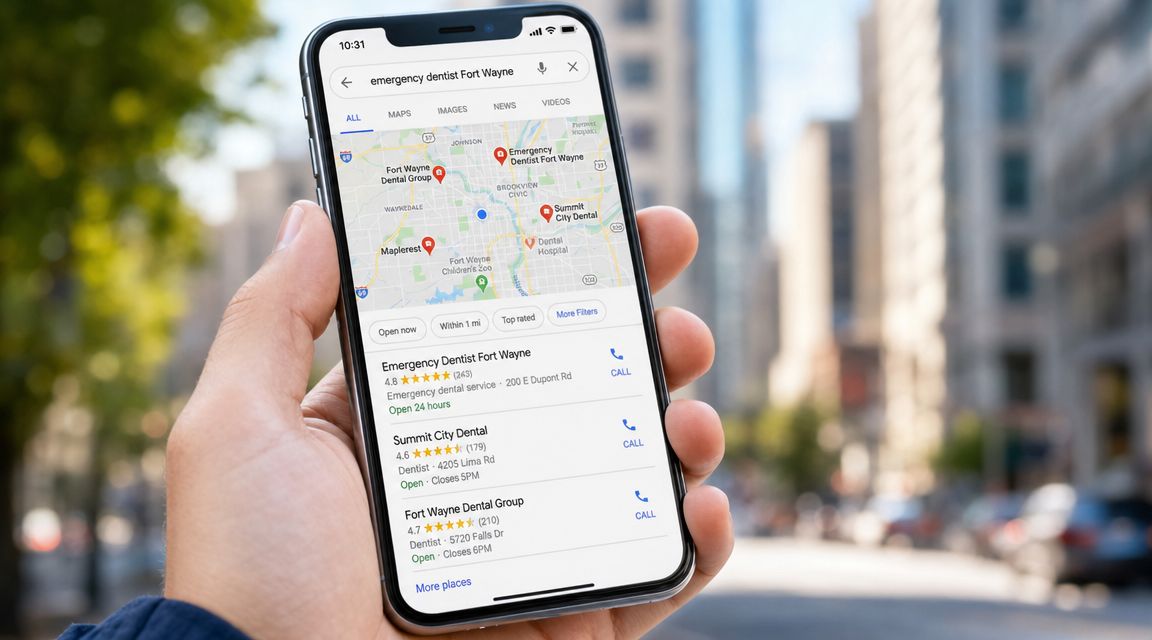
A good same-day plan has three parts. Find an office that can see you soon, confirm whether they can treat your specific problem today, and ask how payment works before treatment starts. Patients in Fort Wayne often lose time on the first and third step. A short phone call can fix that.
What to ask when you call
Do not settle for “we see emergencies.” Ask questions that tell you whether the office can actually help you today.
- Can you see me today, and if so, what time is realistic?
- What kinds of emergencies are you treating right now? Say exactly what is happening. Broken tooth, swelling, severe pain, lost crown, or trauma.
- Do I need to call first, or can I walk in?
- What should I do before I arrive? This matters if you have swelling, bleeding, or a tooth fragment.
- What does the emergency exam fee cover? Ask whether X-rays and a limited exam are included.
- If I need treatment today, can you give me an estimate before you start?
- Do you take my insurance, and what if I do not have insurance?
The quality of the phone response tells you a lot. Offices that handle urgent calls well usually ask follow-up questions, give practical instructions, and explain the next step without making you guess. Practices track lost revenue from emergency dental calls for a reason. Missed calls often mean a patient in pain never makes it through the door. If you cannot reach a person or get a clear answer, call the next office.
What to have ready before you call
Keep it simple. The front desk or clinical team needs enough information to place you correctly on the schedule and tell you what to bring.
- Your main problem: pain, swelling, broken tooth, knocked-out tooth, lost filling, lost crown
- When it started: this morning, last night, after eating, after a fall, or over several days
- Your symptoms right now: throbbing pain, temperature sensitivity, drainage, bad taste, trouble sleeping
- Your health details: allergies, blood thinners, diabetes, pregnancy, major medical conditions
- Insurance card and photo ID if you have them
- Transportation and timing: how fast you can get to the office
If cost is your biggest concern, review this guide to emergency dental care without insurance before you call. It covers the payment questions that matter most when you need help the same day.
How to handle the payment conversation
Many emergency visits have two separate charges. One is for the exam and any needed X-rays. The other is for treatment if the dentist can do it that day. That distinction matters. A patient may expect one flat emergency fee, then learn the tooth also needs an extraction, root canal access, or a temporary repair.
Ask direct questions and wait for direct answers:
- What will I owe for the exam portion of today's visit?
- If you find the problem quickly, what treatments might be offered today?
- Will you review the fee before doing anything beyond the exam and X-rays?
- Do you offer payment arrangements or third-party financing if treatment is larger than expected?
- If I need follow-up care, what part is usually paid today?
From a dentist's side, I can tell you this. Cost conversations go better when they happen early and plainly. Patients make better decisions when they know the fee for diagnosis, the likely treatment range, and whether pain relief today is a temporary fix or the full solution.
Same-day care in Fort Wayne is easier to get when you treat the phone call like triage. Describe the problem clearly, ask whether they can treat it today, and settle the payment basics before you leave home.
What to Expect at Your Fort Wayne Emergency Visit
Most emergency appointments follow a simple pattern. The team gets you checked in, figures out what's wrong, helps control pain or stabilize the problem, and then talks through what happens next.
The usual flow of the visit
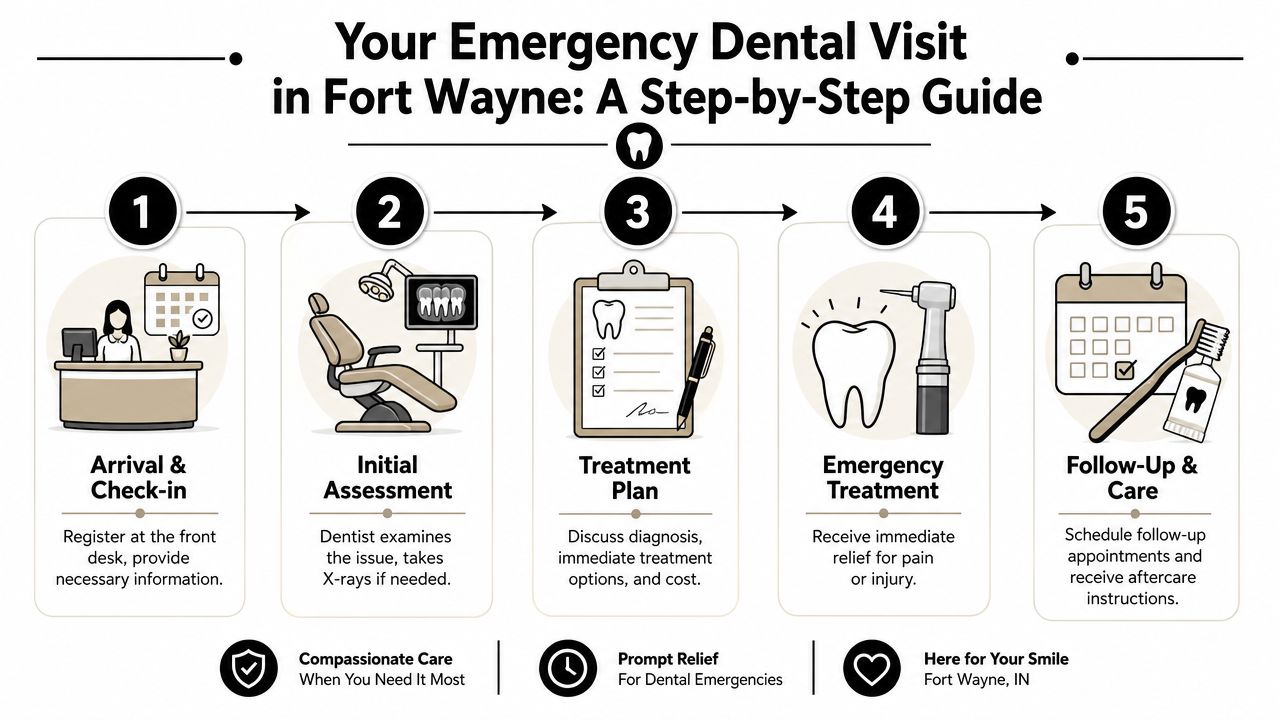
If you've never had a dental emergency visit before, the process is usually less chaotic than you expect. It often feels more focused than a routine cleaning because the team is trying to answer one urgent question first. What's causing this problem right now?
The visit commonly moves through these stages:
- Arrival and check-in: You'll provide your contact information, health history, medications, and a brief summary of the problem.
- Initial assessment: The dentist examines the area and may use dental X-rays if needed to see what isn't visible from the outside.
- Treatment discussion: You'll hear what the likely diagnosis is, what needs to happen today, and what may need follow-up later.
- Emergency treatment: The immediate goal is to reduce pain, protect the tooth, manage infection risk, or stabilize damage.
- Aftercare and follow-up: You'll leave with instructions and, if needed, a plan for the next visit.
If you'd like a simple prep list before you go, this article on how to prepare for seeing an emergency dentist is useful for organizing what to bring and what to mention.
Relief first, then longer-term repair
Emergency care is often the first step, not the final step. A cracked tooth may need immediate protection today and a crown later. An infected tooth may need urgent diagnosis now and then a root canal or extraction depending on the findings.
Fort Wayne's broader dental care system supports that kind of follow-up. One local network serves patients age one and up and provides services including examinations, X-rays, treatment planning, cleanings, extractions, fillings, crowns, root canal therapy, implant replacement of teeth, and full and partial dentures, as described in Fort Wayne dental follow-up care information. That matters because emergency patients often need both rapid relief and a clear path to full restoration.
The best emergency visit doesn't just stop pain. It identifies the cause and gives you a realistic next step.
If you're looking at options beyond Fort Wayne, Aspiring Smiles Dental and Braces in Las Vegas also offers emergency dentistry as part of its broader general and restorative care model. The practical point is that emergency dental offices should be able to connect urgent treatment with longer-term care, not leave you stuck after the first visit.
How to Prevent Future Dental Emergencies
Most dental emergencies don't feel preventable when you're in the middle of one. Many of them are. Small habits usually make the biggest difference.
The habits that reduce risk
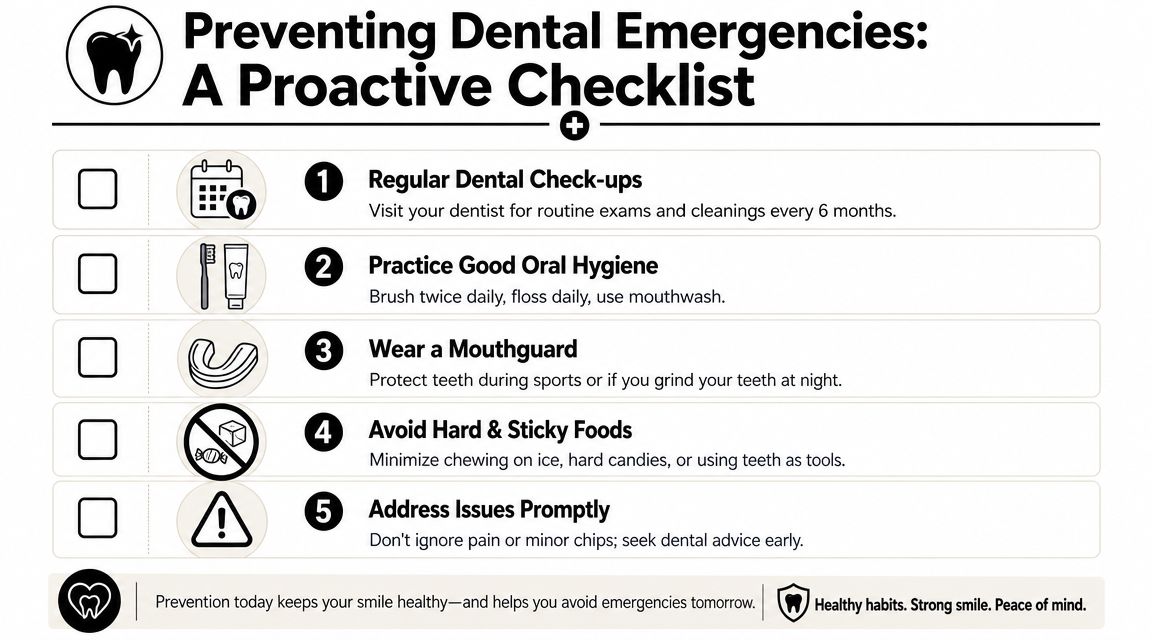
- Wear a mouthguard: If you play sports or grind your teeth, protection matters.
- Stop chewing hard objects: Ice, hard candy, popcorn kernels, and using teeth as tools are common causes of cracks.
- Stay consistent with home care: Brushing, flossing, and good hygiene lower the chance that a small cavity turns into weekend pain.
- Don't ignore early warnings: Sensitivity, a tiny chip, or a loose filling is easier to handle before it becomes urgent.
- Keep regular dental visits: Routine exams catch problems while they're still manageable.
What prevention really looks like
Prevention isn't about perfection. It's about catching issues while you still have options. The patient who comes in with a small crack often has a simpler path than the patient who waits until the tooth breaks in half.
The same goes for infections. Teeth rarely go from healthy to abscessed overnight. There's usually a stretch of warning signs that gets missed, minimized, or tolerated too long.
A good long-term dental relationship matters because emergency care works best when it's connected to follow-through. The immediate visit gets you out of crisis. Preventive care lowers the chance you need another one soon.
If you need urgent dental treatment in Las Vegas, Aspiring Smiles Dental and Braces offers emergency dentistry along with ongoing general and restorative care. If you're in pain, have swelling, or damaged a tooth, contact the office promptly so the team can help you decide the right next step and get you scheduled as quickly as possible.