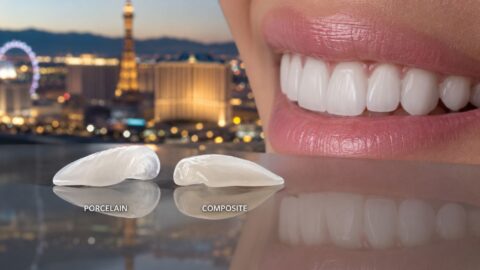
Veneers How Long Last: Las Vegas Guide 2026
Porcelain veneers typically last 10 to 15 years and can reach 20 years or more with excellent care, while composite veneers usually last 5 to 7 years. If you're in Las Vegas weighing veneers before a wedding, a career move, or just because you're tired of hiding your smile, the question isn't only how long they last, it's what the next decade of wear, maintenance, and replacement looks like.
A good veneer plan starts with honest expectations. In the chair, I talk patients through the difference between a smile that looks great for a few years and one that still makes sense when life, bite changes, and normal wear start piling up.
How Long Veneers Last and What to Expect
A Las Vegas patient usually doesn't ask about veneers because they're curious about dentistry. They ask because they want a smile that feels worth the investment before a big life moment, and they want to know whether that choice will still hold up after the excitement fades. Porcelain veneers typically last 10 to 15 years and can reach 20 years or more with excellent care, while composite veneers usually last 5 to 7 years Aspen Dental.
What that timeline feels like in real life
That range matters because veneer longevity doesn't usually fail all at once. Patients typically get years of normal function, then start noticing small changes, like edge wear, tiny chips, or a slight shift in appearance. In long-term follow-up studies, porcelain laminate veneers have shown 94.4% survival after 5 years and 93.5% after 10 years, and a randomized clinical trial by Layton and Walton reported 96% survival at 10 years and 91% at 20 years PMC clinical follow-up study.
Practical rule: veneers are a long-term restoration, not a forever one. The better the material and the better the daily habits, the more likely you are to stay near the top of the lifespan range.
That's why a patient in Summerlin or Desert Shores shouldn't think only in terms of “How many years?” The better question is, “What will my veneers feel like in year 8, year 12, and year 18?” The answer depends on the material, the bite, and the way you care for them at home. A well-planned veneer case at Aspiring Smiles Dental and Braces is built around that timeline, so the result still makes sense years later, not just on day one.
What Veneers Actually Are and How They Bond
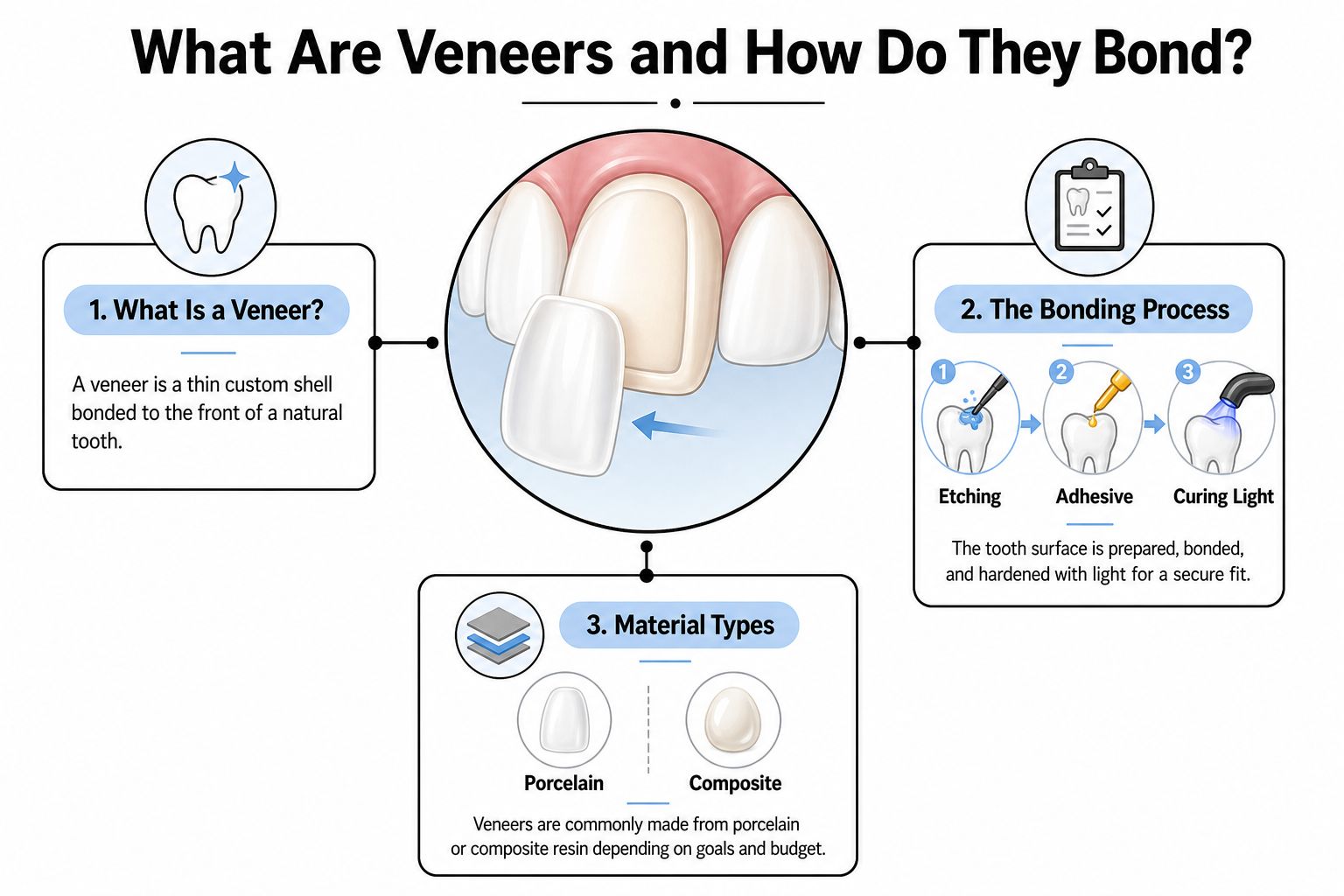
A veneer is a thin custom shell bonded to the front of a natural tooth. It covers discoloration, chips, spacing, or shape problems, but the long-term result depends on the bond underneath it. In practice, the shell can look perfect while the interface between veneer and enamel is still doing the hard work every day.
Porcelain is usually a lab-made ceramic shell. Composite is a resin-based material that can often be placed more directly in the chair. Both can improve a smile, but they do not age the same way, because the bond, the thickness, and the way each material handles stress are different. Enamel preservation during preparation is one of the strongest predictors of success, because bonding to enamel is more predictable than bonding to weakened tooth structure.
Why the bond matters more than people realize
The veneer works like a high-quality cabinet door, and the natural enamel acts as the hinge and frame. If the frame is healthy and the fit is exact, the restoration stays stable for years. If the frame is weakened, the veneer can still look good at first, but it is more likely to loosen, chip, or need attention sooner.
That matters in a real mouth, not just on a model. A patient who grinds at night, plays contact sports, or drinks a lot of acidic beverages puts different stress on the bond than a patient with a calmer bite and fewer wear habits. In Las Vegas, dry air, variable water quality, and stress-related clenching can add small stresses over time, and those stresses usually show up at the margins before they show up anywhere else.
The failure pattern is usually gradual
Long-term evidence shows that veneer problems usually appear as debonding, marginal fracture, and chipping, not sudden bulk failure. That changes how I talk to patients. A veneer that looks perfect today still needs monitoring over time, especially at the edges where the restoration meets the tooth.
Repeat veneer work has its own trade-off. Each replacement cycle can remove a little more enamel, and once that enamel is gone, the tooth becomes harder to bond to in the next round. The first veneer is often the easiest version of the case. The second and third cycles are where planning matters more, because the biological cost starts to show up in the tooth structure itself.
If the tooth is prepared conservatively, the bite is controlled, and the enamel bond is strong, a veneer has a much better chance of aging gracefully.
Porcelain vs Composite Veneers Compared
Patients often want a simple answer. They want to know which material is “better.” The answer is that the better choice depends on how long you want the restoration to last, how much maintenance you're willing to accept, and whether you'd rather pay more upfront or replace sooner.
| Factor | Porcelain Veneers | Composite Veneers |
|---|---|---|
| Typical lifespan | 10 to 15 years, often longer with excellent care | 5 to 7 years, sometimes up to 10 with careful maintenance |
| Survival in evidence summaries | About 95 to 96% at 5 years and around 94% at 10 years | Often 80 to 89% at 5 years |
| Stain resistance | Strong | More prone to staining over time |
| Repairability | Usually replaced or rebonded if damaged | Often easier to add material or repair chairside |
| Long-term planning | Better for fewer replacement cycles | Better when upfront cost matters more |
Those survival ranges come from evidence summaries that consistently favor porcelain for longevity Veneer longevity review. Composite can still be a sensible option for some patients, especially when the goal is a faster, more conservative change. But over time, the replacement cycle tends to come sooner, which means the cheaper option at the first appointment may not stay cheaper across a decade or two.
What I tell patients deciding between them
If you want the longest service life and the most stable appearance, porcelain usually wins. If you want a more budget-conscious starting point and you're comfortable with earlier touch-ups or replacement, composite can fit that goal better. The right answer comes down to your bite, your habits, and how much you value fewer repeat procedures.
A good consultation should cover both the smile design and the long game. For some patients, that means veneers. For others, whitening, bonding, or a different restorative plan makes more sense. The point is to choose the material that matches the life you live in Las Vegas, not just the photo you want on day one.
Factors That Quietly Shorten or Extend Veneer Life
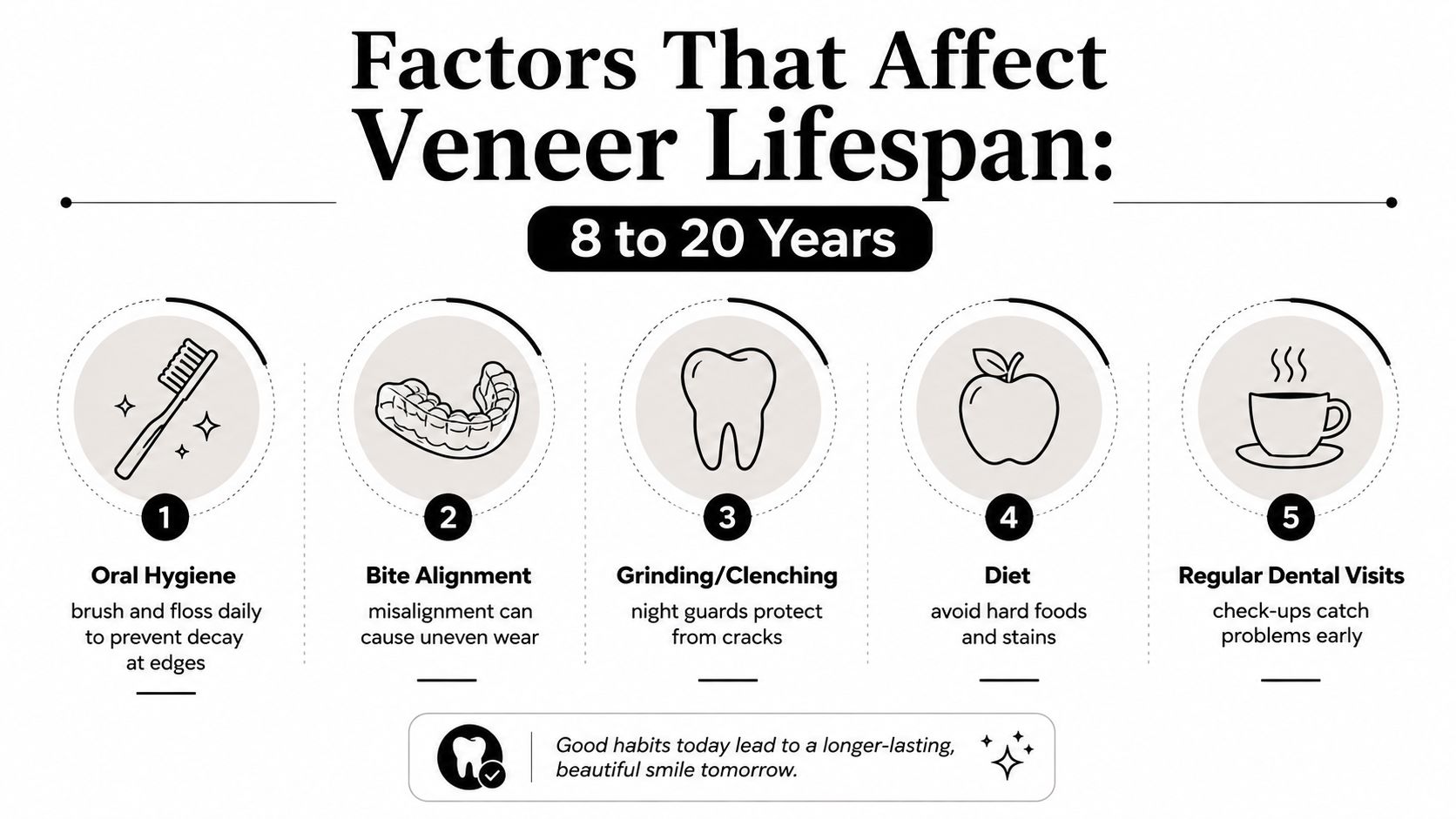
A veneer can look flawless and still be on a shorter path if the bite is heavy or the habits are rough. The material matters, but the day-to-day environment matters just as much. Stronger ceramics can extend service life, but only when paired with controlled occlusion, adequate enamel bonding, and low parafunctional load. Otherwise, bruxism and heavy incisal contacts become major reasons for earlier replacement PMC material and occlusion study.
The habits that matter most in Las Vegas
Las Vegas patients often ask about unusual local factors. Hard water can contribute to mineral buildup around the margins if home care is inconsistent, and stress-related grinding is common in people juggling work, nightlife, or poor sleep. I don't treat those as exotic problems, just quiet ones that wear veneers down over time.
The biggest risk factors are usually familiar ones:
- Grinding and clenching: Nighttime pressure can chip or loosen the edges.
- Biting hard objects: Ice, pens, and hard candy create sudden stress.
- Sports contact: A hit to the mouth can damage even a well-made veneer.
- Bite mismatch: Uneven pressure concentrates force on a few teeth.
- Inconsistent cleaning: Plaque at the margins can undermine long-term stability.
Practical rule: if a veneer is asked to take too much force every day, it won't age like a quiet, low-stress restoration.
What extends the lifespan instead
The best cases usually share the same pattern. The bite is checked before placement, the enamel bond is strong, and the patient wears a guard if they clench. That combination can matter more than which brand of porcelain was used. In other words, a carefully planned case in Lone Mountain or Sun City Summerlin can outperform a flashy case that wasn't designed for the patient's bite.
If you're trying to protect your veneers, talk with your dentist about stress, sleep, exercise, and any history of grinding. Those details are not side notes. They're part of the treatment plan.
Daily Care That Adds Years to Your Veneers
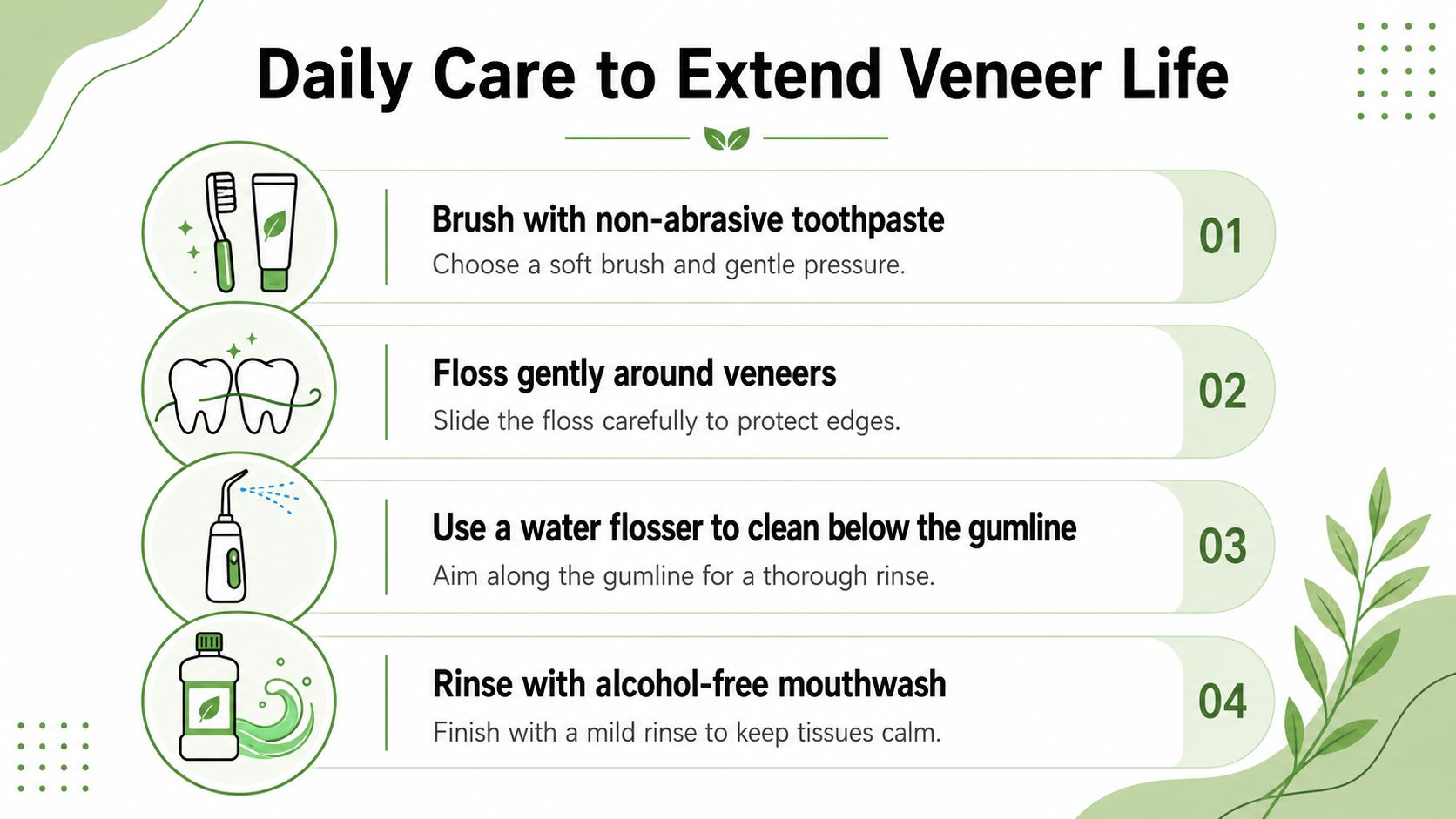
The easiest way to protect veneers is to make the routine simple enough that you'll keep doing it. Brush twice a day with a non-abrasive toothpaste, floss gently around the veneer edges, and use a water flosser if it helps you clean more consistently. For many patients who clench, a nightguard is the single highest-value piece of protection they can add.
What to do every day
The goal isn't perfection. It's reducing the wear that slowly shortens veneer life.
- Brush gently: Use a soft brush and avoid scrubbing the edges.
- Clean the margins: Floss and water flossers help keep plaque from settling at the seam.
- Protect against grinding: A nightguard can reduce cracking and edge wear.
- Be selective with hard foods: Cut tough foods with side teeth instead of biting straight into them.
Alcohol-free mouth rinse can be a helpful add-on, especially if your gums tend to get irritated. I also tell patients to avoid chewing ice and to treat veneered teeth like finished restorations, not tools.
Don't skip the maintenance visits
Regular cleanings and exams matter because early margin wear is easier to manage than a loose veneer. A visit every six months gives the team a chance to spot tiny chips, polishing issues, or early bond changes before they grow into full replacement cases. For patients who want a simple at-home reminder system, the practice's veneer care guide is a practical place to start, and it's available here.
At Aspiring Smiles Dental and Braces, those checkups are part of how veneer longevity is managed, not something tacked on after the fact. That's the difference between hoping a veneer lasts and helping it last.
Repair, Replacement, and the Second Veneer Cycle
A veneer that looks fine one month can start giving signals the next time a patient bites hard food, clenches through a stressful stretch, or notices one edge feels different from the rest. That is usually where the long-term question starts. Patients do not just need to know how long veneers last, they need to know what happens after the first repair, the first replacement, and the second time a tooth is prepared for another restoration.
Warning signs that shouldn't wait
The early signs are often subtle. A visible chip, a dark line at the gumline, a rough edge, sudden sensitivity, or a veneer that feels loose all deserve attention. Small problems can sometimes be repaired, especially when the veneer has minor wear or has debonded without a major fracture.
Larger damage usually calls for replacement. The patterns that show up over time are usually gradual, not sudden. In long-term follow-up, the failures that come up most often are debonding, marginal fracture, and chipping PMC long-term survival study.
The part patients rarely hear about
The second and third veneer cycle matters because every replacement is still being done on the same natural tooth. The cost is not only the new restoration. It also includes the effect of repeat preparation, bonding, and recontouring on the underlying tooth structure. A veneer can be a very good solution, but it does not erase the biology underneath it.
Each time a veneer comes off and goes back on, the margin has to be re-evaluated, and sometimes the tooth needs a little more adjustment to regain the right shape and fit. That is where longevity becomes more than a simple timeline. It becomes a question of how much enamel remains, how stable the bite is, and how many times the tooth has already been worked on.
Las Vegas habits can make that conversation more personal. Stress-related night grinding, sports accidents, and even the dry, hard-chewing routines people fall into can shorten veneer life without obvious warning. Patients who want to plan ahead should also think about the practical side of maintenance, including the veneer payment plan options that can make a replacement cycle easier to schedule when it is needed.
The best long-term veneer plan is not only about making the first set look beautiful. It is about protecting the tooth so the next set is still predictable.
At Aspiring Smiles Dental and Braces, that means looking at the whole lifespan of the tooth, not only the day the veneers are bonded. A plan that accounts for future repairs, the second veneer cycle, and the way a patient lives tends to hold up better over time. That is also why dental practice visibility 2026 matters for practices that want to educate patients before small problems become repeat replacement cases.
Planning Veneer Treatment at Aspiring Smiles Dental and Braces
At a veneer consultation in Las Vegas, the first visit usually starts with a conversation about your goals, your bite, and the teeth you want to change. A full exam may include dental x-rays, because the teeth under the surface matter as much as the smile in the mirror. If you're comparing cosmetic options, that visit is also where whitening, bonding, and veneers get weighed against each other.
At Aspiring Smiles Dental and Braces, Dr. Patel and the team see a lot of patients who want a personalized answer, not a one-size-fits-all package. The practice serves patients from Las Vegas, Summerlin, Desert Shores, Sunhampton, Sun City Summerlin, Monterrey, Lone Mountain, Mar-A-Lago, and Painted Desert Estates, so the plan can be shaped to how you live and what your schedule allows.
After the consult, the next steps are usually straightforward. Some patients need a preparation visit and temporary veneers before the final bonding appointment. Others are better served by a different sequence, depending on how much enamel can be preserved and how much change the smile needs. For patients thinking about costs and timing, the veneer payment plan options can make the process easier to start.
If you're also looking at broader dental visibility and how cosmetic treatment fits into a modern practice, a useful industry resource is dental practice visibility 2026. It's a reminder that the patient journey starts long before the first veneer is bonded.
If you're ready to find out whether veneers are the right fit for your smile, schedule a consultation with Aspiring Smiles Dental and Braces. The team can explain how long veneers are likely to last in your case, review your options, and build a plan that fits your bite, your goals, and your life in Las Vegas.