What Is Zoom Whitening: Guide to a Brighter Smile in 2026
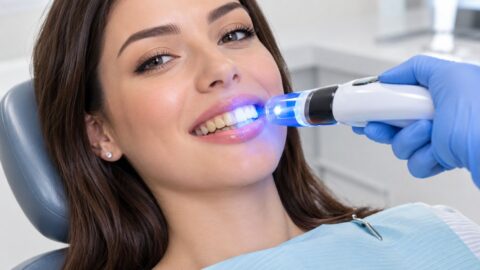
Zoom whitening is a professional, in-office cosmetic dental treatment that commonly uses 25% hydrogen peroxide and a special whitening lamp to brighten teeth in about one hour. The light-activated gel helps break down discoloration quickly, although the right result depends on your stain type, dental health, and sensitivity profile.
You may be searching “what is Zoom whitening” after noticing yellowing in photos, avoiding a wide smile at work, or preparing for a wedding, celebration, or important presentation in Las Vegas. You want visible improvement, but you also want to know what will happen in the chair, whether it will hurt, and whether the treatment will work on your particular teeth.
At Aspiring Smiles Dental and Braces, Dr. Patel and the team help patients from Las Vegas, Desert Shores, Sunhampton, Sun City Summerlin, Monterrey, Lone Mountain, Mar-A-Lago, and Painted Desert Estates understand those choices before treatment begins. Zoom whitening can be a convenient option, but a careful consultation matters more than the brand name alone.
A Brighter Smile in Las Vegas with Zoom Whitening
A brighter smile can change how comfortably you speak, laugh, and meet someone's eyes. Many Las Vegas adults notice discoloration from coffee, tea, tobacco, aging, or everyday foods. Others want their natural teeth to look fresher before a special event. Professional whitening gives you a structured way to address that concern instead of guessing with products from a drugstore shelf.
Zoom whitening belongs to the broader professional teeth-whitening market, which was estimated at USD 7.5 billion in 2023 and projected to reach USD 10.6 billion by 2030, with a 5.0% CAGR from 2024 to 2030, according to Grand View Research's teeth-whitening market report. Another outlook valued the global teeth-whitening market at USD 7.64 billion in 2025 and projected USD 9.38 billion by 2030, at a 4.2% CAGR, showing how established cosmetic whitening has become.
Those figures don't mean every patient needs in-office treatment. They do show why professional whitening is widely recognized and why patients often seek a faster, more controlled cosmetic service. A dentist can first check for cavities, gum concerns, worn enamel, or restorations that whitening won't change. A cleaning and exam, and dental X-rays when clinically appropriate, may be part of deciding whether bleaching is sensible.
If you're building daily habits around a brighter appearance, you may also find this resource helpful for learning how to achieve whiter teeth in your routine. For a more dramatic or predictable change, however, your consultation should focus on the cause of discoloration and the condition of your teeth.
The Science Behind Your In-Office Whitening Session
Zoom chairside whitening uses a hydrogen peroxide gel and a specialized whitening lamp. The gel helps oxidize stain molecules within the tooth, while activation can support peroxide movement through the tooth structure. Philips' technical material describes systems using either 25% or 15% hydrogen peroxide and treatment designed to whiten within about one hour. You can review the manufacturer's explanation in the Philips Science Behind Zoom technical material.
What happens before the light is used
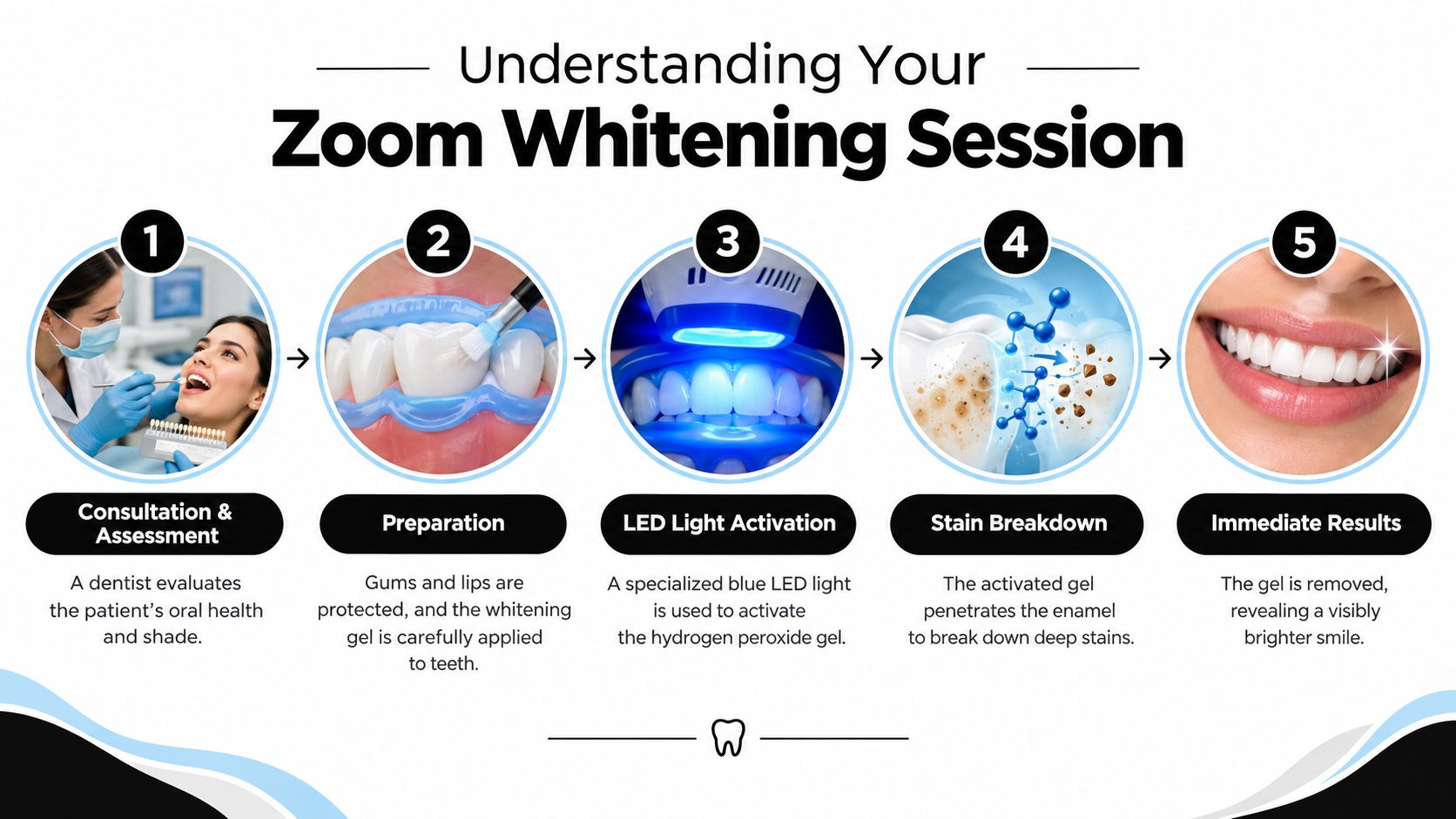
Your visit starts with an evaluation, not with gel. The dental team reviews your goals, looks for oral-health problems, checks existing fillings or crowns, and considers whether your discoloration is likely to respond to bleaching. Teeth may be cleaned so plaque and surface debris don't interfere with an even application.
Next, the team protects your lips, cheeks, and gums. The whitening gel is placed carefully on the visible tooth surfaces, keeping soft tissue exposure as limited as possible. These protective steps help make the process more comfortable and keep the treatment focused where it belongs.
How the activation cycles work
Independent dental education describing a common chairside protocol reports three 15-minute activation cycles, with gel reapplied between cycles and an optional fourth cycle at the dentist's discretion. You can read that procedural overview from Smile Center Dental Clinic's Zoom whitening guide.
During each cycle, the lamp is positioned over the teeth while the gel works. A controlled study found that 25% hydrogen peroxide with light activation produced significantly greater tooth color change than no-light treatment, and mean peroxide penetration was higher in the light-activated group, at 1.568 ± 0.753 μg/mL, as reported in the Philips technical material linked above.
At the end, the gel and protective materials are removed. The dentist checks your teeth and discusses immediate aftercare, including ways to reduce sensitivity and limit new staining. The experience is predictable because each stage has a clear purpose, from assessment through the final shade review.
Practical rule: The lamp is only one part of the treatment. The peroxide concentration, exposure, tooth condition, and clinical protocol all affect the result.
Are You a Candidate for Zoom Whitening
Zoom whitening is most useful when the natural tooth structure contains discoloration that peroxide can reach. Surface stains and many forms of age-related yellowing often respond well because bleaching can alter the appearance of the natural enamel and dentin beneath it.
A consultation still matters because a yellow smile doesn't always have one cause. Coffee, tea, tobacco, and food stains may sit largely on the surface. Other changes develop within the tooth, or they may come from dental work that bleaching cannot alter. Your dentist needs to distinguish those situations before promising a cosmetic outcome.
Cases that often respond well
Patients commonly consider Zoom when they want a faster cosmetic improvement for:
- Surface discoloration: Professional whitening can be effective for stains associated with common foods, drinks, and tobacco.
- Natural yellowing: Changes associated with aging may respond when the discoloration is within bleach-responsive tooth structure.
- A more even natural shade: Whitening can refresh the color of natural teeth before cosmetic bonding, veneers, or a smile-focused event.
A cleaning and exam may reveal that surface buildup is contributing to the dull appearance. In that situation, dental cleaning can improve the smile's appearance before you decide whether bleaching is necessary.
When bleaching has limits
Crowns, veneers, fillings, and other restorations won't whiten like natural teeth. If their shade already matches your smile, bleaching may be straightforward. If the restorations are darker or lighter than the desired result, whitening alone can make the difference more noticeable.
Intrinsic discoloration, including tetracycline staining or fluorosis, is less predictable. Research also indicates that whitening effectiveness varies by stain type and that veneers may provide a more predictable cosmetic solution in some cases, as discussed in this clinical research abstract on whitening outcomes.
Ask before treating: “Will whitening improve the teeth I want to change, or am I trying to bleach a restoration or deep discoloration that needs another solution?”
For some patients, veneers, crowns, or restorative dentistry will make more sense than repeated whitening. The responsible recommendation may be Zoom, supervised take-home whitening, a restorative procedure, or no cosmetic treatment until an oral-health issue is addressed.
Managing Sensitivity and Side Effects
Tooth sensitivity is the side effect patients ask about most often. You may notice brief sharp sensations, sometimes called “zingers,” when teeth encounter cold air, water, or food after treatment. The peroxide can temporarily make the tooth's internal pathways more responsive, which is why comfort planning belongs in the appointment rather than being treated as an afterthought.
A review of adverse effects reported transient sensitivity in 39.4% to 78% of participants across relevant in-office whitening studies, as summarized in this review of tooth-bleaching adverse effects. The sensitivity is generally temporary, and clinicians can manage risk by adjusting gel concentration, exposure, and the overall protocol.
How comfort is protected
At a Las Vegas consultation, tell the team if you already react to cold drinks, have recently had dental work, or have experienced sensitivity with whitening strips. The dentist may modify the plan, use desensitizing products, or recommend a supervised home option when a slower approach is more comfortable.
After treatment, follow the instructions you receive rather than adding extra whitening gel or repeating treatment on your own. If discomfort is persistent, severe, or different from the brief sensitivity expected after bleaching, contact the office so the tooth can be evaluated.
Patients who want a deeper explanation of the issue can review Zoom teeth whitening sensitivity guidance. Sensitivity doesn't automatically rule out whitening, but it does make individualized planning especially important.
Keeping Your Smile Bright After Treatment
Your habits after whitening influence how well the result holds. Freshly treated teeth can be more vulnerable to new staining for a short period, so follow the specific aftercare instructions from your dentist. Many patients choose lighter-colored foods and drinks immediately after treatment and limit dark beverages, sauces, and tobacco while their smile settles.
Simple maintenance habits
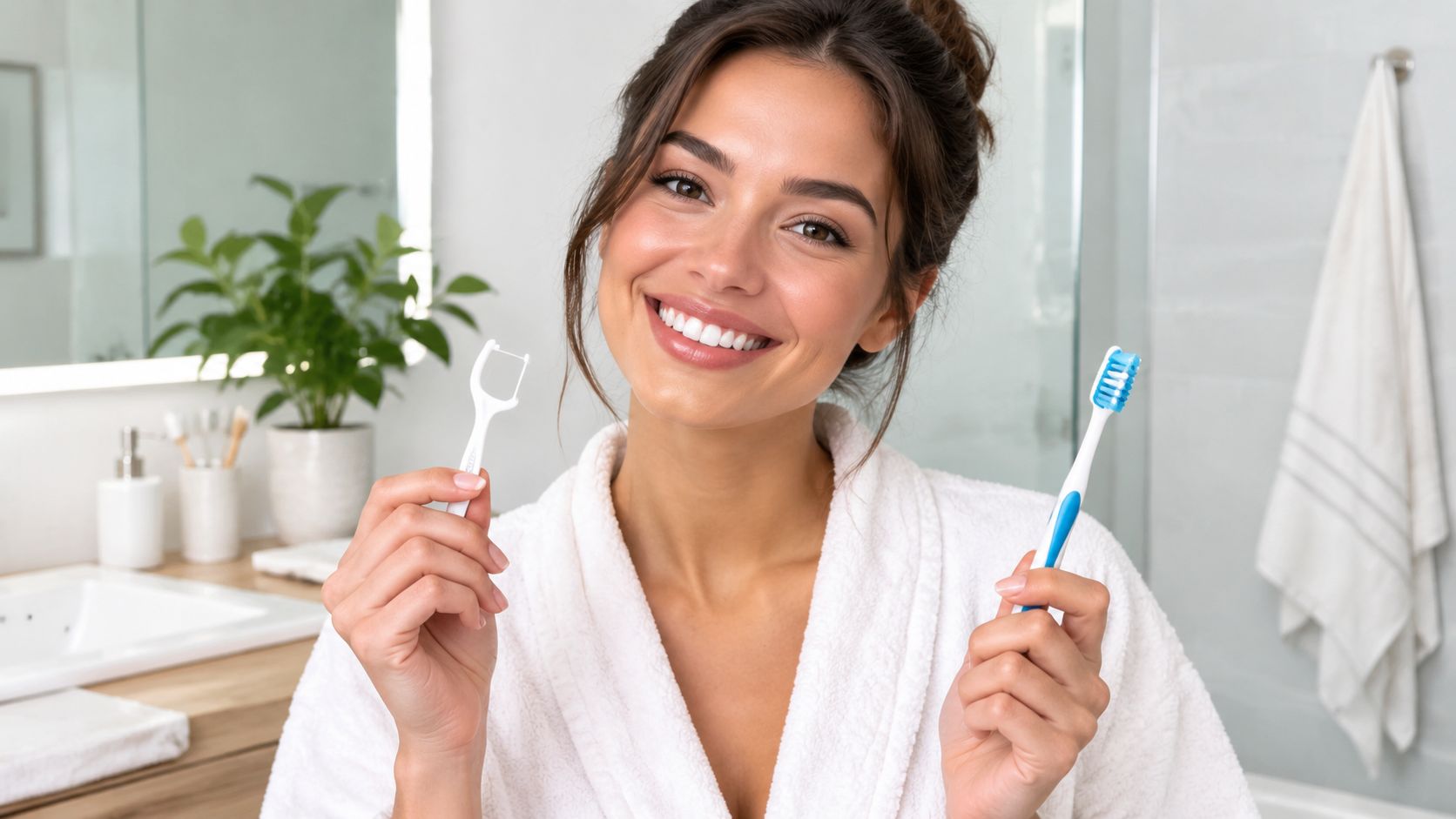
Brush thoroughly with a soft toothbrush, clean between your teeth, and keep routine dental cleaning and exams. These steps remove plaque and surface deposits that can make teeth look dull, even when their underlying shade hasn't changed.
- Choose water after dark drinks: Rinsing can reduce the time staining substances remain against the teeth.
- Use practical stain awareness: Coffee, tea, red wine, tobacco, and strongly colored foods can gradually affect natural teeth.
- Protect existing dental work: Remember that restorations retain their original shade, so ask about color matching before replacing visible fillings, crowns, or veneers.
- Keep professional reviews: A dentist can distinguish new surface staining from a change that needs restorative or cosmetic evaluation.
For patients who prefer gradual touch-ups, supervised at-home whitening can complement an in-office treatment. A recent review reports that both in-office and supervised at-home whitening are effective and generally safe, while take-home treatment tends to be slower and associated with milder sensitivity. That makes custom trays a practical maintenance option for some patients, provided the dose and instructions are followed.
A dentist may recommend professional take-home trays rather than unsupervised strips. The tray can be designed for your teeth, and the team can explain how to use it without over-whitening or irritating your gums. More aftercare guidance is available in the Aspiring Smiles teeth whitening aftercare guide.
This short video can help you understand the broader importance of consistent dental care before and after cosmetic treatment.
If your goals extend beyond shade, a new patient exam can also identify cavities, gum disease, worn teeth, or restorations that affect your smile. Cosmetic dentistry works best when it supports a healthy foundation.
Schedule Your Whitening Consultation in Las Vegas
The most useful answer to “what is Zoom whitening” is personal. The treatment is a professional, light-activated whitening option, but whether it suits you depends on your natural teeth, stain type, restorations, oral health, timeline, and tolerance for temporary sensitivity.
Aspiring Smiles Dental and Braces serves patients seeking a cosmetic dentist near me in Las Vegas, NV, including families from Sun City Summerlin, Desert Shores, Lone Mountain, Painted Desert Estates, and nearby communities named above. Dr. Patel's team can discuss Zoom whitening alongside custom take-home trays, veneers, crowns, Invisalign, dental implants, and restorative care when those services relate to your goals.
A comfortable consultation should give you clear answers, not pressure. You should leave knowing what whitening can change, what it can't change, and whether another cosmetic approach would create a more predictable result. Patient-experience resources such as 3D DDS patient experience improvement guidance also emphasize the value of clear communication and a smoother care journey, principles that matter when you're choosing a new dental office.
You don't need to choose an emergency dentist, tooth extraction, or dental implants because you're researching whitening. Those services are available when clinically needed, but cosmetic treatment begins with an appropriate exam and a conversation about your priorities.
Aspiring Smiles Dental and Braces offers professional Zoom teeth whitening, custom take-home whitening, preventive dental care, cosmetic dentistry, restorative services, and emergency dental care in Las Vegas, NV. Schedule a consultation at Aspiring Smiles Dental and Braces to discuss your desired shade, sensitivity concerns, and the most practical path to a brighter smile.