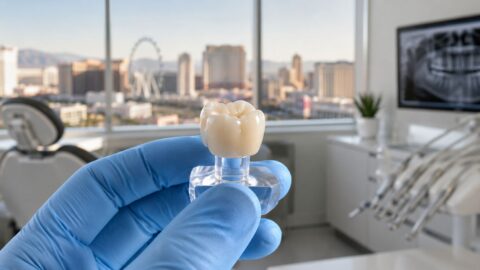
How Long Do Crowns Last? a Las Vegas Dentist Explains
Most dental crowns last about 10 to 15 years, but that's only the average. With the right material, a good fit, and steady care, many crowns stay in service for 20 to 30 years or longer.
If you're reading this, you're probably in one of two situations. You were just told you need a crown and want to know whether it's worth it, or you already have one and you're wondering how much life it has left. Both are reasonable questions, especially when you're trying to protect your tooth and make a smart investment in your smile.
I'm Dr. Patel, and this is one of the most common questions patients ask in Las Vegas. The short answer is that crowns are dependable restorations, but they don't all age the same way. The material matters. Your bite matters. The health of the tooth underneath matters. Most of all, the fundamental question usually isn't only how long do crowns last. It's what makes one crown last for decades while another needs replacement much sooner.
For patients in Las Vegas, NV, including Desert Shores, Sunhampton, Sun City Summerlin, Monterrey, Lone Mountain, Mar-A-Lago, and Painted Desert Estates, that practical difference matters. Whether you're looking for a dentist near me, an emergency dentist, restorative dentistry, cosmetic dentistry, or just a trusted dentist in Las Vegas, NV for cleanings and exams, you deserve a clear explanation in plain language.
Your Guide to Dental Crown Longevity in Las Vegas NV
A crown is a custom cover that fits over a damaged tooth. Dentists use crowns to restore strength, shape, and appearance after a large cavity, a fracture, heavy wear, or root canal treatment. Patients also choose crowns as part of cosmetic dentistry when a tooth needs both protection and a better appearance.
The reason so many people get confused is simple. They hear one number, usually 10 to 15 years, and assume every crown has an expiration date. That's not how it works in real life. A crown can be old and still healthy. Another can be much newer but already failing if the edge seal breaks down or the tooth underneath develops decay.
What the research actually shows
Broad clinical reviews commonly place average crown lifespan at about 10 to 15 years, but the long view is more encouraging. One review found 95% of crowns remain functional for at least 5 years, with 15 to 20 year survival ranging from 50% to 80%, while another clinical series found 97% fully functional at 10 years and 85% maintaining optimal performance after 15 years according to this review of long-term dental crown data.
That tells patients something important. A crown is not a short-term patch. It's a long-term restoration that can serve you very well when the fit is precise, the margins stay sealed, and the surrounding gums stay healthy.
Practical rule: Don't judge a crown by age alone. Judge it by how well it fits, how well you clean around it, and how the supporting tooth is holding up.
Why local follow-up matters
In a city like Las Vegas, patients often delay follow-up care because the crown feels “fine.” That's risky. A crown can look normal from the outside while a small problem begins at the margin where the crown meets the tooth. That's why exams, dental x-rays, and regular dental care matter just as much as the day the crown was placed.
If you want a second perspective while you're understanding crown longevity, it helps to compare what different dentists emphasize. The consistent theme is that longevity depends on both the dentistry and the daily habits that protect it.
How Long Crowns Last Based on Material
When patients ask how long do crowns last, they often expect one answer. A better answer is, “Which crown material are we talking about?” Different materials wear differently, look different, and suit different parts of the mouth.
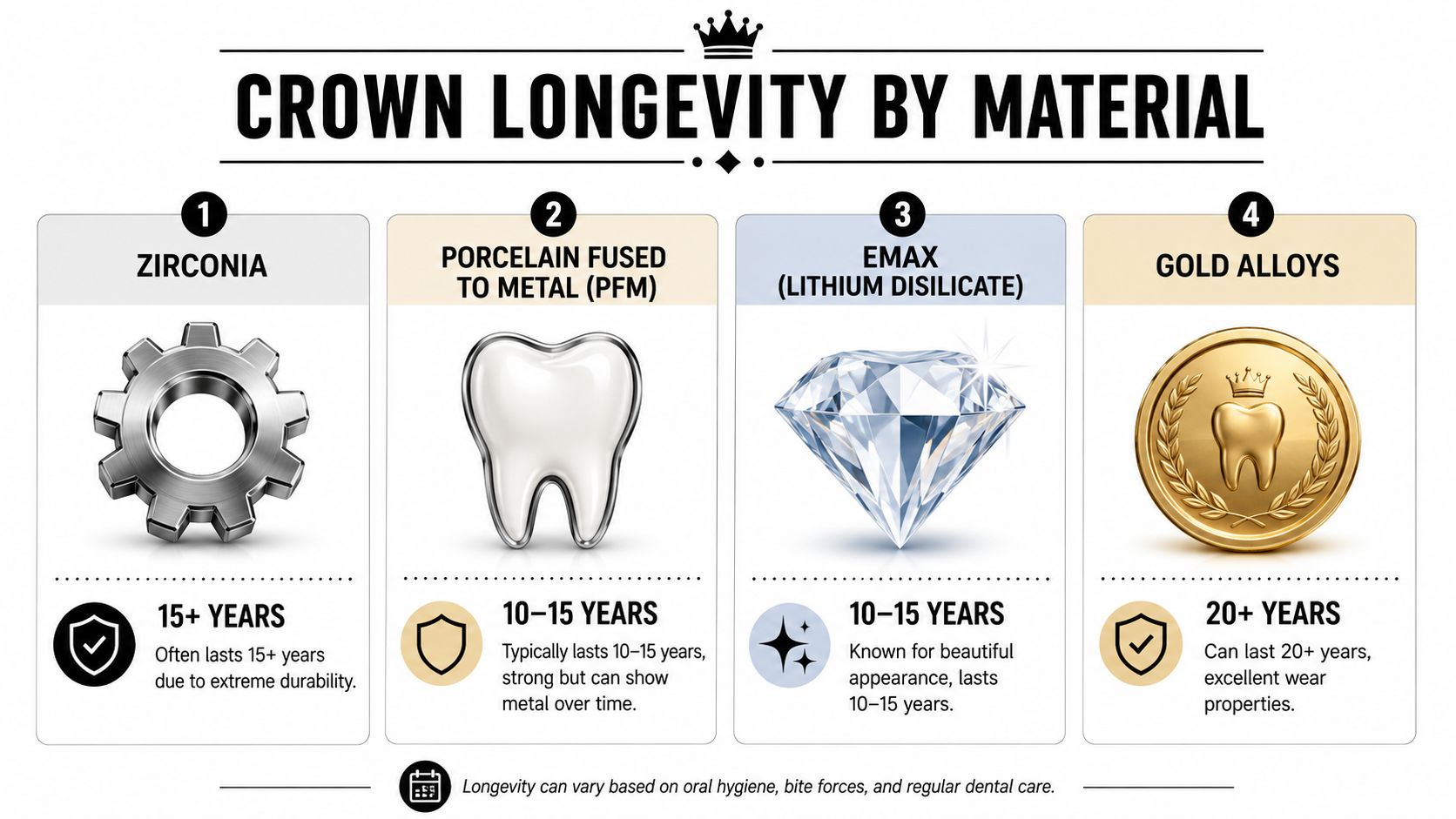
A simple material comparison
| Material | What patients usually choose it for | Longevity information |
|---|---|---|
| Gold alloy | Strength, wear resistance, long service life | A 2015 literature review on crown materials reported a 95% 10-year survival rate for gold crowns, and noted they can last for decades with proper care |
| PFM | A balance of strength and appearance | The same review noted PFM crowns are typically in the 5 to 15 year range |
| Zirconia | High strength with tooth-colored appearance | The same review noted zirconia can last 10 to 15+ years, making it a common option when patients want durability and aesthetics |
| All-ceramic or porcelain options such as E.max | Natural appearance, especially in visible areas | These are often chosen for appearance first, with durability depending heavily on bite forces, placement, and maintenance |
What each choice means in real life
Gold alloy still has one of the strongest longevity records. It isn't the most common cosmetic choice because of the color, but it handles chewing forces very well and tends to be kind to the opposing tooth. For back molars, especially in heavy biters, gold remains a very practical option.
Porcelain fused to metal, often called PFM, has been used for many years. It combines a metal base with a porcelain exterior. It can work well, but some patients eventually notice a dark line near the gumline as gums change over time.
Zirconia is popular because it balances strength and a tooth-colored look. For molars and patients who want a sturdy restoration without a metallic appearance, zirconia is often part of the conversation.
All-ceramic crowns, including options patients may hear called porcelain or E.max, are often selected when the appearance of the front teeth matters most. They can look very natural, but they need to be matched to the bite carefully.
The best crown material isn't the one with the best marketing. It's the one that fits the tooth's job in your mouth.
Material is important, but not everything
One place patients get surprised is this: the crown material doesn't decide everything by itself. A strong material can still fail if the tooth underneath has problems or if heavy grinding overloads the restoration. A beautiful crown on a front tooth and a durable crown on a molar may be made from different materials for a reason.
That's why a good restorative plan is a discussion, not a menu. The right choice depends on visibility, chewing force, the condition of the tooth, and what matters most to you, such as appearance, durability, or both.
Key Factors That Determine Your Crowns Lifespan
A crown doesn't fail just because time passes. Usually, something specific happens. The seal weakens. Decay forms at the edge. Grinding puts too much pressure on the tooth. The supporting tooth changes. When patients understand those triggers, they make better decisions and keep crowns longer.
The tooth and bite matter as much as the crown
A 2022 clinical study of tooth-supported single crowns found cumulative survival rates of 89.9% at 5 years, 80.9% at 10 years, 70.5% at 15 years, and 61.8% at 20 years in this PubMed Central clinical study on crown survival. The same study found that loss of retention and recurrent caries were the most common complications, and that survival was influenced by crown placement site, tooth vitality, and bruxism.
That means the crown on a back molar isn't dealing with the same stress as a crown on a front tooth. Posterior teeth handle more force. Teeth that have had root canal treatment can behave differently than vital teeth. Patients who clench or grind can place repeated stress on both the crown and the underlying tooth.
The biggest day-to-day factors you control
Here are the factors I talk about most often with patients in Las Vegas:
- Oral hygiene at the gumline. The crown itself can't decay, but the natural tooth underneath still can. Plaque often collects where the crown meets the tooth, so poor brushing and flossing can lead to recurrent decay at the margin.
- Grinding and clenching. Bruxism creates repeated pressure that can loosen cement, crack porcelain, or overload the supporting tooth.
- Hard chewing habits. Ice, hard candies, popcorn kernels, and using teeth as tools all raise the risk of chips and fractures.
- Crown location. Back teeth carry more chewing force than front teeth, so material choice and bite design matter more there.
- The health of the supporting tooth. A crown is only as stable as the tooth underneath.
A crown is strong, but it isn't indestructible. Most failures begin at the edge of the restoration or in the tooth beneath it.
Why “the crown looks fine” can be misleading
Patients often assume that if a crown isn't broken, it must be healthy. That's not always true. Early problems are often subtle. You may notice food catching around the tooth, a little tenderness when biting, or gums that seem irritated in just one spot. Those signs can point to a crown margin that needs attention.
This is also why choosing a careful dentist matters. Crown longevity depends on preparation, fit, bite adjustment, and follow-up. In restorative dentistry, small details make a large difference over time.
How to Make Your Dental Crown Last for Decades
If you want your crown to last, focus less on the calendar and more on the routine. Long-lasting crowns usually come from a combination of good home care, regular professional monitoring, and protection from excess force.
Clinical data shows that with diligent maintenance, including regular biannual checkups and proper daily care, the majority of crowns can serve patients effectively for 10 to 15 years or longer, with many reaching 20 to 30 years. One study found 97% of crowns were fully functional at the 10-year mark, as summarized in this clinical overview of dental crown lifespan.
Daily habits that protect the margin
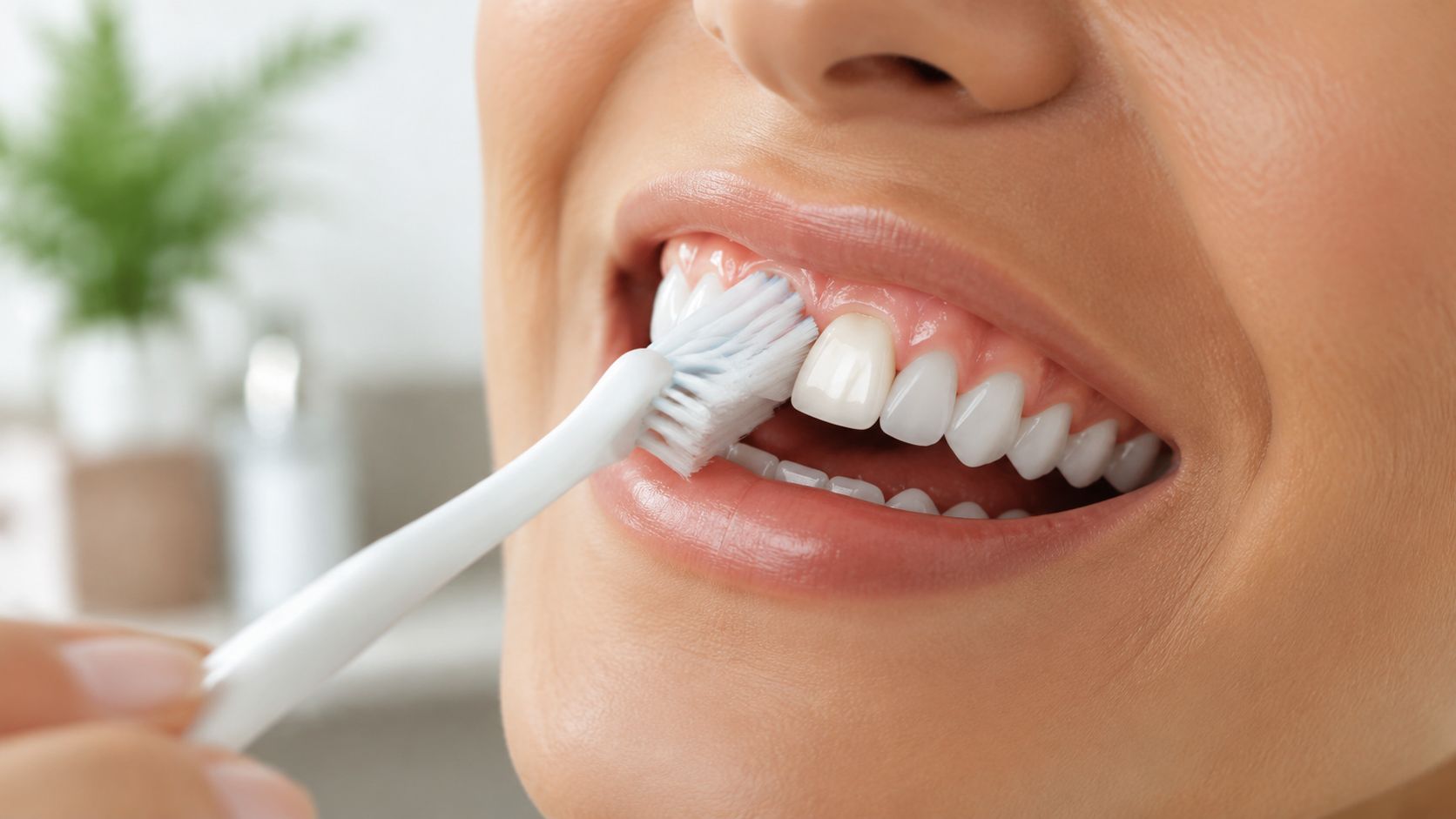
Start with the area patients miss most often: the gumline. Brush gently where the crown meets the gum, not just the top of the tooth. That edge is where bacteria collect and where many failures begin.
Floss every day. Do it carefully and completely. The goal is to clean the side of the crowned tooth and the neighboring tooth so plaque doesn't stay trapped around the margin.
If you want extra reading at home, this comprehensive guide to dental crown care gives patients a useful overview of the basics.
Protect the crown from overload
Some patients do everything right with brushing and still break down crowns because of pressure. If you wake up with jaw tightness, headaches, or worn teeth, ask about grinding. A custom night guard can reduce stress on crowns and natural teeth during sleep.
At Aspiring Smiles Dental and Braces, patients can also review practical aftercare and maintenance guidance for new crowns. That kind of instruction matters because many crown problems are preventable.
A few habits are worth changing right away:
- Skip chewing ice. It's a common reason for chips and cracks.
- Avoid using teeth as tools. Opening packages with your teeth can damage both crowns and natural enamel.
- Be careful with sticky or very hard foods. These can stress the crown or pull at a weak cement seal.
Here's a short visual that helps patients understand crown care at home.
Keep your follow-up visits even when nothing hurts
The patients whose crowns last longest usually do one thing consistently. They let a dentist check the restoration before small issues become larger ones. During cleaning and exams, your dentist can evaluate the bite, the margin, the surrounding gums, and any early signs of recurrent decay.
That matters whether you need preventive dental care, cosmetic dentistry, emergency dentist services, tooth extraction planning, or more complex restorative work such as dental implants near me searches often lead patients to consider later.
Signs Its Time to Replace Your Dental Crown
Many patients don't really want to know the average lifespan. They want to know when a crown needs attention. That's the better question.
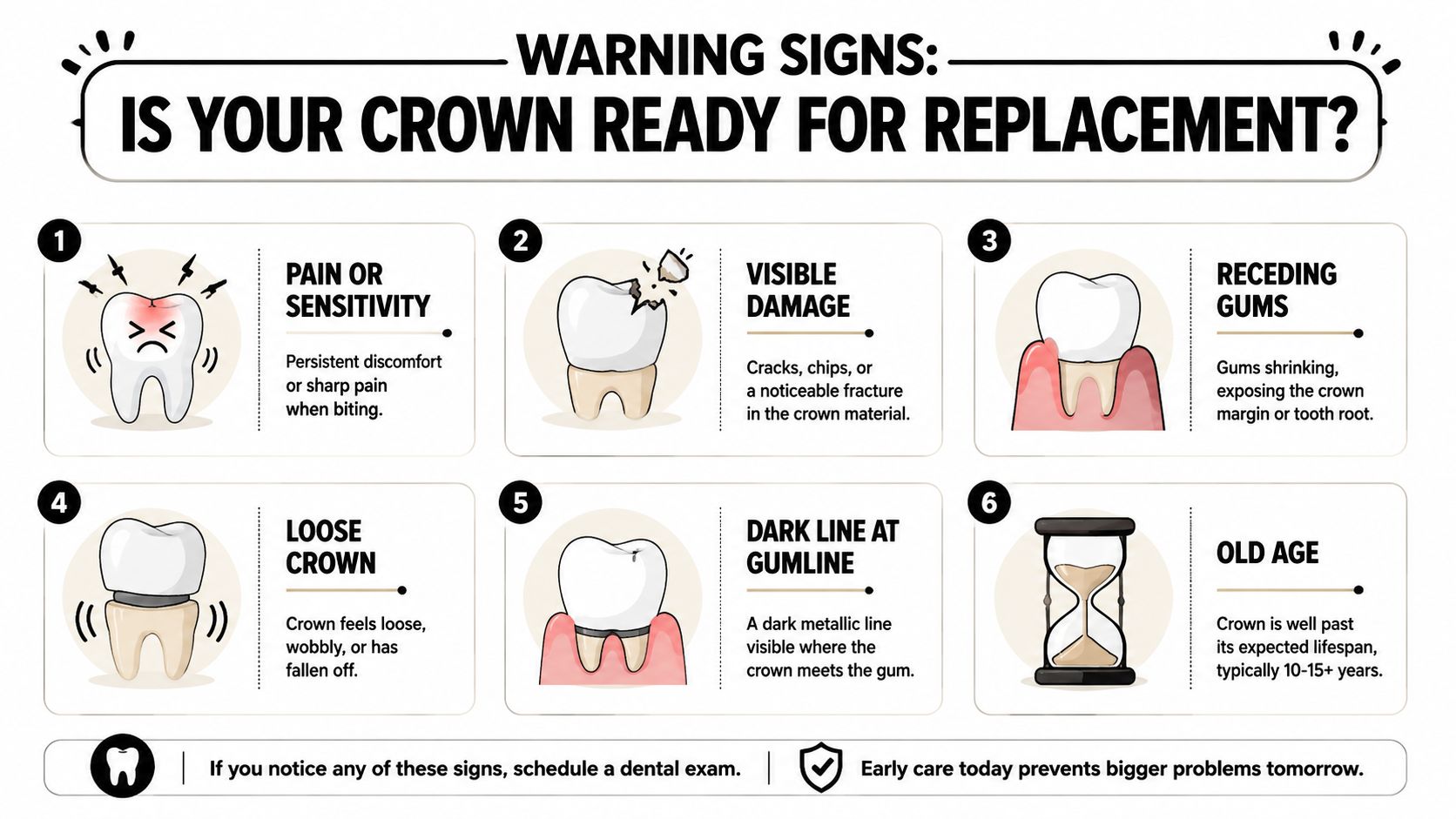
According to Cleveland Clinic guidance on dental crown replacement, the key replacement triggers are not just age but wear, tear, or damage. That guidance also notes that crown longevity depends on factors like oral hygiene and whether the margins remain sealed, which is why a younger crown with a bad seal may need replacement while an older crown may not.
Warning signs you shouldn't ignore
- Pain when biting. This can suggest a bite issue, a crack, or trouble under the crown.
- Hot or cold sensitivity. A new change in sensitivity can point to leakage or exposed tooth structure.
- A loose or wobbly feeling. Crowns shouldn't move. Movement needs prompt evaluation.
- Visible chips or cracks. Small damage can sometimes stay stable for a while, but it needs to be checked.
- Gum recession around the crown. When the margin becomes exposed, the tooth may be more vulnerable.
- A dark line near the gumline. Older PFM crowns may show this as gums change, and it can affect both appearance and the seal.
If a crown feels different, don't wait for pain to prove it's a problem. Pain is often a late signal.
Replace or repair
Not every damaged crown automatically needs full replacement. A very small chip may sometimes be smoothed or repaired, depending on where it is and whether the crown still seals properly. But if the crown is loose, decayed underneath, badly cracked, or no longer fitting well, replacement is usually the safer choice.
An emergency dentist visit can prevent a much bigger problem. A failing crown can eventually lead to deeper decay, fracture of the tooth, or loss of the tooth if it's ignored too long.
What to Expect During Crown Replacement in Las Vegas
Most crown replacement visits are more straightforward than patients expect. If you've been putting it off because you're worried it will be complicated or painful, it helps to know the usual sequence.
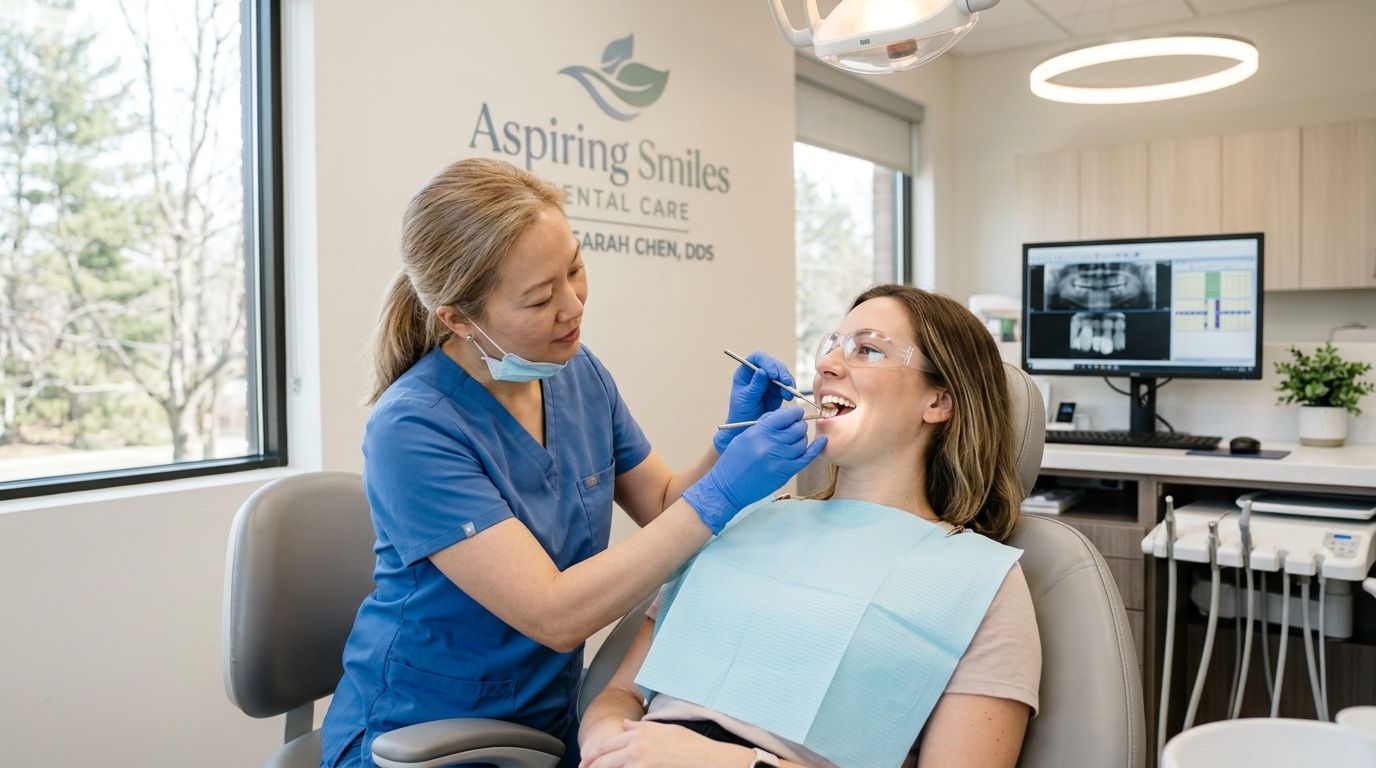
Visit one
First, the dentist examines the crown, the surrounding gum tissue, and the tooth under it as much as possible. Dental x-rays often help reveal decay, margin leakage, or changes around the root. Then the old crown is removed carefully.
After that, the tooth is cleaned up and reassessed. Sometimes the tooth is in good shape and needs a new crown. Other times, the dentist finds decay or damage that needs additional treatment before the new crown can be made. Impressions or a digital scan are taken, and a temporary crown is usually placed.
Visit two
At the next visit, the permanent crown is tried in, checked for fit, color, and bite, then cemented into place once everything looks right. Small adjustments are normal. The goal is a crown that feels secure, cleans well, and meets the opposing teeth properly.
Patients looking for more detail on dental crowns and cosmetic dentistry in Las Vegas often want to know whether replacement can improve both function and appearance. In many cases, yes. A replacement crown can protect the tooth while also updating the look of an older restoration.
When replacement becomes part of a bigger treatment plan
Sometimes a crown problem reveals a larger issue. If the tooth can't be saved, your dentist may discuss tooth extraction and replacement options such as dental implants. If the crown is on a visible tooth, a cosmetic dentist near me search may lead you to ask about smile design and matching neighboring teeth. If the problem is painful or urgent, an emergency dentist appointment is the right next step.
For patients in Lone Mountain or Mar-A-Lago who want a dependable dentist in Las Vegas, NV, the key is getting a clear diagnosis first. Once you know what's happening under the crown, the path forward usually becomes much less stressful.
Your Crown Questions Answered and Next Steps
A crown is a long-term restoration, not a forever restoration. The teeth that do best are the ones monitored regularly, cleaned carefully, and protected from grinding and heavy bite stress.
Common questions I hear from patients
Does dental insurance help cover crown replacement?
It often can, but coverage depends on your plan, timing rules, and the reason the crown needs replacement. The best first step is to have the tooth examined so your dental team can document what's going on and help you understand your benefits.
Can a chipped crown be repaired instead of replaced?
Sometimes. A small cosmetic chip may be repairable if the crown is still stable and sealed. If the damage affects the fit, strength, or tooth underneath, replacement is usually the better option.
What is the typical cost of a crown in Las Vegas?
The cost varies based on the material used, the condition of the tooth, and whether additional treatment is needed first. Because costs differ from case to case, the most useful answer comes after an exam and any needed dental x-rays.
If you live in Las Vegas, Sunhampton, or Monterrey and you're wondering how long do crowns last in your specific situation, the honest answer depends on what your crown looks like today. A quick exam can tell you far more than a guess based on age alone.
If you'd like clear answers about a new crown, an older crown, or symptoms such as sensitivity, looseness, or pain, schedule a visit with Aspiring Smiles Dental and Braces. Dr. Patel and the team provide exams, dental x-rays, restorative dentistry, cosmetic dentistry, and emergency dental care for patients across Las Vegas, NV, including Desert Shores, Sun City Summerlin, Painted Desert Estates, and nearby neighborhoods.