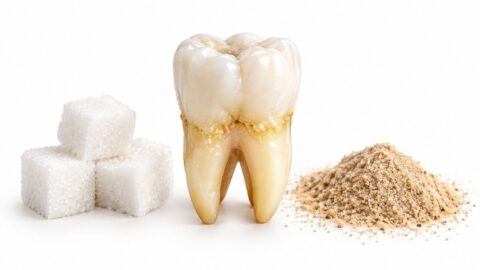
What Causes Cavities in Adults in Las Vegas
You're sitting in a dental chair in Las Vegas after keeping up with your brushing routine, and the news is still frustrating: a new cavity near an old filling, sensitivity along the gumline, or a rough spot you can't explain. Adult cavities can feel surprising, especially when you're balancing work, family schedules, medications, and the dry desert air.
The answer to what causes cavities in adults usually isn't one careless choice. Cavities develop through a chain reaction involving plaque bacteria, fermentable carbohydrates, acid, and time. Dry mouth, exposed roots, older restorations, braces, and difficulty cleaning certain areas can make that chemistry more damaging. The good news is that a dentist in Las Vegas, NV can identify the specific risks affecting your teeth and build a practical plan before a small problem becomes an emergency.
Why Adults Get Cavities Even When They Brush
A Las Vegas parent may brush morning and night, skip candy, attend regular appointments, and still discover decay beside an older filling. That result does not automatically point to poor hygiene. Brushing cleans many reachable surfaces, yet a toothbrush can miss tight contacts, deep chewing grooves, restoration edges, and areas exposed as gums recede.
It also cannot control how often acids form when sugary or acidic foods and drinks enter the mouth. Saliva normally dilutes acids, clears food particles, and helps restore minerals to teeth. Las Vegas's dry desert air can make a dry-mouth feeling more noticeable, while some medications and medical conditions reduce saliva's protective effect. Busy family schedules may add frequent snacking or sipping between meals, giving teeth fewer quiet periods to recover.
The four-part cavity chain
Adult cavities develop when four conditions work together:
- Plaque bacteria collect on tooth surfaces in a sticky biofilm.
- Fermentable sugars and carbohydrates give those bacteria fuel.
- Organic acids form as bacteria process that fuel.
- Time and repetition let mineral loss exceed the tooth's ability to repair itself.
The World Health Organization's oral-health guidance identifies free sugars as the dietary factor required for dental caries and describes a dose-response relationship between sugar intake and decay. The CDC explains that cavities become more likely when adults consume sugary or acidic items between meals, or when medications and medical conditions reduce saliva's protection.
Practical rule: Brushing matters, but preventing cavities requires attention to plaque, food exposure, acid, saliva, and the places a toothbrush cannot reach.
Adult risk can also build over the years. Existing fillings, gum recession, exposed roots, and repeated dry-mouth episodes give decay more opportunities to begin. The WHO states that most dental caries occurs in adults because the disease accumulates across the years.
A cavity despite responsible brushing usually has a specific explanation. The useful question is which part of the cavity chain is active in your mouth now, and whether saliva or exposed root surfaces are making that chain easier to sustain.
The Science Behind How Cavities Form
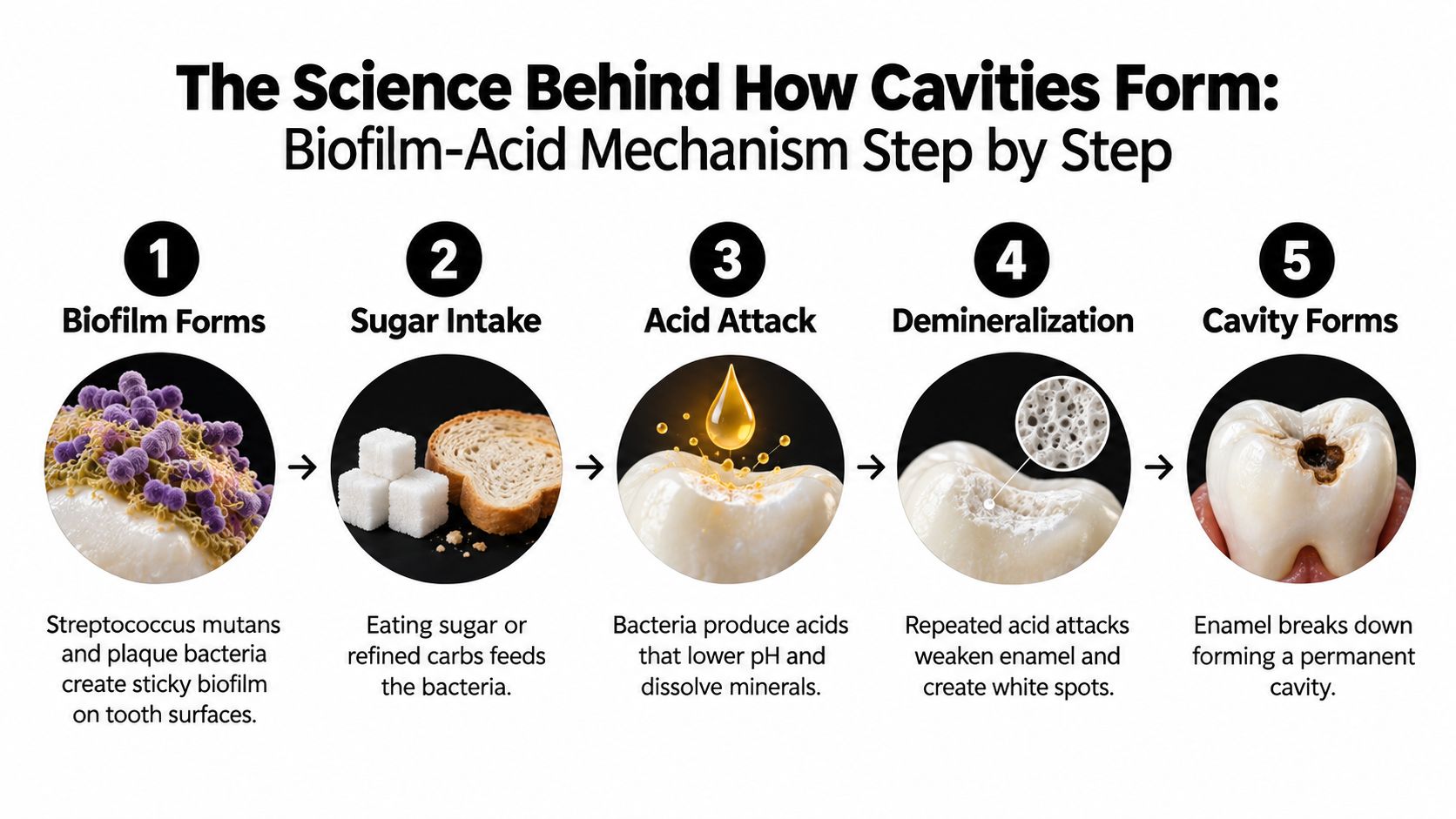
Tooth decay begins inside plaque, not as a random hole in an otherwise healthy tooth. Plaque bacteria, including Streptococcus mutans and other cariogenic organisms, create a sticky biofilm that clings to enamel and holds acids close to the tooth surface.
When you drink a sweetened coffee, eat refined carbohydrates, or consume another fermentable carbohydrate, bacteria use that material as fuel. They produce organic acids, with lactic acid as the predominant end product. Those acids lower the pH within the plaque and begin dissolving the mineral structure of enamel and dentine. The NCBI overview of dental caries describes this biofilm-acid process and explains how frequent sugar exposure, poor plaque removal, and limited salivary buffering accelerate mineral loss.
Demineralization versus repair
Enamel constantly moves through a cycle. Acids pull calcium and phosphate out of the enamel in a process called demineralization. Saliva helps dilute and clear acids, supplies minerals, and supports the opposite process, remineralization. Fluoride helps weakened enamel resist future acid attacks and supports repair of early lesions.
A cavity forms when the balance shifts toward repeated mineral loss. For example, sipping a sugary drink across a long work shift creates more repeated acid conditions than having a sweet item with a meal and then returning to water. Dry mouth makes the imbalance worse because saliva can't buffer acids or wash away debris as effectively.
The National Institute of Dental and Craniofacial Research describes tooth decay as an acid attack that damages the tooth's hard tissues. That framing helps remove the idea that cavities are a punishment for being careless. They're the result of biology and chemistry interacting with daily habits, saliva flow, fluoride exposure, and plaque removal.
Once enamel loses enough mineral structure, it can collapse into a permanent opening. At that point, home care can slow the process and protect surrounding areas, but it can't rebuild the missing tooth structure. A dental exam can determine whether a suspicious area is still an early mineral change or has become a cavity requiring restorative dentistry.
Everyday Habits That Drive Adult Cavities
Adult cavity risk can shift with a new commute, prescription, work schedule, or snack routine. A Las Vegas parent may brush as usual yet spend the afternoon sipping sweetened coffee, then snack late after a long shift. These patterns repeatedly change the mouth's chemistry.
Frequent drinks and snacks
Sweetened coffee, energy drinks, sports drinks, and snacks feed plaque bacteria. Each exposure can produce acids that challenge tooth minerals. Frequency matters because repeated exposures keep the tooth surface in an acid-challenged environment. Sipping one drink across several hours creates more separate acid events than having it with a meal and returning to water.
Late-night eating adds another layer. Saliva normally washes away debris and helps neutralize acids, but flow decreases during sleep. A dry mouth after mouth breathing, a demanding day, or medication use leaves less natural protection when food and plaque remain on the teeth.
Dry mouth and medications
The FDI fact sheet on dental caries identifies low salivary flow as a clinical caries risk factor and notes that hyposalivation may relate to drugs, disease, head and neck radiation, or age. Antihistamines, antidepressants, and some blood pressure medications can contribute to dryness in certain adults. Tell both your physician and dentist about persistent dry-mouth symptoms before changing any prescription.
Las Vegas's desert air does not cause cavities by itself, but it can make existing dryness more noticeable, especially when someone drinks too little water or breathes through the mouth. Saliva acts like a constant rinse and chemical buffer. When that flow drops, plaque acids stay active longer.
Receding gums, restorations, and appliances
Gum recession exposes surfaces that lack the enamel covering a crown. Plaque can also collect around aging fillings, crowns, bridges, braces, and other appliances, where a rushed brushing routine may miss narrow edges. Adults accumulate these overlapping risks through years of restorations, gum changes, medical conditions, and busy family schedules.
Good brushing remains important, but it must match the mouth you have today. A dentist can check exposed areas, restoration margins, and dry-mouth concerns before a small problem becomes harder to manage.
Root Cavities and the Role of Receding Gums
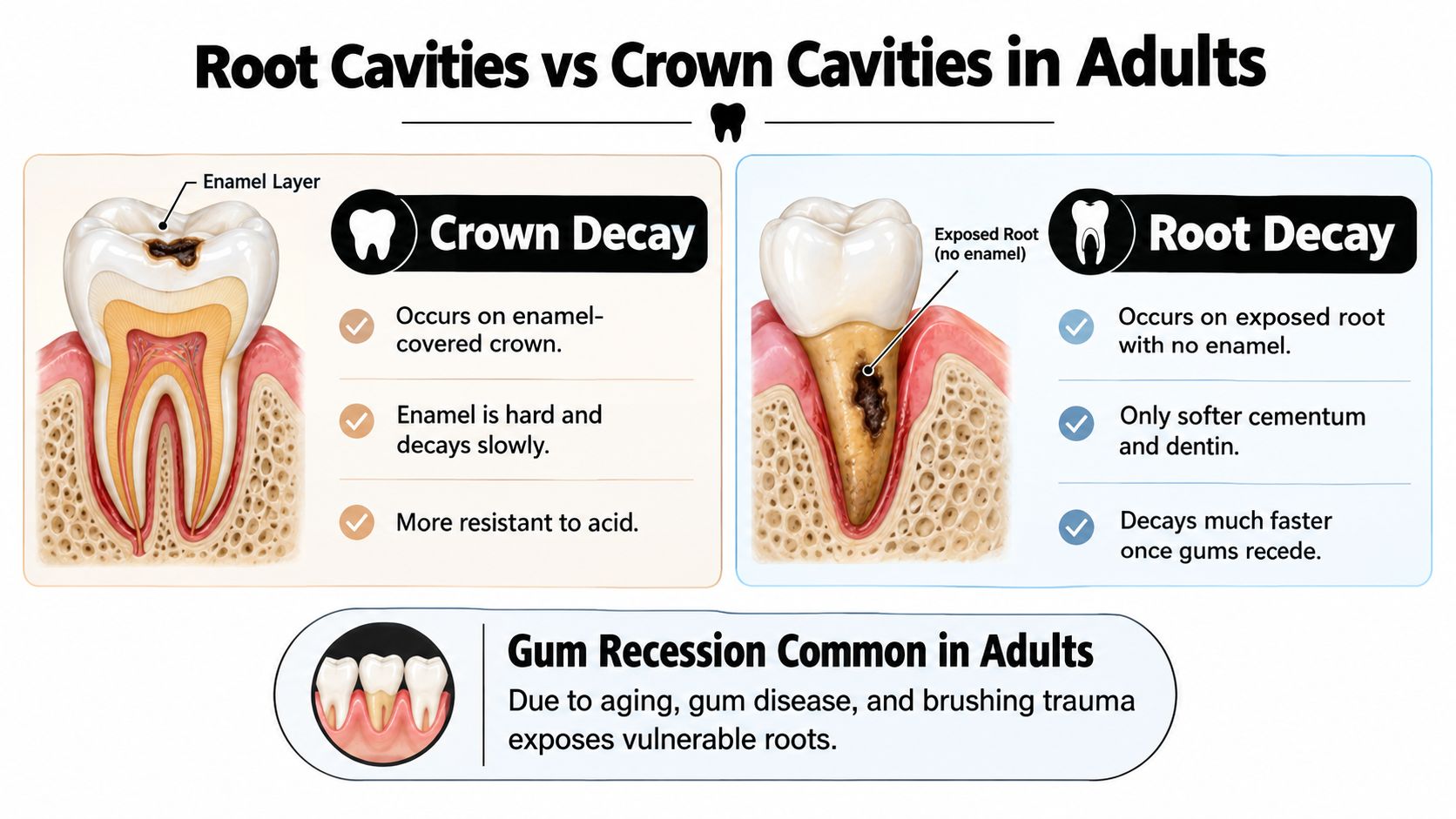
A crown cavity develops on the enamel-covered portion of a tooth. A root cavity develops after gum tissue moves away from the tooth and exposes the root surface. That distinction matters because the root doesn't have the same hard enamel shell protecting the crown.
The exposed root is covered by cementum and dentin, which are more vulnerable to acid attack than enamel. The CDC's fluoride guidance identifies exposed root surfaces from gingival recession as a biologic caries risk factor. Reviews of root caries also associate risk with age, plaque, gingival recession, salivary factors, smoking, diabetes, socioeconomic barriers, and access to care (root-caries review).
Why root decay can move quickly
Gum recession can result from periodontal disease, brushing with excessive force, or tooth movement. Medication-related dry mouth can make the exposed area even less able to withstand plaque acids. In a dry Las Vegas environment, adults who already experience low saliva may notice sticky saliva, difficulty swallowing dry foods, or frequent nighttime thirst.
Root cavities may look like dark notches or discolored areas near the gumline. You might feel roughness with your tongue, sensitivity to cold air, or a sharp response to sweet foods. Some root lesions trap plaque in a way that makes them difficult to clean without professional guidance.
A filling on a root surface also needs careful evaluation because the surrounding cementum and dentin remain vulnerable. The dentist may need to address both the damaged area and the gumline condition that allowed exposure. Early detection is especially important because root decay can progress more readily than decay confined to enamel.
How a Cavity Progresses Inside a Tooth
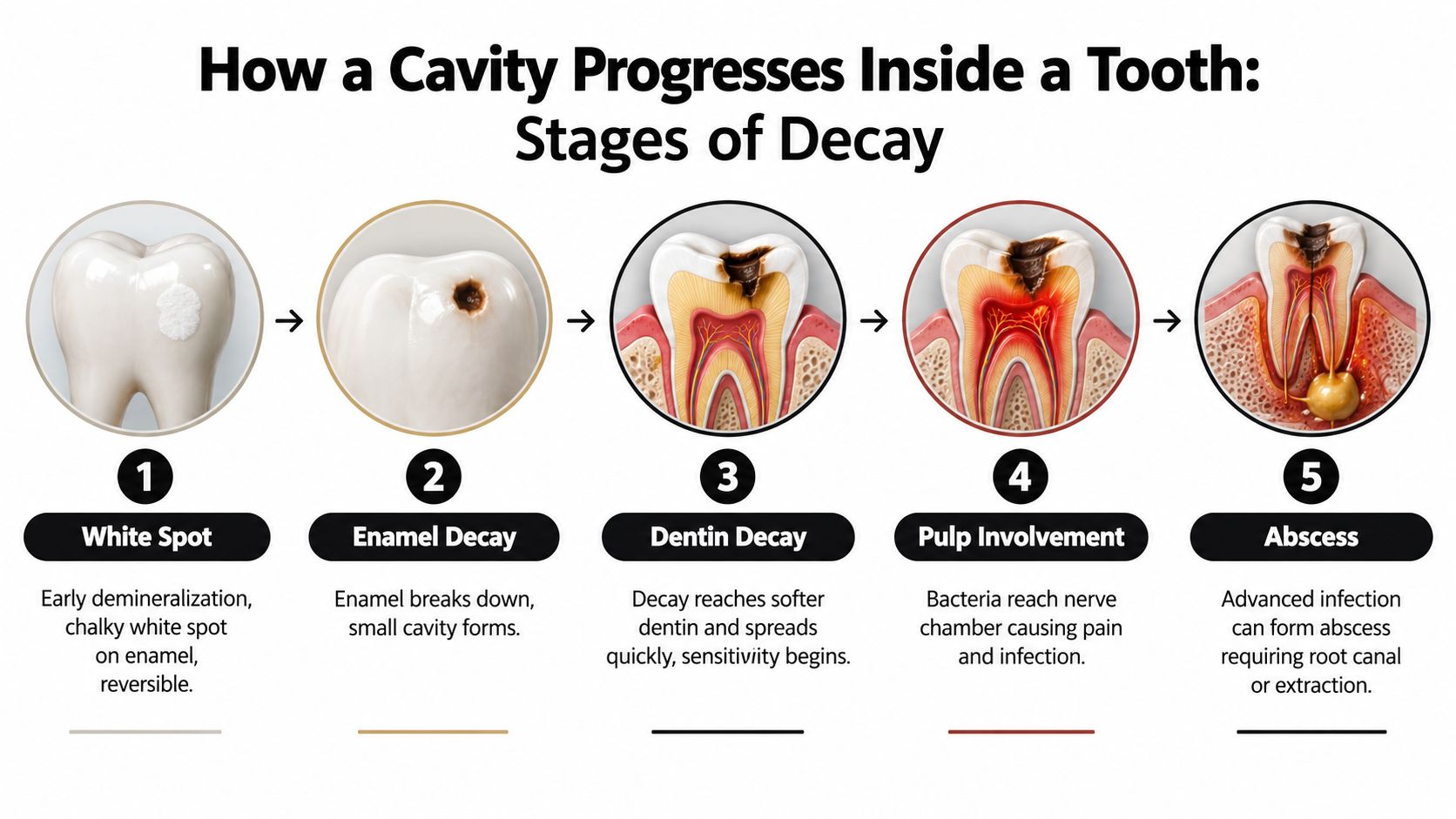
Tooth decay doesn't jump directly from a clean tooth to an abscess. It usually develops through recognizable stages, although the speed varies according to plaque, sugar exposure, fluoride, saliva, and the location of the lesion.
From a white spot to deeper decay
The earliest visible change may be a chalky white spot. This indicates mineral loss in the enamel, but the surface may still be intact. With fluoride, better plaque control, and improved saliva protection, an early lesion may stabilize or remineralize before a true hole develops.
Once the enamel surface breaks down, the area becomes a permanent cavity. Decay can then reach dentin, the softer layer beneath enamel. Dentin allows the lesion to spread more easily, and sensitivity to cold, heat, or sweets may begin.
A busy schedule can make this progression easy to miss. A small spot seen during a cleaning may not hurt, so a patient postpones care while continuing to sip sweet drinks or manage dry mouth. Without intervention, bacteria can reach the pulp, the chamber containing the tooth's nerves and blood vessels.
When infection reaches the root
Lingering throbbing pain, pain with biting, swelling, or a persistent bad taste can indicate that the pulp or surrounding tissues are involved. An abscess may form when infection extends toward the root and supporting bone. Treatment could then require root canal therapy, a crown, or, when the tooth can't be predictably saved, tooth extraction followed by replacement planning such as dental implants.
Sensitivity doesn't diagnose the stage by itself. A dentist uses an examination and dental X-rays to determine how far decay has progressed and whether the tooth remains restorable.
Prevention Habits That Actually Work for Adults
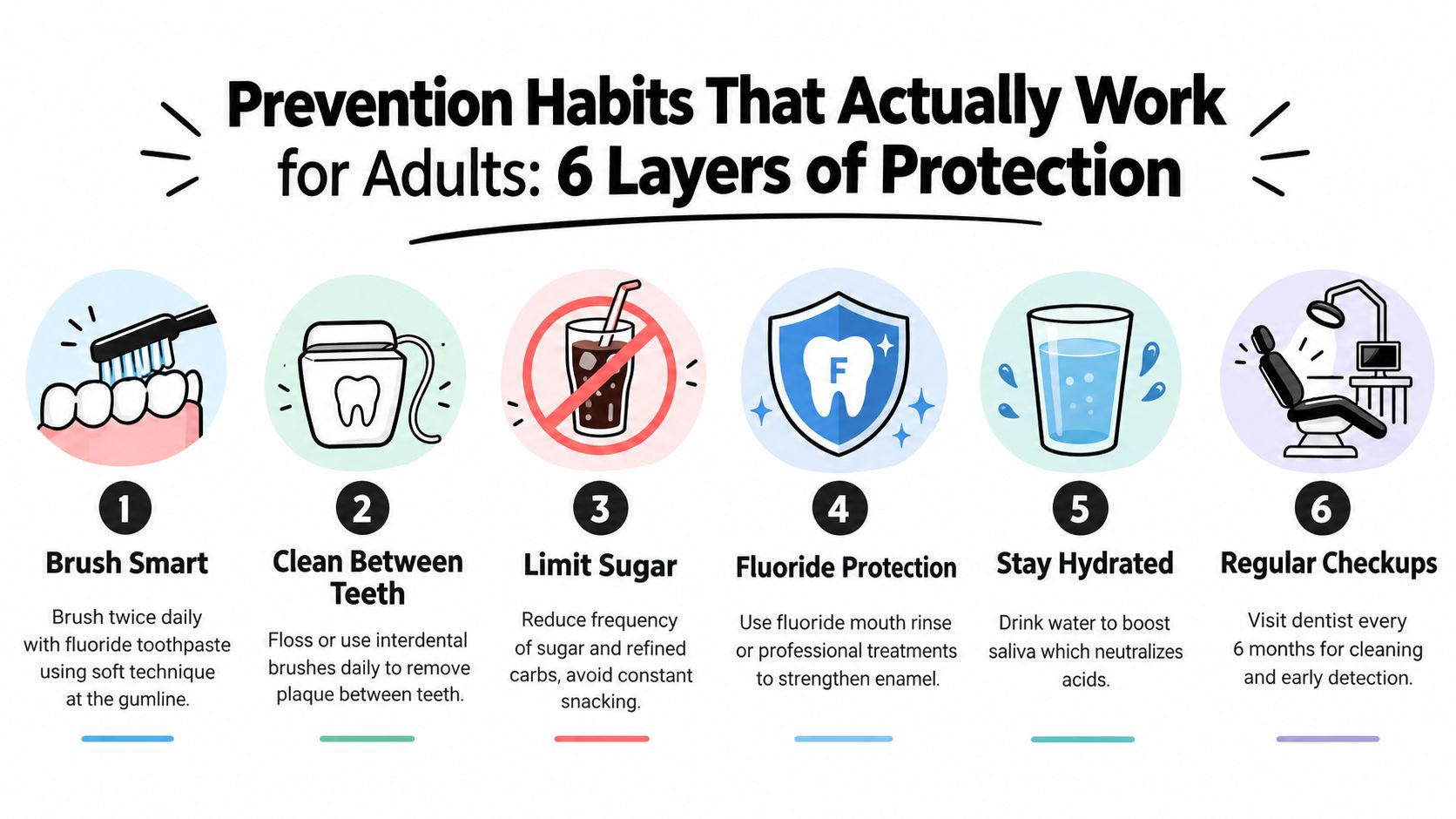
Cavity prevention works best as a set of protective layers. No single habit can compensate for every risk, especially when an adult has dry mouth, exposed roots, orthodontic appliances, or older dental work.
Six practical layers
- Brush smart: Brush twice daily with fluoride toothpaste and a soft technique that reaches the gumline without scrubbing aggressively.
- Clean between teeth: Use floss or an interdental cleaner daily, because toothbrush bristles don't fully clean tight contacts.
- Separate mouthwash from brushing: A fluoride or alcohol-free rinse may support the routine when used at a different time from brushing.
- Choose water often: Keep water available during work and family errands. Hydration supports comfort and saliva function, while water can replace frequent sweetened drinks.
- Reduce exposure frequency: Have sugary or acidic items with meals rather than grazing or sipping them throughout the day.
- Support saliva: Sugar-free gum can stimulate saliva for some adults. If dryness began after a prescription change, ask your physician whether a medication review is appropriate.
Las Vegas tap water can be a practical hydration choice, but the fluoride content available to an individual can depend on the water source and other factors. Your dentist can recommend whether you need additional fluoride through toothpaste, rinses, varnish, or another professional treatment.
Make the routine fit real life
A working parent may keep floss picks in a desk drawer. Someone commuting from Desert Shores, Sunhampton, Sun City Summerlin, Monterrey, Lone Mountain, Mar-A-Lago, or Painted Desert Estates may carry water and sugar-free gum rather than relying on willpower at the end of a long day. Consistency matters more than perfection.
For adults considering supplements for broader bone and nutrition support, smart calcium D3 usage can provide general educational context. Supplements don't replace fluoride, plaque removal, saliva support, or dental examinations.
For additional local prevention guidance, review natural cavity prevention strategies and discuss which recommendations fit your medical history.
When to See a Dentist About a Possible Cavity
A cavity can develop without symptoms. A busy Las Vegas parent may notice a brief twinge during an iced drink, then move on with the day. Repeated changes deserve an examination before discomfort becomes severe.
Arrange a dental visit if you notice:
- Sensitivity: A recurring sharp response to hot, cold, or sweet foods.
- A visible change: A pit, hole, dark area, or chalky white spot.
- Food trapping: Food repeatedly catches between the same teeth.
- An unusual taste: A persistent bad taste or odor that seems to come from one location.
- Swelling: Puffiness in the gum, cheek, or jaw requires prompt attention.
Seek evaluation sooner if your risk is higher. This includes adults taking antihistamines, antidepressants, or blood pressure medicines that may reduce saliva, people with gum recession, patients with older crowns or fillings, adults with diabetes, and anyone wearing braces or another orthodontic appliance.
Dry-mouth symptoms matter even when a tooth does not hurt. Sticky saliva, cracked lips, difficulty eating dry foods, and nighttime thirst can indicate less salivary protection. In desert air, low moisture can make an already dry mouth feel worse, while medications may further reduce the saliva that helps rinse acids and deliver minerals to teeth. Guidance on dry mouth and cavity risk explains why reduced salivary flow deserves clinical attention.
What a diagnostic visit includes
At Aspiring Smiles, a new-patient exam may involve visual inspection, close checks of grooves and restoration edges, and bitewing X-rays when appropriate to find decay between teeth. The dentist can review saliva symptoms, meal and drink timing, fluoride exposure, gum recession, medications, and the cleaning challenges created by work or family schedules.
Early mineral changes may improve with fluoride and better home care. A formed cavity generally needs a filling. Deeper decay may require a crown, root canal, or extraction. Read about cavity treatment with a general dentist to understand possible next steps when a symptom keeps returning.
Protect Your Smile With a Las Vegas Dental Team
The causes of adult cavities are manageable when you match prevention to the risk in front of you. Desert dryness can make hydration and saliva support more important. Sweetened coffee and busy family schedules call for better timing and realistic cleaning tools. Medication-related dry mouth may require a conversation with your physician and dentist. Receding gums call for gentle brushing, fluoride, and close monitoring of exposed roots.
Routine cleaning and exams help identify changes before they become painful. Adults with higher caries risk may benefit from professional fluoride treatments, more individualized recall planning, and specific strategies for dry mouth or root exposure. Dental X-rays can also reveal decay that isn't visible during a mirror examination, especially between teeth.
Aspiring Smiles Dental and Braces serves families in Las Vegas, NV with exams, cleanings, restorative dentistry, cosmetic dentistry, emergency dental services, and patient education in clear language. The practice also provides crowns, Invisalign, night guards for grinding, dental implants, All-on-4 solutions, implant-supported dentures, veneers, and Zoom teeth whitening. Patients looking for a dentist near me, an emergency dentist, a cosmetic dentist near me, dental implants near me, or help deciding whether they need a tooth extraction can discuss their symptoms and treatment options during a consultation.
A local dental practice also needs to communicate clearly with the community it serves. For readers interested in how practices explain services through dental practice TV advertising, the central patient need remains the same: understandable information, convenient access, and a clear path to care.
A cavity-risk assessment doesn't have to feel like a judgment. It's a practical review of your teeth, gums, saliva, habits, medications, and existing dental work so you can protect your smile with a plan that fits life in Las Vegas.
Schedule an exam, cleaning, or personalized cavity-risk assessment with Aspiring Smiles Dental and Braces in Las Vegas, NV. The team can evaluate sensitivity, dry mouth, gum recession, old fillings, and possible cavities, then explain whether preventive care, restorative treatment, emergency care, or a consultation for dental implants is appropriate for your smile.