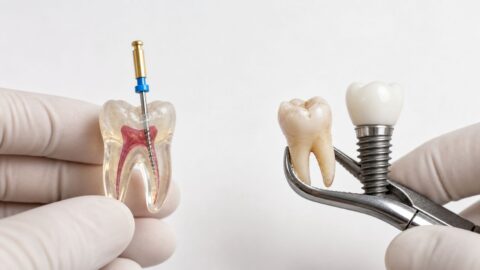
Root Canal vs Extraction: Make Your Best Choice
You wake up in the middle of the night with a toothache that doesn't let up, and by morning you're trying to decide between saving the tooth or getting it out. That's a stressful spot to be in, especially when you're also wondering about pain, recovery time, and what the bill might look like. For patients in Las Vegas, NV, including neighbors in Desert Shores, Sunhampton, and Sun City Summerlin, Aspiring Smiles Dental and Braces helps make that decision feel manageable with clear exams, honest guidance, and treatment options that fit the condition in front of you.
| Option | What it does | Best fit |
|---|---|---|
| Root Canal | Saves the natural tooth by removing infected tissue and sealing the tooth | Teeth that can still be restored and supported with a crown |
| Extraction | Removes the tooth from the socket | Teeth that are too damaged, fractured, or unstable to save |
Introduction with Patient Scenario
A common late-night call starts like this. A Las Vegas resident rolls over, feels a sharp pain in a back tooth, and realizes cold water, chewing, and even breathing through the mouth can set it off. By the next morning, the question isn't just, “Why does it hurt?” It's, “Do I try to save this tooth, or should an emergency dentist remove it?”
That decision gets even harder when you're staring at the unknowns. A root canal vs extraction choice touches pain relief, cost, the number of visits, and whether you'll still have a strong bite a year from now. People in nearby communities like Desert Shores and Sun City Summerlin often want the same simple answer, but the right choice depends on how much tooth structure is left, whether infection has reached the pulp, and whether the tooth can still be restored.
Aspiring Smiles Dental and Braces approaches that conversation the way a calm local dentist should. The first step is not guessing, it's examining the tooth, checking dental x-rays, and looking at the surrounding bone and gums. That matters because a painful tooth isn't always a hopeless tooth, and a tooth that seems “saveable” on the surface may still need removal if the crack or decay goes too deep.
Practical rule: if the tooth can be predictably restored, preserving it usually deserves serious consideration. If it can't, extraction may be the safer and simpler path.
Patients often come in worried that one option will be “obviously” cheaper or faster. In reality, the smartest choice comes from balancing short-term relief with long-term mouth health. That's why this guide walks through symptoms, procedure steps, pain expectations, costs, and replacement planning, so you can schedule a consultation with confidence instead of uncertainty.
When You Need a Root Canal or Extraction
Deep decay, trauma, and failed prior treatment can all lead to the same fork in the road. If the infection is inside the tooth, a root canal is often the tooth-saving option. If the structure is too far gone, or the root and surrounding support can't hold up, tooth extraction may be the safer choice.
Signs that point toward treatment
The usual clues are plain enough once you know what to look for. Hot and cold sensitivity, a persistent toothache, swelling, and inflamed gums can all signal that the pulp or surrounding tissues are involved. Sometimes pain comes and goes at first, then lingers longer, then starts waking you up at night. That's the kind of pattern many emergency dental visits are built around.
Certain situations push the conversation toward extraction more quickly. A tooth with a severe fracture, major loss of structure, or poor support from the surrounding bone may not hold a crown reliably. In other cases, a previously treated tooth that has failed may still be salvageable, but the predictability changes, and retreatment has different odds than a first-time treatment.
Why the rest of your mouth matters
This decision is never just about one tooth. Your overall oral health, bite balance, and bone support all influence whether saving the tooth makes sense. If you're dealing with swelling in Sunhampton and the pain is escalating fast, an emergency dentist visit may focus on immediate relief first, then a more complete treatment plan after the infection is under control.
A planned root canal visit is different. It usually starts with diagnosis, then moves into cleaning, sealing, and protecting the tooth. Extraction can be the right answer when the tooth can't reasonably be restored, but it should still be tied to a replacement plan if the missing tooth will affect chewing or bite stability.
The key point is simple. Pain tells you something is wrong, but it doesn't tell you which procedure is right. The exam does.
Clinical reality: a painful tooth is not automatically a tooth that needs removal. The structure, infection extent, and future restorability decide that.
Procedure Steps for Root Canal and Extraction
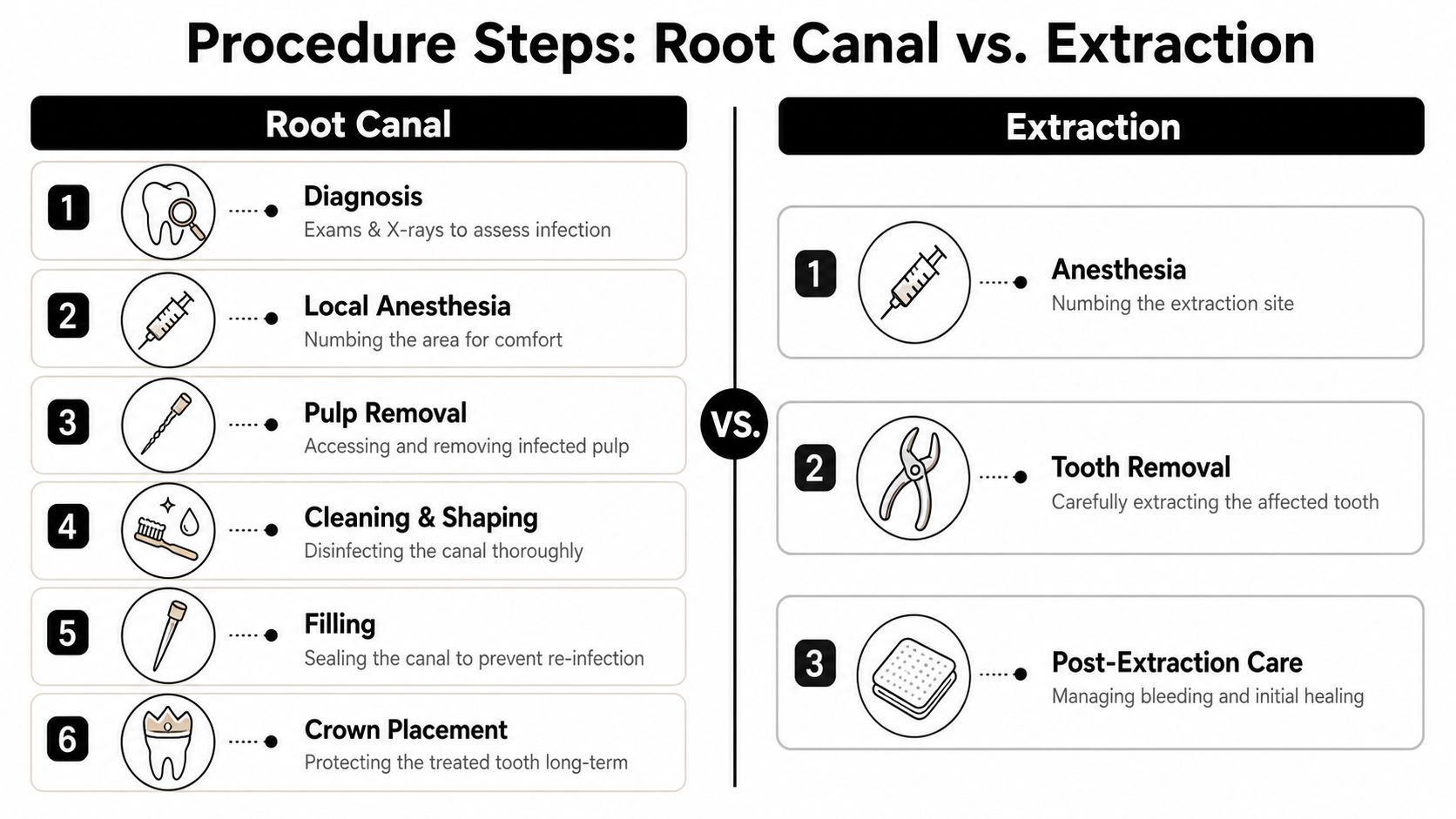
For readers comparing root canal vs extraction, the procedure itself often brings the most anxiety. A clear step-by-step view helps, because the two options are very different once you're in the chair. If you want a deeper look at the endodontic side, this step-by-step guide to the root canal procedure is a useful companion.
How a root canal usually works
A root canal starts with diagnosis, usually through an exam and x-rays to see how deep the infection goes. Once the tooth is numb with local anesthesia, the dentist opens the tooth, removes the infected pulp, and cleans the canals carefully. The canals are then shaped, disinfected, and filled to seal the space and keep bacteria out.
The last step is just as important as the cleaning. A treated tooth usually needs a crown or another protective restoration so it can handle normal biting forces. That's why a root canal is often described as a multi-step process, not because it's excessive, but because saving a tooth safely takes more than a quick fix.
How extraction works
Extraction is more direct. The area is numbed, the tooth is loosened from the socket, and the dentist removes it carefully. After that, the socket is cleaned, and suturing may be used if needed to help the site close and heal. Some extractions are straightforward, while others require more surgical control if the tooth is broken or anchored tightly.
For patients in Lone Mountain or Painted Desert Estates, the main difference is usually not the tool set, it's the treatment goal. Root canal therapy tries to keep the tooth in place. Extraction removes the source of the problem entirely and shifts the conversation to healing and replacement.
What changes from visit to visit
Root canals and extractions can both be done comfortably with numbing, and some cases may involve sedation depending on anxiety, medical history, or complexity. Root canals often require a follow-up for the crown, while extraction can require follow-up if you're planning an implant, bridge, or denture later. That's part of the reason the best plan is always personalized.
Good planning beats guesswork. If a tooth can be restored and crowned, saving it often preserves more of your bite and keeps future options open.
Pain and Recovery Timelines for Each Procedure
Pain is usually the first thing people ask about, and for good reason. Most patients want the problem fixed without turning treatment into a second problem. With modern anesthesia, a root canal is typically comfortable during treatment, and extraction is also numbed, but recovery tends to feel different afterward.
What the first few days feel like
After a root canal, many patients describe mild soreness or sensitivity for a short time, especially when biting on the tooth before the crown is placed. After an extraction, the area is more likely to feel tender and swollen because the socket itself has to heal. Soft foods are usually the safer choice early on for either procedure, but extraction generally requires more caution around the healing site.
That doesn't mean every extraction is miserable or every root canal is effortless. It means the healing pattern is different. If you're balancing work, family, or weekend plans in Las Vegas, knowing that difference ahead of time makes the recovery feel much more predictable.
Recovery at a glance
- Root canal recovery: often settles within a few days, with discomfort controlled by standard over-the-counter relief when appropriate.
- Extraction recovery: can require more time on soft foods and more attention to the socket while healing progresses.
- Follow-up: root canal patients often return for the permanent crown, while extraction patients may return to discuss a replacement plan.
A practical point matters here. If swelling increases, bleeding doesn't calm down, or the pain changes in a way that worries you, call the office rather than waiting it out. That's especially true after a difficult extraction or if you have ongoing infection concerns.
The recovery question also connects to accessibility. Many families want weekend availability and follow-up that doesn't require a long delay. That's one reason having a local dental team matters, you're not left trying to figure things out alone after the numbing wears off.
Cost and Insurance for Root Canal vs Extraction
The money question is usually the hardest part of the decision. An extraction often costs less at the first visit, but the full bill can change once replacement care enters the picture. The immediate cost of a simple tooth extraction is typically $150 to $650, while a root canal plus crown ranges from $1,700 to $3,400, so extraction is usually cheaper at the start, but it can cost more later if you need to replace the tooth (Serenity Dental Bloom).
Local fee ranges and what they usually cover
In Las Vegas, the fee can vary by tooth type. Molars range from $865 to $2,400+, front teeth range from $540 to $1,100+, and crowns add $800 to $1,500 to the total expense (Serenity Dental Bloom). That spread is one reason some patients feel pressure to remove the tooth first and sort out the rest later.
The short-term savings can be misleading. An extraction without a replacement can lead to shifting teeth, bite changes, and bone loss, while replacing the tooth later with an implant, bridge, or denture can cost more than saving the tooth earlier. For patients in neighborhoods served by Aspiring Smiles Dental and Braces, the practical question is not only what costs less today, but what fits the next step in care without creating a bigger bill later. If you are already thinking about replacement, tooth extraction and denture options in Las Vegas are part of the discussion, because the first procedure and the follow-up plan usually belong together.
Immediate cost and longer-term cost
| Procedure | Immediate Cost | Replacement Cost | Total 5-Year Cost |
|---|---|---|---|
| Root Canal with Crown | Higher upfront, based on the treated tooth and crown needs | Usually none if the tooth is successfully retained | Often lower when the tooth is saveable |
| Extraction | Lower upfront | May require implant, bridge, or denture planning | Often higher once replacement is added |
Insurance can change the math too. Many PPO plans and some Medicaid benefits help with part of the treatment and, in some cases, part of the crown or replacement planning. Financing and membership options can also spread the cost across visits, which helps when the estimate feels too large to handle all at once.
In Las Vegas, that matters for families comparing care across local communities. A plan that looks affordable on paper may still be difficult if it leaves out the cost of the crown after a root canal, or the cost of replacing a tooth after extraction. A straightforward comparison starts with the full treatment plan, not just the first appointment.
Financial rule of thumb: compare the whole treatment plan, not just the first visit. A low extraction fee can hide a much larger replacement bill later.
Long Term Outcomes and Replacement Options
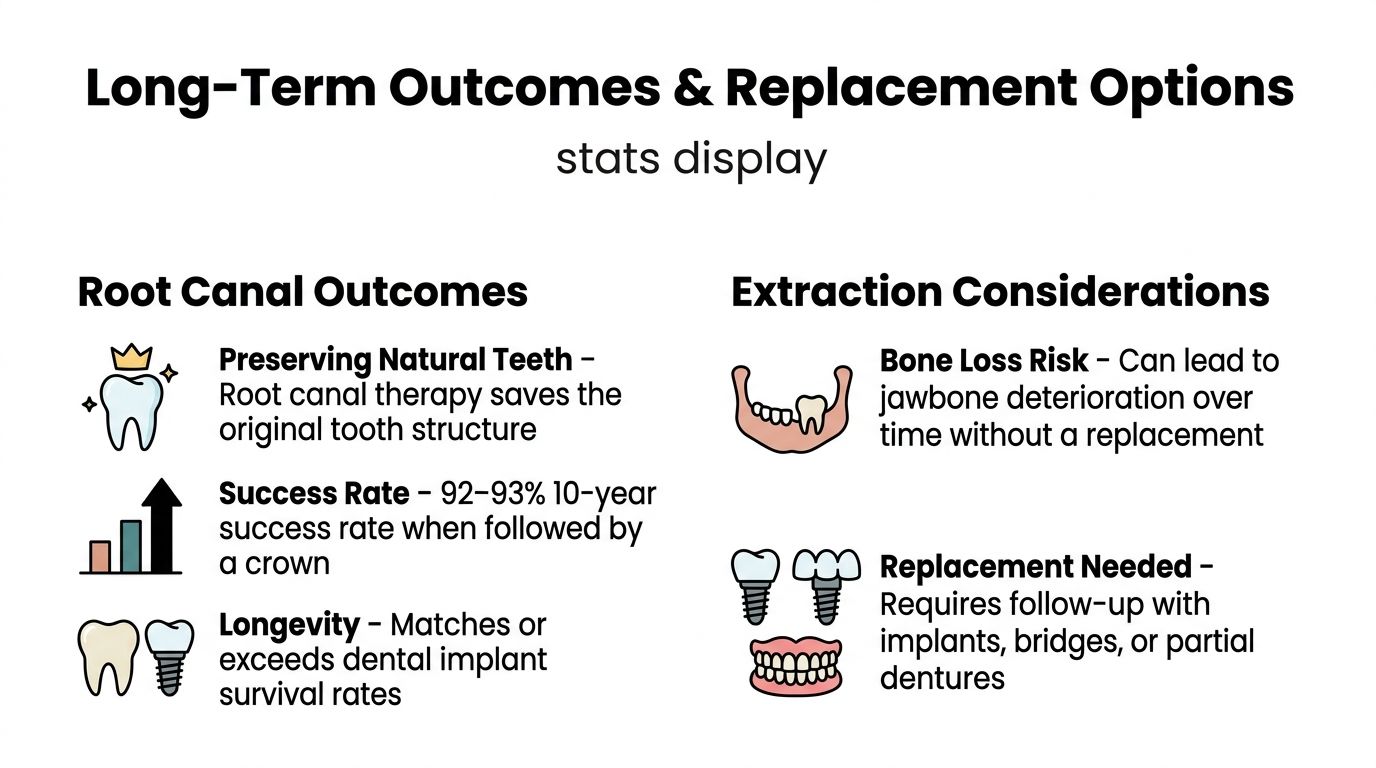
The best long-term decision depends on whether the tooth is still worth keeping. Primary root canal therapy has a weighted pooled success rate of 92.6% under loose criteria and 82.0% under strict criteria, and a root canal followed by a crown maintains a 92 to 93% success rate at the 10-year mark according to the verified data from the systematic review and 2023 review in endodontic literature. Restored endodontically treated teeth also show a 97% survival rate over six years, statistically matching the 97% survival of implant-supported crowns (ToothCheck).
What that means for real patients
Those numbers matter because they show why saving a natural tooth is often worth serious consideration when the tooth is still structurally workable. Natural teeth preserve feel, chewing feedback, and the surrounding bone in a way implants can't fully duplicate. That's also why patients who choose root canal therapy often report better quality of life than extraction groups, with improved oral-health-related quality of life and fewer concerns about appearance in the verified data from the review of treatment outcomes (PMC review).
Extraction is still the right choice in some cases. Severe bone loss, non-restorable fractures, or a tooth that can't be sealed and rebuilt safely can make removal the more honest recommendation. When that happens, the replacement discussion should start right away, not months later.
Replacement choices after extraction
Common options include dental implants, implant-supported dentures, and conventional bridges. The right path depends on the number of missing teeth, bone support, and budget. A tooth that's removed in the back of the mouth may affect chewing more than people expect, so the plan should be built around function, not just appearance.
If extraction is the better clinical choice, this guide to dental extractions and dentures helps explain the next steps. For some patients, the long-term plan may also include implant planning after extraction, especially if maintaining a stable bite is a priority.
Decision Making Checklist for Las Vegas Patients
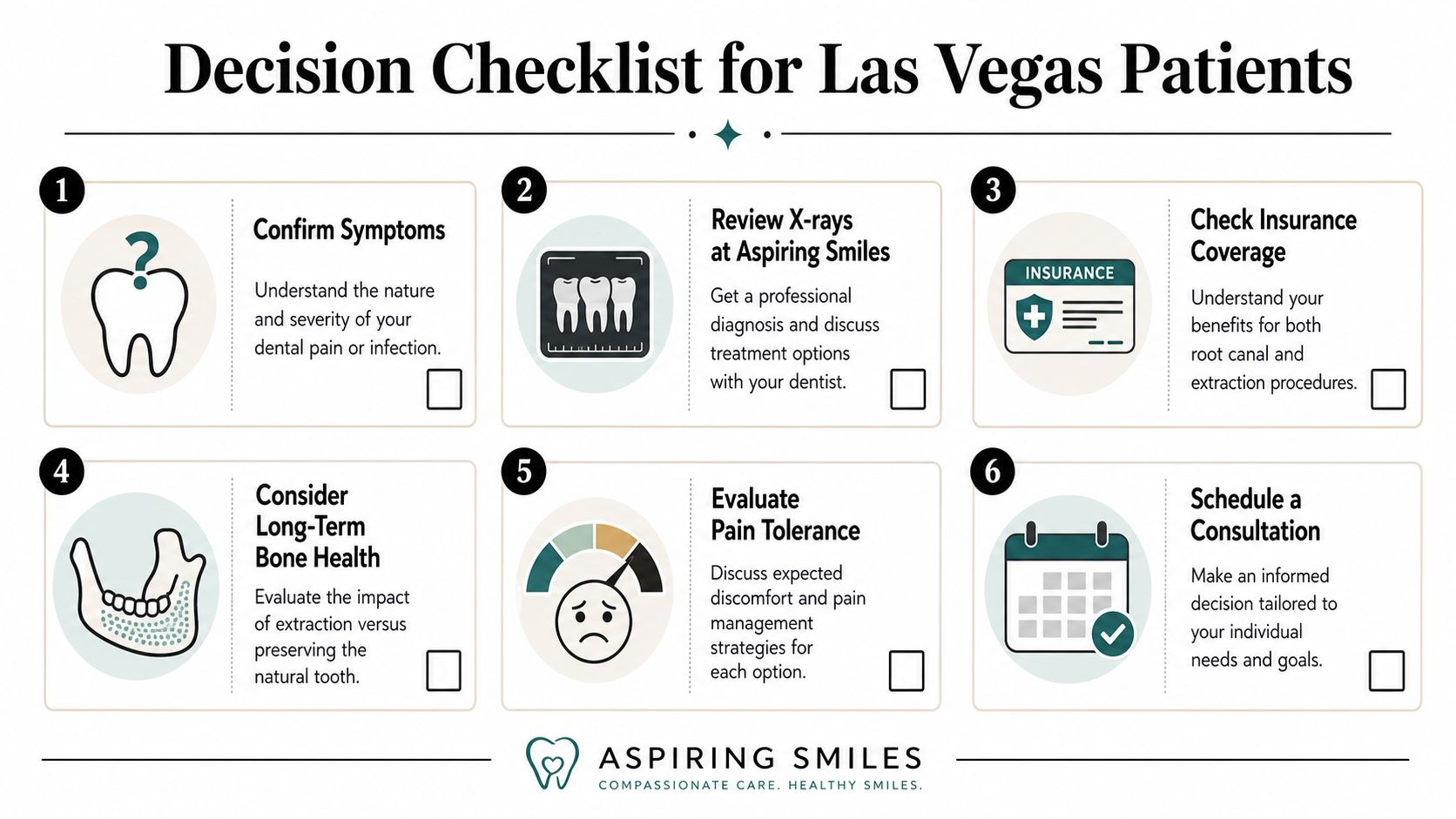
A patient in Las Vegas, NV often needs the same thing before treatment starts, a clear way to compare the tooth, the timing, and the cost without getting lost in guesswork. The choice gets easier when you ask the questions a dentist asks at the chair, because the answer usually depends on whether the tooth can still be saved safely and what the next few visits will involve.
A local checklist that keeps the choice clear
- Ask whether the tooth is restorable. If the crack, decay, or infection is still inside a tooth that can be rebuilt, root canal treatment may keep the tooth in place. If the tooth cannot be sealed and restored safely, extraction may be the more practical answer.
- Look at the number of visits. A root canal often connects to crown work afterward, so the full plan may take more than one appointment. Extraction can be shorter at first, but replacement planning can add visits later if you want to keep chewing evenly.
- Compare the full cost, not just the first procedure. A lower upfront extraction fee may look easier, but a missing tooth can lead to bridge, implant, or denture costs later. Root canal care can also include a crown, so the office should help you compare the whole path, not just the first step.
- Check your insurance network carefully. Some plans cover endodontic treatment, some help more with extraction, and some treat crown work or replacement very differently. In neighborhoods such as Desert Shores and Sun City Summerlin, patients often ask how their local plan rules affect the final bill, especially if they are choosing between a one-time extraction and a tooth-saving treatment that needs follow-up care.
- Think about travel time and return visits. If you live farther from the office or want to limit time away from work or family, a treatment that needs fewer returns may fit better. That matters for patients who are balancing commuting, school pickup, or mobility concerns while dealing with tooth pain.
- Bring up sedation, anxiety, and recovery needs. Some patients want the least invasive option they can complete quickly, while others want to preserve the tooth if the repair is still reliable. Your comfort level should be part of the plan, because a treatment you can actually complete is better than one you keep postponing.
- Book the consultation before pain gets worse. X-rays, an exam, and a direct conversation will tell you more than online research can. That visit also lets the team at Aspiring Smiles Dental and Braces explain whether the tooth is a better fit for saving, removing, or planning replacement right away.
That checklist helps whether you are calling after a weekend flare-up or setting up a weekday visit with a little more time to think. A simple conversation can separate what feels urgent from what is urgent, and that difference matters when you are weighing a tooth-saving procedure against removal.
If you are deciding between root canal vs extraction in Las Vegas, the best next step is a calm exam, a review of your x-rays, and a treatment plan that matches your budget, your schedule, and the condition of the tooth.
Frequently Asked Questions
Will insurance cover both options? Many plans help with part of both treatments, but coverage depends on the specific benefit design. A root canal, crown, extraction, and later replacement can all be covered differently, so the office should verify the details before treatment starts.
How many visits does each require? A root canal often takes more than one visit when you factor in diagnosis and crown placement. Extraction can sometimes be completed in fewer visits, though replacement planning may add more appointments later.
Can I drive after sedation? If sedation is used, you usually need someone else to drive you home. The safest move is to ask the team before your appointment so you know exactly what to expect.
What if the root canal fails? Failed treatment can sometimes be retreated, and retreatment has its own success profile. If the tooth still can't be saved, extraction becomes the fallback, followed by a discussion of replacement options.
If you're trying to decide between a root canal vs extraction in Las Vegas, schedule a visit with Aspiring Smiles Dental and Braces so you can get a clear exam, review your x-rays, and choose the option that protects your comfort, budget, and long-term oral health.