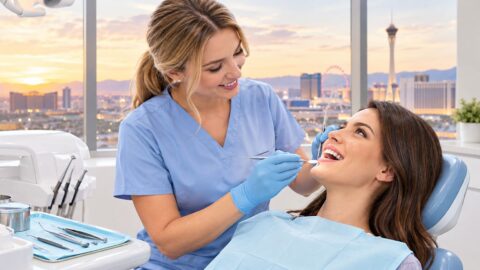
Routine Dental Check-Ups in Las Vegas: What to Expect
You're brushing before work and your gums bleed again. Or you're looking at the calendar and realizing your last dental visit was two years ago, while your child keeps asking if the dentist will hurt. That's the moment you type dentist near me and hope for a clear answer.
Routine dental check-ups don't have to feel mysterious or rushed. At their best, they're a calm, step by step review of your teeth, gums, and risk for future problems, with a cleaning and a plan you understand. For families searching for a dentist in Las Vegas, NV, the right question isn't only how often to come in. It's what should happen during that visit, and how the timing should fit your mouth, not a one-size-fits-all rule.
Why Routine Dental Check-Ups Matter for Las Vegas Families
Most first-time patients walk in a little unsure. You might have sensitivity to cold drinks, bleeding when you floss, a chipped edge you keep feeling with your tongue, or no pain at all and just a sense that you're overdue. All of those are good reasons to book, because early decay and gum inflammation often start without obvious signs.
Routine dental check-ups give your dentist a baseline. The team can spot a small soft spot before it needs a large filling, notice gum pockets before they deepen, and check old crowns or fillings before they fail at an inconvenient time. The CDC notes that routine visits are associated with fewer treatments for oral conditions and lower dental care costs, and its data show attendance is still inconsistent for working-age adults. In 2019, 65.5% of adults aged 18 to 64 had visited a dentist in the previous year, compared with 86.9% of children aged 2 to 17, according to CDC dental visit trends for children and adults.
A Local Starting Point for Preventive Dental Care
Aspiring Smiles Dental and Braces, led by Dr. Patel, treats preventive care as the foundation for restorative dentistry, cosmetic dentistry, and emergency care. The office at 3211 N Tenaya Wy Suite 122, Las Vegas, NV 89129 welcomes new patients with flexible hours, insurance acceptance, and a modern, comfortable setting. That matters when you're trying to fit care around school, work, and family schedules.
If you want a plain-language overview before you book, Ringway Dental check-up advice reinforces why regular examinations help catch problems early. Think of your check-up the same way you'd think of an annual physical. You're not only getting a cleaning, you're building a record that makes future decisions easier and less urgent.
Practical rule: Don't wait for pain to tell you something's wrong. Pain is often a late sign, not an early warning.
What Happens Step by Step During a Check-Up
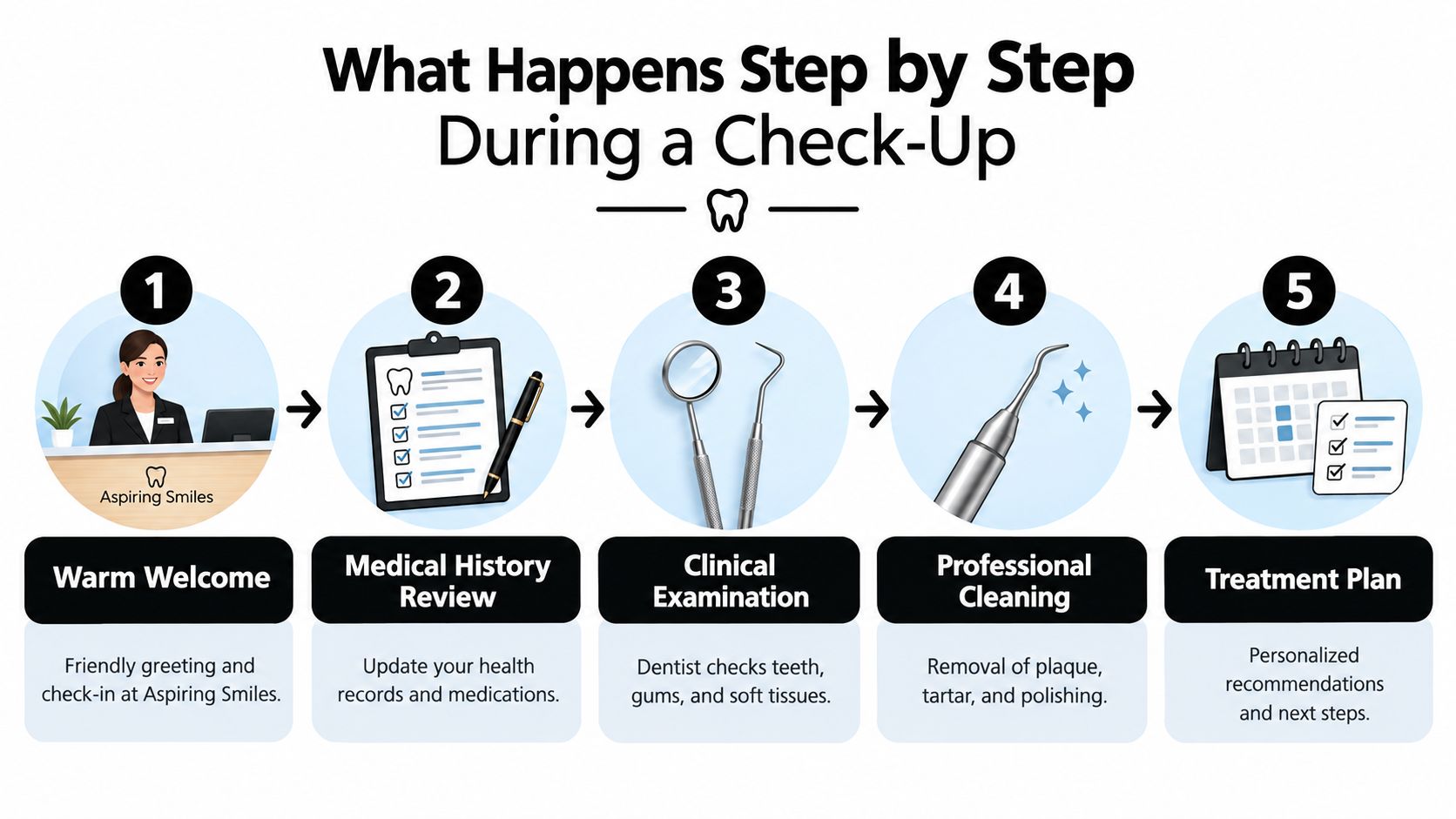
A routine visit follows a predictable order, and knowing that order lowers anxiety. You'll check in, update your medical history and medications, and tell the team about sensitivity, grinding, dry mouth, or anything that's changed. Those details matter because some medicines reduce saliva, and saliva helps protect teeth.
The five stages below show the flow from welcome to treatment plan.
Examination of Teeth Gums and Soft Tissues
Your dentist examines each tooth, checks existing restorations, and measures gum health. A soft tissue examination should include visual inspection of the face, neck, lips, inner cheeks, gingiva, floor of the mouth, tongue, and palate, with palpation where appropriate. The USPSTF states evidence is insufficient to know whether screening asymptomatic adults reduces oral cancer mortality, so this exam isn't a guarantee, but it does help identify persistent or suspicious lesions early for referral or biopsy, as explained in USPSTF guidance on oral cancer screening.
Documenting a lesion's location, size, color, texture, and duration creates a useful baseline. If you have an ulcer, lump, numb area, or patch that isn't healing, mention it even if it doesn't hurt. That conversation is part of good dental care, not an extra.
Cleaning Polishing and Targeted X-Rays
During cleaning and exams, the hygienist removes plaque and tartar with scaling instruments, then polishes the teeth so the surface feels smooth. You may hear scraping sounds and feel pressure, but you can ask for a pause at any time. Fluoride may be discussed when your cavity risk makes it helpful.
Dental X-rays aren't automatic at every visit. FDA guidance says dentists should order radiographs only when the information is expected to affect care, based on your exam, history, and disease risk, and should follow the ALARA principle of keeping exposure as low as reasonably achievable, according to FDA guidance on selecting patients for dental radiographs. When images are justified, they can reveal decay between teeth or below old fillings that can't be seen directly.
You'll finish with clear next steps. That might mean no treatment, a watch area to recheck, or a plan for a filling, crown, or referral. A preventive visit is different from an emergency appointment, which focuses on one urgent problem first.
How Often You Should Schedule Check-Ups by Age and Risk
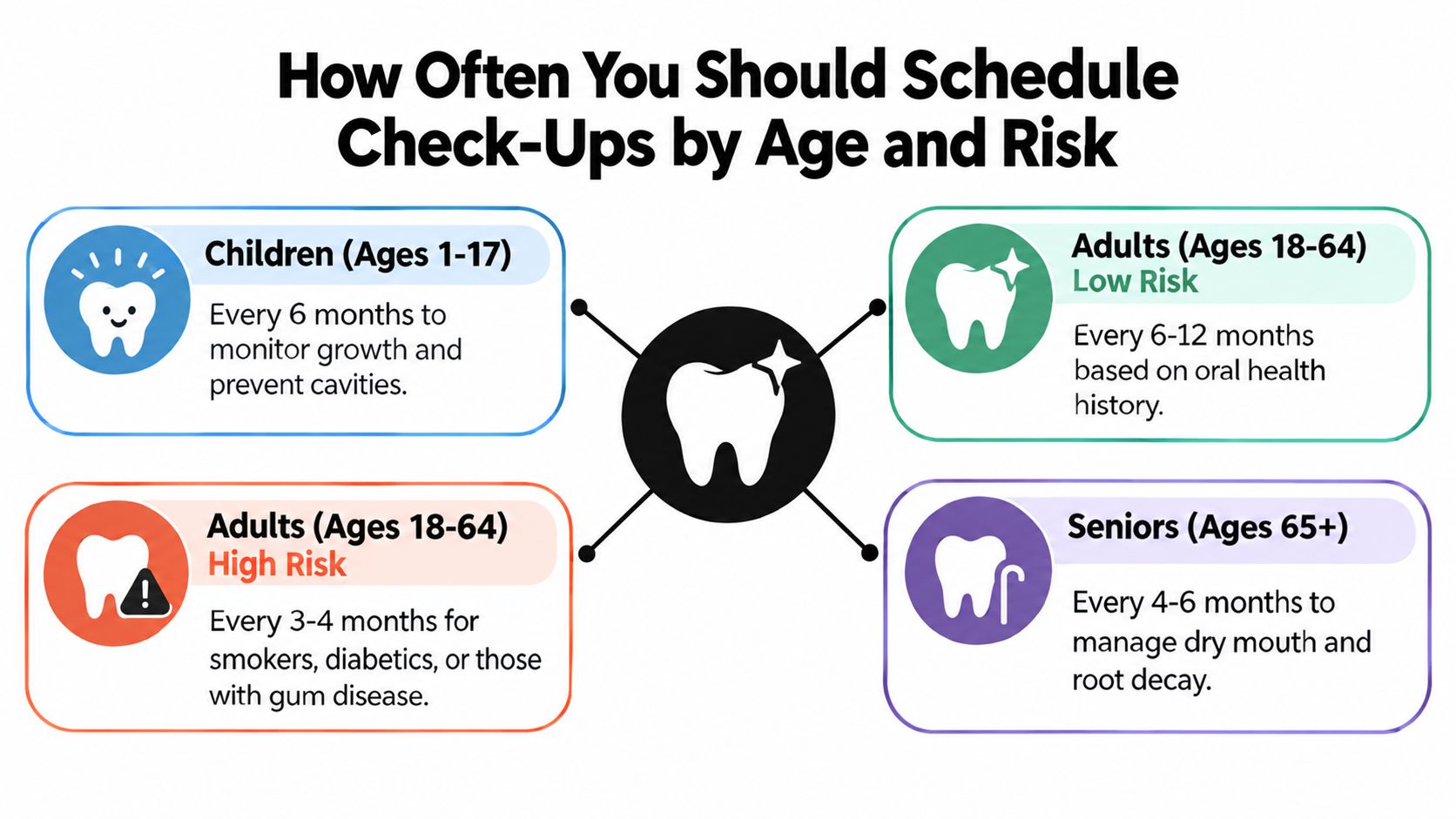
You've probably heard you must go every six months, no exceptions. That rule is simple, but it isn't personal. A risk-based recall approach matches your interval to your age, disease history, plaque control, medicines, tobacco use, sugar exposure, and symptoms.
The hierarchy below outlines how age and risk can shape timing, though your dentist should confirm the interval after examining you.
A Cochrane review found high-certainty evidence that risk-based and six-month recall produced little to no difference over four years in caries-affected surfaces, gingival bleeding, or oral health related quality of life for adults in primary dental care, as reported in the Cochrane review of dental recall intervals. That doesn't mean visits don't matter. It means frequency should follow risk.
Who Usually Needs Shorter Intervals
- Children and teens in orthodontics: Growth, new permanent teeth, and braces or aligners create more plaque traps and more to monitor.
- Adults with active disease: New cavities, bleeding gums, periodontal inflammation, or poor plaque control call for closer review.
- Patients with dry mouth or complex dental work: Xerostomia, tobacco use, high sugar exposure, and multiple restorations raise risk.
Consistently low-risk adults may be recalled less often, while UK guidance permits individualized adult intervals from 3 to 24 months in the same review. Attendance also isn't only about motivation. A 2025 German survey found 74.1% of adults had a check-up in the previous year, but rates were 81.1% for people with high education versus 67.7% for low education, according to German federal health reporting on dental check-ups.
During new patient exams, the team assesses cavities, gum health, existing restorations, and risk factors, then builds your recall plan. Book sooner if you develop persistent pain, bleeding, swelling, a broken tooth, or rapidly changing symptoms. Don't try to stretch an interval when something new appears.
Benefits That Go Beyond a Cleaner Smile
A polished smile feels good, but it's the least important reason to come in. The bigger value is finding disease while it's still small and reversible or easier to repair. CDC surveillance found about one in five adults ages 20 to 64 has at least one untreated cavity, and nearly half of adults aged 30 or older show signs of gum disease, according to CDC data on untreated cavities in adults.
Risk isn't evenly shared. In that CDC data, untreated decay affected 45% of low-income adults compared with 18% of higher-income adults, and 44% of current smokers compared with 20% of people who had never smoked, from the same source above in textual summary. A check-up gives you time to talk about diet, tobacco, grinding, and dry mouth medicines without judgment, then adjust prevention around real life.
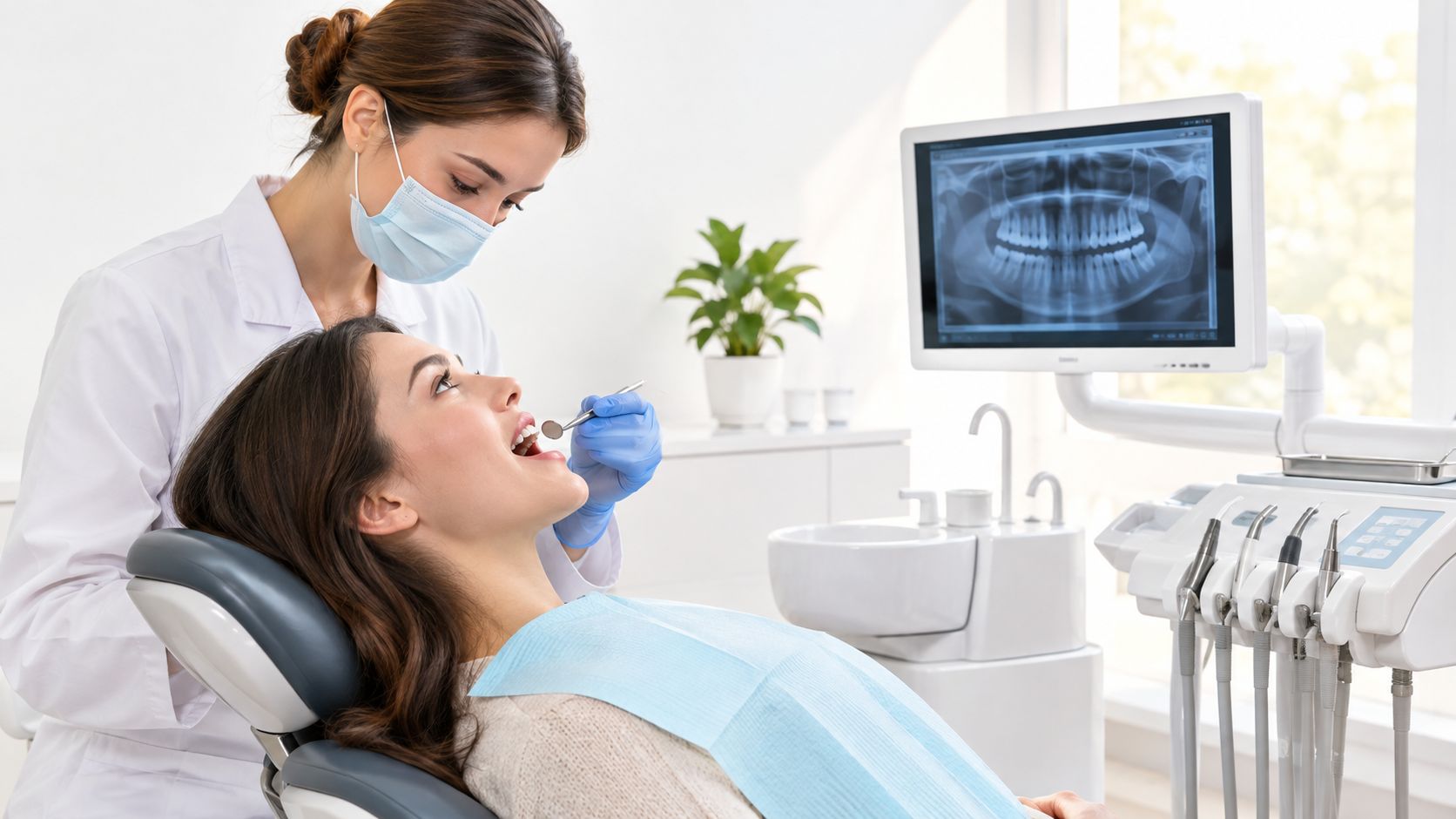
The photo below shows the kind of focused examination that connects prevention to later treatment decisions.
How Prevention Connects to Other Services
When decay is caught early, restorative dentistry may mean a small filling instead of a crown, root canal, or tooth extraction. If a tooth can't be saved, your dentist can discuss replacement early, including dental implants, All-on-4, and implant-supported dentures. That's why people searching for dental implants near me often benefit from starting with a complete exam rather than jumping straight to a procedure.
The same visit can open a conversation about appearance. If you're looking for a cosmetic dentist near me, healthy gums and stable teeth come first, then options like veneers, crowns, Invisalign, and teeth whitening with Zoom whitening make more sense. Cosmetic dentistry lasts better when the foundation is sound.
CDC data also report that nearly 21% of adults ages 20 to 64 had at least one permanent tooth with untreated decay, according to CDC selected findings from the 2024 oral health surveillance report. Many of those adults likely felt fine. Regular monitoring turns a silent problem into a planned, smaller fix, and it can lower lifetime costs by avoiding urgent care.
What Your First Visit at Aspiring Smiles Looks Like
Consider a parent in Lone Mountain booking for herself and two kids on a Saturday. She requests an appointment online, completes paperwork, and schedules the children back to back so nobody misses much school. That kind of planning is the point of a family-focused first visit.
You can start through the new patient dental appointment request page and note any anxiety, sensitivity, or treatment goals in advance. On arrival, the team reviews your history, takes X-rays only if clinically needed, and completes a new-patient exam with Dr. Patel or a team member. You'll hear findings in plain language, with time to ask what needs treatment now and what can be monitored.
Different First Visits for Different Patients
A nervous adult who hasn't been in years might begin with a consultation-style exam and cleaning, without pressure to start major treatment that day. A teen curious about straighter teeth can discuss Invisalign after the exam confirms the teeth and gums are healthy enough. An adult interested in Zoom whitening can learn whether staining, old fillings, or sensitivity should be addressed first.
For young children, early and consistent visits matter. CDC data show the share of children aged 1 to 17 who had a dental examination or cleaning fell from 83.8% in 2019 to 80.9% in 2020, with children aged 1 to 4 dropping from 58.6% to 51.3%, according to CDC reporting on children's preventive dental care. Guidance cited there recommends preventive visits beginning when the first tooth appears or no later than age 1.
Your first visit should end with a written sequence you understand, what to do now, what to watch, and when to return.
Costs are discussed before treatment begins, including insurance and payment options. If you arrive with sudden pain, the team can triage you toward emergency care instead of forcing a routine template. By the end, you've moved from searching for care to having a named dentist, a baseline record, and a recall date that fits your risk.
Overcoming Anxiety, Cost, and Access Barriers
Knowing check-ups matter doesn't automatically make them easy to attend. A 2025 national survey reported 21% of adults had avoided dental care because of anxiety, while 14% of parents had skipped taking their children for the same reason, according to Delta Dental reporting on preventive visits and anxiety. The same report found 87% of adults considered dental appointments as important as an annual physical.
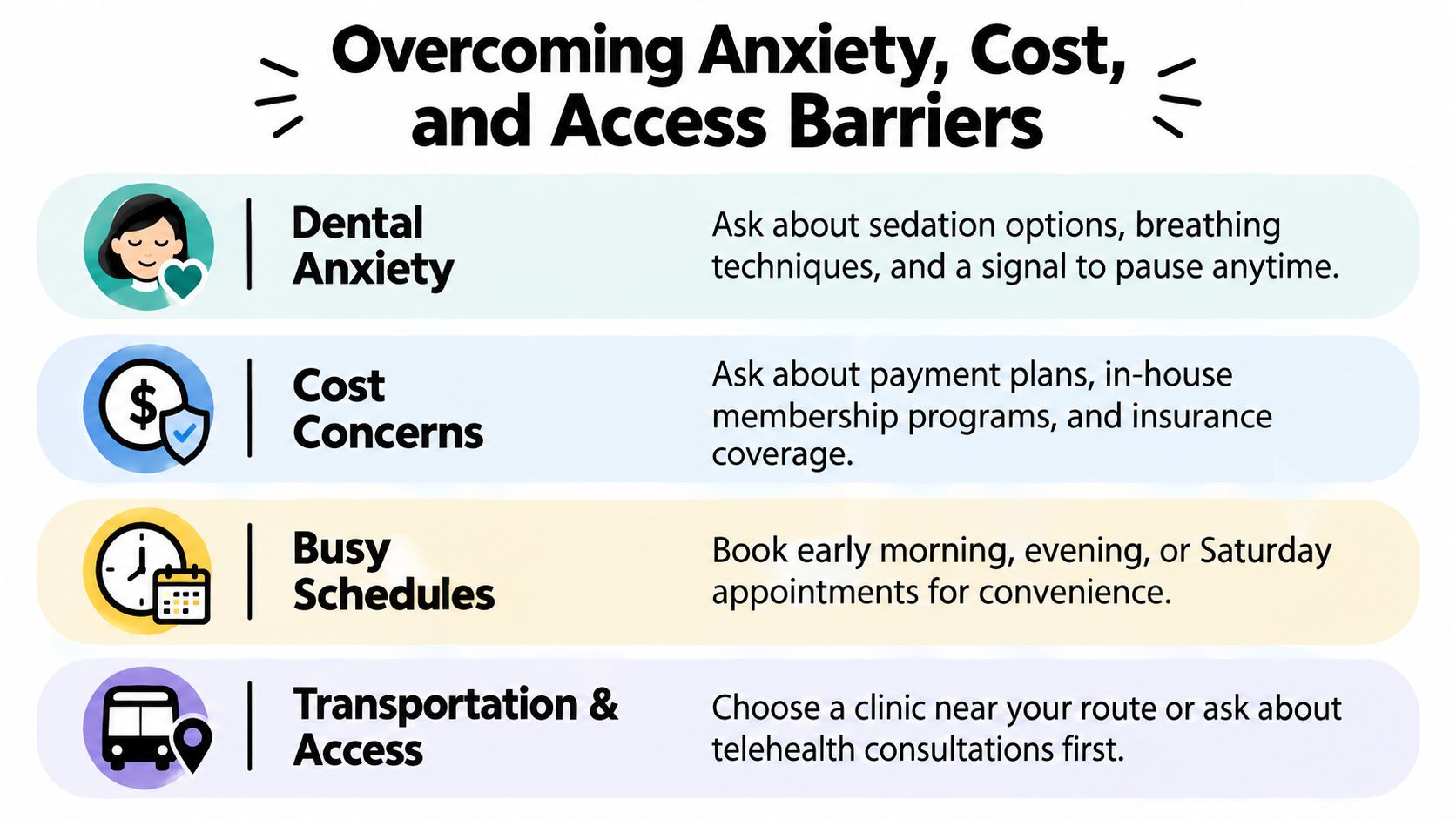
Avoidance isn't a character flaw. It's often an access and trust problem. The infographic below summarizes practical ways to reduce common barriers before they turn into another postponed year.
A Low Pressure Path Back Into Care
Tell the office you're anxious when you book. Ask for an explanation before each step, agree on a stop signal, and consider starting with a consultation rather than treatment when appropriate. You can also ask about topical anesthetic, pain control, shorter visits, or quieter appointment times. The practice explains more in its guide on how a general dentist can help relieve dental anxiety.
Cost and scheduling help too. Transparent estimates, insurance acceptance, flexible payment options, a membership program for uninsured patients, and extended weekday plus Saturday hours remove practical friction. For families who forget recall dates, Guiding Growth's dental reminder tips offer simple reminder ideas you can adapt at home.
The short video below gives another calm walkthrough you can watch before a first appointment.
Don't confuse urgent symptoms with routine care. NHS guidance lists severe pain affecting sleep, worsening swelling, a knocked-out tooth, persistent lesions, and broken restorations as reasons to seek urgent advice, with a knocked-out adult tooth needing care within one hour, according to NHS guidance on finding emergency dental care. If swelling affects breathing or bleeding won't stop, seek emergency medical care and contact an emergency dentist right away.
Schedule Your Next Check-Up With a Las Vegas Dentist
You now have a clearer picture. A good check-up includes an exam, cleaning, risk review, selective X-rays, and a recall interval matched to you, not a slogan. It also gives you a trusted place to call for cosmetic goals, restorative needs, or an urgent problem.
Aspiring Smiles Dental and Braces serves Las Vegas families from Desert Shores, Sunhampton, Sun City Summerlin, Monterrey, Lone Mountain, Mar-A-Lago, and Painted Desert Estates at 3211 N Tenaya Wy Suite 122, Las Vegas, NV 89129. If cost without insurance is your main concern, ask how a membership approach works, and compare ideas from Dental Cafe membership plan options when you discuss what's available locally. Book a routine visit when you're overdue or have mild concerns, and call promptly for severe pain, swelling, trauma, or a broken tooth.
Request your new-patient exam online today, bring your questions and medication list, and leave with a clean smile and a plan you understand.
Aspiring Smiles Dental and Braces provides preventive check-ups, cleanings, cosmetic and restorative dentistry, dental implants, Invisalign, and emergency dental care for families across Las Vegas. If you're ready for a calm, risk-based routine dental check-up with clear next steps, schedule your visit with Aspiring Smiles Dental and Braces today.