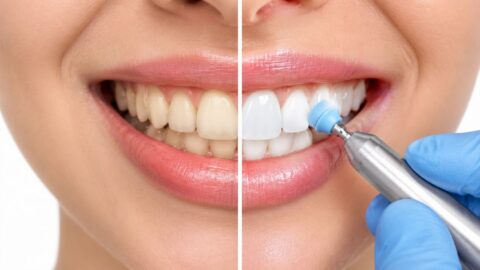
How to Whiten Teeth Crowns: Options That Work
You notice it in the bathroom mirror, then again in a family photo. One crowned tooth looks darker or more yellow than the natural teeth beside it, and suddenly your smile is all you can see. If you've been searching for how to whiten teeth crowns, you're not alone, and the mismatch doesn't automatically mean your crown has failed.
The honest answer is that crowns and natural teeth need different strategies. A dentist in Las Vegas, NV can determine whether surface staining is the problem, whether surrounding enamel needs professional teeth whitening, or whether crown replacement is the only way to create a consistent shade. The right plan can also protect the tooth beneath the restoration and help you avoid spending money on products that cannot do what you want.
Why Your Dental Crown Looks Darker Than Your Natural Teeth
A crown can look out of place even when it's still doing its job. You might have had a front crown placed when the neighboring teeth were a different shade, or your natural enamel may have changed gradually while the crown stayed close to its original color. In other cases, coffee, tea, tobacco, plaque, or tartar can leave surface discoloration that makes the restoration appear dull.
The gum line can change the way the tooth looks, too. If the gum has receded slightly, the edge of the crown may become easier to see. A visible margin can create the impression that the crown has darkened, even when the larger restoration hasn't changed much.
A darker-looking crown is a cosmetic concern first, but it still deserves a professional examination.
Natural enamel and restorative materials age differently. Enamel can pick up internal and external stains, while porcelain, ceramic, and zirconia crowns retain the shade selected during fabrication. The surrounding teeth may become darker, or they may become lighter after whitening, while the crown remains fixed at its original shade. That contrast is often what makes the crown stand out.
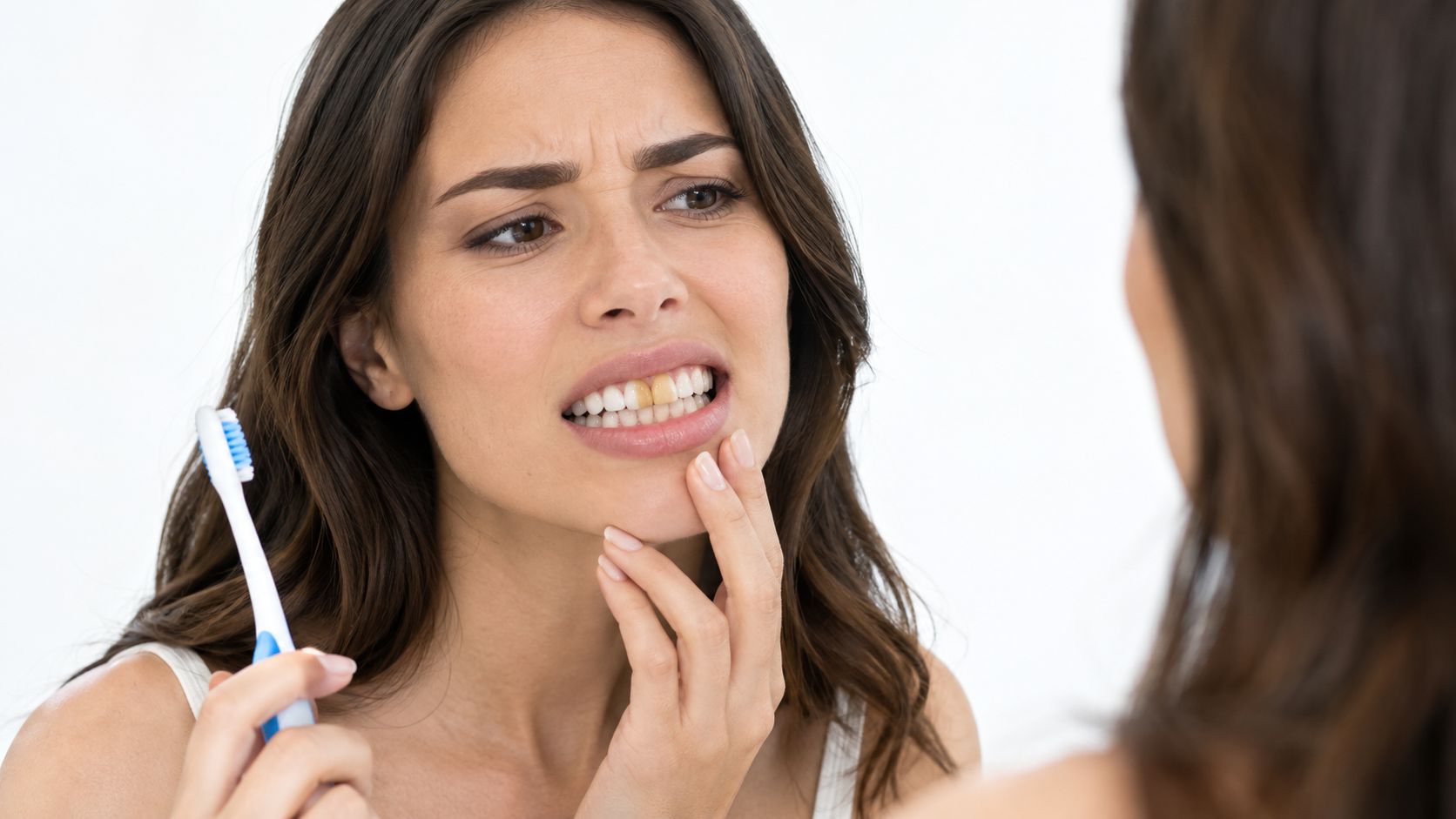
At a local practice serving Las Vegas families, the first step is identifying where the color problem comes from. A cleaning and exam may be enough when stain sits on the surface. If the crown's internal shade no longer fits your smile, cosmetic dentistry can include whitening the natural teeth first and then planning a new restoration.
So, can you bleach the crown itself? No, peroxide-based bleaching won't make a finished crown lighter. The practical solutions are cleaning, coordinating whitening around the crown, or replacing the crown when a new shade is needed.
Why Whitening Products Do Not Work on Dental Crowns
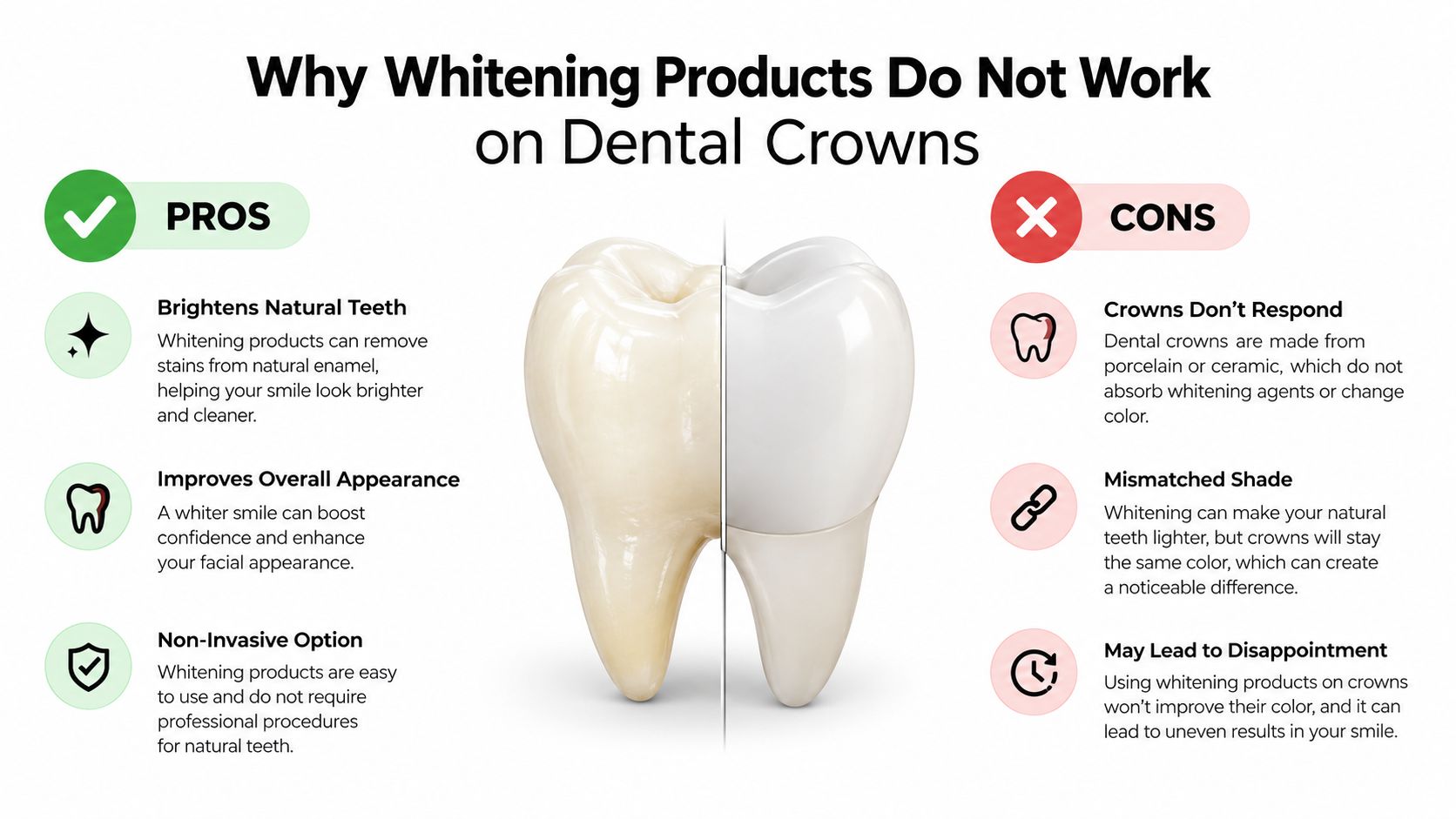
Peroxide whitening products work by changing stain compounds within natural tooth structure. They can lighten enamel because enamel responds to the bleaching process. A finished crown is different. Its color is selected and built into the porcelain, ceramic, zirconia, or similar material while the laboratory fabricates the restoration.
That means whitening strips, peroxide gels, custom trays, and in-office treatments won't change the crown's intrinsic shade. As explained in this clinical overview of whitening and crowns, crowns generally cannot be whitened with peroxide products, and a crown won't become brighter than the shade it had when it was placed.
Why the mismatch can become more noticeable
Suppose your natural teeth are slightly yellow and your crown is a similar warm shade. You use whitening products, and the enamel becomes brighter. The crown stays where it was. The treatment may improve the natural teeth while making the difference between the crown and enamel easier to see.
That doesn't mean whitening was unsafe or ineffective for the natural teeth. It means the treatment affected two different materials in two different ways. The same issue can arise with an implant crown, bridge, veneer, or other tooth-colored restoration.
What whitening can and cannot do
A simple way to think about the process is:
- Natural enamel can lighten. Professional or at-home peroxide whitening can change the appearance of natural teeth.
- The crown stays at its selected shade. The gel doesn't recolor the finished ceramic or zirconia.
- The final match depends on planning. If the desired smile is lighter than the existing crown, the restoration may need to be remade.
The next decision isn't which whitening product is strongest. It's whether the crown has removable surface stain, whether the natural teeth should be brought closer to the crown, or whether both the teeth and crown need a coordinated cosmetic plan.
Options That Can Improve a Discolored Crown Without Replacing It
Replacement isn't always the first answer. A dentist can examine the restoration under good lighting, check the crown margins, and determine whether the discoloration is on the surface or part of the crown's internal shade.
Professional cleaning and polishing can remove plaque, tartar, and external stain. This may refresh a crown that looks dull after exposure to food, drinks, or tobacco. It won't change the material's original color, but removing buildup can make the restoration look cleaner and more natural.
A second option is whitening the natural teeth around the crown. A Zoom whitening treatment can brighten enamel and may improve the overall balance of the smile if the existing crown already fits the shade you want. The crown itself will remain unchanged, so your dentist should evaluate the likely result before treatment.
For home care after treatment, follow the instructions provided by your dental team and review this guide on maintaining and caring for a new dental crown.
Crown Discoloration Options Compared
| Option | What It Changes | Best For | Limitations |
|---|---|---|---|
| Professional cleaning and polishing | Removes external plaque, tartar, and surface stain | A crown that looks dull or stained on the outside | It can't lighten the crown's intrinsic shade |
| Whitening natural teeth | Brightens surrounding enamel | Natural teeth that have darkened and no longer blend with the crown | The crown remains the same color |
| Surface stain evaluation | Identifies whether discoloration is removable | Patients unsure whether cleaning could help | An examination is needed before choosing treatment |
| Crown replacement | Changes the restoration to a selected shade | A crown that is permanently too dark or mismatched | It requires restorative treatment and careful shade planning |
A cleaning may solve a superficial problem. Whitening may improve harmony when the natural teeth are the main concern. If you want a smile that is substantially lighter than the crown, replacing the restoration is usually the dependable route.
Whitening Before or After Crown Work
If you're planning both whitening and a new crown, the usual order is straightforward: whiten the natural teeth first, allow the shade to settle, then fabricate the crown to match. This prevents the laboratory from matching a temporary shade that changes after the restoration has already been made.
A clinical recommendation is to wait about two weeks after whitening before fabricating the new crown, allowing the natural tooth color to stabilize. You can review that timing in this prosthodontic guide to whitening before crown fabrication.
The practical decision
If your crown is already in place and you're considering whitening, ask yourself what outcome you want:
- If you want your natural teeth to return closer to the existing crown, whitening may be worth discussing.
- If you want the entire smile lighter than the crown, whitening alone won't create a uniform result.
- If the crown is old, damaged, poorly contoured, or permanently mismatched, replacement may make more sense than trying to disguise it.
- If you're planning a new crown, complete the whitening plan before shade selection.
The sequence matters because a crown matched to unwhitened teeth can look dark beside freshly brightened enamel. Changing the order later may mean repeating restorative work.
Research also supports a cautious approach to shade planning. Restored teeth can show a smaller color change from peroxide treatment than sound natural teeth, so the dentist must judge the final appearance rather than assume every tooth will respond equally. That's one reason a professional whitening consultation should include an examination of visible crowns and other restorations.
Crown Replacement and Shade Matching for a Uniform Smile
When cleaning cannot remove the discoloration and whitening would leave the crown behind, a new crown can provide the controlled color change you're looking for. The process starts with the tooth, not just the visible restoration. Your dentist needs to confirm that the tooth beneath the crown is healthy enough for the planned treatment.
What the appointment process may involve
A new patient exam and dental X-rays help the dentist assess the tooth beneath the crown, the surrounding bone, the root, and the condition of the existing restoration. X-rays are especially important when the crown has been in place for some time or when you have sensitivity, pain, swelling, or a loose feeling.
Shade planning comes next. The dentist compares the crown area with neighboring teeth, considers your whitening goals, and may use digital shade tools along with clinical judgment. The goal isn't just to select the whitest shade. It's to choose a shade that fits the rest of your smile under natural and indoor lighting.
The old crown is removed so the tooth can be evaluated and prepared for the new restoration. Depending on the case, you may receive a temporary crown while the custom crown is fabricated. The temporary protects the prepared tooth and lets you test the general appearance and comfort of the planned result.
The final crown is checked before placement. Your dentist evaluates its color, shape, bite, contacts, and relationship to the gum line. Once it fits properly, the restoration is bonded or cemented according to the clinical plan.
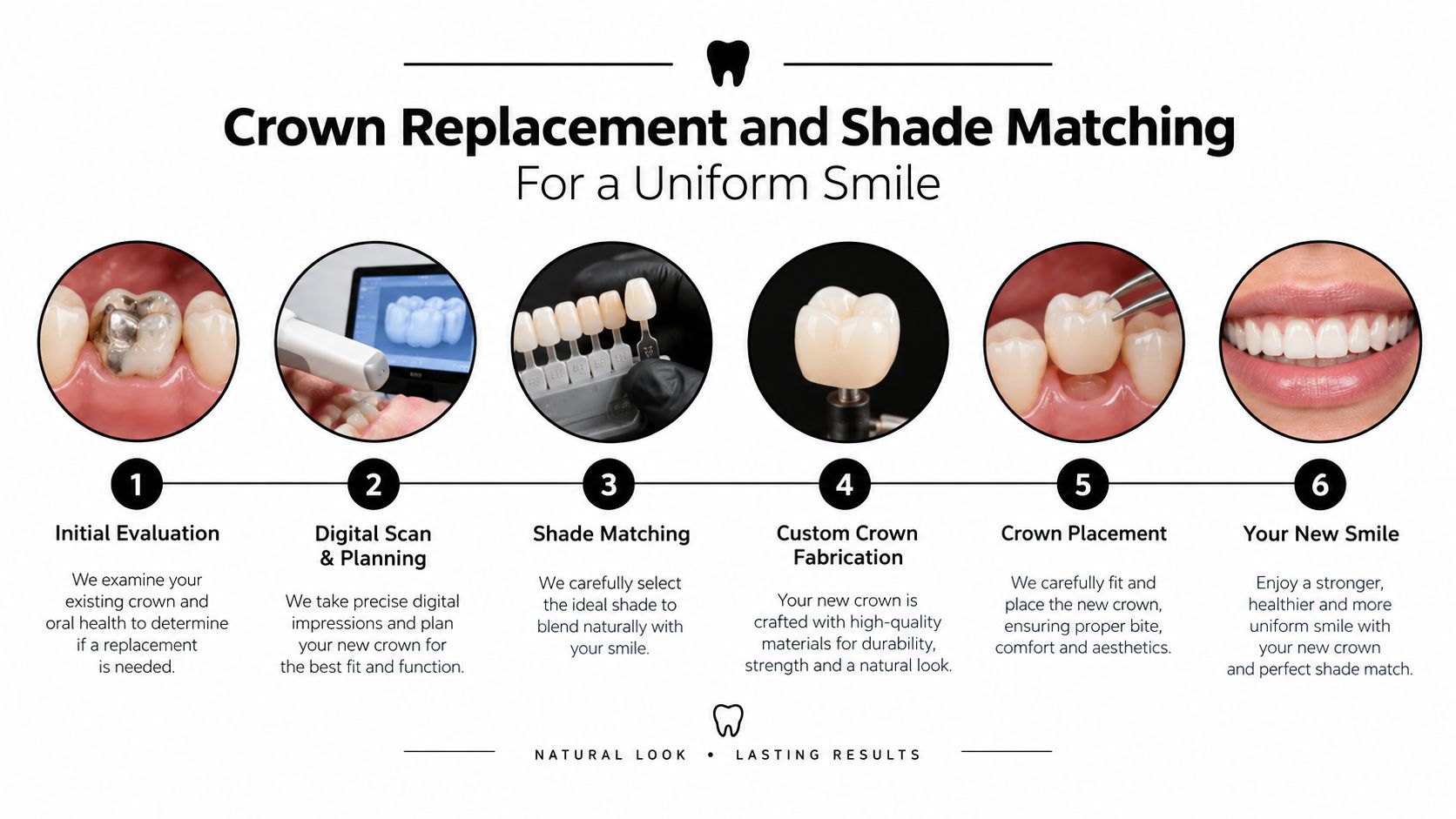
Digital tools help with consistency, but the dentist's eye still matters. Teeth have natural variation, translucency, and surface texture. A crown that looks acceptable on a shade tab may need careful adjustment to blend with the neighboring teeth.
Laboratory research reviewed in this systematic review of bleaching and restorative color found that bleaching can affect discoloration in tooth structures and some restorative contexts, but it doesn't change the intrinsic shade of a finished crown the way it alters natural enamel. The review also reported that neither evaluated bleaching technique fully restored the original crown color.
If discoloration affects several visible teeth, your plan may include veneers, restorative dentistry, or coordinated cosmetic treatment rather than a single crown. If the tooth can't be saved, tooth extraction and a dental implant may become part of the conversation. Those choices require a separate examination, especially if you've been searching for dental implants near me or tooth extraction because of pain or structural damage.
Brightening Your Smile With a Cosmetic Dentist in Las Vegas
A crown consultation should be about more than choosing a lighter color. At Aspiring Smiles Dental and Braces, Dr. Patel and the team at 3211 N Tenaya Wy Suite 122, Las Vegas, NV evaluate the restoration, the tooth beneath it, the surrounding enamel, and your overall goals. Patients can discuss professional teeth whitening, crowns, veneers, restorative dentistry, and related care in one treatment plan.
A new patient visit may include cleaning and exams, dental X-rays when appropriate, and a conversation about what bothers you most. You can ask whether polishing could improve the crown, whether Zoom whitening would make the surrounding teeth more balanced, or whether replacement is the more predictable option.
The practice provides a modern setting, gentle techniques, clear communication, flexible payment options, and insurance acceptance. Extended weekday and Saturday hours, online appointment requests, and a membership program can make ongoing dental care easier for families in Desert Shores, Sunhampton, Sun City Summerlin, Monterrey, Lone Mountain, Mar-A-Lago, Painted Desert Estates, and nearby Las Vegas neighborhoods.
The same office also provides general, cosmetic, restorative, and emergency care. That can be helpful if a cosmetic concern appears alongside a chipped crown, toothache, swelling, or another issue requiring an emergency dentist. Patients looking for a dentist near me, a cosmetic dentist near me, or a dentist in Las Vegas, NV can begin with an evaluation instead of guessing which product to buy.
If a discolored crown is affecting your confidence, request a consultation with Aspiring Smiles Dental and Braces to determine whether cleaning, whitening, or crown replacement best fits your smile. Visit Aspiring Smiles Dental and Braces to request an appointment and discuss a personalized plan for a brighter, more even smile.