Dental Crown Hurts When Biting Down in Las Vegas
You've just had a dental crown placed in Las Vegas, and it looks finished, but every time you bite down, one tooth sends a sharp jolt through your jaw. That can be unsettling, especially when you expected the restoration to feel natural right away. If your dental crown hurts when biting down, the pattern of pain matters, and a focused examination can often separate a simple bite adjustment from a problem involving the nerve, tooth structure, or tissues around the root.
For patients searching for a dentist near me or a dentist in Las Vegas, NV, Aspiring Smiles Dental and Braces provides restorative and emergency dental care for crown discomfort. The important first step is understanding what your symptom may be telling you and knowing when it's time to contact a dental office.
Why Your New Crown Feels Painful on Biting
You leave a dental appointment expecting to chew normally, then feel a sharp sting the first time your new crown meets the opposing tooth. The tooth may feel comfortable while you are resting, yet hurt whenever you close your teeth or chew. That difference helps guide the evaluation.
A crown is shaped to function with the entire bite, including the opposing tooth, neighboring teeth, ligament around the root, and living tissue inside the tooth. If the crown contacts too early, pressure can concentrate on one area, much like pressing repeatedly on a tender bruise. If the nerve or tissues beneath the crown are inflamed, biting can also trigger pain even when the restoration looks secure.

Why the timing and trigger matter
Some soreness after treatment can occur while the tooth and nearby gum recover. Pain that appears mainly when you bite deserves closer attention because it may indicate a bite contact that needs adjustment. Even a small high spot can direct extra force onto the crowned tooth, and an adjustment may relieve symptoms when pressure is the main trigger (guidance on crown-related pain and bite adjustment).
The pattern matters more than the label of “sensitivity.” Pain that is brief and gradually fading can fit routine recovery. Pain that lingers after biting, worsens, occurs without pressure, or comes with swelling, heat sensitivity, or fever may point to deeper irritation or infection and should be assessed by a dentist.
Practical rule: A crown that hurts only when you bite deserves a bite evaluation, even if it looks secure and feels fine at rest.
Common Causes of Post-Crown Bite Pain
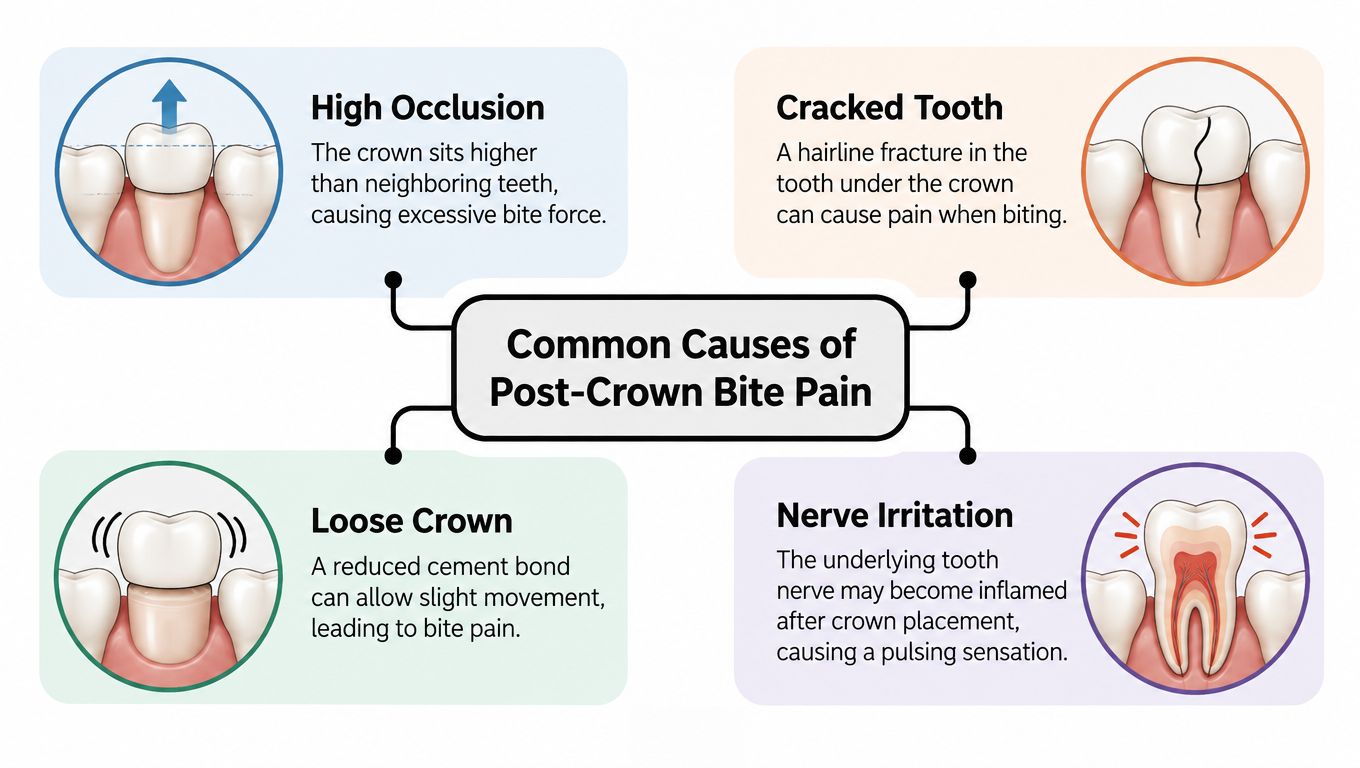
A crown that hurts during chewing usually has an identifiable reason. The most common explanation is a high occlusion, meaning the restoration contacts the opposing tooth before the rest of the teeth come together. That early contact concentrates force on the crowned tooth and compresses the periodontal ligament, the thin tissue that helps suspend the tooth in its socket. The result can feel like a sharp, localized bruise whenever you close or chew.
Four patterns dentists look for
High occlusion often causes immediate pain on closure. You may feel that your bite is uneven or that the crowned tooth touches first. Even a subtle discrepancy can shift force away from the full arch, so the crown doesn't need to look visibly too tall for it to create symptoms. Chairside bite adjustment is commonly the first treatment when pain is immediate and pressure-dependent (explanation of high crowns and biting pain).
Nerve irritation, sometimes called pulpitis, involves inflammation inside a tooth that still has a living nerve. A crown may protect damaged tooth structure, but it can't remove irritation caused by deep decay, a cracked tooth, or pressure reaching an inflamed nerve. Reversible inflammation may settle after the cause is addressed, while more advanced inflammation can require further treatment.
A crack beneath the crown can make chewing painful because biting forces flex the remaining tooth structure. Patients may notice discomfort with particular foods or specific directions of pressure. A crack isn't always visible from the outside, which is why a dental examination matters when a bite adjustment doesn't explain the symptom.
A compromised seal or loose crown can allow movement, irritation, or leakage around the restoration. Decay under the crown, cement problems, and inflammation around the tooth can all produce pressure sensitivity. A crown that feels loose, catches food, or causes worsening pain should be checked rather than repeatedly tested at home.
Bruxism can keep the area irritated
Teeth grinding or clenching can repeatedly load a new crown, particularly during sleep. That extra pressure may make a small bite discrepancy feel worse and can strain the tooth and jaw muscles. If you wake with jaw soreness or often clench during concentration, discuss bruxism treatment options with a dental professional.
Pain that lingers after you release the bite, occurs without chewing, or comes with swelling, a gum bump, or throbbing deserves a broader evaluation. These patterns can point toward nerve irritation, infection near the root, or a fracture rather than a simple high spot (crown pain causes and warning signs).
Differentiating Normal Healing from Problem Pain
You close your teeth around a sandwich and feel a sharp jolt from the new crown. The key question is whether the discomfort is fading as the tooth settles or returning with every bite.
Mild sensitivity can follow tooth preparation, while the nearby gum may remain tender. Normal healing should gradually improve. Bite pain that stays the same, becomes sharper, or starts occurring without pressure deserves an examination.
Use four questions to describe the pattern:
- Does pain occur only when you bite?
- Does it stop quickly after you release pressure?
- Is the overall trend improving?
- Are there swelling, fever, a gum bump, or spontaneous pain?
Pain only on contact, especially if the crown feels like it hits first, can fit a high spot. A dentist can test the bite and make a small adjustment. Lingering pain after release, throbbing, or discomfort that appears without chewing raises more concern about nerve inflammation, infection, or another problem beneath the crown.
| Symptom | More consistent with healing | Needs dental evaluation |
|---|---|---|
| Mild sensitivity | Gradually settles | Worsens or becomes constant |
| Pain on biting | Mild and improving | Sharp, localized pain each time you close |
| Pain after release | Brief | Lingering ache or throbbing |
| Gum response | Temporary tenderness | Swelling, a bump, or increasing redness |
| Time pattern | Improves over several days | Bite pain is not improving by about 7 days |
| Longer persistence | Monitor the trend | Pain beyond 1 to 2 weeks may indicate pulpitis or another complication requiring evaluation |
Early soreness after crown treatment is common and generally should ease within days. Postoperative data also show that pain and chewing discomfort can occur soon after treatment, as summarized in this postoperative crown pain study summary. The findings concern early symptoms and do not make persistent bite-triggered pain in an adult permanent crown harmless.
Pain that is getting better differs from pain that returns with every bite.
Facial swelling, significant throbbing, fever, or difficulty swallowing requires prompt dental or emergency care. These signs may indicate infection or advancing inflammation rather than a bite that just needs adjustment.
Immediate Steps for Temporary Relief
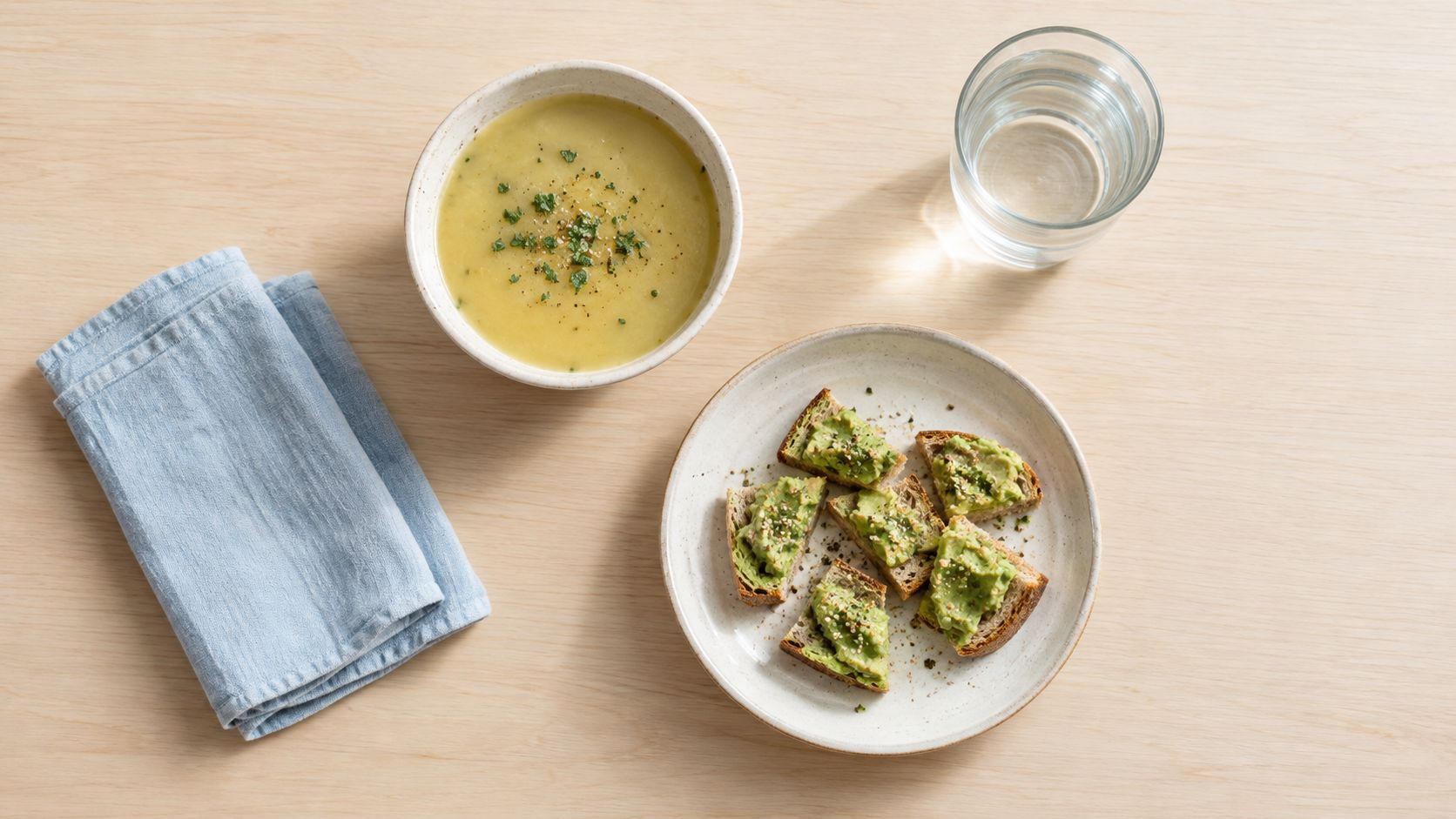
Until you can reach a dental office, reduce the pressure placed on the affected tooth. Choose softer foods and chew on the opposite side. Avoid hard, crunchy, or sticky foods that can increase force or pull at a crown that may not be fully stable.
A warm saltwater rinse may soothe irritated gum tissue. If you're normally able to take an over-the-counter anti-inflammatory medication, follow the product directions and check with a healthcare professional or pharmacist if you have medical conditions, take other medicines, or aren't sure it's safe for you. Don't place aspirin directly on the gum, and don't try to file, glue, or adjust the crown yourself.
Protect the restoration while you wait
Keep brushing gently around the crown and floss carefully. If floss catches or the crown moves, stop pulling forcefully and contact the office for advice. Home care can reduce irritation, but it can't correct a high bite, diagnose nerve inflammation, or repair decay beneath a crown.
The following video provides general visual guidance about crown-related discomfort. It shouldn't replace an examination specific to your tooth.
Arrange prompt care if the pain is sharp and repetitive, doesn't improve, or appears with swelling or a gum bump. If the crown has come loose or the pain is severe, look for an emergency dentist rather than waiting for a routine cleaning and exam.
Professional Diagnosis and Treatment Options
A dental visit begins with your description of the symptom. Tell the team whether the pain occurs on closing, chewing, or releasing the bite, and whether the tooth is sensitive to hot or cold. The dentist may examine the crown, gums, neighboring teeth, and the way your upper and lower teeth meet.
How bite analysis works
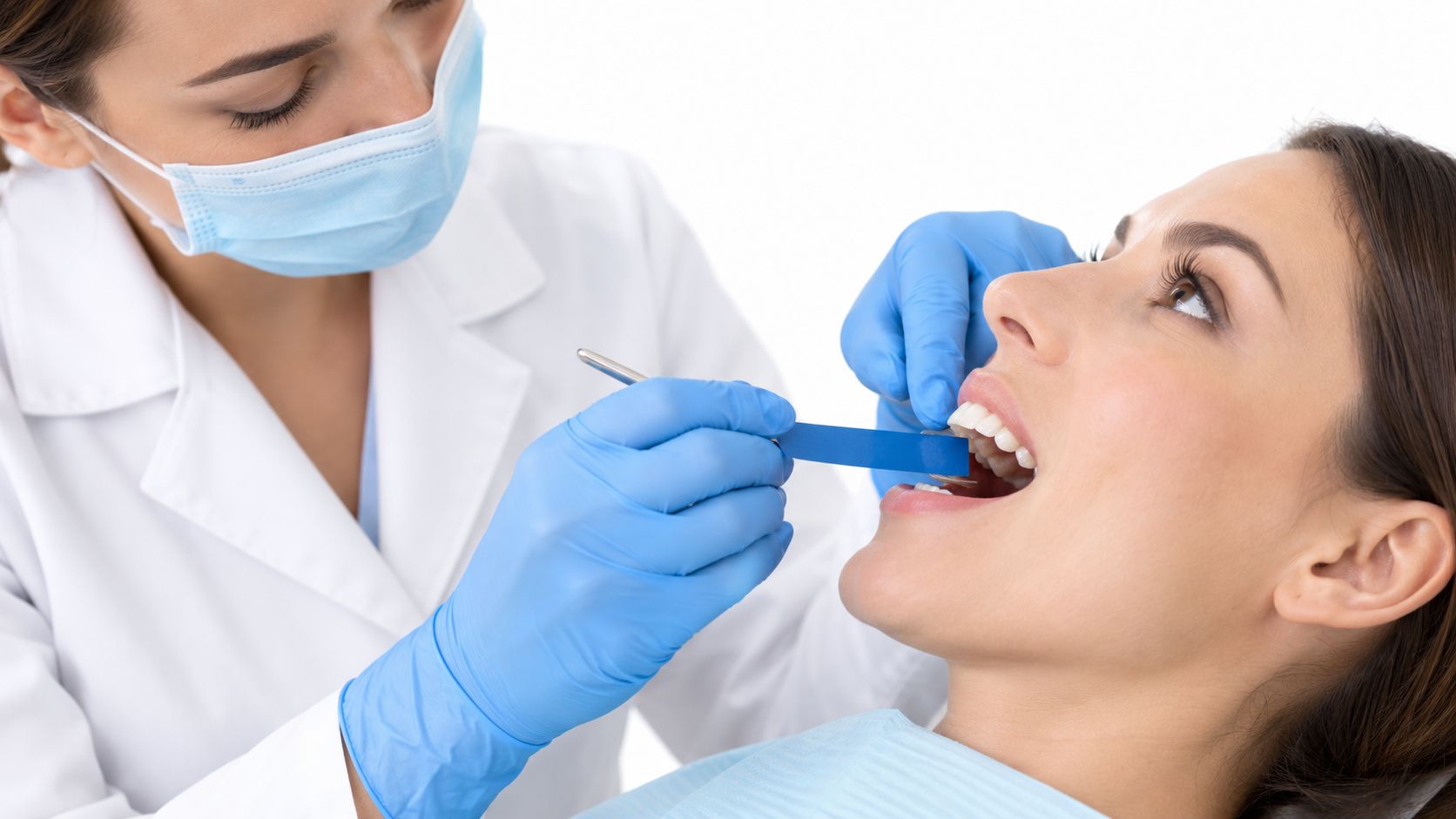
Articulating paper marks the points where your teeth contact. If the crown is hitting too early, the dentist can identify that contact and selectively reshape the biting surface. This is usually a focused procedure, not a complete replacement of the crown, when the restoration itself is sound.
Dental X-rays can help assess the tooth beneath the crown and the area around its roots. They may support an evaluation for decay, changes near the root tip, or other concerns when symptoms don't match a straightforward high bite. If the crown is loose, damaged, poorly sealed, or the underlying tooth has a crack, treatment may involve repair, removal, replacement, root canal care, or another restorative approach.
A bite adjustment should not be performed without diagnosis. Removing material from a crown won't solve pain caused by a nerve problem or infection. Likewise, starting complex treatment without checking the bite can miss a simple mechanical cause.
Care matched to the finding
If the issue is occlusal interference, the dentist adjusts the contact and checks your bite again. If the tooth's nerve is inflamed, the team explains whether monitoring, restorative care, or root canal treatment is appropriate. A loose or failing crown may need stabilization or replacement, while a severely damaged tooth may require tooth extraction followed by a discussion of replacement options such as dental implants.
The same practice can also coordinate related needs, including new patient exams, dental X-rays, cleaning and exams, cosmetic dentistry, teeth whitening, and emergency dental services. That matters when crown pain appears alongside broader oral health concerns.
Finding Reliable Restorative Care in Las Vegas
When a crown hurts during chewing, a local dental office can evaluate the bite and the tooth beneath it before the problem becomes harder to manage. Aspiring Smiles Dental and Braces serves patients in Las Vegas, including Desert Shores, Sunhampton, Sun City Summerlin, Monterrey, Lone Mountain, Mar-A-Lago, and Painted Desert Estates.
The practice provides restorative dentistry services that include crowns and other care for damaged or decayed teeth. Its team also offers general, cosmetic, implant, and emergency services, so patients can discuss tooth extraction, dental implants near me, or related treatment when a crown can't be preserved.
Schedule an evaluation with Aspiring Smiles Dental and Braces if your crown hurts when biting down, especially when the pain is sharp, persistent, or accompanied by swelling. The Las Vegas team can assess the bite, use dental X-rays when appropriate, and recommend a clear path toward comfortable chewing.