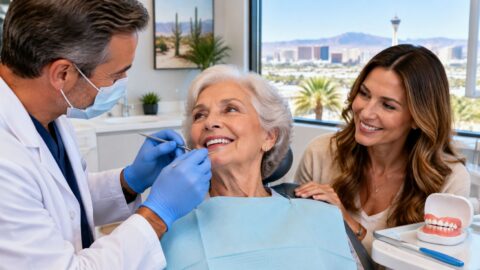
Senior Dental Care in Las Vegas: What Older Adults Need
Your father has started chewing on one side, or your denture rubs by lunchtime. Perhaps your mouth feels sticky every morning, and you're wondering whether another prescription is responsible. These changes deserve attention, but they don't automatically mean you'll lose teeth or need extensive treatment.
If you're searching for a dentist near me or a dentist in Las Vegas, NV, senior dental care should address more than brushing. At Aspiring Smiles Dental and Braces, we help older adults and caregivers discuss symptoms, medications, daily care and practical barriers so the next step feels manageable.
Warning Signs That Call for a Dental Visit
A daughter notices her father avoiding crunchy food and chewing only on the left. He says it's just getting older. That explanation can hide a cracked tooth, tender gums or decay beneath an existing filling.
Pain isn't always the first warning. Gum disease, exposed-root decay and infections can develop before someone complains. In the United States, approximately 1 in 6 adults aged 65 and older currently has untreated tooth decay, according to the CDC's cavities guidance.
Match the Symptom to the Timing
These are practical booking guidelines, not diagnoses. Call sooner if symptoms worsen, and describe swelling or swallowing problems when requesting an appointment.
Senior mouth warning signs, likely causes and how soon to see a dentist
| Symptom | Possible cause | How soon to see a dentist |
|---|---|---|
| Bleeding gums when brushing | Gum disease | Within two weeks |
| Teeth that look longer or feel sensitive to cold | Gum recession and exposed roots | Within two weeks |
| Pain or swelling around a tooth or jaw | Infection or abscess | Same day |
| Loose tooth or denture that no longer fits | Bone loss, cracks or worn denture | Within one week |
| Persistent dryness or burning tongue | Medication effect or reduced saliva | Within two weeks |
| Sore that has not healed after two weeks | Oral lesion that needs an exam | Within one week |
| Trouble chewing, swallowing or unexplained weight loss | Advanced disease or nutrition risk | Same day |
Trouble breathing, rapidly spreading swelling or an inability to swallow saliva requires immediate emergency medical care, not a wait for a routine dental appointment. Unexplained weight loss also warrants medical assessment, even when dental discomfort seems to explain reduced eating.
What Caregivers Can Check at Home
With permission, look in good light once a month. You're checking for changes, not trying to diagnose disease.
- Gum color: Notice new redness, puffiness or bleeding.
- Tooth movement: Ask about looseness without repeatedly wiggling teeth.
- Denture fit: Watch for rocking, rubbing or increasing reliance on adhesive.
- Mouth tissues: Look for white or red patches and persistent sores.
- Trapped food: Check areas where food repeatedly packs between teeth.
Most of these signs don't mean an emergency, but waiting can make treatment more involved and expensive. A dental examination, with dental x-rays when indicated, is the most direct way to identify the cause rather than guess.
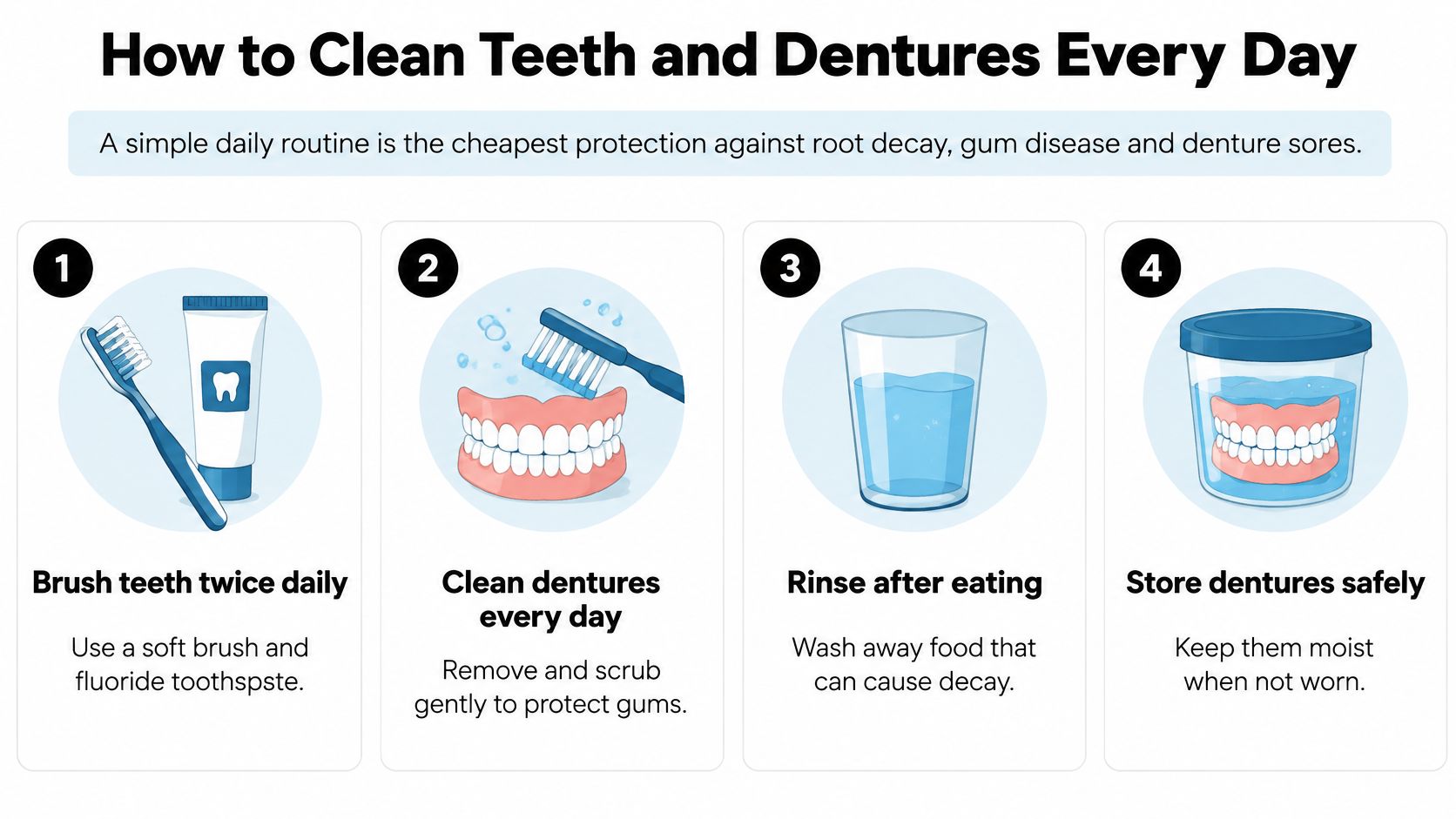
How to Clean Teeth and Dentures Every Day
A consistent home routine is an inexpensive defense against root decay, gum inflammation and denture sores. The tools should fit your hands and mouth, rather than forcing you to struggle with a routine you can't comfortably manage.
This visual summarizes the main tasks for natural teeth and removable dentures.
A Practical Daily Routine
Brush twice a day for two minutes. Use a soft toothbrush and fluoride toothpaste, directing the bristles gently toward the gumline. Scrubbing harder doesn't clean better and can wear exposed root surfaces.
Clean between teeth once daily with floss, a floss holder or appropriately sized interdental brushes. A water flosser or long-handled interdental brush may be easier when grip is limited; the common mistake is cleaning only the surfaces you can readily see.
Gently clean the tongue and inner cheeks. A soft brush helps remove debris and some bacteria associated with bad breath, but don't scrape tender tissue. Persistent white patches or burning need an examination rather than more vigorous cleaning.
Remove dentures at night, brush them with a denture brush and nonabrasive denture cleanser, then rinse thoroughly. Store them in water or a denture-safe soaking solution according to the appliance instructions; sleeping in dentures and using hot water are common mistakes that can irritate tissues or damage the base.
Use a damp, soft cloth for tender toothless gums and the tongue when brushing is difficult. This can make tissue care more comfortable, but it doesn't replace brushing natural teeth. Don't leave painful areas unexamined because wiping is easier.
Rinse with water after meals and take small sips during the day if your medical plan permits. Avoid frequent sugary drinks for moisture, and follow any fluid restrictions your physician has prescribed.
When Someone Needs Help
Try a large-handled toothbrush, a grip sleeve or an electric brush with a timer. Tie cleaning to an established habit, such as breakfast and bedtime, and offer simple directions one task at a time.
Caregiver approach: Explain what you're about to do, support the person comfortably and pause if they become distressed. Don't force a toothbrush into a closed mouth.
Ask the dental team to demonstrate positioning and the correct interdental brush size. A routine that someone can complete reliably is more useful than an elaborate one they avoid.
Treating Gum Disease and Root Decay Before Teeth Are Lost
Gingivitis is early gum inflammation. Gums may bleed during brushing, but this stage can improve with effective cleaning and professional care. Periodontitis involves damage to the tissues and bone supporting teeth, and that lost support does not grow back after brushing improves.
Smoking and diabetes can make gum problems harder to control. The CDC's oral-health equity guidance reports complete tooth loss in 29% of older adults who currently smoked, compared with 12% of those who never smoked. That association supports discussing smoking openly, without blame, as part of protecting remaining teeth.
What the Treatment Path Looks Like
Measure before treating. The dentist examines teeth and records gum-pocket depths, the spaces between teeth and gums. X-rays help assess bone support and decay that isn't visible from the outside.
When disease extends below the gumline, scaling and root planing removes plaque and hardened deposits from root surfaces. Local numbing can help make this deeper cleaning comfortable.
Check healing and set maintenance intervals. A follow-up assesses bleeding and pocket depths. Periodontal maintenance may be recommended every three to four months, with timing adjusted to disease activity and home-care needs.
Exposed roots need a separate decay assessment. Early damage may benefit from fluoride-based treatment, while a cavity may require a tooth-colored filling or another restoration.
Consider tooth extraction only when appropriate. A tooth that can't be predictably restored, or has severe supporting-bone loss, may need removal. Infection and severe pain require urgent assessment, but pain alone doesn't establish that extraction is the only option.
Why Earlier Treatment Helps
Treating inflammation can reduce bleeding and tenderness, while repairing root decay can make eating and cleaning more comfortable. Keeping usable teeth also preserves choices for future restorative dentistry.
A recommendation for extraction should include an explanation of why the tooth can't be saved and what leaving the space would mean.
If removal is necessary, it doesn't end the discussion. Once active gum disease is controlled, a restorative dentist can compare replacement options that fit your health, cleaning ability and budget. Earlier treatment often preserves more choices and avoids the greater expense of managing advanced damage.
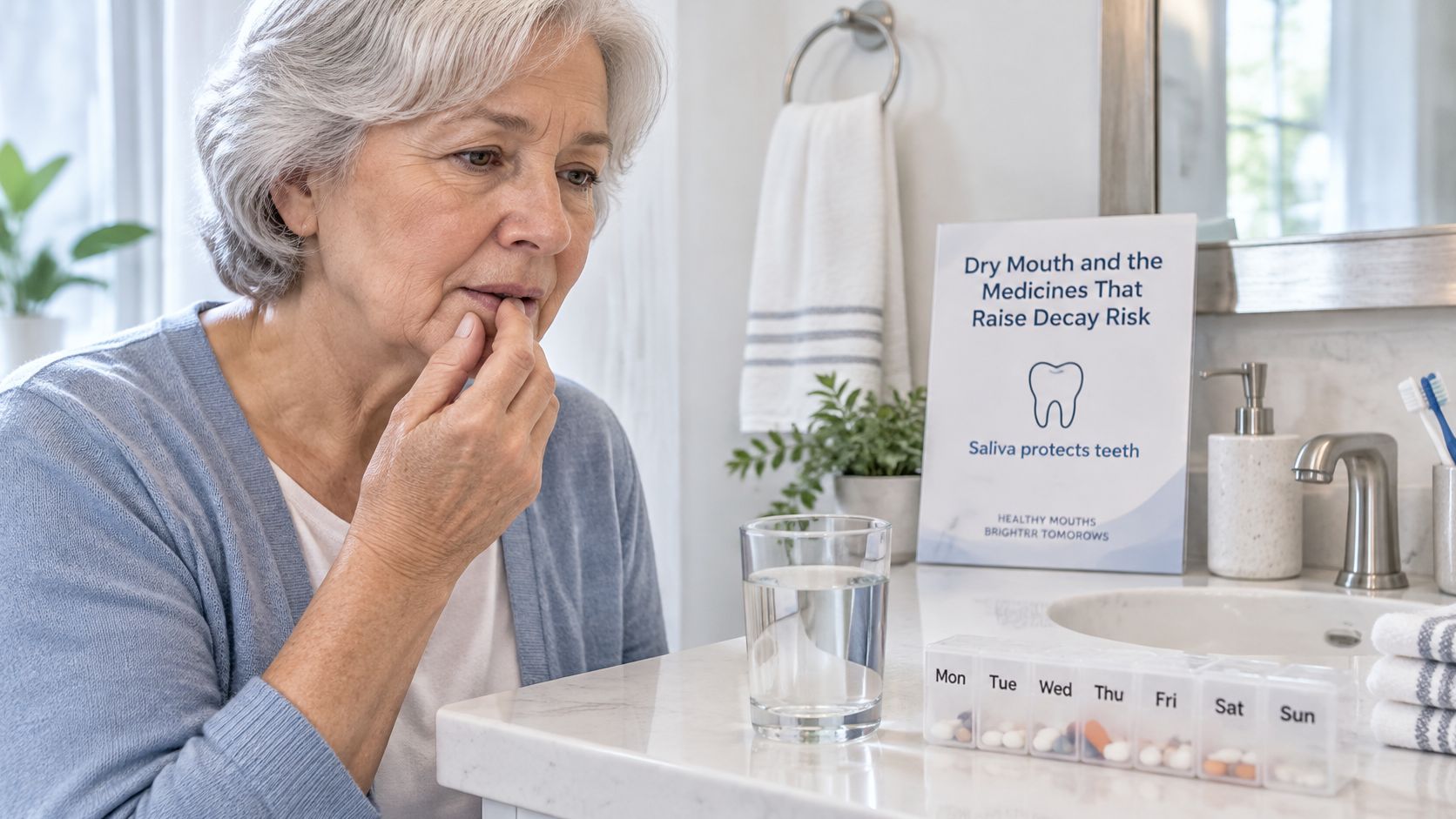
Dry Mouth and the Medicines That Raise Decay Risk
Dry mouth isn't an inevitable part of aging. Saliva washes away food, buffers acids, helps control germs and supplies minerals that support tooth surfaces. When flow falls, exposed roots become vulnerable, dentures can feel uncomfortable and fungal infections may develop.
The American Dental Association's aging and dental health guidance estimates dryness affects approximately 30% of people older than 65 and up to 40% of those older than 80, with risk increasing particularly among people taking more than four prescription medicines.
Medication review therefore belongs beside brushing advice. In a 2025 study of 382 acutely ill older adults indexed by PubMed, 30% reported xerostomia, or a dry-mouth sensation, while 56% had objectively measured low saliva flow; the number of drying medicines was significantly associated with reported dryness.
Keep the actual bottles or an updated list available when reviewing symptoms.
Medicines Worth Reviewing
These examples don't mean everyone taking them will develop dryness. A pharmacist can help identify overlapping effects, including those from nonprescription sleep aids.
Common medication classes that can dry the mouth
| Medication class | Example medicines | How it reduces saliva | Question to ask your doctor |
|---|---|---|---|
| Some blood pressure medicines | Diuretics and certain beta blockers | Increases urine loss or slows salivary flow | Is a lower dose or a different option possible? |
| Antidepressants | SSRIs such as sertraline, tricyclics such as amitriptyline | Side effect that reduces saliva production | Would a different drug or timing reduce dryness? |
| Bladder control medicines | Oxybutynin, tolterodine | Anticholinergic effect blocks saliva | Is there an option with less drying effect? |
| Antihistamines for allergies or sleep | Diphenhydramine, chlorpheniramine | Anticholinergic effect on salivary glands | Can a non-sedating alternative be used? |
| Opioid pain medicines | Oxycodone, hydrocodone | Reduces saliva flow as a side effect | Is there a plan for pain that dries less? |
The National Institute of Dental and Craniofacial Research's dry-mouth guide identifies blood-pressure, depression and bladder-control medicines as common contributors. Never stop or change a prescription on your own.
Build Prevention Around the Cause
- Review every medicine, supplement and relevant health condition with the dental team.
- Assess saliva flow and whether hand strength, memory or discomfort limits daily cleaning.
- Brush twice daily with fluoride toothpaste.
- Discuss prescription-strength fluoride gel when needed, including 0.4% stannous fluoride or 1.1% sodium fluoride formulations identified in ADA guidance.
- Try sugar-free xylitol gum or lozenges if chewing and swallowing are safe.
- Ask whether silver diamine fluoride suits a difficult root lesion. It can arrest decay, but causes permanent dark staining of treated decay and may need repeat application.
Our guide to medications that affect oral health can help you prepare questions for a coordinated review.
Water can ease discomfort, but it rarely corrects a medication-related cause. If you're also experiencing dryness elsewhere, raise it separately with your clinician; Vitamin Planet's resource on moisturising care for intimate dryness concerns a different symptom and isn't an oral treatment.
Record nightly dryness, waking for water, medication timing and new soreness. Bring that log to your appointment, and seek prompt assessment for persistent sores, repeated cavities, swallowing trouble or unexplained weight loss.
Replacing Missing Teeth with Dentures or Implants
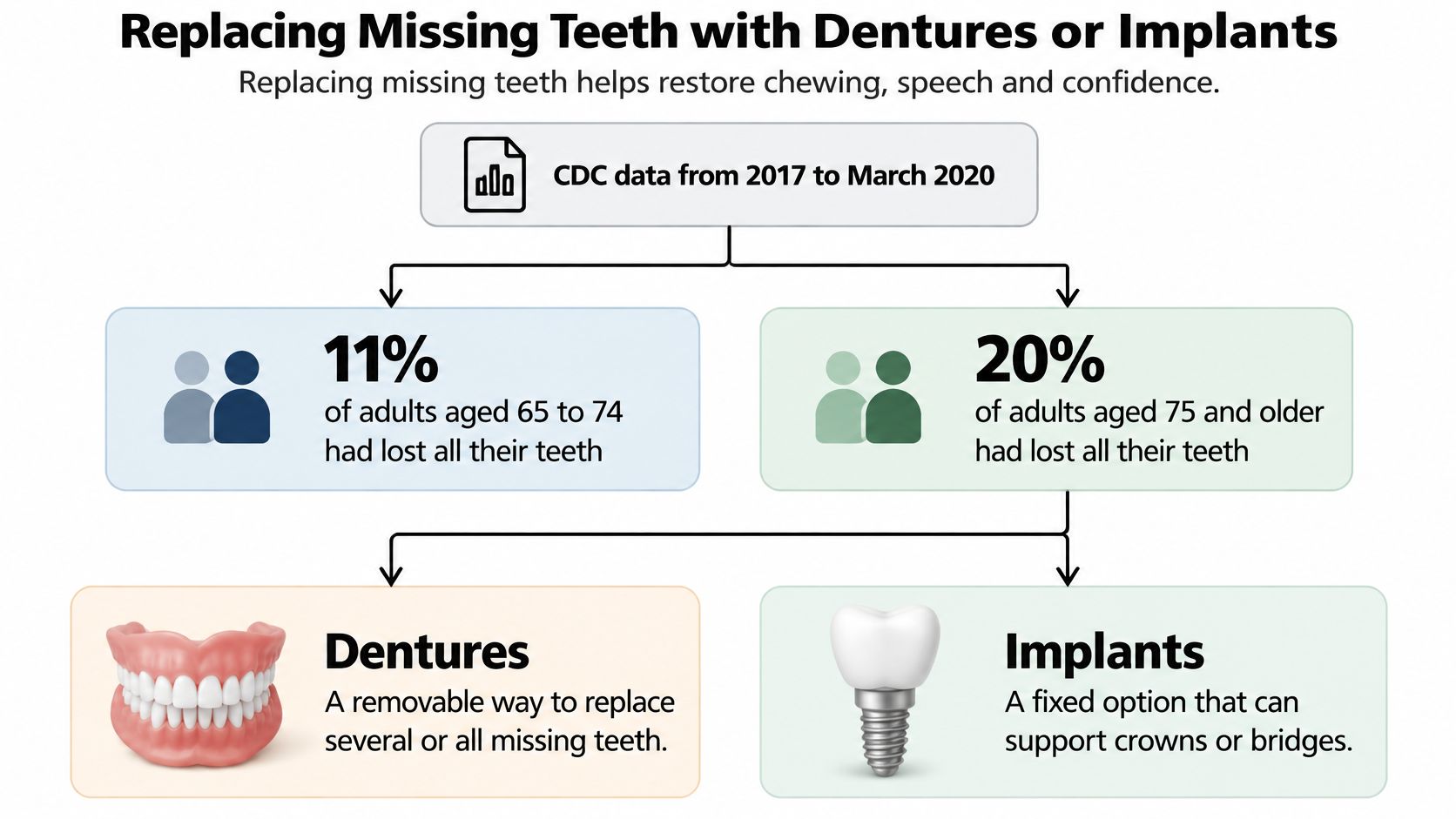
Replacing teeth is about chewing comfortably, speaking clearly and feeling at ease in company, not just changing your appearance. The CDC's tooth-loss guidance, using data from 2017 to March 2020, found that 11% of adults aged 65–74 had lost all their teeth, compared with 20% of adults aged 75 and older.
The right replacement depends on the remaining teeth, bone support, overall health and what you can comfortably maintain. A removable option isn't automatically inferior, and a fixed option isn't automatically suitable.
This overview separates the main replacement approaches.
Compare Function and Maintenance
Tooth replacement options for older adults
| Option | Best for | What it involves | What to weigh |
|---|---|---|---|
| Partial denture | Several missing teeth with healthy neighbors | Removable plate with clasps | Often a lower-cost, quicker approach; may need adjustment as tissues change |
| Complete denture | Full loss of teeth in one or both arches | Removable full plate | Lower cost than implant-based treatment; can slip and needs relining over time |
| Fixed bridge | One or two missing teeth with strong neighbors | Crowns on teeth beside the gap supporting replacement teeth | Requires suitable neighboring teeth and careful cleaning underneath |
| Single dental implant | One missing tooth with enough jawbone | Implant post with a crown on top | Can help maintain local bone; requires healing and adequate support |
| Implant-supported denture | Full arch loss needing more stability | Denture held by two to four implants | Greater stability; requires surgery and bone assessment |
| All-on-4 implants | Full arch replacement with four implants | Fixed teeth supported by four implants | Requires a candidacy check, health review and ongoing cleaning |
Cost comparisons are relative, not a quotation. Preparation, remaining teeth and the design of the final replacement can change the treatment involved.
What an Implant Consultation Should Establish
If you're searching for dental implants near me, use the consultation to compare realistic choices, not just implant brands. Expect discussion of:
- Full examination and imaging: Identify salvageable teeth and assess the replacement area.
- Bone support: Determine whether the proposed implant positions have adequate support.
- Medical history and medicines: Review conditions and prescriptions relevant to surgery.
- Smoking and diabetes: Discuss how they may affect healing and long-term maintenance.
- Daily cleaning: Establish whether you or a caregiver can maintain the proposed design.
Untreated gum disease needs control before implant treatment. Ask to compare the complete plan before deciding on extraction, including any temporary replacement during healing.
Appearance still matters, but comfort and health come first. If your search began with cosmetic dentist near me, discuss teeth whitening or other cosmetic dentistry only after determining which teeth and restorations will remain. Whitening doesn't change the color of denture teeth, crowns or implant crowns.
Paying for Care and Getting to the Chair
Having dental benefits doesn't guarantee that someone can afford or reach care. The ADA Health Policy Institute's coverage and access summary reports that 54% of U.S. adults aged 65 and older had no dental benefits, illustrating why payment planning belongs in the conversation early.
Original Medicare generally doesn't pay for routine dental care, although exceptions can apply to dental services connected with certain covered medical treatments. Some Medicare Advantage plans include dental benefits, but families should verify the actual plan rather than assume that enrollment covers a proposed procedure.
Questions to Ask Before Treatment
Ask the insurer for procedure-specific information and, when appropriate, a written pretreatment estimate.
- Annual maximum: How much will the plan pay, and how much remains?
- Waiting periods: Are benefits available when treatment is needed?
- Frequency limits: How often are examinations and cleanings covered?
- Prior authorization: Does the plan require approval before treatment?
- Restoration exclusions: Are dentures, crowns or replacements restricted?
- Implant rules: Which surgical and replacement components are covered?
An estimate isn't always a guarantee of payment. Compare the expected patient share with the written treatment plan, and distinguish urgent care from work that can safely be phased.
At Aspiring Smiles Dental and Braces, we accept a variety of major dental insurance providers and offer financing, cash and credit card payment options, along with a membership program. Our dental payment plans information provides a starting point for discussing costs without assuming a particular price.
Make the Journey Possible
For pain or swelling, request urgent scheduling rather than postponing until every insurance question is settled. Mid-morning appointments may be easier for some caregivers, and combining compatible treatment can reduce trips when clinically appropriate.
Confirm transportation, mobility assistance and who will accompany the patient. For someone with memory loss, establish who can legally consent, bring a current medication list and identify who will supervise brushing afterward.
Planning principle: A treatment plan isn't usable until the patient can get to appointments and manage care between them.
Families arranging broader support may find Cream Home Care's understanding funding for in-home elderly care useful for framing budgeting questions, though its funding information shouldn't be treated as Nevada eligibility guidance.
Across Las Vegas, from Sun City Summerlin to Painted Desert Estates, map the drive before booking. Allow for peak traffic, parking and the time needed to move comfortably from the vehicle to the chair.
Book Your Senior Dental Visit in Las Vegas
A new patient exam should begin with what's bothering you and what matters most. Tell us whether your priority is eating without pain, keeping remaining teeth or understanding why your mouth feels different after a medication change.
Bring your medication list and relevant medical history so the conversation can begin with a clear picture.
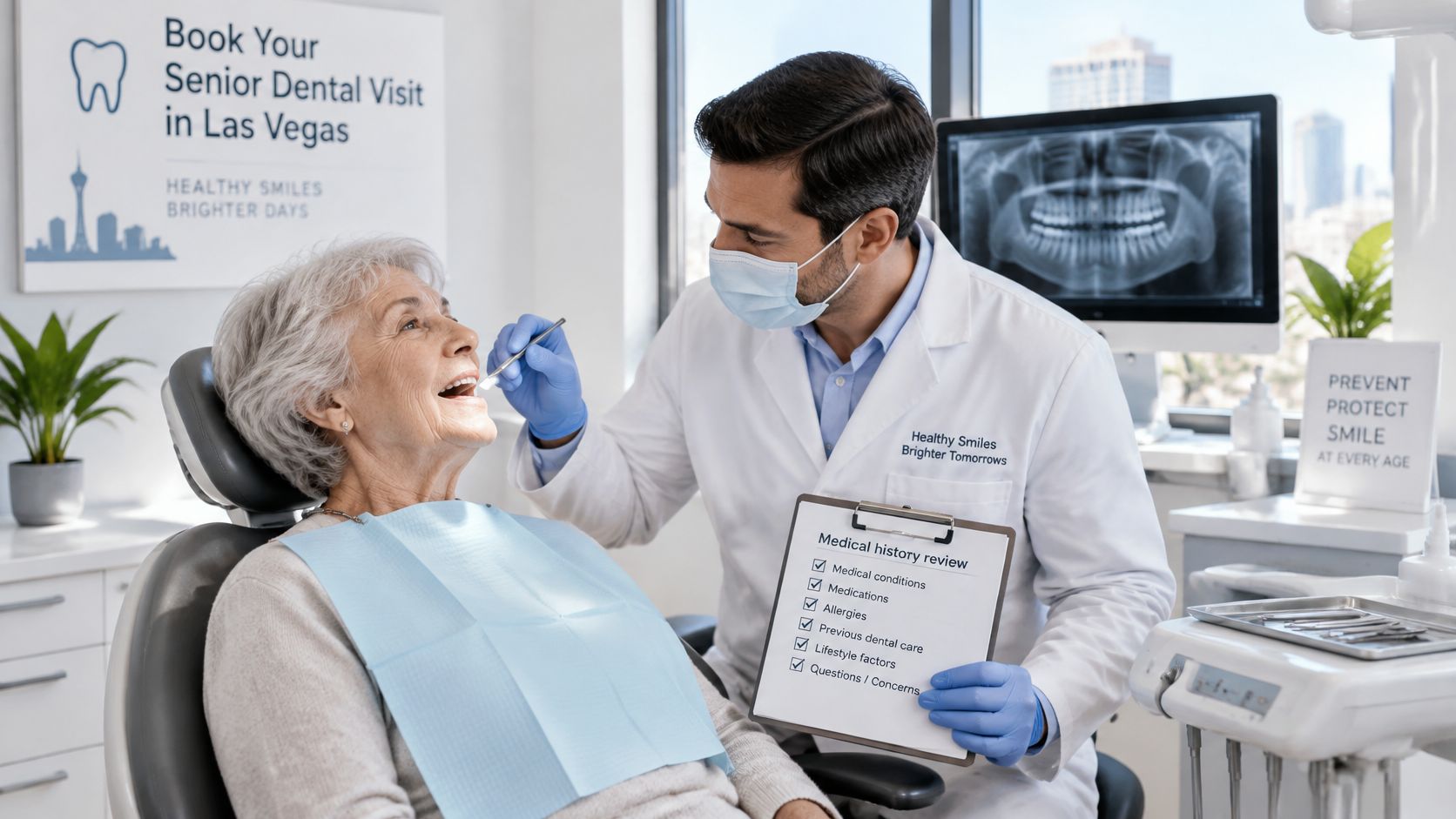
What Your First Appointment May Include
The clinical assessment is based on your symptoms and health history. Depending on what's needed, it may include:
- Medical and medication review: Include prescriptions, supplements and nonprescription medicines.
- Head, neck and mouth examination: Check soft tissues for concerning changes, including signs that need further oral-cancer evaluation.
- Gum and tooth assessment: Record gum measurements and obtain x-rays where indicated.
- Dryness evaluation: Discuss symptoms, saliva and practical cleaning difficulties.
- Cleaning and written planning: Arrange the appropriate professional cleaning and rank urgent treatment ahead of planned care.
A routine cleaning may need a separate appointment, particularly if deeper gum treatment is necessary. A caregiver can attend, help explain the history and support decision-making, with the patient's permission and appropriate consent arrangements.
For families coordinating several calendars, Velma's guidance to reduce stress when scheduling medical visits offers practical organizational ideas.
You can also view the practice video before arranging your visit.
A Local Starting Point for Ongoing Care
Aspiring Smiles Dental and Braces treats patients of all ages, so older adults, adult children and caregivers can coordinate their family's needs with one Las Vegas practice. We welcome patients from Desert Shores, Sunhampton, Sun City Summerlin, Monterrey, Lone Mountain, Mar-A-Lago and Painted Desert Estates.
Same-day appointments are available, and we provide emergency dental care in Las Vegas. Call promptly about pain, swelling or a broken denture so we can clarify the urgency and appointment needs.
Call or request an appointment online at 3211 N Tenaya Wy Suite 122, Las Vegas, NV 89129. Bring your medication list and mention any warning sign from the table when booking your dentist near me visit, so we can begin a senior dental care plan around your immediate needs.
Aspiring Smiles Dental and Braces offers preventive, restorative and emergency care to help older adults protect their teeth and address discomfort. Visit Aspiring Smiles Dental and Braces to request your appointment, and let us know whether you need help with dryness, chewing, denture fit or dental pain.