
Emergency Root Canal Near Me
Emergency Root Canal Near Me: What to Do When Severe Tooth Pain Strikes
Severe tooth pain can make it difficult to think about anything else. The discomfort may begin as sensitivity and quickly turn into constant throbbing, pressure, or pain that keeps you awake. When that happens, searching for an “emergency root canal near me” may be the fastest way to find help and determine whether the tooth can still be saved. A painful tooth does not automatically need a root canal. Cavities, cracked teeth, loose restorations, gum infections, teeth grinding, and sinus pressure can cause similar symptoms. However, constant pain, swelling, lingering temperature sensitivity, or significant tenderness when biting may indicate that the tissue inside a tooth is inflamed or infected. Aspiring Smiles Dental and Braces provides emergency dental care and root canal treatment for patients in Las Vegas and surrounding communities. The first priority is identifying the cause of the pain, controlling the immediate problem, and determining whether root canal therapy or another treatment offers the best outcome.When Tooth Pain Becomes a Dental Emergency
Dental pain should be evaluated promptly when it is severe, persistent, or accompanied by swelling. The American Association of Endodontists notes that constant pressure, gum swelling, and sensitivity to touch can be signs of an abscess affecting the tissues and bone around a tooth. Lingering pain after hot or cold foods may indicate irreversible damage to the pulp inside the tooth. Contact a dentist as soon as possible when you experience:- Severe or throbbing tooth pain
- Pain that prevents you from sleeping
- Lingering sensitivity to hot or cold
- Intense pain while biting or chewing
- Swelling around a tooth or along the gum
- A pimple-like bump on the gum
- A cracked, chipped, or injured tooth
- A bad taste or drainage near the painful area
- Pain that spreads toward the ear, jaw, or face

Emergency Root Canal Treatment
When to Seek Emergency Medical Attention
Most toothaches should be handled by a dentist because a dental office can treat the source of the problem. However, certain symptoms can indicate that infection or swelling is threatening your airway or overall health. Seek immediate emergency medical care when facial or neck swelling makes it difficult to breathe or swallow. Rapidly spreading swelling, confusion, faintness, or other signs of serious illness also require urgent attention. A hospital emergency department may help manage a dangerous infection or airway concern, but it generally cannot complete a root canal or permanently repair the tooth. Once you are medically stable, dental treatment will still be needed to address the source.What to Do While Waiting for the Dentist
Home care cannot cure an infected tooth, but a few steps may make the wait for your appointment more manageable. Gently rinse your mouth with warm water to clear away food and debris. If something is caught between the teeth, carefully use dental floss rather than a sharp object. The American Dental Association advises against placing aspirin directly on an aching tooth or gum because it can damage the soft tissue. A cold compress placed against the outside of the face may help with swelling. Avoid applying heat to a swollen area unless a healthcare professional specifically recommends it. Over-the-counter pain medication may provide temporary relief when it is safe for you to take. Nonsteroidal anti-inflammatory medicines and acetaminophen are commonly used for acute dental pain, but they can have side effects and may not be appropriate for people with certain medical conditions or medications. Follow the product label and ask a pharmacist, dentist, or physician when you are uncertain. Do not take leftover antibiotics or another person’s prescription. Antibiotics alone also do not remove infected tissue from inside a tooth. Even when medication reduces swelling temporarily, the tooth still needs to be evaluated and treated.Why Severe Pain May Lead to a Root Canal
Inside each tooth is a soft area containing nerves, blood vessels, and connective tissue. This tissue is known as the dental pulp. Deep decay, cracks, injuries, repeated dental procedures, or problems around an older filling or crown can allow the pulp to become inflamed or infected. If the problem is left untreated, pain may worsen and an abscess can develop. Root canal therapy removes the affected pulp while preserving the outer tooth and its roots. The canals inside the tooth are cleaned, shaped, disinfected, filled, and sealed. The tooth is then restored with a filling or crown. The purpose of an emergency root canal is not simply to cover up the pain. It is to eliminate the diseased tissue causing the problem and save a natural tooth that remains structurally restorable.How the Dentist Diagnoses the Problem
An emergency appointment usually begins with questions about your symptoms. The dentist may ask when the pain started, whether it is constant, what triggers it, and whether heat or cold causes a reaction that lingers. The dentist will examine the tooth and surrounding gum tissue. Testing may include gently tapping the tooth, checking your bite, evaluating temperature sensitivity, and comparing the painful tooth with nearby teeth. Dental X-rays can reveal deep dental decay, changes near the root, damaged restorations, or bone loss associated with infection. The examination also helps determine whether the tooth has enough healthy structure to be restored after the infection is treated. Not every painful tooth can be saved. A deeply fractured tooth or one with extensive structural loss may require extraction. When a root canal offers a predictable way to preserve the tooth, the dentist will explain the procedure and the restoration that will be needed afterward.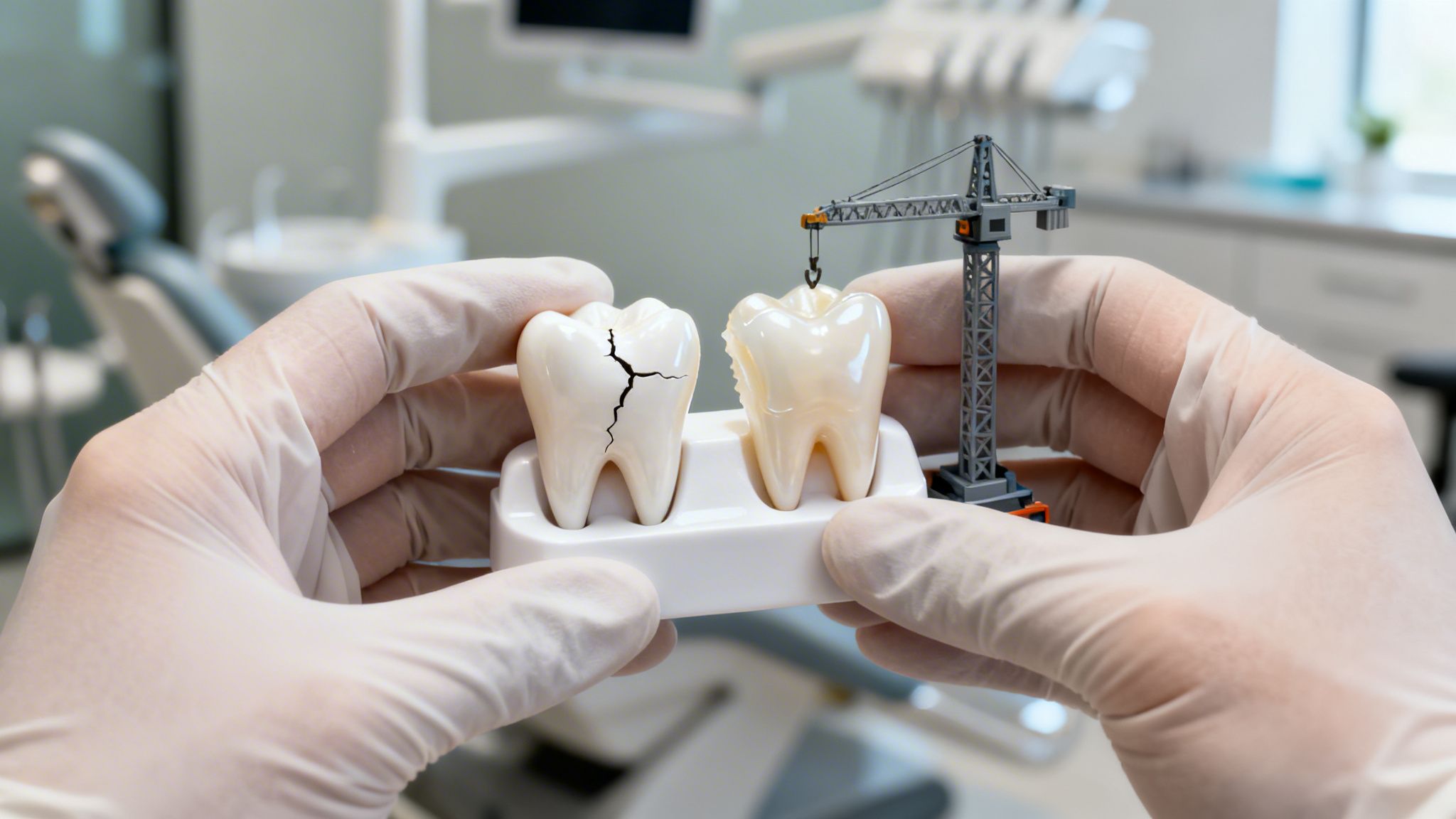
Root Canal Treatment
What Happens During an Emergency Root Canal?
Before treatment begins, the area is numbed with local anesthetic. A protective dental dam is usually placed around the tooth to keep the area clean and isolated. The dentist creates a small opening in the tooth and removes the inflamed or infected pulp. The pathways inside the roots are then cleaned and shaped before they are filled and sealed. Aspiring Smiles describes this process as removing the diseased tissue, cleaning the canals, and restoring the tooth to relieve pain and preserve its function. Some root canals can be completed during one appointment. In other situations, the dentist may begin emergency treatment to relieve pressure and control infection, place medication or a temporary filling, and schedule another visit to finish the procedure. A complex tooth may require referral to an endodontist. Endodontists have additional training in treating the pulp and root canal system, particularly when a tooth has unusual anatomy, previous treatment, severe trauma, or another complication.Will the Procedure Hurt?
Many patients are surprised to learn that the pain leading up to a root canal is often worse than the treatment itself. Local anesthesia is used to numb the area. According to the American Association of Endodontists, receiving a root canal is generally no more uncomfortable than common dental procedures such as a filling. Mild soreness or numbness may remain afterward, but most patients can return to work or school soon after treatment. Tell the dental team if you are anxious or have previously had difficulty becoming numb. Aspiring Smiles emphasizes listening to patient concerns and explaining procedures to help patients feel more comfortable throughout their appointments.Why You May Need a Crown Afterward
Completing the root canal removes the infection, but the tooth may still be weakened by decay, a crack, an old filling, or the opening made during treatment. Back teeth usually absorb significant pressure when you chew and commonly need crowns after root canal therapy. A crown covers the visible portion of the tooth and helps protect it from fracture. Other teeth may be restored with a permanent filling, depending on how much healthy structure remains. Until the permanent restoration is completed, avoid biting hard or sticky foods with the treated tooth. Delaying the crown or final filling can leave the tooth vulnerable even if the pain has stopped.What Recovery Usually Feels Like
The treated tooth and surrounding tissues may feel tender for several days, particularly if significant pain or infection was present before the procedure. This discomfort should gradually improve rather than become more intense. Wait until the numbness has worn off before eating so you do not bite your cheek, tongue, or lip. Follow the dentist’s instructions about medication, food, brushing, and temporary restorations. Call the office if you develop increasing swelling, severe pressure that does not improve, a fever, an uneven bite, or a temporary filling or crown that comes loose. New or returning symptoms should be evaluated rather than managed indefinitely at home.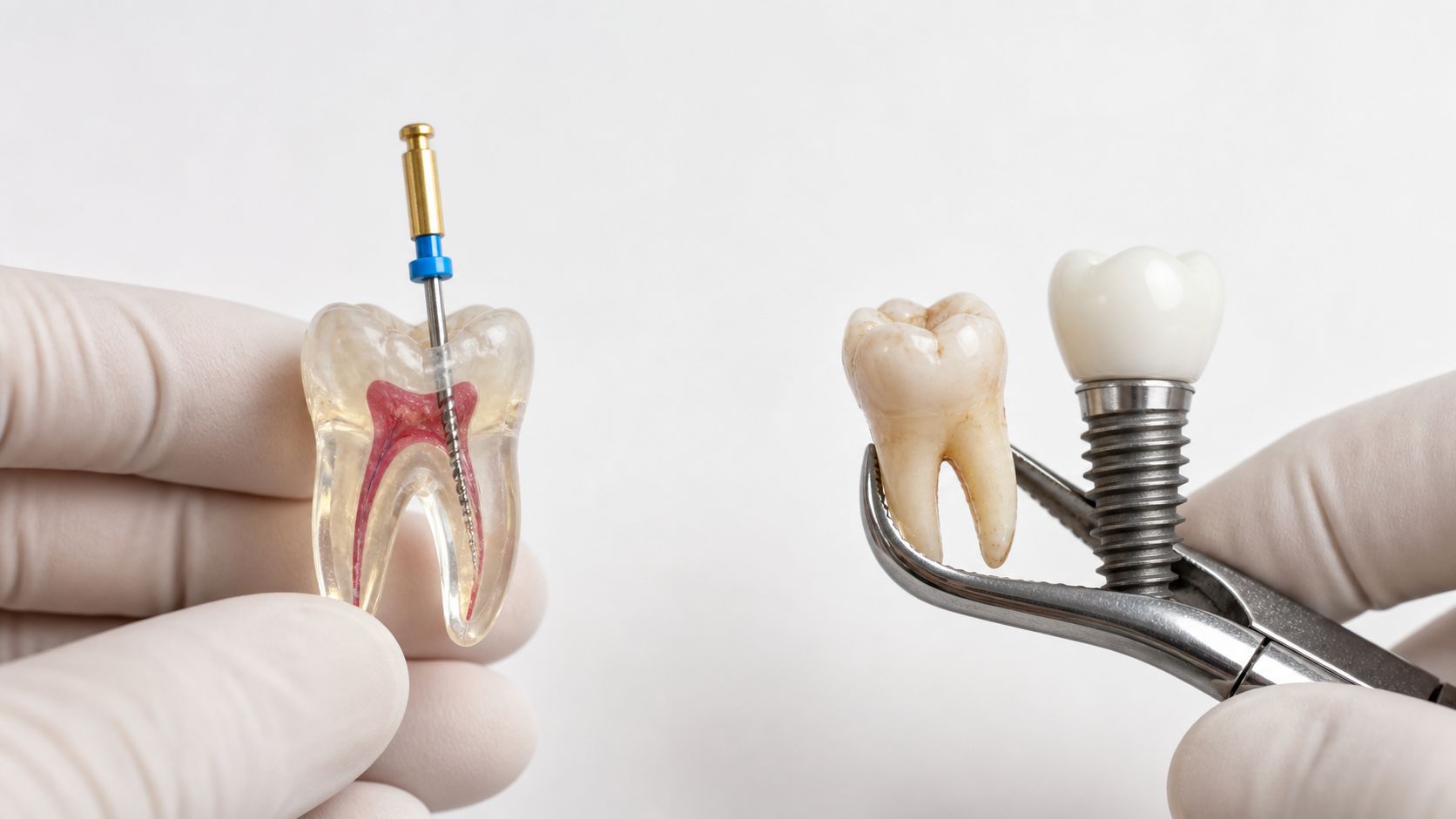
Root Canal Treatment Service Provider