Deep Cleaning vs Regular Cleaning: A Las Vegas Guide
If you've been told you might need a deep cleaning instead of your usual cleaning, it's normal to pause and wonder whether that means something is wrong, whether it's just a more thorough polish, or whether you're being upsold. In my chair, that question usually comes from people who want one simple answer for a situation that depends on gum health, not preference. For Las Vegas families in Desert Shores, Sunhampton, Sun City Summerlin, Lone Mountain, Mar-A-Lago, Monterrey, and Painted Desert Estates, the question is whether the gums are healthy enough for a routine cleaning or showing signs that call for treatment.
Aspiring Smiles Dental and Braces uses the same clinical decision-making a careful family dentist should use. Regular cleaning keeps healthy mouths stable, while scaling and root planing is reserved for disease that's already showing up below the gumline. If you're searching for a dentist near me or a dentist in Las Vegas, NV, the smartest move is to understand which category you're in before you book.
| Criterion | Regular Cleaning | Deep Cleaning |
|---|---|---|
| Main goal | Prevent buildup and maintain gum health | Treat gum disease below the gumline |
| Best fit | Healthy gums | Signs of periodontal disease |
| Typical scope | Above the gumline | Below the gumline, around tooth roots |
| Usual timing | Every 6 months | Follow-up depends on diagnosis and maintenance needs |
If you run a local practice and want your service pages to reach people who are actively searching, a guide like boost your clinic growth can be a useful starting point for understanding why clear service language matters.
Why Las Vegas Patients Ask About Deep Cleaning vs Regular Cleaning
A woman in Las Vegas sits down for her exam expecting the usual cleaning, then hears the hygienist mention scaling and root planing. That single phrase can change the whole conversation. Most patients don't need more jargon, they need to know whether their gums are healthy, inflamed, or showing signs of periodontitis.
That's why this topic comes up so often in our office. People want to know if they need a routine visit, a treatment visit, or just a better plan for keeping up with care. For residents in Desert Shores, Sunhampton, Sun City Summerlin, Lone Mountain, and nearby neighborhoods, the answer has less to do with intensity and more to do with what the exam shows.
Practical rule: if the gums are healthy, a regular cleaning keeps them that way. If the exam shows disease, a deep cleaning may be the treatment that's actually appropriate.
The decision should never feel like a sales pitch. In a good dental office, the hygienist and dentist explain what they're seeing chairside, then connect that to what your mouth needs next. At Aspiring Smiles Dental and Braces, that means talking plainly about prophy, gingivitis, or periodontal therapy instead of assuming everyone knows the difference.
People also ask because they've heard cleaning terms used casually in online ads and office conversations. The trouble is that the phrase deep cleaning sounds like a better version of a regular cleaning, but clinically it isn't. It's a different service for a different diagnosis, and that distinction matters if you're trying to protect your smile and avoid preventable tooth and gum problems.
What Each Procedure Involves
Regular Cleaning
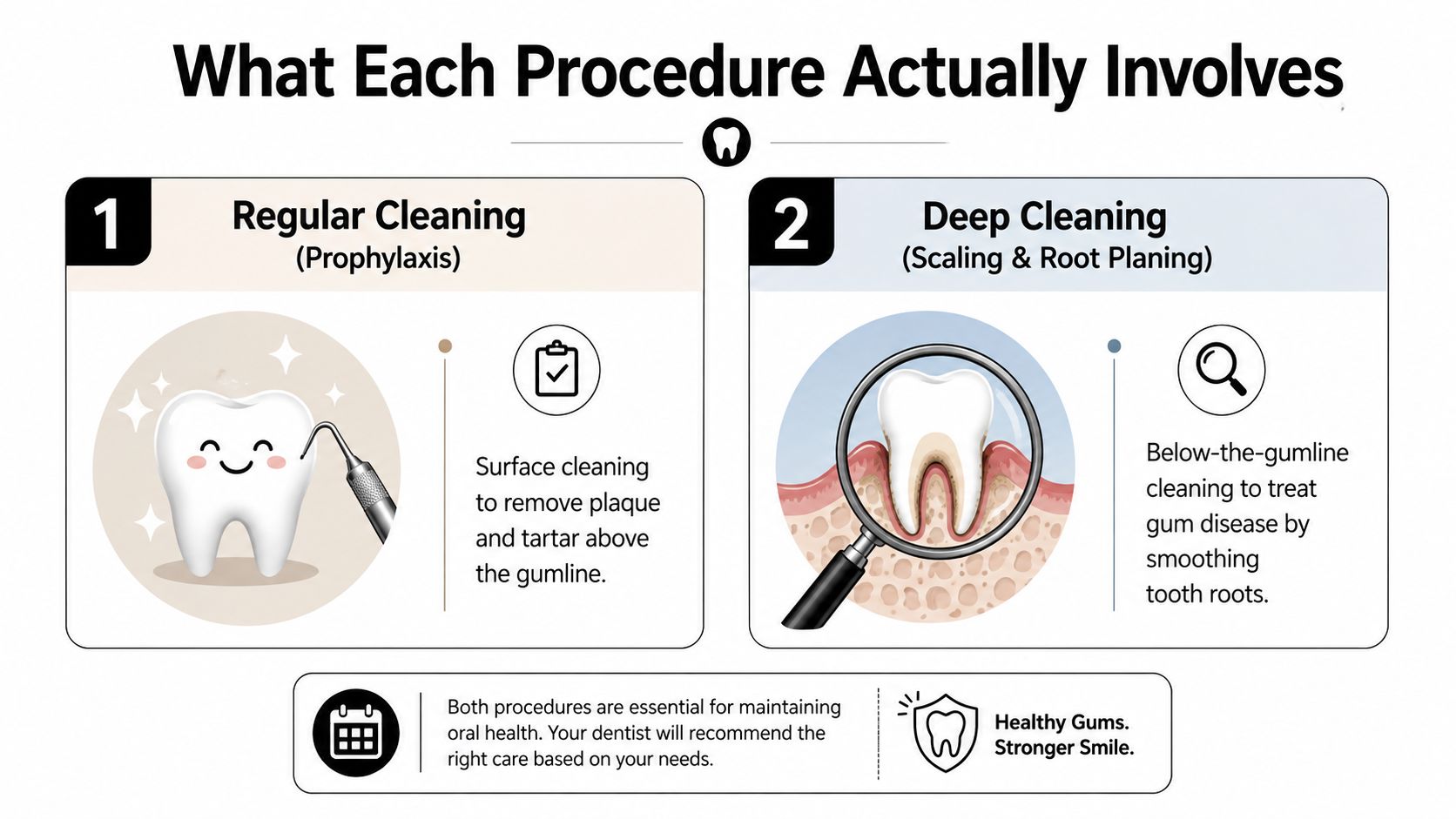
A regular dental cleaning, also called a prophylaxis, is preventive care for gums that are already healthy. It removes plaque and tartar from the tooth surfaces above the gum line, then usually includes polishing, flossing, and a quick check of what's going on in the mouth. A typical visit is often done without anesthesia and takes about 20 minutes to 1 hour. If you want a plain-language overview of what a routine visit includes, see our guide to professional dental cleaning.
That is the kind of visit most families mean when they schedule cleaning and exams. It is routine maintenance, and it is designed to keep healthy mouths from drifting into trouble. For many patients, the cleaning itself feels familiar, comfortable, and predictable.
Deep Cleaning
A deep cleaning is scaling and root planing, and it is meant to treat disease below the gumline, not just tidy the visible surfaces. The clinician removes hardened deposits and bacterial buildup from pockets around the teeth, then smooths root surfaces so the gums can heal and reattach more effectively. The work often happens across more than one visit, and local anesthetic may be used so the area stays numb and comfortable.
For a patient, the difference is practical, not theoretical. Regular cleaning is about staying ahead of buildup. Deep cleaning is about addressing infection and inflammation that have already moved into the supporting tissues.
Healthy gums do not need a deeper version of the same cleaning. They need prevention. Diseased gums need treatment.
If you are comparing options for dental care in Las Vegas, that distinction guides every other decision, including follow-up, comfort, and cost. For a broader look at the routine side of care, our page on regular dental cleaning vs deep cleaning explains how providers separate maintenance from periodontal treatment.
Side-by-Side Comparison for Quick Reference
Some patients want the short version first, and the chairside difference is easier to see side by side. The main split shows up in the exam findings, the treatment plan, and the way the mouth feels afterward.
ACLS shock algorithms comparison is a reminder that two treatments can look related and still serve different purposes. Dental cleanings work the same way. A routine cleaning supports healthy gums. A deep cleaning treats disease below the gumline.
| Criterion | Regular Cleaning (Prophylaxis) | Deep Cleaning (Scaling and Root Planing) |
|---|---|---|
| Purpose | Prevent buildup and maintain healthy gums | Treat gum disease below the gumline |
| Target area | Tooth surfaces above the gumline | Gum pockets and tooth roots below the gumline |
| Anesthesia | Usually not needed | Often used for comfort |
| Number of visits | Usually one visit | Often split across more than one visit |
| Typical duration | Usually a short visit, often around 20 minutes to 1 hour | Often longer and sometimes staged by quadrant |
| Frequency | Usually every 6 months | Based on diagnosis and ongoing periodontal maintenance |
| Recovery | Little to none | Possible soreness or sensitivity after treatment |
The practical takeaway is simple. A regular cleaning is built for prevention, while a deep cleaning is built for treatment. That changes the chair time, the tools we use, and the follow-up plan. If the gums are healthy, the routine visit fits. If the exam shows inflammation or pocketing, the deeper treatment may be the step that helps protect the teeth.
A patient should not ask which cleaning sounds more complete. The better question is what the exam shows and what the mouth needs next. If you want a quick check on the warning signs before you come in, our guide on 3 signs you should get a deep teeth cleaning is a useful place to start.
Who Needs a Deep Cleaning
The decision starts with diagnosis. A Las Vegas dentist looks for periodontal pockets of 4 mm or greater, bleeding on probing, and radiographic bone loss before recommending scaling and root planing. Those findings show that the tissues supporting the teeth are not just dirty, they are unhealthy.
A deep cleaning is the right call when the exam points to periodontitis, not just surface buildup. Healthy gums usually stay in the preventive-cleaning category. Gingivitis may call for closer monitoring and better home care, while deeper pockets and bone loss move the plan into treatment.
What the exam is really telling you
If the gums bleed easily, the hygienist may point out inflammation. If the probe slips deeper than expected, that suggests pocketing. If the x-rays show bone loss, the problem has moved past simple surface buildup. Those are the cues that move the plan from prevention to treatment.
A clear explanation matters here, especially for patients in Desert Shores, Painted Desert Estates, and Mar-A-Lago who want straight answers. Dr. Patel and the Aspiring Smiles team talk through the findings in plain language so patients understand why a routine cleaning is enough for some mouths and why others need periodontal therapy.
If you want a quick way to compare what you see at home with what the exam can confirm, read 3 signs you should get a deep teeth cleaning.
Clinical takeaway: the exam decides the treatment. Healthy gums get preventive cleaning. Diseased gums need periodontal care.
That can change over time. A patient who once only needed routine cleanings may later need a deep cleaning if the gums worsen. The reverse can happen too, after treatment and maintenance bring things back under control.
What to Expect at Your Las Vegas Visit
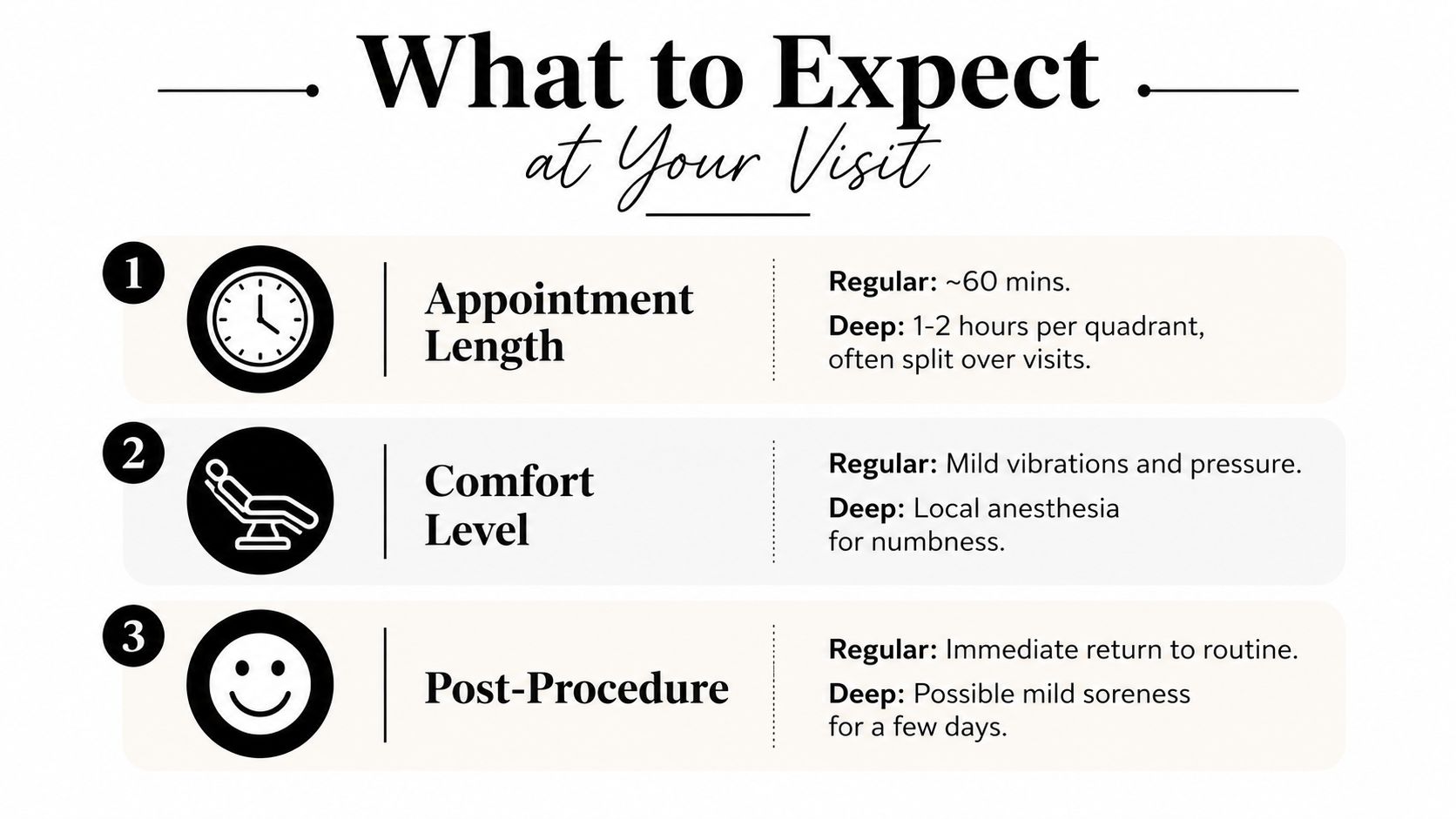
A regular cleaning at a Las Vegas dental office is usually a simple, comfortable appointment. The hygienist works through the mouth at a steady pace, removes buildup, polishes the teeth, and often talks through fluoride or home care if needed. Most patients can go right back to their day afterward.
Deep cleaning feels different because the purpose is different. The mouth is often treated in sections, local anesthetic may be used, and the visit can be split so the hygienist can treat the affected areas carefully. Mild soreness can happen afterward, and many patients do better with softer foods for a day or two.
Aspiring Smiles keeps the process calm and clear. The team explains what they're doing before they start, checks comfort during treatment, and makes sure the patient knows what to expect once the numbness wears off. That kind of communication matters when you're already feeling nervous about dental x-rays, new patient exams, or any treatment that sounds more involved than a cleaning.
A simple way to prepare is to ask these questions before you sit down:
- How long will the appointment take? Regular cleaning is usually shorter, while deep cleaning may need more time or multiple visits.
- Will I need numbing? Routine cleanings usually don't require it, but deep cleaning often does.
- What should I eat afterward? If the gums are tender, soft foods are usually easier for a short period.
For patients in Sun City Summerlin and Lone Mountain, that clarity removes a lot of anxiety. You're not being rushed into a mystery procedure. You're being told what your mouth needs and how the visit will feel.
Benefits, Risks, and Long-Term Maintenance
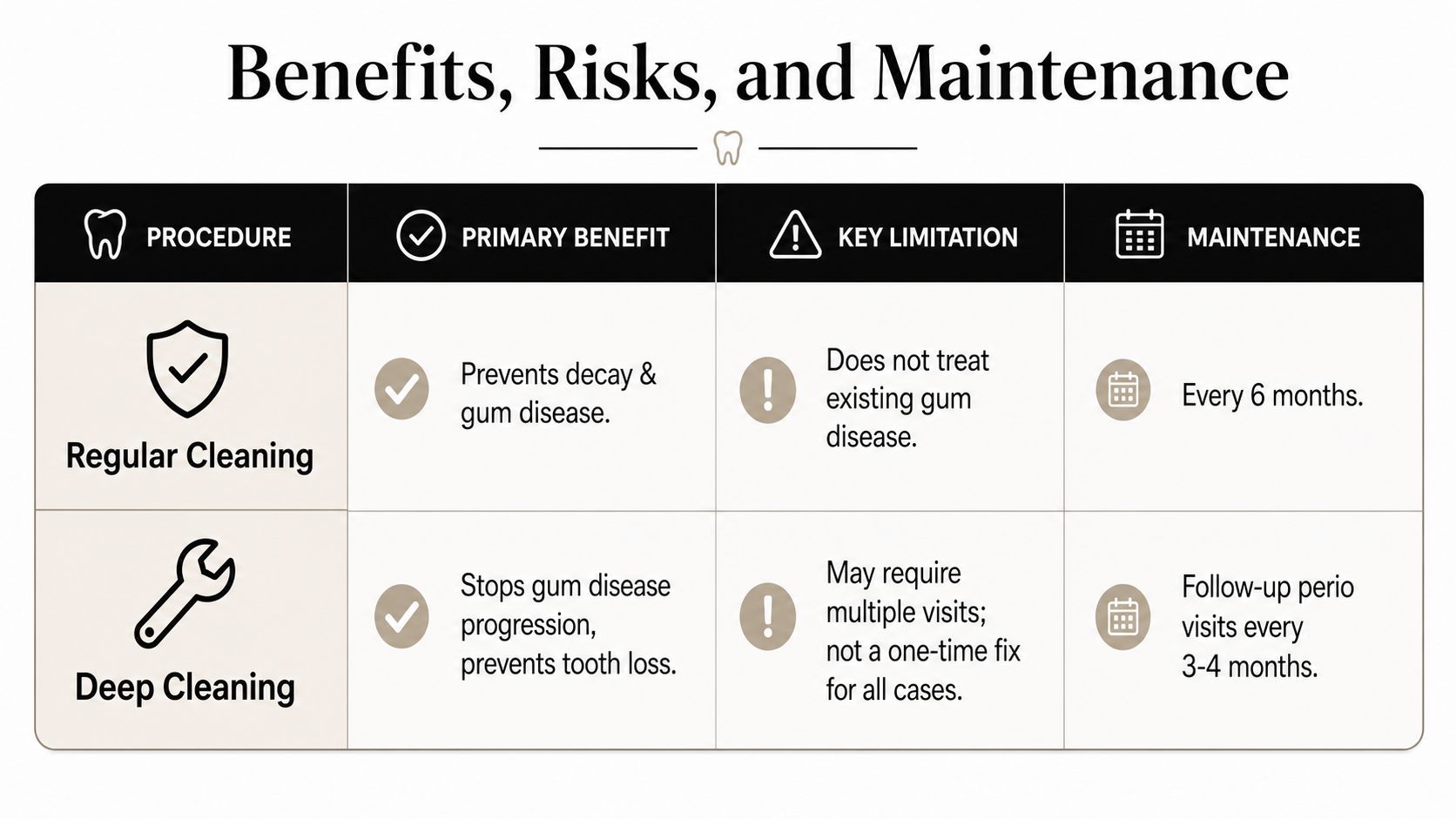
The benefit of a regular cleaning is simple. It helps keep decay and gum disease from taking hold in the first place, which is why it remains the backbone of preventive dentistry. For healthy mouths, that steady six-month rhythm is often enough to keep things stable.
The benefit of a deep cleaning is different. It's used to stop periodontal disease from progressing, which can help protect the teeth from further damage when the problem is already present. It's treatment, not maintenance, and that's why the follow-up plan matters so much.
That follow-up is where many patients are surprised. A deep cleaning is not a one-time reset for oral health. It's part of a longer disease-management plan, and periodontal maintenance is often needed afterward to keep the gums from slipping backward.
Deep cleaning can improve the condition of the gums, but it doesn't replace daily brushing, flossing, or later maintenance visits.
The main trade-offs are practical. Regular cleaning is easier, quicker, and usually returns you to normal right away. Deep cleaning can mean a little more sensitivity, more chair time, and a commitment to ongoing care after the first treatment. That doesn't make it worse. It just means it's addressing a bigger problem.
This is also where restorative dentistry can come into the conversation later if gum disease has already affected the support around teeth. In some cases, patients who delay treatment eventually need more involved care, including tooth extraction, dental implants, or other restorative services. That's another reason not to dismiss bleeding gums or pocketing as minor.
Cost and Insurance Coverage in Las Vegas
Cost is one of the biggest reasons people hesitate, so it helps to know the range before the appointment gets booked. In dentistry, the price difference comes from the amount of tissue involved, the time needed chairside, and whether the visit is preventive care or treatment for active gum disease. That distinction matters more than the label.
For periodontal care, one U.S. source cites $200–$450 per quadrant, or about $800–$1,600 for full-mouth treatment without insurance (WHMCNY). Routine preventive cleaning is usually covered differently because it is meant to maintain healthy gums, while deep cleaning is tied to a periodontal diagnosis and the coverage rules that go with it.
Insurance often handles the two procedures differently. A standard cleaning is commonly treated as preventive care, while a deep cleaning may fall under periodontal benefits, deductibles, or patient cost-sharing depending on the plan and the diagnosis recorded in the chart.
At Aspiring Smiles, patients can ask about insurance acceptance, flexible payment options, and the membership program if cost is the reason care gets delayed. That matters for families balancing family dentistry, cosmetic dentistry, restorative dentistry, and urgent concerns like an emergency dentist visit or a needed tooth extraction.
The question is not only what the visit costs today. It is also what happens if bleeding gums, pocketing, or bone loss are left alone and the problem moves into more involved treatment later.
How to Book the Right Cleaning in Las Vegas
When you call, be direct. Say whether you think you need a routine preventive cleaning or an evaluation for scaling and root planing. If you've noticed bleeding gums, sensitivity, bad breath, or tenderness, mention it up front so the office can schedule the right type of visit.
Aspiring Smiles Dental and Braces is located at 3211 N Tenaya Wy Suite 122, Las Vegas, NV 89129. The practice offers extended weekday and Saturday hours, online appointment requests, and a welcoming process for new patients who want a clear explanation before anything starts. That makes it easier for busy families in Desert Shores, Sunhampton, Sun City Summerlin, Monterrey, Lone Mountain, Mar-A-Lago, and Painted Desert Estates to get care without guessing.
A good scheduling call should sound like this:
- If you haven't had a cleaning in a while: ask for a cleaning and exam first.
- If your gums bleed or your dentist mentioned pockets: ask whether you need a periodontal evaluation.
- If you're unsure: tell the staff what you're feeling and let the team guide the right appointment type.
That approach helps the office reserve the proper amount of time and makes your visit smoother from the start. It also keeps you from booking the wrong appointment and having to reschedule later.
For patients searching for a cosmetic dentist near me, dental implants near me, or an emergency dentist, the same office can often help you map out next steps after the cleaning question is settled. Preventive care, diagnosis, and treatment all work better when the first appointment is set up correctly.
If you're ready to find out whether you need a regular cleaning or a deep cleaning, schedule a visit with Aspiring Smiles Dental and Braces. The team can evaluate your gums, explain the diagnosis in plain language, and help you choose the right next step for your smile.