Ridge Augmentation in Las Vegas for Dental Implants
You finally want to move forward with dental implants, but the exam brought you news that can feel discouraging. The ridge in your jaw isn't wide enough yet, and without enough bone, even a well-made implant can't be placed with the stability it needs.
At Aspiring Smiles Dental and Braces in Las Vegas, NV, Dr. Patel helps patients turn that setback into a clear plan. For people coming from Desert Shores, Sun City Summerlin, Lone Mountain, or Painted Desert Estates, the goal is the same, rebuild a dependable foundation so the implant has a strong place to anchor.
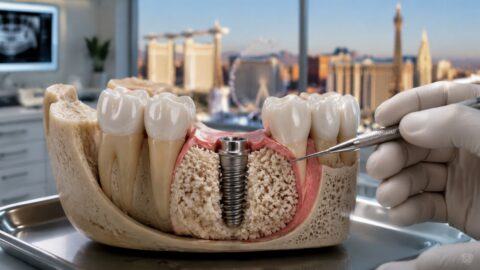
That's why ridge augmentation matters so much. It's a common pre-implant procedure used when the jaw has thinned after tooth loss, gum disease, trauma, extraction, or infection. The procedure involves an incision, placement of graft material to rebuild the ridge's width or height, and closure with sutures, with the goal of creating a stable foundation for a future implant. If you're comparing treatment paths and trying to make sense of the clinical language, a useful perspective is to stop wasting ad spend acquiring patients, because patients deserve clear information before they commit to care.
Your Trusted Las Vegas Dentist for Dental Implant Success
A lot of patients walk in hoping the next step is a simple implant appointment. Then the x-rays show a narrow ridge, and the plan has to change. That moment can feel like a delay, but in implant dentistry it usually means the team is doing the careful thing first.
At our Las Vegas office, the conversation starts with the bigger picture. If the bone isn't ready, placing an implant too soon can compromise comfort, function, and long-term stability. Ridge augmentation is the bridge between wanting a new tooth and having enough bone to support it.
For patients in Las Vegas, NV and nearby areas like Mar-A-Lago and Sunhampton, that usually means a calm, stepwise visit instead of a rushed procedure. Imaging, examination, and treatment planning help Dr. Patel decide whether the ridge needs width, height, or both. The right answer depends on the defect, not on a one-size-fits-all template.
Practical rule: the goal isn't to add bone for its own sake. The goal is to build enough support so a future implant can sit in a stable position and function like a real tooth.
That distinction matters because patients often hear “bone graft” and assume it's purely restorative. In reality, it's part of a larger restorative dentistry plan that may also include tooth extraction, dental implants, or other post-surgical steps. When those pieces are sequenced well, the result is easier to maintain and far more predictable for the patient.
For anyone trying to find a dentist near me who can handle both diagnosis and implant preparation, the process should feel organized, not confusing. That's the standard patients should expect when they're preparing for dental implants near me and want care that's local, personal, and clinically sound.
Understanding Ridge Augmentation and Alveolar Bone Loss
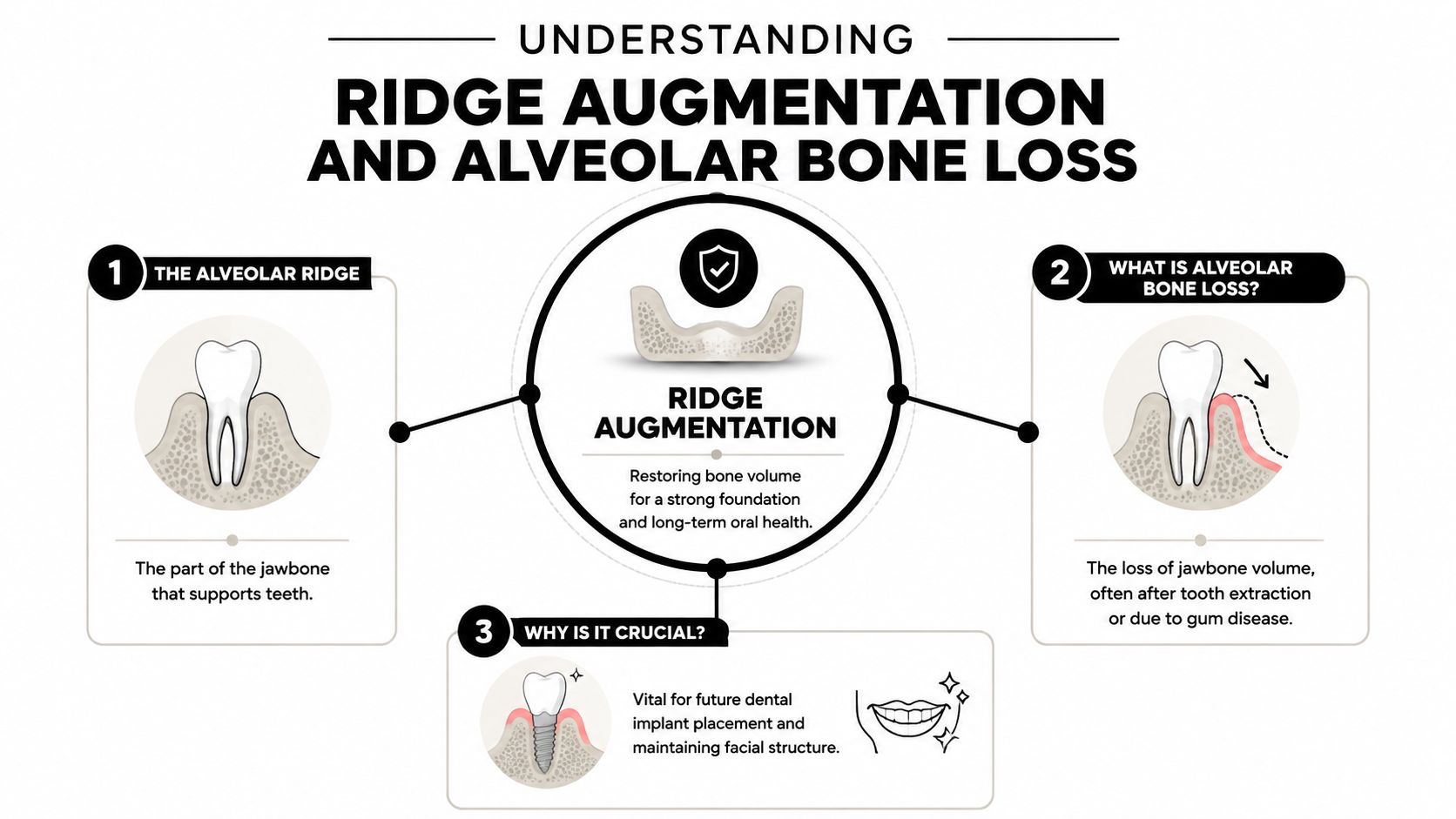
The alveolar ridge is the bony area of the jaw that supports the teeth. Once a tooth is removed, that bone no longer receives the same everyday stimulation, and it can begin to shrink over time. The change is gradual, but it affects the shape and strength of the ridge that later needs to support an implant.
For patients at Aspiring Smiles in Las Vegas, that bone loss is one of the first things Dr. Patel looks for during implant planning. The ridge may still look acceptable from the outside while being too thin or too soft inside for secure implant placement. Ridge augmentation addresses that problem by rebuilding support where the jaw has lost volume.
That makes the procedure a structural step in treatment, not an extra cosmetic one. If the ridge has narrowed too much, the implant may not have enough bone around it to stay stable during healing and long-term use. A well-built ridge gives the restoration a better foundation and helps the final tooth function more predictably.
When the ridge is too narrow
Horizontal ridge augmentation is used when the alveolar ridge width is <6 mm. The procedure typically involves raising a full-thickness flap and making a horizontal osteotomy so the ridge can be widened for implant placement. In practical terms, the surgeon lifts the gum tissue, reshapes the bone, and creates room for a future implant to sit in a safer position.
That treatment choice matters because the amount of gain is often modest, but clinically meaningful. The 2024 systematic review and meta-analysis of horizontal ridge augmentation reported that guided bone regeneration produced a mean gain of 4.036 mm and ridge splitting produced 3.661 mm, while osteodistraction was lower at 2.151 mm. Across the included studies, the pooled mean horizontal gain was 3.305 mm PMC review. Those numbers may sound small, yet in implant dentistry a few millimeters can determine whether the site is ready for placement or still needs more rebuilding.
Why the ridge changes after tooth loss
Bone loss after extraction happens because the jaw remodels to match the workload it receives. The ridge can also weaken after gum disease, infection, or trauma, which is why some patients need ridge augmentation long after the original tooth is gone. A careful implant plan starts with identifying whether the problem is width, height, or both.
For patients who need more information about treatment planning, Dr. Patel may also discuss a bone graft for dental implants at Aspiring Smiles Las Vegas. The goal is to rebuild enough support so the future implant can sit securely and the new tooth can feel and function more naturally when you chew and smile.
Exploring Bone Grafts and Surgical Techniques
Ridge augmentation isn't a single material or a single operation. It's a set of tools used to match the defect in front of us. That's good news for patients, because the plan can be customized instead of forced into one category.
The available graft materials include autograft, allograft, xenograft, and alloplasts Minot Dental Partners. In many cases, a barrier membrane or mesh is added to stabilize the graft and keep soft tissue from growing into the healing space. That membrane detail matters, because bone needs room to mature without being crowded by gum tissue.
| Comparison of Bone Graft Materials | Source | Key Advantage |
|---|---|---|
| Autograft | Your own body | Uses your own bone tissue |
| Allograft | Human donor source | Avoids a second surgical site |
| Xenograft | Animal source | Commonly used to help maintain volume |
| Alloplast | Synthetic material | Provides a non-biologic graft option |
Different techniques solve different problems. Guided bone regeneration is often used when the goal is to protect space while new bone forms. Ridge splitting can be useful when there's some bone present but not enough width. Block grafts may be considered for more substantial rebuilding, while vertical cases often need stricter space control and longer healing.
The right graft isn't the fanciest one. It's the one that matches the defect, the soft tissue, and the implant plan.
For patients who want a practical next step, a focused implant workup is beneficial. In some cases, the discussion includes the practice's own bone graft for dental implants service, which is described in more detail at this page. The point is not to overwhelm you with options. The point is to narrow them down to the method that makes sense for your mouth.
That's also where the evidence is reassuring. A 2024 review found that implant survival remained very high across horizontal augmentation techniques, even though the amount of bone gain differed by method Spandidos review. The takeaway is simple. Technique choice matters, and the best plan depends on the defect, not just the label on the procedure.
Your Step-by-Step Ridge Augmentation Journey in Las Vegas
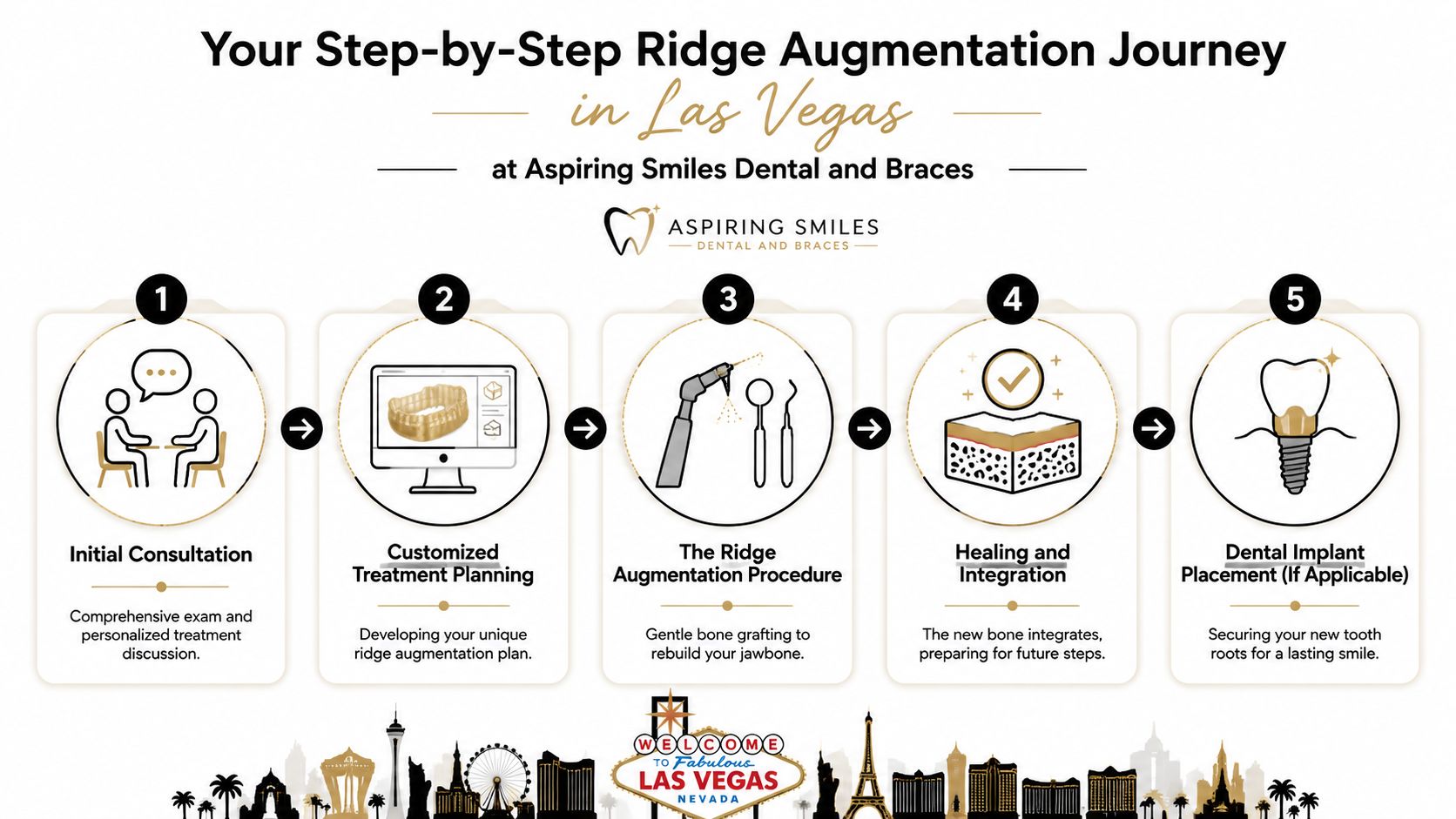
A patient usually feels calmer once the visit is broken into clear steps. At Aspiring Smiles in Las Vegas, Dr. Patel begins with a full exam, a review of your imaging, and a direct conversation about what your mouth needs before an implant can be placed. If you live in Lone Mountain or Painted Desert Estates, that first appointment should still feel personal and unhurried.
What happens before surgery
Treatment planning starts with your bone shape, gum health, and implant goals. If the ridge is narrow but still stable enough to build on, the plan may favor horizontal augmentation. If the site needs more rebuilding, the choice of graft and the timing of the next stage matter more. This visit is also where the sequence for your future restoration is mapped out so the implant plan stays realistic.
What happens on procedure day
The surgical visit follows a controlled sequence. The gum tissue is opened, the graft material is placed, and the site is closed so it can heal without repeated movement. Comfort measures and sedation may be part of the appointment, but clear instructions before each step often do as much as anything to reduce anxiety.
The goal is practical bone support, not a dramatic change you can see right away. In the 2024 meta-analysis, GBR averaged 4.036 mm and ridge splitting averaged 3.661 mm of horizontal gain PMC review. For the right case, that level of improvement can create enough room for a stable implant while keeping the soft tissue under reasonable tension.
How the sequence stays coordinated
If a patient is also planning dental implants, ridge augmentation is one part of a larger restorative plan. The graft has to be timed with the implant phase, because healing and placement need to match the condition of the ridge. Patients who want to see how that broader plan fits together can review dental implants in Las Vegas.
Good implant planning is usually quiet, methodical work. The best visits feel uneventful because the team has already thought through the details.
What to Expect During Your Recovery and Healing

Recovery after ridge augmentation happens in stages, and patients in Las Vegas usually feel that in a very practical way. The first few days are often about rest, keeping swelling under control, and following Dr. Patel's instructions closely so the graft stays stable while the tissues calm down. That early discipline matters because the body is building support under the gum line, and that process should not be disturbed.
Swelling is often the first change patients notice. One clinical source reports that swelling typically peaks at 48 to 72 hours after the procedure, initial gum healing takes about 2 to 3 weeks, and full bone graft integration often requires 4 to 9 months before an implant can be placed Oral Surgery of Bloomington. Healing can also take 6 to 9 months in some cases, especially when the graft is larger or the ridge loss is more complex Oral Surgery of Bloomington.
For patients in Aspiring Smiles, the day-to-day instructions are usually clear and manageable:
- Keep pressure off the site: Do not poke the area with your tongue or fingers, because the graft needs a quiet healing environment.
- Choose soft foods early: Hard chewing can put stress on the surgical site before the tissues are ready.
- Brush gently: Clean the rest of the mouth carefully, while protecting the graft area exactly as directed.
- Keep follow-up visits: Healing should be checked in person, not guessed at from how the area feels.
A short video can also help patients understand why the healing pace matters and why the first few months call for patience.
The main point is simple. Bone integration takes time because the body is rebuilding structure, not just closing gum tissue. If you are healing after a tooth extraction with grafting, or after a more involved ridge rebuild, the timeline can feel slow but still be normal. That is why follow-up visits matter. They let Dr. Patel confirm that the site is maturing the way it should and that your future implant plan still has the support it needs.
Are You a Candidate for Ridge Augmentation
Patients are usually good candidates when the ridge is too narrow or too short to hold an implant safely, but the surrounding tissues are healthy enough to support surgery. The question isn't whether you want an implant, it's whether the bone can support one with enough predictability.
There are also situations where another path may make more sense. If a tooth has just been removed, socket preservation may help reduce future bone loss. If the overall tooth count or bite pattern points to a different restoration, graftless solutions such as All-on-4 or short implants may be discussed where appropriate. A careful plan weighs those choices instead of forcing every patient into the same sequence.
Signs the consultation is worth it
- You've been told the ridge is too narrow: That usually means implant planning needs a bone-building step first.
- You lost a tooth some time ago: Older extraction sites often have more bone remodeling.
- You want a stable implant, not a shortcut: Patients who want long-term function usually benefit from a thorough evaluation.
- You've had gum disease or trauma: Those problems can change the ridge shape in ways that affect implant placement.
The best candidates understand that ridge augmentation is part of restorative dentistry, not a separate cosmetic detour. For some people, it's the difference between a loose-fitting solution and a stable implant-supported result. For others, a different plan is better, and that honesty is part of good dentistry.
Aspiring Smiles Dental and Braces also provides general and restorative care, so the implant conversation can be connected to cleaning, exams, emergency dentistry, or other treatment needs when that's appropriate. If you're searching for a cosmetic dentist near me or a dentist in Las Vegas, NV who can help sort out the implant pathway, the consultation should answer the question clearly.
Frequently Asked Questions About Ridge Augmentation
Does ridge augmentation hurt?
Patients usually feel pressure during treatment rather than pain, because the area is managed carefully during the procedure. The days after surgery are more about soreness and swelling control than severe pain, and clear aftercare instructions make a big difference.
How long before I can get my implant?
That depends on how much bone was rebuilt and how your mouth heals. Healing commonly happens over several months, and the graft has to mature before implant placement is safe.
What does it cost?
Cost varies based on the size of the graft, the material used, whether a membrane or mesh is needed, and how much surgical work is involved. The only honest answer is that you need an exam and imaging to get a real estimate.
Will insurance help?
Sometimes dental insurance contributes to treatment, but benefits vary by plan and by whether the procedure is considered medically necessary under that policy. A benefits review is the right next step before any surgery is scheduled.
If you live in Las Vegas or nearby neighborhoods like Monterrey and Mar-A-Lago, the easiest way to get a straight answer is to schedule a consultation. Dr. Patel can review your x-rays, explain whether ridge augmentation is needed, and tell you whether a different implant plan would be more appropriate for your case.
If you're ready to move forward with implant treatment, Aspiring Smiles Dental and Braces can evaluate your ridge, explain your options, and map out the safest path toward a stable restoration. Visit Aspiring Smiles Dental and Braces to request a consultation in Las Vegas and get a personalized plan for ridge augmentation and dental implants.