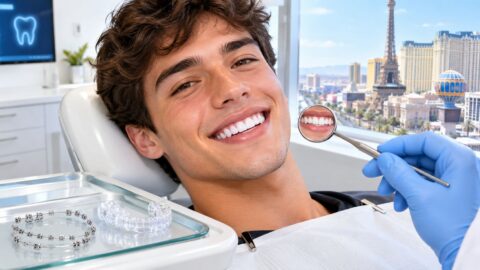
Teeth Whitening After Braces: Safe Timing in Las Vegas
After months of orthodontic treatment, your brackets finally come off. You look at your straight new smile, then notice pale squares, yellow areas, or darker marks where the brackets used to sit. That uneven color can feel disappointing, but it doesn't automatically mean your teeth need stronger whitening.
For families searching for a dentist near me or a dentist in Las Vegas, NV, the first step is identifying what caused the discoloration. Surface staining, natural shade differences, adhesive residue, enamel demineralization, and early decay can look similar in a bathroom mirror but require different care. A professional evaluation helps protect your enamel while creating a realistic plan for teeth whitening after braces.
Understanding Discoloration After Orthodontic Treatment
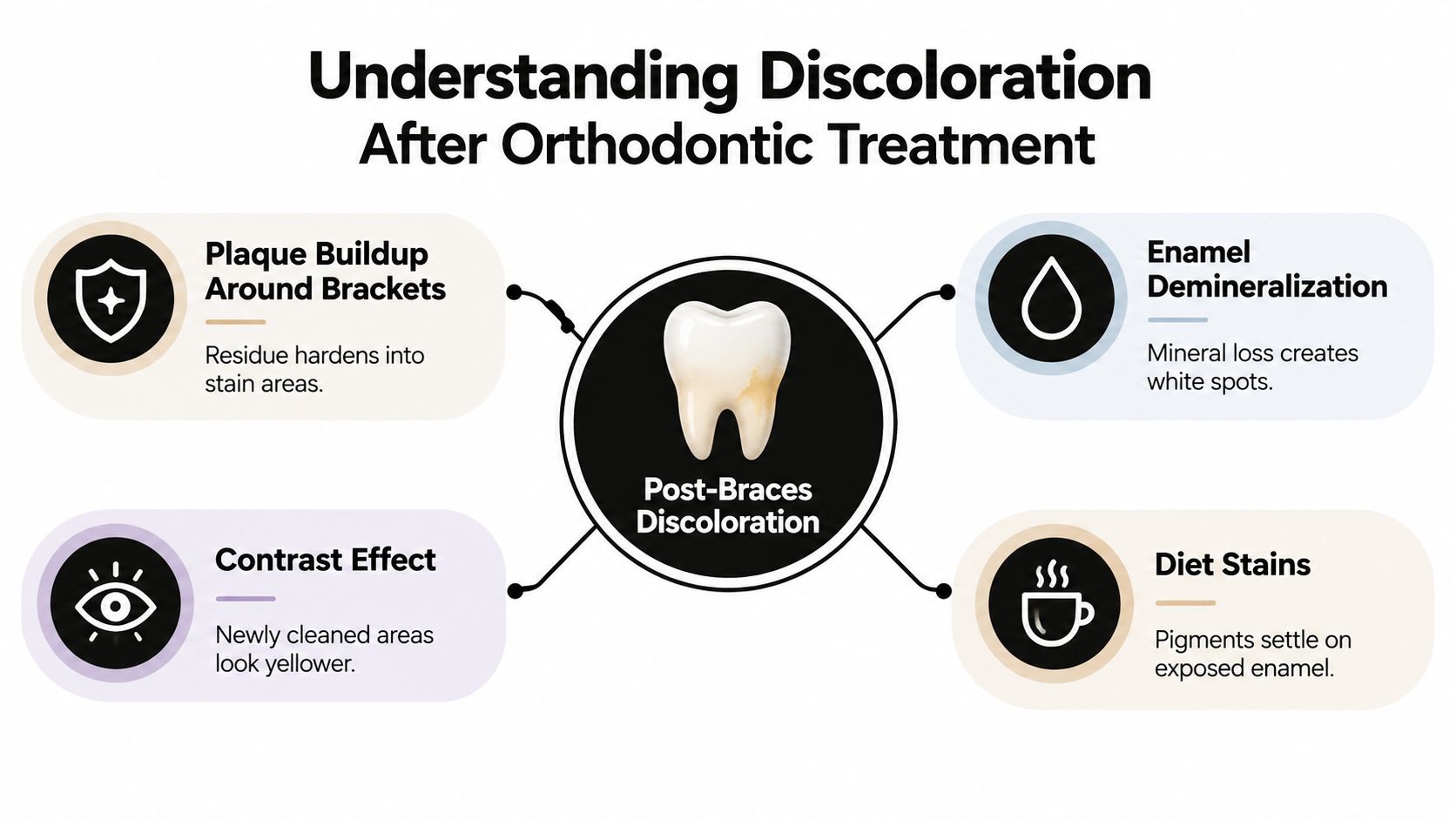
A patient may leave an orthodontic appointment thrilled with the alignment of their teeth, then notice that the areas around the former brackets look lighter or darker. In many cases, the brackets themselves didn't stain the teeth. Plaque, food pigments, cleaning challenges, and changes in the enamel around the brackets created the uneven appearance.
The simplest possibility is extrinsic staining, which sits on the outside of the enamel. Coffee, tea, tobacco, colored foods, and retained plaque can make exposed areas look yellow or brown. A professional cleaning may improve this type of discoloration before any bleaching is considered. More information about the different sources of discoloration is available in this guide to what causes tooth discoloration.
White marks aren't ordinary stains
The more important possibility is a white spot lesion, often called a WSL. This is an early area of enamel mineral loss that may appear as a chalky, opaque patch around a former bracket. Plaque can remain trapped around brackets and wires, allowing acids to draw minerals from the enamel surface.
A systematic review reported WSL prevalence at bracket removal ranging from 12% to 55%, while broader orthodontic literature commonly places prevalence near 20% to 50% at debonding. These figures come from the review of fluoride-varnish research in the European Journal of Orthodontics review of white spot lesions after orthodontic treatment.
Many minor lesions can partially reverse during the first year after brackets are removed. That doesn't mean every mark will disappear, but it does mean immediate whitening may not give the clearest picture of your final tooth color or enamel condition.
Why the diagnosis changes the plan
Bleaching can brighten healthy enamel around a lesion without eliminating the underlying opacity. A white spot may blend more closely with surrounding enamel, remain visible, or look more noticeable depending on how each area responds.
That distinction matters in Las Vegas, where patients often want a quick cosmetic solution before a wedding, graduation, vacation, or important work event. Before choosing whitening, a dentist should check whether the mark is ordinary plaque staining, intrinsic discoloration, inactive demineralization, active enamel breakdown, or decay. A cleaning, examination, and dental X-rays when clinically indicated can prevent a cosmetic treatment from masking a condition that needs preventive or restorative care.
Evaluating Professional Whitening Options
Once an examination confirms that cosmetic whitening is appropriate, the method should match the condition of your teeth, your sensitivity risk, and the result you want. In-office whitening, custom take-home trays, and over-the-counter products don't provide the same level of control.
In-office Zoom whitening can deliver a noticeable change during a closely supervised appointment. The dental team can protect the gums, control how the product contacts the teeth, and stop or adjust treatment if sensitivity develops. This option may suit someone who wants a faster overall brightening result, although it won't repair white spot lesions or change the color of existing restorations.
Custom take-home trays provide a more gradual approach. A dentist supplies trays designed for your mouth and gives you instructions for controlled use. This can be helpful when sensitivity needs careful management or when gradual color blending is preferable to a rapid shade change. The treatment still requires patience, especially if the teeth have recently undergone orthodontic debonding.
Over-the-counter strips and whitening products are easy to purchase, but they offer less individual control. They may improve mild surface staining, yet they don't diagnose cavities, assess white spot activity, or account for crowns, veneers, fillings, and bonding. Improper use can also increase sensitivity and create an uneven result when enamel has different levels of porosity.
A practical comparison
| Method | Supervision Level | Speed of Results | Best For |
|---|---|---|---|
| Professional in-office whitening, such as Zoom | Direct dental supervision | Faster overall brightening | Patients seeking a more immediate cosmetic change after examination |
| Custom take-home trays | Dentist-designed and guided | Gradual change | Patients who prefer controlled whitening at home or need a gentler pace |
| Over-the-counter products | Limited professional oversight | Variable and gradual | Mild surface staining in patients with healthy, evaluated teeth |
Whitening works most predictably on natural enamel with generalized yellowing or surface discoloration. It doesn't reliably erase structural changes in enamel. A systematic review of bleaching for post-orthodontic WSLs found very uncertain evidence, with eligible clinical evidence consisting of one randomized clinical trial involving 19 participants with visible, inactive lesions. The combined at-home and in-office approach appeared to reduce color contrast and produced patient satisfaction, but the trial had a high risk of bias. The findings are discussed in this systematic review of bleaching for post-orthodontic white spot lesions.
Clinical perspective: Whitening can improve the overall shade of a smile, but it isn't a substitute for diagnosing enamel damage.
A dentist may recommend fluoride or remineralization support, microabrasion, resin infiltration, or restorative consultation before bleaching when white spots are persistent or severe. The appropriate choice depends on whether a lesion is active, how deep the enamel change appears, and whether the patient's priority is health, camouflage, or broader smile enhancement.
The Importance of Timing and Preparation
The safest answer to “How soon can I whiten after braces?” isn't to start as soon as the brackets come off. Research supports completing bracket removal and adhesive cleanup first, then allowing the teeth and surrounding tissues time to stabilize before bleaching.
A 2022 systematic review examined eight relevant sources and concluded that the evidence quality was low. Even so, the most defensible timing identified in that review was at least 30 days after bracket removal. The review found that conventional orthodontic studies performed whitening between 7 and 90 days after debonding, with a mean interval of 40.2 days. These findings are summarized in the systematic review of tooth whitening after conventional braces.
What happens during the waiting period
Newly exposed tooth surfaces may be sensitive after adhesive is removed and the teeth are professionally cleaned. The waiting period also gives your dental team time to see how the enamel looks after the immediate post-braces changes settle. Some white spots may become less prominent, while others may remain and need a separate preventive or cosmetic discussion.
Use this time for a complete assessment rather than treating it as a delay without purpose. A conservative appointment may include:
- Bracket and adhesive check: The dentist confirms that residual bonding material isn't creating a false color difference.
- Dental examination: Cavities, cracks, exposed dentin, gum inflammation, and active white spot lesions are identified.
- Cleaning: Plaque and surface stain are removed before the baseline shade is recorded.
- Radiographs when indicated: Dental X-rays can help assess concerns that aren't visible during a routine visual examination.
- Shade documentation: The starting color is recorded so changes can be judged fairly after treatment.
Comparing the three pathways
In-office whitening offers control and speed, but sensitivity can be more noticeable when a patient has recently completed orthodontic treatment. Custom trays offer a slower pace and allow the dentist to adjust instructions around comfort. Over-the-counter products may appear convenient, but they can't account for uneven enamel, restorations, active decay, or the location of white spots.
A survey-based study found that most respondents didn't recommend whitening during orthodontic treatment and preferred waiting one to three months after bracket removal. The same research supports allowing final tooth-color changes, hygiene stabilization, and residual lesions to become clearer before choosing a cosmetic procedure. You can review the relevant survey and evidence review on whitening timing.
If you have pain, rough brown areas, persistent sensitivity, or a spot that appears to be enlarging, don't begin bleaching while waiting. A dentist in Las Vegas, NV can determine whether you need preventive care, restorative dentistry, or cosmetic treatment first.
Navigating White Spot Lesions and Sensitivity
White spot lesions change the purpose of whitening. The treatment may help camouflage a contrast between a lesion and healthy enamel, but it doesn't reliably replace the minerals that were lost. Patients who expect every white mark to disappear often feel disappointed, even when the overall smile becomes brighter.
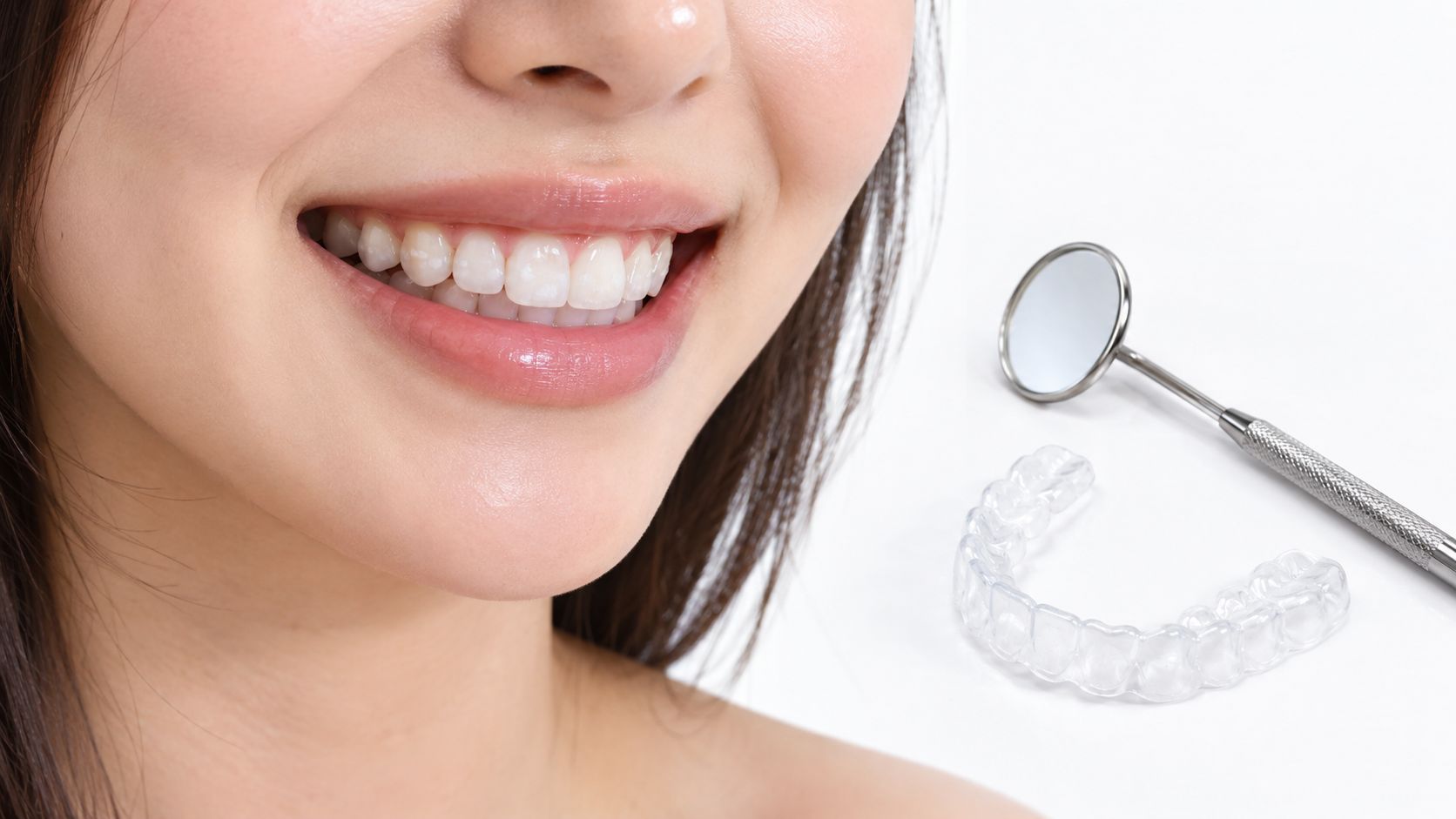
A clinical study involving 10 patients with inactive white spot lesions used a 60-minute bleaching session, a 14-day break, and then two weeks of home bleaching for one hour each day. Both lesion and sound-enamel areas became lighter, but sound enamel changed more, which improved color matching. All participants reported satisfaction, but this small study doesn't establish that bleaching will reliably treat every post-braces lesion. Its findings are available in this clinical study of bleaching and white spot camouflage.
A conservative clinical sequence
Start with diagnosis, not product selection. The dentist should determine whether the lesion is active, whether decay is present, and whether the enamel surface is sound enough for cosmetic treatment.
- Complete the orthodontic phase: Brackets are removed and adhesive is cleaned away.
- Assess oral health: The dentist performs an examination, periodontal assessment, cleaning, and radiographs when indicated.
- Record the baseline: Tooth shade, sensitivity, restorations, enamel defects, and visible lesions are documented.
- Support the enamel: Fluoride or remineralization strategies may be recommended when risk or early demineralization is present.
- Wait at least 30 days: Bleaching begins only after the post-debonding period and only if the teeth are suitable.
- Select a controlled method: A dentist-supervised in-office protocol or custom-tray home protocol is considered.
- Reassess the shade: The dentist reviews the result and manages sensitivity rather than automatically repeating treatment.
A review of remineralization treatments found that no evaluated treatment completely remineralized WSLs, although 5% sodium-fluoride varnish showed a statistically significant improvement compared with control treatment. Evidence from 20 randomized trials involving 942 patients found that fluoride varnish improved lesion area and enamel fluorescence, but visible clinical improvement remained uncertain because the trials were small and methodologically limited. These findings are summarized in the review of fluoride varnish and white spot lesions.
Sensitivity deserves equal attention. The dentist may modify the whitening schedule, recommend a desensitizing product, or pause treatment if discomfort develops. Patients should also know that excessive frequency or concentration can create avoidable sensitivity and raise concerns about enamel microhardness.
For practical guidance about reducing discomfort, see teeth whitening sensitivity care.
Maximizing Your Results and Smile Longevity
A brighter smile after orthodontics depends on more than the bleaching appointment. The result reflects the condition of the enamel, how evenly natural teeth respond, the presence of white spots, your sensitivity level, and whether any restorations are visible when you smile.
Once treatment is complete, continue the oral-hygiene routine that protects your enamel. Brush consistently with fluoride toothpaste, clean between the teeth as advised, and keep regular cleaning and exam appointments. Plaque control matters especially when white spot lesions are present because a cosmetic result won't protect an area from further demineralization.
Protecting the shade
Coffee, tea, red wine, tobacco, and strongly pigmented foods can contribute to new surface staining. You don't necessarily need to remove every favorite food or drink, but reducing frequent exposure and rinsing with water afterward can help limit pigment retention. Your dentist may also recommend a maintenance approach using custom trays or desensitizing products, depending on your response.
A useful goal: Aim for a healthy, balanced smile with improved color, not an artificial promise that every tooth will match perfectly.
Retainers also deserve attention. Follow your orthodontic instructions for cleaning and wearing them, since a retainer that isn't cleaned properly can collect plaque and affect how fresh your smile looks. If your teeth feel sensitive, don't keep increasing treatment frequency to chase a lighter shade. Pause and contact your dental office for individualized advice.
Restorations won't bleach
Whitening changes the color of natural tooth structure but doesn't whiten tooth-colored restorations. The American Dental Association's guidance on tooth whitening specifically notes that natural teeth can be whitened, whereas tooth-colored restorations cannot.
That includes visible fillings, composite bonding, veneers, crowns, and other restorative materials. If surrounding natural enamel becomes lighter, a restoration may look darker by comparison. Shade planning should happen before whitening, particularly if you may need a crown, veneer, dental implant restoration, or other restorative dentistry in the future.
The same evaluation helps patients who are considering cosmetic services beyond whitening. A cosmetic dentist near me should be able to explain whether whitening, bonding, microabrasion, resin infiltration, veneers, or another option best matches the cause of the discoloration.
Schedule Your Cosmetic Consultation Today
If you live in Las Vegas, NV, and your teeth look uneven after braces, a consultation is more useful than guessing which whitening product to buy. The key question isn't only how white you want your smile to be. It's whether the visible areas are surface stains, intrinsic discoloration, inactive white spots, active demineralization, decay, or a mixture of concerns.
A careful appointment can include a new patient exam, professional cleaning, dental X-rays when clinically indicated, gum assessment, shade documentation, and a discussion of sensitivity. The dentist can then explain whether you should begin with fluoride support, remineralization, resin infiltration, microabrasion, restorative treatment, or cosmetic whitening.
Las Vegas patients may also need broader dental care at the same visit. If a damaged tooth needs tooth extraction, prompt evaluation can prevent a cosmetic concern from distracting from a health problem. Patients searching for an emergency dentist should seek care quickly for swelling, severe pain, trauma, or signs of infection rather than applying whitening products to the area.
A consultation can also support longer-term plans. Someone searching for dental implants near me may need whitening and shade planning before a final implant crown is made, because the implant restoration won't change color later. Patients considering veneers, crowns, Invisalign, or other cosmetic and restorative services benefit from coordinating the sequence before treatment begins.
For readers interested in how dental practices approach patient-centered smile care, this Bright Smiles case study offers additional context about practice marketing and patient communication. It isn't a substitute for an examination, but it can help explain why clear education matters when patients are comparing treatment options.
Your next step should be diagnostic: Let a dental professional identify the discoloration before you decide whether to bleach it.
Aspiring Smiles Dental and Braces offers examinations, cleanings, dental X-rays when indicated, professional Zoom whitening, custom take-home trays, cosmetic dentistry, restorative care, dental implants, and emergency dental services in Las Vegas, NV. Visit Aspiring Smiles Dental and Braces to request a consultation and build a safe, personalized plan for your smile after braces.