What Is a Periodontist? What They Do and When to See One
Quick answer: A periodontist is a dentist who specializes in gum disease and in the structures that support your teeth, and who also places dental implants. They complete about three extra years of training after dental school. See one when your gums bleed often, pull back from your teeth or when teeth feel loose. Questions? Call (702) 508-6699.
Written by the Aspiring Smiles Dental Team · Last updated November 2026
Your gums do more than frame your smile. They hold your teeth in place, and when they get infected, the damage can reach the bone underneath. If your dentist or hygienist mentioned a periodontist, or your gums have started to bleed, you probably want a plain answer about who this specialist is.
This guide explains what a periodontist is, what they treat, how they differ from a general dentist, the warning signs that point to gum disease, and what treatment usually involves.
Gums bleeding or receding? Call (702) 508-6699.
What Is a Periodontist?
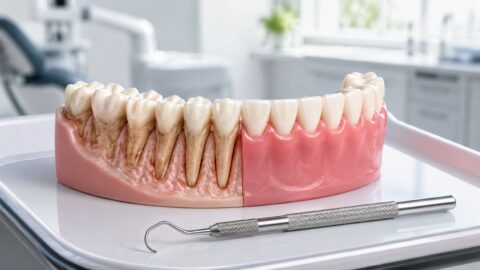
A periodontist is a dentist who specializes in preventing, diagnosing and treating periodontal disease, which is the medical term for gum disease. The American Dental Association also lists the placement of dental implants as part of the specialty.
After dental school, periodontists complete three more years of specialty residency, according to the American Academy of Periodontology. That training includes surgical skills most general dentists do not use every day, which is why periodontists handle gum surgery and implant placement.
The path to becoming a periodontist
4 years
Dental school, earning a DDS or DMD degree.
3 years
Accredited residency in periodontics, including surgical training.
Board
Board certification through the American Board of Periodontology.
Training length as described by the American Academy of Periodontology.
What Does a Periodontist Treat?
The specialty covers the gums, the ligaments that hold teeth in their sockets and the jawbone around the teeth. In practice, that means these problems.
Gum disease (gingivitis and periodontitis)
Gingivitis is early, reversible gum inflammation. Periodontitis is the advanced stage, where infection destroys the tissue and bone that anchor your teeth. Our page on gum disease walks through the stages and treatments.
Gum recession
When gums pull back, tooth roots are exposed, teeth become sensitive and the risk of decay rises. Treatments range from monitoring to gum grafts. Read more in our guide to gum recession treatment, or see what to do if you think your gums are receding.
Dental implants and bone support
Placing an implant is a surgical procedure, and periodontists train for it as part of their specialty. If the jawbone has shrunk, a bone graft can rebuild the support first. See how this works in our pages on dental implants and bone grafts for dental implants.
Gum shaping and crown lengthening
Some patients show too much gum when they smile, or have too little tooth above the gumline to hold a crown. Gum contouring reshapes the gums to fix both. Learn about gum contouring and reshaping.
Periodontist vs General Dentist: What Is the Difference?
Your general dentist checks your gums at every exam and can treat early gum disease. A periodontist steps in when the disease is deeper, the treatment is surgical or the case is complex.
| General dentist | Periodontist | |
|---|---|---|
| Training | Four years of dental school | Dental school plus three years of periodontics residency |
| Focus | Exams, cleanings, fillings and early gum care | Gum disease, gum surgery, recession and implants |
| Typical cases | Gingivitis, mild periodontitis, routine care | Advanced periodontitis, grafts, bone loss, complex implants |
| How you get there | Your regular dental home | Often by referral, though many accept patients directly |
| Best fit | Prevention and early treatment | Deep pockets, bone loss or surgical needs |
Practical rule: Start with your general dentist, since early gum disease is often treated there. Ask about a periodontist when pockets stay deep after a deep cleaning, gums keep receding, teeth feel loose or you want implants and need bone support.
Signs You May Need to See a Periodontist
Gum disease is often painless in the early stages, which is why people miss it. These are the signs worth acting on.
Gums that bleed when you brush or floss. Healthy gums do not bleed. See our page on why gums bleed for common causes.
Red, swollen or tender gums. Inflammation is the first warning sign.
Gums pulling away from your teeth. Teeth look longer or the roots feel sensitive.
Persistent bad breath or a bad taste. Bacteria trapped in deep pockets are a common cause.
Loose teeth or a changing bite. This can mean the supporting bone has been damaged.
Deep pockets noted at your checkup. Healthy pockets measure roughly one to three millimeters, and deeper readings can signal disease.
Remember: Do not wait for pain. By the time gum disease hurts, it is usually advanced. A quick gum check at your regular exam can catch it early.
The Stages of Gum Disease
Gum disease moves in stages, and the earlier you catch it, the simpler the treatment. Knowing where you are on this scale helps you understand why your dentist recommends what they do.
How gum disease progresses
Gingivitis
Red, puffy gums that bleed easily. No bone loss yet, and it is usually reversible.
Early periodontitis
Gums begin to pull away and small pockets form. Some bone loss starts.
Moderate
Deeper pockets, more bone loss, gum recession and possible bad breath.
Advanced
Significant bone loss, loose or shifting teeth and a higher risk of losing teeth.
A simplified overview. Only an exam with measurements and X-rays can show your actual stage.
The turning point is between stage 1 and stage 2. Gingivitis can often be reversed with better brushing, daily flossing and a professional cleaning. Once bone is lost, it does not grow back on its own, so treatment shifts from reversing the disease to controlling it.
How to Protect Your Gums at Home
A periodontist can treat gum disease, but daily habits decide whether it comes back. These five habits make the biggest difference.
Brush twice a day for two minutes. Use a soft brush and angle the bristles toward the gumline.
Clean between your teeth every day. Floss, interdental brushes or a water flosser all work. Pick the one you will actually use.
Keep your cleaning appointments. Plaque that hardens into tartar can only be removed by a professional.
Do not smoke or vape. Tobacco is a major risk factor for gum disease and slows healing.
Manage health conditions. Diabetes and gum disease affect each other, so keep blood sugar under control and tell your dentist about it.
What Happens at a Periodontal Visit?
Review and exam. The periodontist reviews your health history and looks at your gums, teeth and bite. Smoking, diabetes and some medications affect gum health, so be open about them.
Gum measurements and X-rays. A small probe measures the space between each tooth and the gum, and X-rays check the bone beneath.
Diagnosis and plan. You learn whether you have gingivitis or periodontitis, how advanced it is and what treatment fits.
Treatment and maintenance. Treatment may start with a deep cleaning. Surgery is reserved for cases that need it, and regular maintenance visits keep the results.
Common Periodontal Treatments
Treatment options from least to most involved
Deep clean
Scaling and root planing removes plaque and tartar below the gumline.
Pocket care
Gum surgery reduces deep pockets and cleans the roots directly.
Grafts
Gum or bone grafts rebuild tissue lost to recession or bone loss.
Implants
Implants replace teeth that cannot be saved.
Most people start at the left. A deep cleaning treats many cases, and your dentist will tell you if you need more. Home care matters just as much: brush twice a day, clean between your teeth daily and keep your cleaning visits.
If you want a plain-language walk-through of what treatment feels like, read our answers to the 5 common questions about gum disease treatment.
Gum Treatment Costs and Insurance
The price depends on how much of the mouth needs treatment, which procedure you need and whether you have insurance. Deep cleanings and gum maintenance are often partly covered, while grafts and implants may have limits. Ask for the procedure codes and an itemized estimate before you start.
If you do not have insurance, see our dental payment plans and the membership program for ways to spread out costs.
Next Steps in Las Vegas
A periodontist is a gum specialist who also places implants. Bleeding gums, receding gums and loose teeth are all worth a check, and early treatment is easier and less costly than waiting.
If you live in the northwest valley, Summerlin or North Las Vegas and want your gums checked, our team can examine them and explain your options, including gum disease treatment and deep cleanings.
Or call (702) 508-6699.
Aspiring Smiles Dental and Braces
3211 N Tenaya Way, Suite 122, Las Vegas, NV 89129
Phone: (702) 508-6699
Monday to Saturday, 9 AM to 5 PM. Closed Sunday.
Periodontist FAQs
1What does a periodontist do?
2Is a periodontist the same as a dentist?
3Do I need a referral to see a periodontist?
4Can gum disease be cured?
5How often should I see a periodontist?
6Does a periodontist do deep cleanings?
7How much does a periodontist cost?
Sources
This article is general information, not a diagnosis or personal medical advice. Every mouth is different, so see a dentist for guidance on your own teeth.